
He had never owned anything older than a lease car when he bought his first C10, a faded blue longbed with a bench seat that sagged in the middle from decades of somebody's dog riding shotgun. He did not know what a tank sticker was. He did not know the difference between a Fleetside and a Stepside, and he certainly did not know that the truck's rear end had a completely different gear ratio than the one his buddy's C10 had. He just knew the price was fair, the frame felt solid when he kicked the rocker panels, and something about sitting behind that big flat windshield made him feel like he had time travelled without leaving his own driveway. Three years later he still owns it, and he still cannot fully explain why this particular truck was the one that got him into old cars when nothing else ever had.
The Gateway Truck: Why First-Time Collectors Start With a C10
Low cost of entry, forgiving mechanicals, and a welcoming community make the C10 the truck that turns first-time buyers into lifelong collectors. Here is why so many people start here.
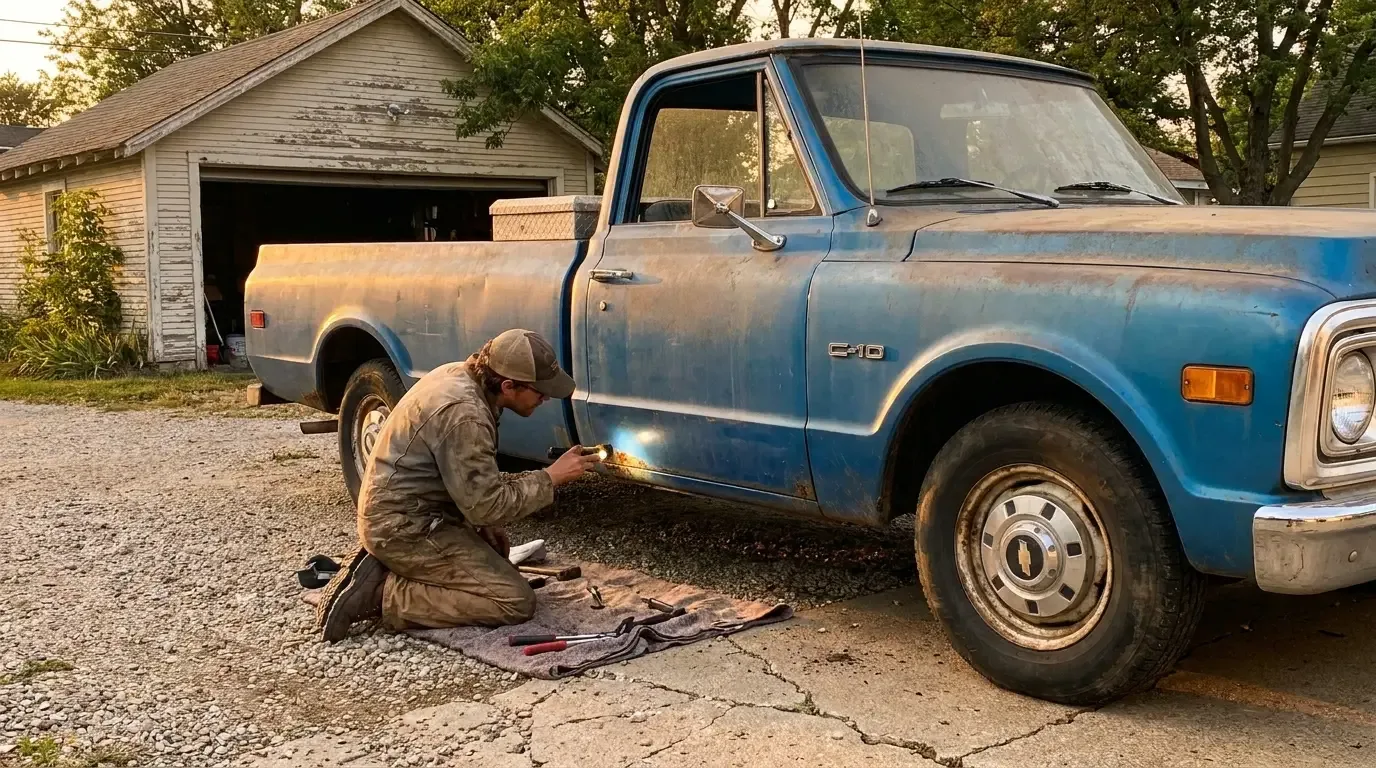
A price of entry that does not punish curiosity
Most people who end up loving old vehicles did not start out planning to become collectors. They started out wanting something interesting to drive on a Saturday, and they discovered the hobby almost by accident once the first project taught them more than they expected. The C10 works so well as that first step because it does not demand a serious financial commitment before someone even knows if they will like the hobby. A driver-quality example can still be found for a fraction of what a comparable muscle car costs, and the parts to fix whatever needs fixing are neither rare nor expensive by classic car standards. Nobody has to mortgage anything to find out whether they actually enjoy owning something with a carburetor.
That matters more than it sounds like it should. A lot of people talk themselves out of ever buying a classic car because they assume the entry point requires deep pockets and deeper mechanical knowledge. The C10 quietly proves that assumption wrong for anyone willing to start with something humble.
Mechanically forgiving, and that forgiveness teaches something
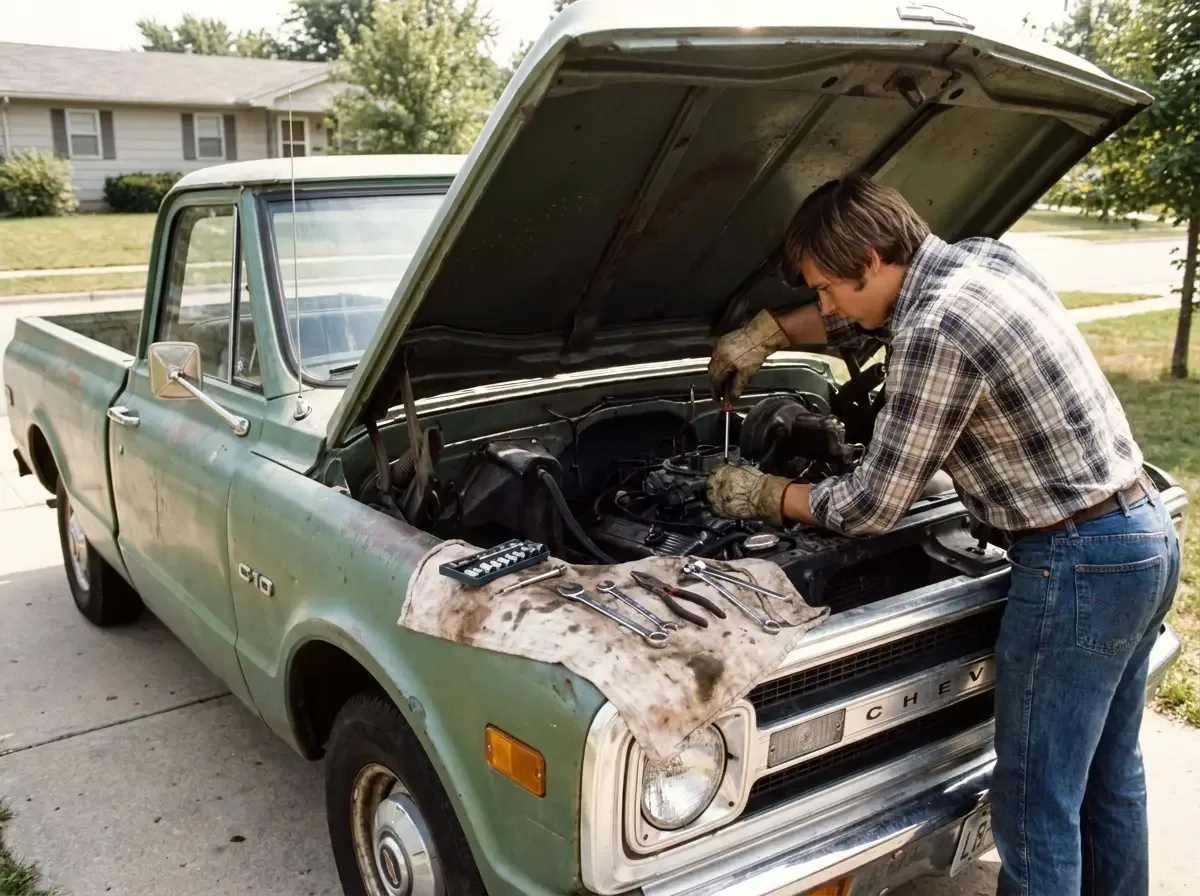
A first-time owner does not need a machine shop background to keep a C10 running, and that is not an accident of luck. General Motors built these trucks to be serviced by people who were not mechanics, out in a field, with tools that fit in a single box. The engines are simple enough that a determined beginner can learn to do a tune-up themselves without ruining anything, and the parts supply chain is deep enough that almost nothing on the truck is a mystery part nobody makes anymore. That accessibility turns the ownership experience into an education instead of a source of dread every time something goes wrong.
There is something quietly important about a hobby that lets a beginner make a mistake without it being expensive or embarrassing. Plenty of newcomers to classic cars get scared off permanently by their first repair going badly on something rare and unforgiving. The C10 tends not to do that to people. It tends to teach them instead.
A community that wants beginners to stick around
The other thing a first-time owner discovers, usually within the first month of asking questions online or at a local show, is that the community around these trucks has an unusual patience for beginners. Nobody expects a new owner to already know what a tank sticker is or why the frame number matters. People who have owned these trucks for decades tend to answer the basic questions warmly instead of making somebody feel foolish for asking, and that welcome makes the difference between a first purchase that turns into a decade-long hobby and one that gets sold off in frustration six months later.
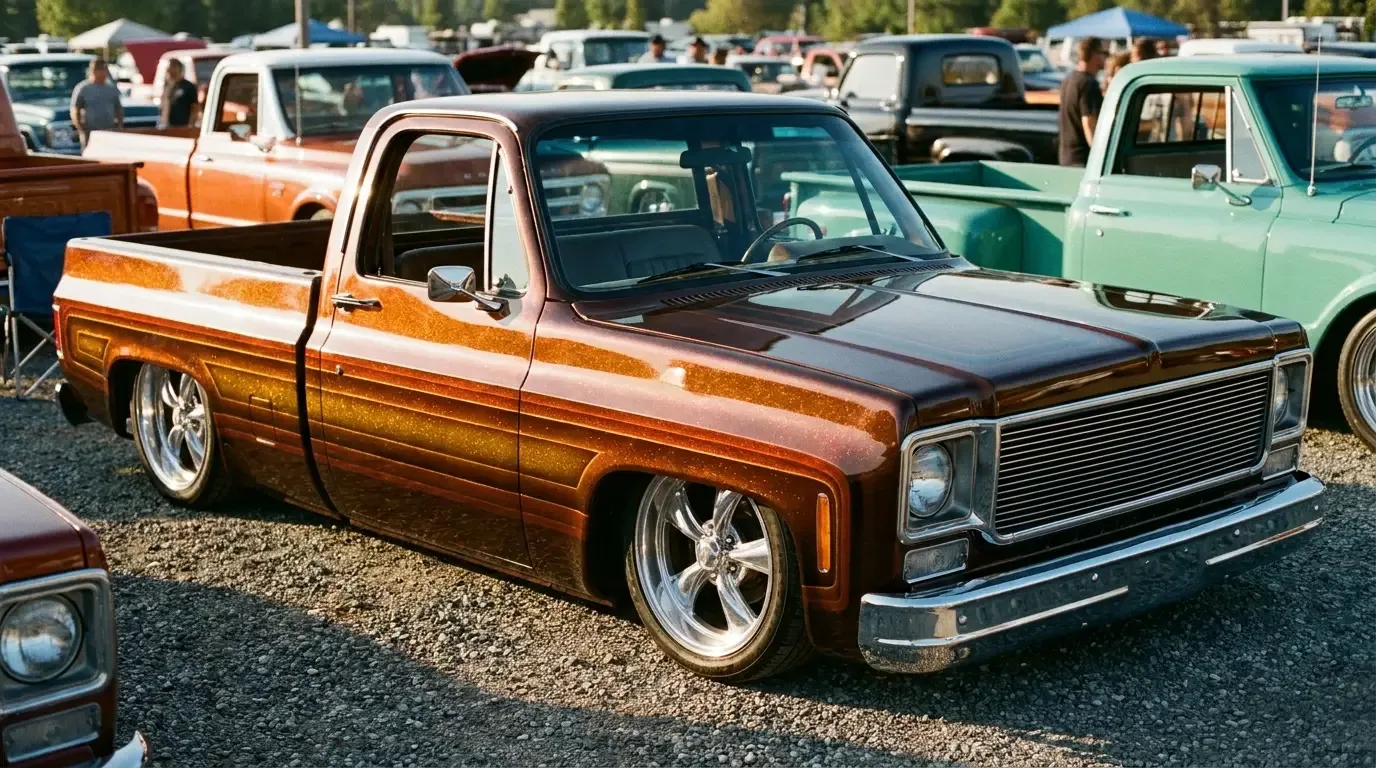
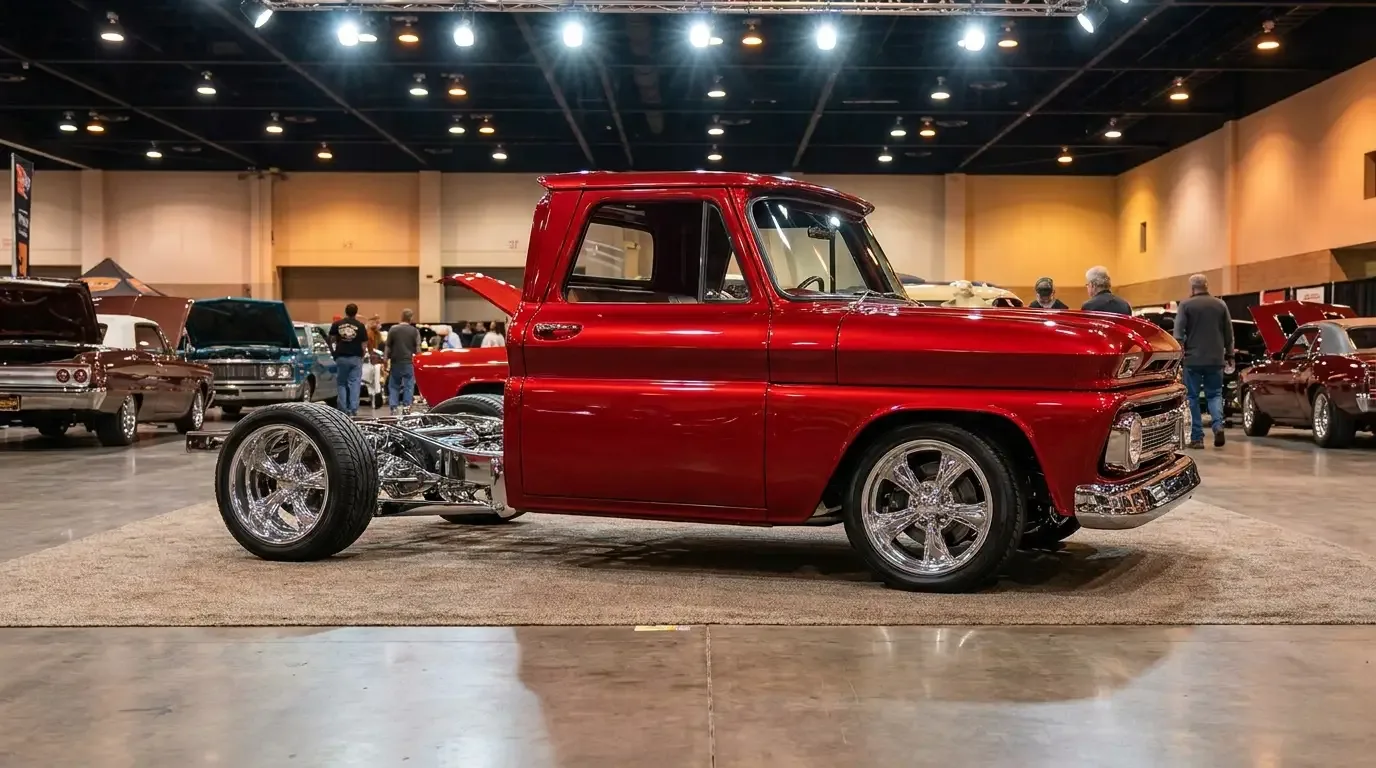
Part of that patience comes from how the C10 crosses so many different corners of the hobby. Somebody who bought the truck to restore it stock will run into custom builders at the same show as somebody chasing one of the scenes that claimed it early, and the conversations between those groups tend to be generous rather than territorial. A beginner does not have to pick a lane immediately. There is room to figure it out.
The moment it stops being just a truck
Something shifts for most first-time owners somewhere around the point they fix their first real problem themselves, whether that is a carburetor that finally idles right or a wiring gremlin that took three weekends to track down. The truck stops being a purchase and starts being a project with a history the owner is now part of. That shift is really the whole reason people get pulled into this hobby permanently instead of selling the truck and moving on. It is not really about the vehicle at that point. It is about the relationship that gets built with a machine that talks back honestly when something is wrong with it.
Understanding why so many people end up at this exact truck first means understanding everything the C10 became over its production run, not just as a vehicle but as an entry point into an entire way of spending Saturdays.
"He kept saying he just needed something cheap to learn on. Three years and a rebuilt engine later, he still calls it his beginner truck, like it hasn't already taught him everything it had to teach."
Nora Beckett
The blue longbed still has the sagging bench seat. He never got around to fixing it, and at this point he probably never will. Some flaws end up feeling less like problems and more like proof that the truck was somebody's before it was his, and that it is his job now to keep it running for whoever comes next. That is the culture that's grown up around it, and it starts, for most people, exactly the way his did.
Sources and notes
Related Reading

Automotive features writer and photographer who tells the human stories behind the cars, from show fields to cross-country road trips.
Related Listings - Chevrolet C10
More in Ownership & Lifestyle
Comments
Be the first to comment on this article.