
I've pulled apart enough real Chevelles to know what one actually does under hard braking, and I'll admit the first time I sat down with a racing game that had one modeled in, my first move wasn't to race it. It was to sit there in first person and look at the dash, see if whoever built the digital version bothered to get the details right. Some studios do. A lot don't. But the fact that a mid-size Chevrolet from the 1960s and 1970s keeps showing up in software built by people who weren't even alive when the real thing rolled off the line tells you something about how deep this car's reputation runs.
Ownership & Lifestyle
7 min read
Chevelle in Video Games
How the Chevrolet Chevelle turns up in racing games, from licensed Forza models to the visually-inspired Sabre in Grand Theft Auto, and why it matters.
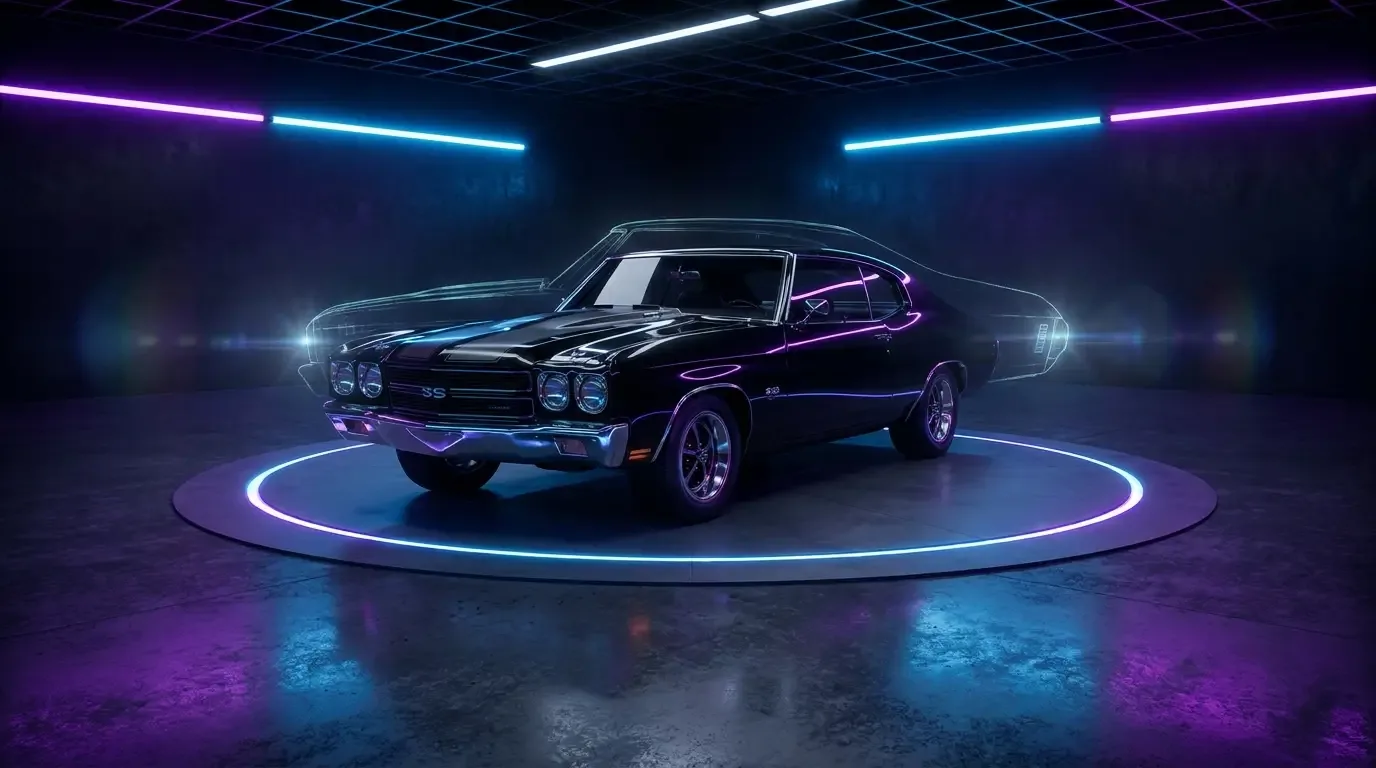
Video games have become one of the quieter but more effective ways a whole generation gets introduced to muscle cars they'd otherwise only see at a show. A kid who's never smelled hot exhaust off a big-block can still learn the silhouette, the sound, and the numbers from a controller. That matters more than the car-guy crowd sometimes gives it credit for.
Where the Chevelle actually shows up
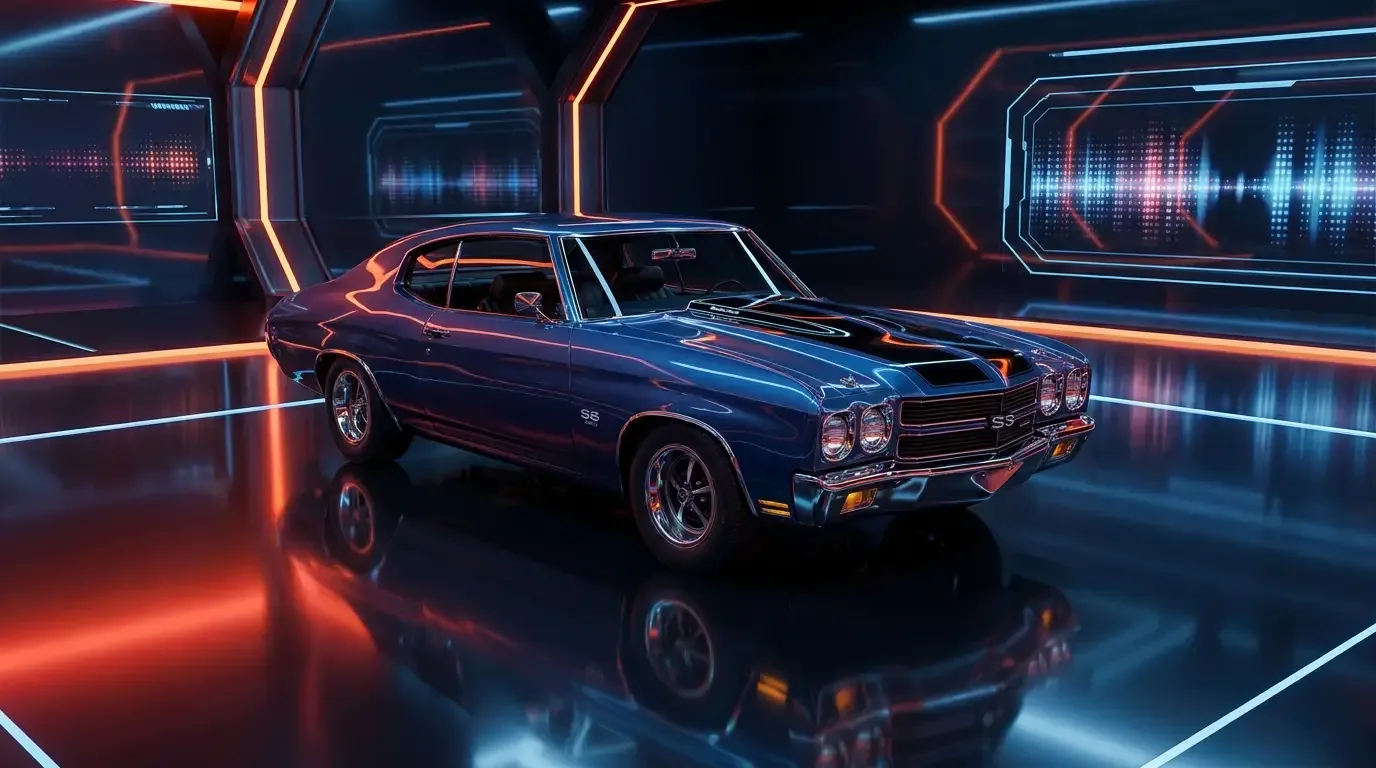
Licensed racing franchises have featured the Chevelle in various forms for years. The Forza series, both the open-world Horizon games and the more simulation-focused Motorsport titles, has included the 1970 Chevelle SS454 as a drivable, licensed car since Forza Motorsport 2, and it has reappeared in Forza Horizon 3, 4, and 5, Forza Motorsport 7, Forza Street, and was confirmed for Forza Horizon 6. That's the gold standard for accuracy in this space, since Forza's team tends to model factory specs closely enough that you can feel the weight difference between a small-block and a big-block car in how it handles under braking.
The Need for Speed franchise has dipped into muscle car territory at various points too. A 1970 Chevelle SS appeared in Need for Speed: Undercover, and a Chevelle SS also featured in Need for Speed: Carbon and the online title Need for Speed: World. Gran Turismo's roster has historically leaned more European and Japanese, though the 1970 Chevelle SS454 Sport Coupe has had a long run on the American side of the garage, appearing from Gran Turismo 4 through Gran Turismo 5 and 6, and returning to Gran Turismo 7 in an update.
The unlicensed version everyone recognizes anyway
Then there's the Grand Theft Auto approach, which doesn't use real manufacturer names or badges but still manages to put a Chevelle-shaped car in front of millions of players. The in-game "Sabre" and its variants across multiple GTA titles are widely understood by fans and documented on GTA reference wikis to be visually inspired by early 1970s GM A-body muscle cars, with the rear haunches and roofline reading as 1970-1972 Chevelle, blended with styling cues from the Oldsmobile Cutlass and, in the older 3D-era games, a Buick Skylark-style front end. It's a composite rather than a straight copy of any one car, but Rockstar's approach means there's no factory badge to point at, and the Chevelle is the most prominent single influence on the design.
That's a different kind of tribute than a licensed reproduction, but it's arguably done more for the car's recognition among younger players than a fully accurate model buried in a niche sim would. A lot of guys who show up to Chevelle events now in their twenties and thirties got their first exposure to the shape behind a controller, long before they ever sat in the real thing. It's one more entry point into Chevelle in pop culture, alongside film and television.
What the games get right, and what they don't
Handling models are where a real gearhead starts nitpicking. A properly modeled big-block Chevelle should feel nose-heavy under braking and want to push wide if you carry too much speed into a corner without respecting that weight, and the better simulation titles capture that. Arcade-leaning games smooth all of that out for accessibility, which makes for a more forgiving experience but strips out the exact character that makes the real car interesting to drive in the first place. I don't hold that against the arcade titles. Not every game needs to model bushing deflection. But it's worth knowing the difference if you're using a game to learn what the real car actually does.
Sound design has come a long way too. Early console racing games used generic engine samples that could have come from any V8, but more recent titles with real manufacturer partnerships have started recording actual big-block exhaust notes for their in-game audio, which is the kind of detail that separates a game built by people who care from one that's just checking a licensing box.
| Franchise | Chevelle presence | Notes |
|---|---|---|
| Forza (Horizon/Motorsport) | Licensed, since Forza Motorsport 2 | 1970 SS454 in Horizon 3, 4, 5, Motorsport 7, Forza Street, confirmed for Horizon 6 |
| Need for Speed | Select entries | 1970 Chevelle SS in Undercover; Chevelle SS also in Carbon and NFS World |
| Gran Turismo | Recurring, since GT4 | 1970 SS454 Sport Coupe in GT4, GT5, GT6, and GT7 (added via update) |
| Grand Theft Auto | Unlicensed, visually inspired | "Sabre" family blends 1970-72 Chevelle roofline with Cutlass/Skylark styling cues |
Why this actually matters to the hobby
I've had guys walk into my shop who can tell you the in-game horsepower rating of a virtual Chevelle before they can tell you what a real 396 actually made from the factory, and my first instinct used to be to roll my eyes at that. I don't anymore. Every one of those guys eventually asks the follow-up question, wants to know what the real numbers were, what the real car feels like, whether it's worth chasing one. The game got them curious. That curiosity is worth something, even if it starts on a screen instead of in a driveway. If you want to see where that curiosity leads once someone starts collecting the physical version instead of the digital one, next: Hot Wheels and Diecast Culture covers the scaled-down side of the same obsession.
"A game can't teach you what a real big-block sounds like coming up on the cam, but it can put the shape of the car in front of somebody who'd never have seen it otherwise. That's not nothing. That's how you keep a hobby alive past the guys who grew up with it."
Mike Sullivan
The bottom line
The Chevelle's presence in video games isn't as flashy as its film résumé, but it's arguably done more heavy lifting for long-term brand recognition among younger buyers than any single movie franchise. It's in the racing sims for the purists, the open-world arcade titles for the casual crowd, and baked unofficially into fictional cars for players who never even realize what they're looking at. That kind of quiet, persistent presence is exactly how a car stays relevant across generations that never got to see it new on a dealer lot.
Sources and notes
Related Reading
Have a
Chevrolet Chevelle
for Sale?
Reach thousands of serious classic car collectors across the US.
Sell It Here →
Are You a Classic Car Dealer?
List your full inventory and connect with targeted classic car buyers.
Join as a Dealer →

About the author
Mike Sullivan
Detroit-area muscle car enthusiast and restoration specialist with three decades of hands-on experience working on American iron.
Related Listings - Chevrolet Chevelle
More in Ownership & Lifestyle
Comments
Be the first to comment on this article.