
There's a shoebox in a lot of collector garages, tucked on a shelf above the real toolbox, full of small metal cars nobody quite has the heart to throw away. Somewhere in that box, more often than not, is a Chevelle. Maybe it's scuffed from being run across a kitchen floor sometime in the 2000s. Maybe it's still on its original card, never opened, because somebody's dad decided this one was too good to play with. Either way, the diecast version of this car has been quietly shaping how people fall in love with the real one since the casting debuted in the late 1990s.
Ownership & Lifestyle
7 min read
Hot Wheels and Diecast Culture
How Hot Wheels, Johnny Lightning, and premium diecast makers have kept the Chevrolet Chevelle's silhouette alive for generations of collectors.
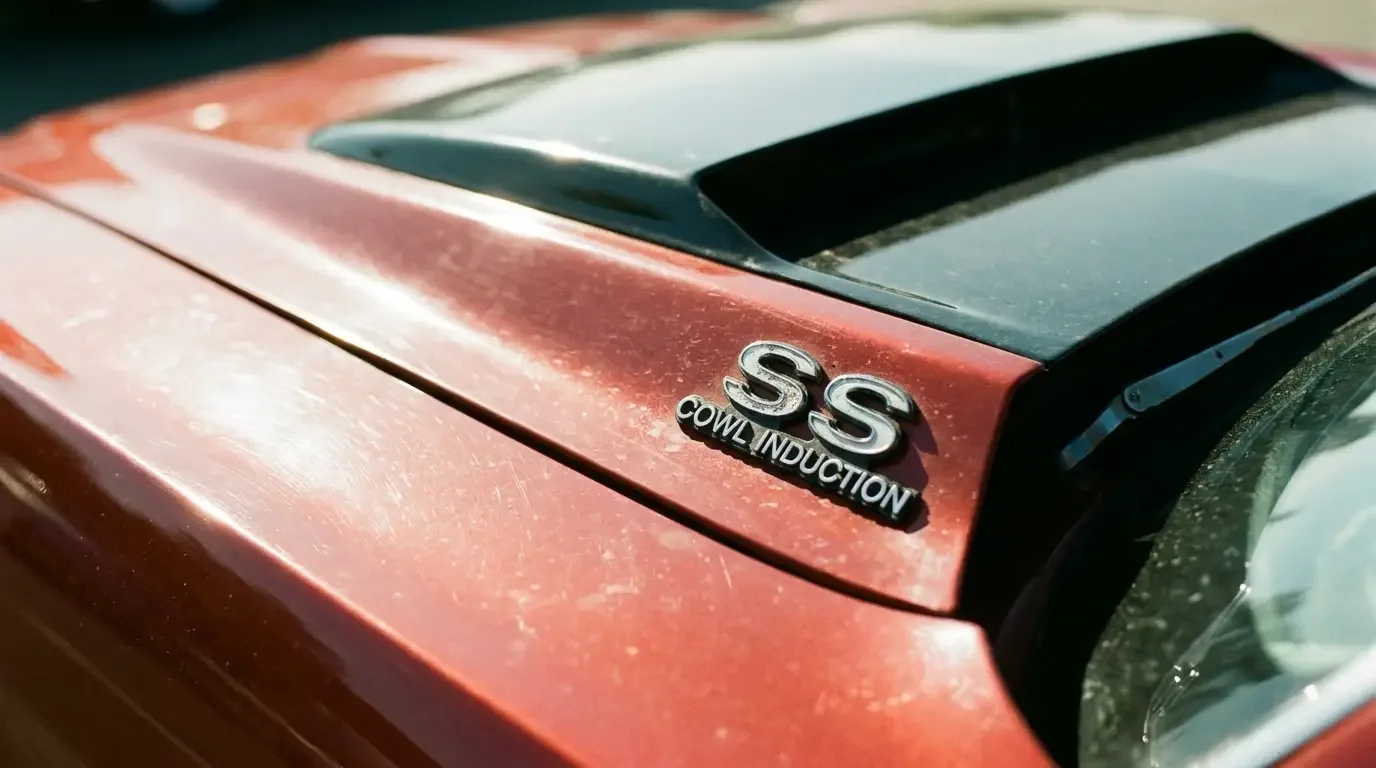
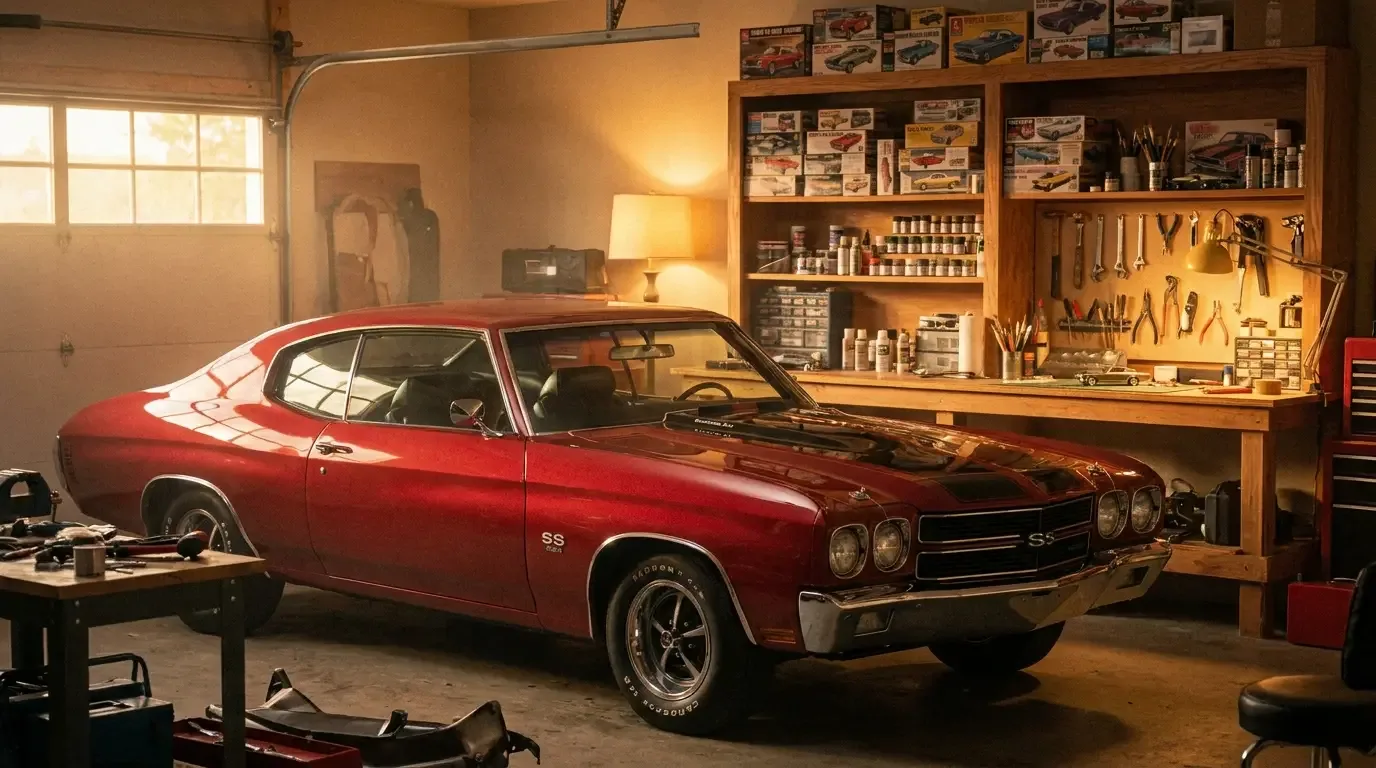
Diecast and model kit culture doesn't get talked about with the same reverence as auction results or restoration builds, but it's arguably done more to keep the Chevelle's silhouette in front of ordinary people, especially kids who'd never otherwise see one, than almost anything else in the car's cultural footprint.
How the Chevelle became a diecast staple
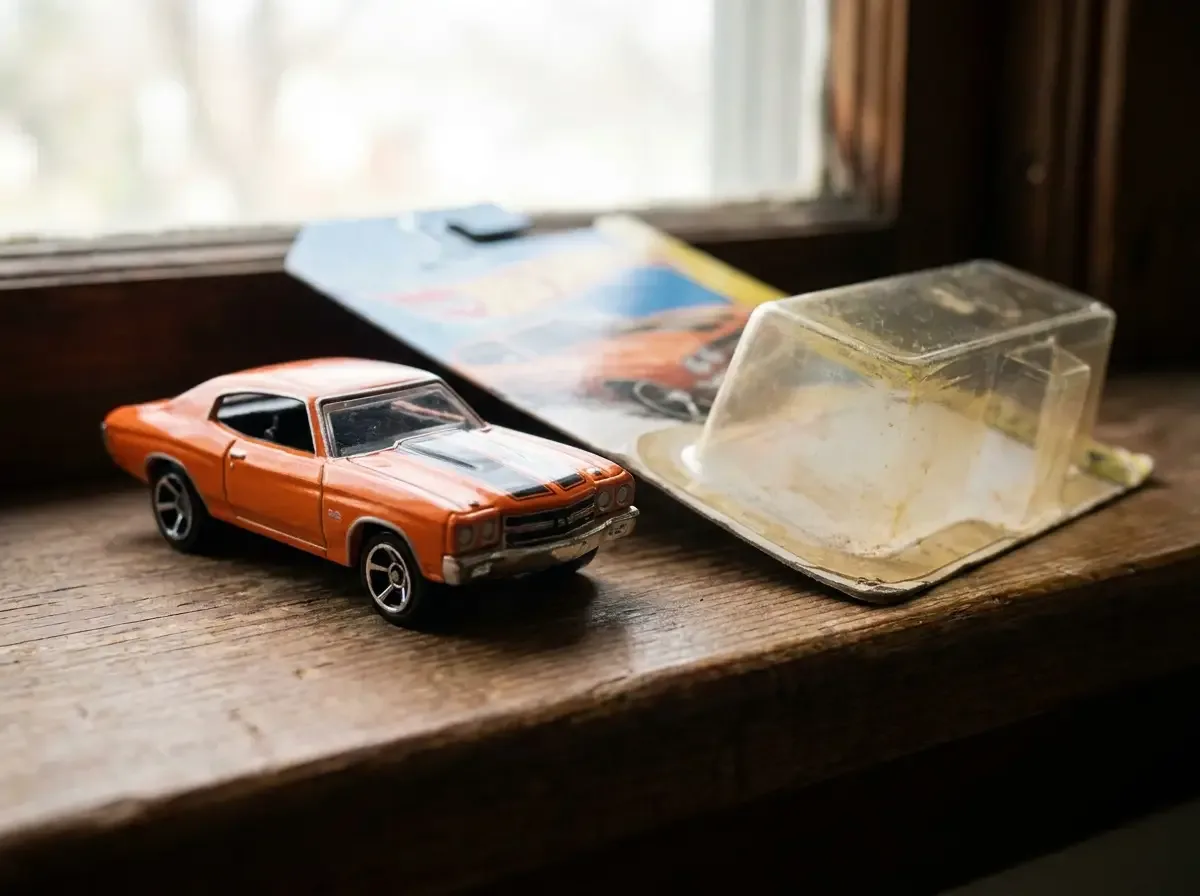
Hot Wheels launched in 1968, but the Chevelle didn't join the lineup right away. The first dedicated '70 Chevelle SS casting, designed by Phil Riehlman, debuted in the 1999 First Editions series and proved popular enough to run at least once a year for the next 14 years straight, through 2013. A second, race-inspired casting by Jun Imai arrived in 2013 and has spawned more than a dozen further releases since. Related castings have covered the SS Convertible, an SS Express, and an SS Wagon. Johnny Lightning and Auto World have both put out detailed Chevelle diecasts aimed more squarely at adult collectors than kids, typically in 1:64 and 1:24 scale with far more accurate proportions and paint detail than a mainline toy aisle release.
At the higher end, companies like Franklin Mint, Danbury Mint, and GMP have produced highly detailed 1:24 and 1:18 scale replicas aimed at serious collectors, the kind that come in display cases rather than blister packs, with opening doors, detailed engine bays, and factory-correct paint colors like Glacial Blue Poly on a 1969 SS396. Those pieces sit closer to model car artistry than toy, and they command prices to match.
Why this corner of the hobby matters more than it looks
A five-year-old pushing a diecast Chevelle across a carpet isn't thinking about numbers-matching drivetrains or split-bumper trim years. But that five-year-old is absorbing the shape, learning to recognize it, and in a lot of cases that early exposure becomes the seed of a lifelong interest. I've talked to more than one guy at a swap meet who traced his whole obsession with the real car back to a specific toy he had as a kid, the one he remembers better than most of his actual childhood memories. That's a powerful thing for a two-inch piece of die-cast metal to be responsible for.
It also means the diecast market functions as a kind of leading indicator. When a particular Chevelle trim or color gets a fresh diecast release and demand for it spikes among collectors, it's usually not far behind a similar uptick in interest for the real thing, whether that shows up in show attendance, forum traffic, or actual sales. The connection runs both directions too, and anyone tracking the Chevelle's screen legacy alongside its diecast presence will notice the two tend to move together, since a movie or TV appearance almost always triggers a wave of new model releases.
What separates a good diecast Chevelle from a forgettable one
Not every scaled-down Chevelle is created equal, and serious collectors are picky about the same things restoration buyers care about on the full-size car: correct stance, accurate wheel style for the model year, and paint that actually corresponds to a factory color rather than a generic "muscle car red." The best releases get the cowl induction hood right, get the SS badging placement correct, and don't cheat the proportions to make the car look more aggressive than it actually was in period. The worst ones look like a generic muscle car silhouette with a Chevelle badge slapped on, which collectors spot immediately and generally avoid.
A quick reference for anyone getting into this side of the hobby, sorted by what actually matters when evaluating a piece:
The bridge between toy box and driveway
For a lot of current Chevelle owners, the diecast wasn't just a nostalgic trigger, it became a genuine research tool once they started shopping for the real thing. A well-made 1:18 scale model shows trim details and body lines in a way photos sometimes don't capture cleanly, and more than one buyer has used a detailed diecast as a reference while inspecting an actual car for originality. That's a strange but real bit of crossover between a toy aisle and a pre-purchase inspection, and it speaks to how seriously the better manufacturers take getting these details right.
For readers who want the full arc of how this platform earned enough cultural weight to end up shrunk down and sold in blister packs at every big box store in the country, the Chevelle's complete history covers the real car from introduction through its final model years. And if the scaled-down obsession has you curious about the plastic model kit side of things rather than diecast, next: Model Kit Heritage picks up exactly where this leaves off.
"She still has the diecast Chevelle her grandfather gave her before he passed, sitting on a shelf next to the keys to the real one she eventually bought herself. Ask her which one she'd grab first in a fire and she won't hesitate. It's not the one with the engine."
Nora Beckett
A small object with a long reach
It's easy to dismiss diecast and model culture as a side hobby, something adjacent to the real thing rather than part of it. But talk to enough Chevelle owners and a pattern emerges fast: an enormous number of them can point to a specific toy car as the first spark. The scale changes. The obsession doesn't. That's not a small thing for a couple inches of die-cast zinc to be responsible for, and it's a big part of why this corner of the hobby keeps getting passed down, one shoebox at a time.
Sources and notes
Related Reading
Have a
Chevrolet Chevelle
for Sale?
Reach thousands of serious classic car collectors across the US.
Sell It Here →
Are You a Classic Car Dealer?
List your full inventory and connect with targeted classic car buyers.
Join as a Dealer →

About the author
Nora Beckett
Automotive features writer and photographer who tells the human stories behind the cars, from show fields to cross-country road trips.
Related Listings - Chevrolet Chevelle
More in Ownership & Lifestyle
Comments
Be the first to comment on this article.