
Ask ten different car people to name a great movie muscle car and you'll get ten confident answers within seconds. Ask the same ten people to name a Chevelle that showed up on television, and you'll get a longer pause, then usually something like, "wait, I know I've seen one." That pause tells you something real about how television uses cars differently than film does, and it's exactly why the Chevelle's small-screen career deserves its own look rather than getting folded into the movie conversation.
Ownership & Lifestyle
6 min read
Chevelle on the Small Screen
From period drama background cars to restoration reality shows, here's how the Chevelle built a long, quiet career on television.
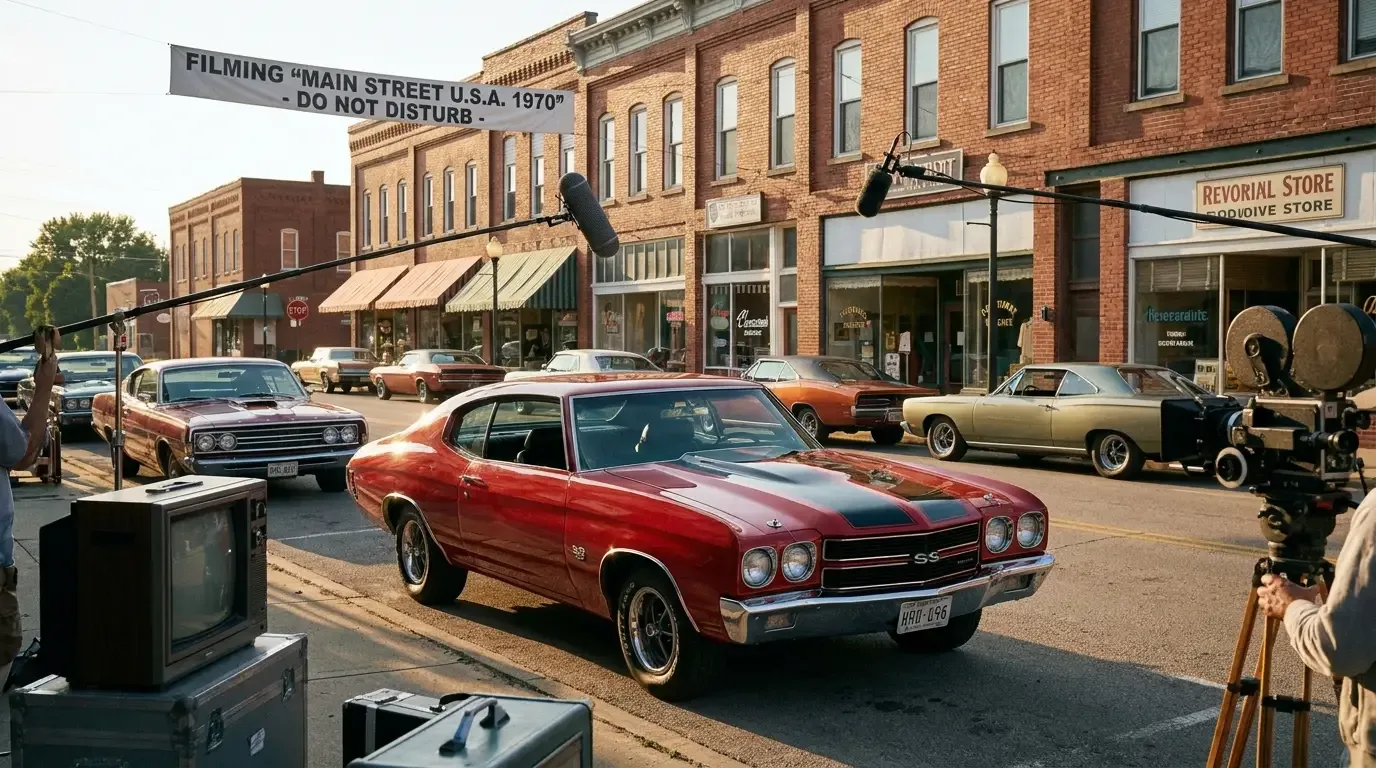
Television doesn't usually get the marketing push or the theatrical trailer moment a film gets, but it reaches more households, more consistently, over a longer run. A car that shows up in a single film gets one big cultural moment. A car that shows up across a season, or gets used as a recurring background vehicle on a period drama, gets absorbed into the audience's memory more quietly, and often more durably.
Why TV production leans on cars like the Chevelle
Television budgets, especially for anything set before 1980, force production designers to be resourceful. A period drama can't just dress the leads and call it done; every car on every street in every establishing shot has to belong to the era, or the illusion breaks. That means shows set anywhere from the late 1960s through the 1970s need a steady supply of background vehicles, and the Chevelle, built in real numbers across a decade of production, is exactly the kind of car a picture car coordinator can source without draining a budget meant for the actual story.
It also helps that the Chevelle reads correctly across a wide date range. A show set in 1968 and one set in 1974 can both plausibly use a Chevelle on the street without anyone in the audience clocking an anachronism, since Chevrolet kept the model in production with recognizable styling cues through that whole stretch. That flexibility matters more to a TV budget than people realize.
Foreground versus background
Most of the Chevelle's television life has happened in the background, not the foreground, and that distinction matters. A period crime drama or a show set in a working-class American town will often use a Chevelle as one of several parked cars lining a street, or as the vehicle a supporting character drives without any dialogue calling attention to it. That's a different kind of exposure than a hero car getting a chase sequence, but it adds up over the run of a series, especially one that lasts multiple seasons.
When a Chevelle does get foreground treatment on television, it tends to happen in shows built around car culture itself, restoration programs, garage-based reality shows, and the occasional scripted drama that puts a specific vehicle at the center of a character's arc. Those appearances get remembered more clearly because the show is asking the audience to actually look at the car rather than just accept it as scenery.
The reality-television angle
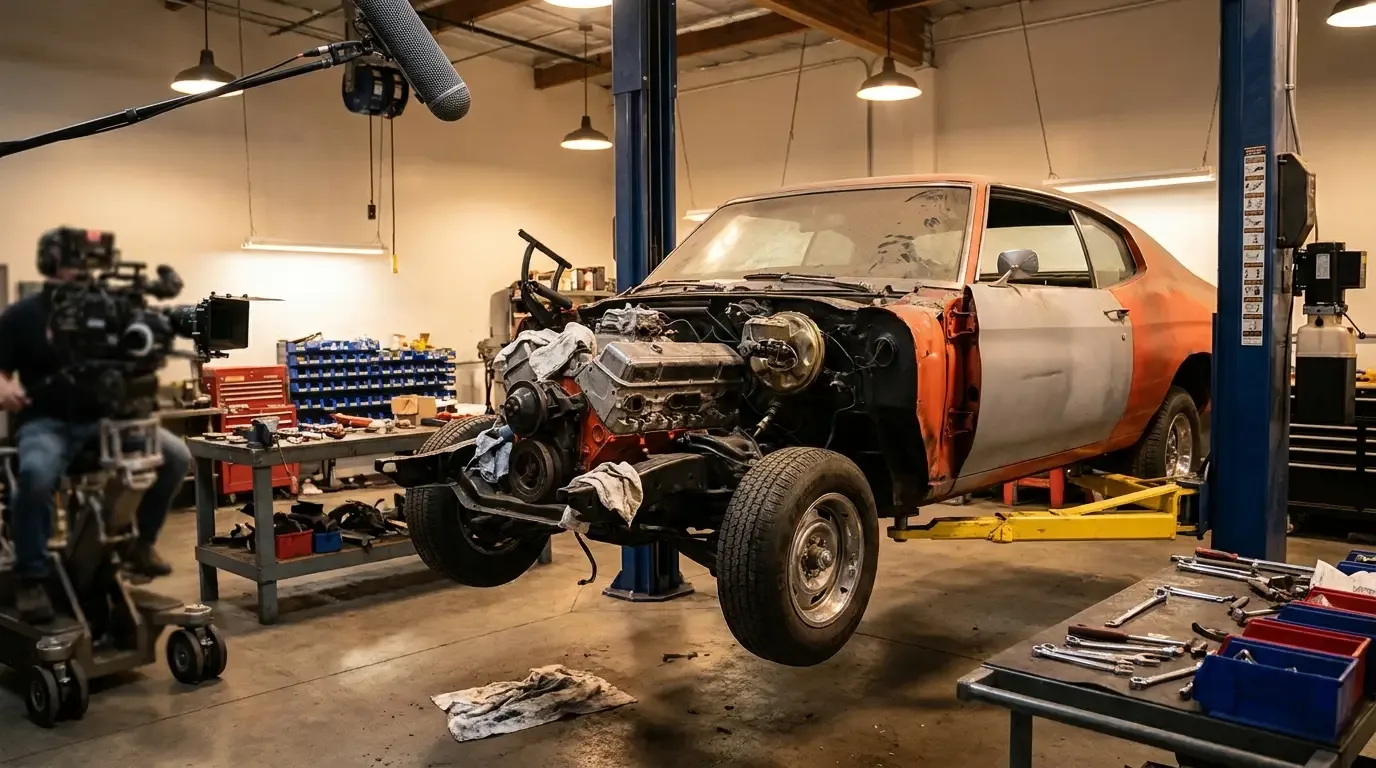
Restoration and garage-culture reality shows changed the equation for the Chevelle's screen presence starting in the 2000s. Rather than appearing as a prop dressed to fit someone else's story, the Chevelle became the story on shows built around buying, fixing, and flipping classic muscle cars. FantomWorks devoted an early episode to a 1970 Chevelle SS conversion project, Desert Car Kings built a whole episode around a 1966 Chevelle that turned out to be a genuine SS, Garage Squad centered an episode on a family's 1968 Chevelle, and Gotham Garage's Car Masters: Rust to Riches has flipped a late-1960s Chevelle as part of its build lineup. That format gave viewers a much closer look at the model than any scripted drama typically bothers with, down to engine numbers, trim details, and the actual cost of parts and labor.
This shift mattered for the model's reputation in a very specific way. A scripted drama treats a Chevelle as a symbol. A restoration show treats it as a mechanical object with real problems and real solutions, which is a different kind of education for an audience and arguably did more to inform casual viewers about what these cars actually are under the sheet metal than any chase scene ever could.
| Type of TV appearance | Typical role |
|---|---|
| Period drama background car | Street dressing, parked or passing vehicle |
| Crime or working-class drama | Supporting character's daily driver |
| Restoration or garage reality show | Central subject, full build or flip documented |
| Anthology or nostalgia programming | Era-defining visual shorthand |
That split, between the car as symbol and the car as subject, runs through the model's whole relationship with the Chevelle's cultural footprint, and television is where both versions have played out most consistently over the decades, often within the same broadcast season on different networks.
Why it never quite became a TV icon
Despite all that screen time, the Chevelle never landed the kind of singular, character-defining television role that turned other cars into cultural shorthand on sight. Part of that comes down to timing. The shows that could have made a specific Chevelle iconic in the way certain other muscle cars became inseparable from a single character tended to reach for models with a more exaggerated visual signature, something louder or more stylized for a medium built around instant recognition on a smaller screen. The Chevelle's understated aggression, the very quality that makes it work so well in film, can read as a little too plain for a TV close-up that needs to grab attention in seconds.
That's not a knock on the car. If anything, it's a compliment to how well the Chevelle handles supporting work. Not every great actor needs the title role, and not every great car needs to be the one everybody names first.
"The best television car work is the kind you don't consciously register, and that's exactly the role the Chevelle has played for decades. It's doing the job so well most viewers never realize they've watched it a dozen times."
Patrick Walsh
The model's presence in music tells a similarly layered story, from vintage album covers to lyrics name-checking the car outright. For where that thread picks up, next: Chevelle in Music covers how the car found its way onto turntables as often as it found its way onto television screens.
Sources and notes
- IMCDb: Chevrolet Chevelle SS in movies and TV series
- Discovery: Desert Car Kings, "Chevelle SS" episode
- Tubi: FantomWorks, "1970 Chevrolet Chevelle SS, 1926 Velie" episode
- IMDb: Garage Squad, "Hell of a Chevelle" episode
- Netflix Tudum, 12 Best Car Shows on Netflix
- IMDb, "American Muscle Car: Chevrolet Chevelle SS" (1998)
Related Reading
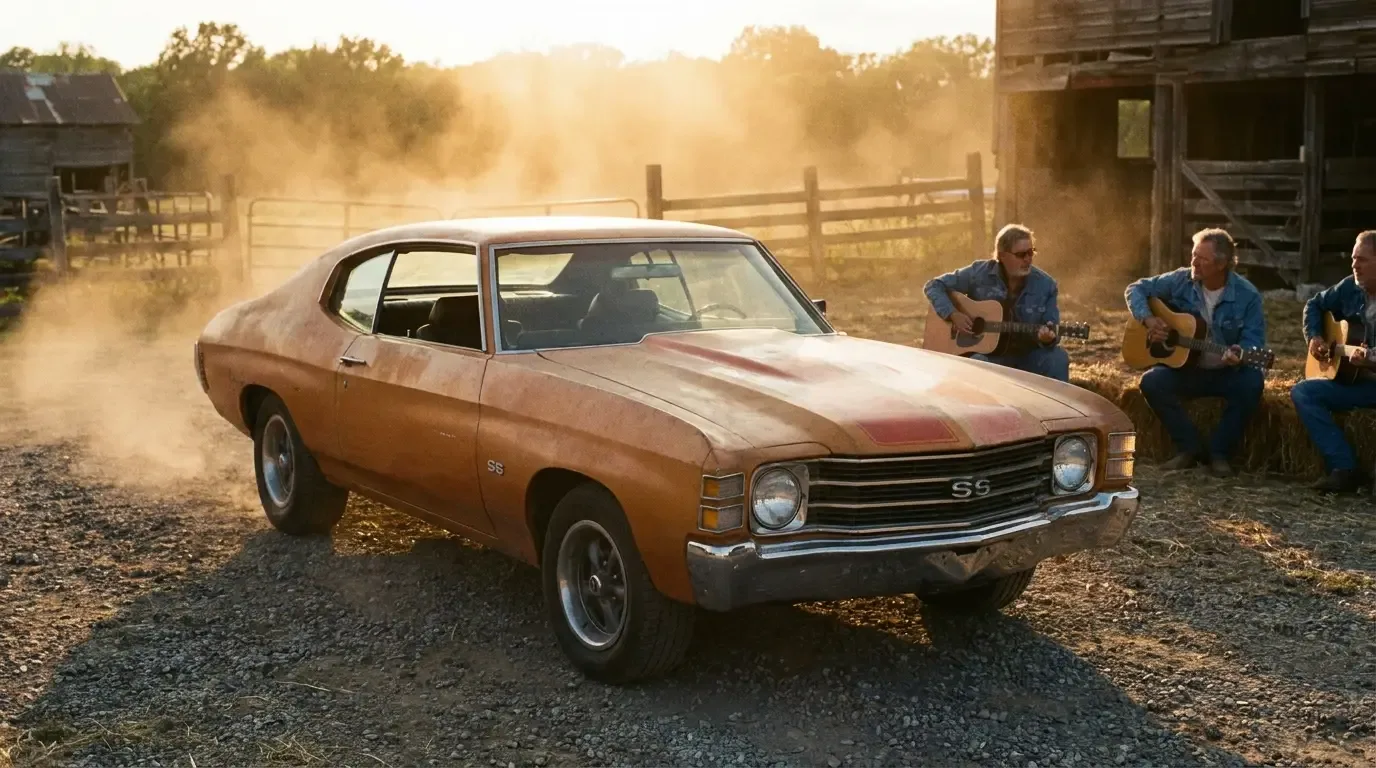
Have a
Chevrolet Chevelle
for Sale?
Reach thousands of serious classic car collectors across the US.
Sell It Here →
Are You a Classic Car Dealer?
List your full inventory and connect with targeted classic car buyers.
Join as a Dealer →

About the author
Patrick Walsh
Automotive journalist covering classic car shows, events, and the enthusiast community across North America.
Related Listings - Chevrolet Chevelle
More in Ownership & Lifestyle
Comments
Be the first to comment on this article.