
A record store clerk once said the fastest way to guess what decade an album cover was shot in, without reading a single date on the sleeve, is to look at what's parked behind the band. Chrome bumpers and a low, wide fender line usually mean the photographer was working sometime around 1970, whether or not that was the actual year the photo was taken. More than a few of those fenders belonged to a Chevelle, parked deliberately in frame because a producer or an art director understood exactly what that car was saying without anyone having to write it into the liner notes.
Ownership & Lifestyle
6 min read
Chevelle in Music: Album Covers That Put the A-Body on a Pedestal
How the Chevelle's silhouette became a recurring fixture in album art, and why it's often confused with an unrelated rock band of the same name.
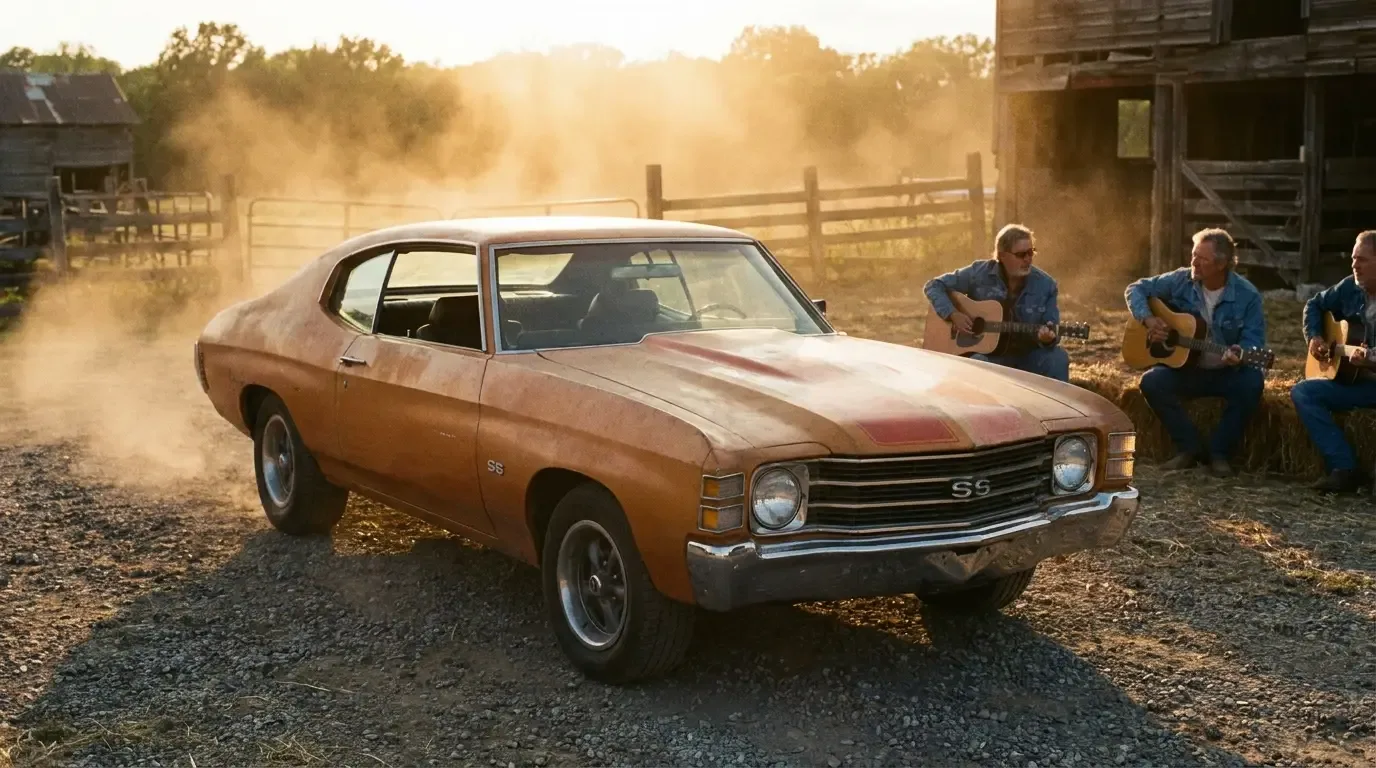
Album art has always leaned on cars the way film does, as a shortcut to mood, geography, and attitude, and the Chevelle earned a real place in that visual language. It shows up less often than a Cadillac or a pickup truck in the broader catalog of American music imagery, but when it does appear, it tends to carry real weight in the shot rather than sitting there as filler.
Why a Chevelle photographs like a statement
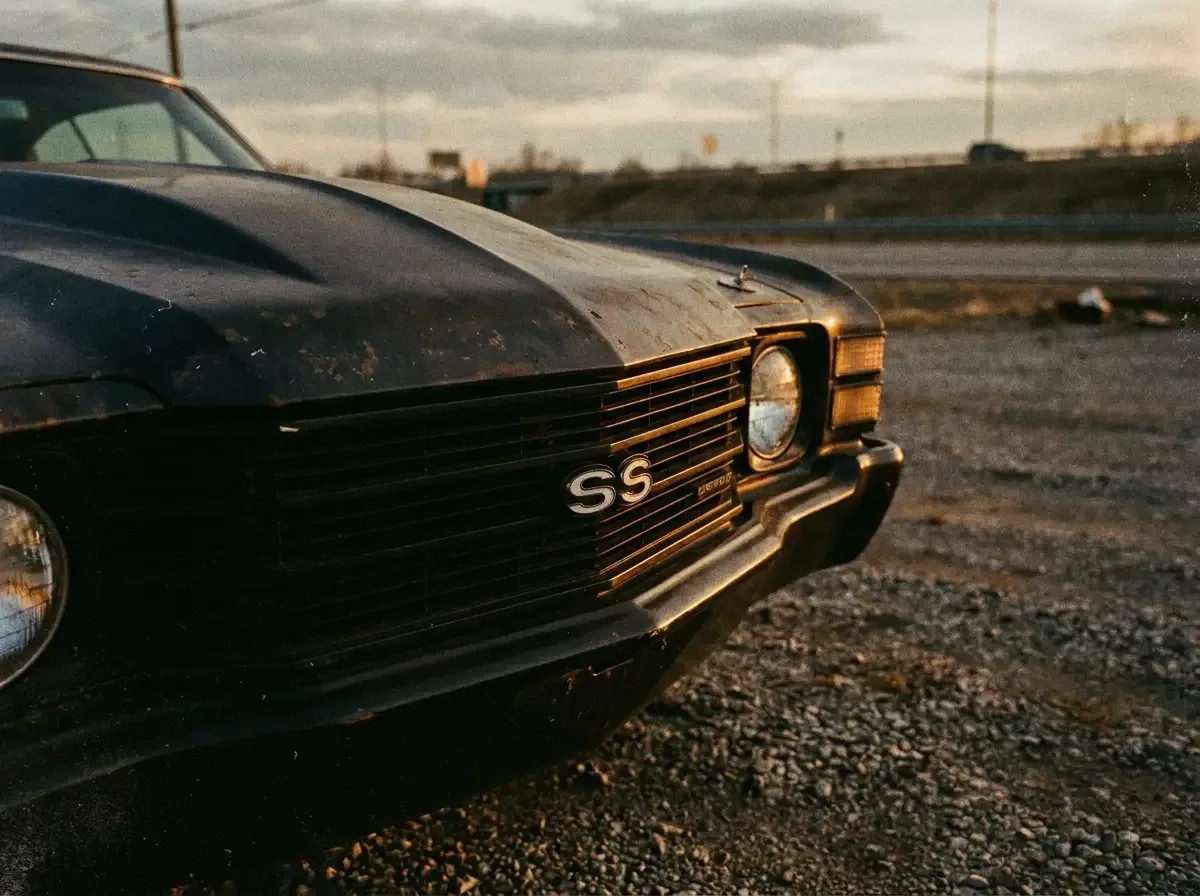
Cover art photographers and art directors think in silhouette first, the same way film production designers do. A Chevelle's stance, wide rear haunches, a low roofline, a front clip that sits slightly forward and low, reads as tension even in a still image. That matters enormously on an album cover, which has maybe half a second to catch someone flipping through a record bin or scrolling past a thumbnail before they move on.
Genre matters here too. Southern rock, outlaw country, and certain corners of hip-hop have all reached for muscle car imagery at different points to signal regional identity and a kind of unpolished authenticity, the opposite of a studio-polished pop image. A Chevelle parked in a gravel lot or under a highway overpass communicates working-class American grit in a way that requires zero explanation, which is exactly the kind of visual efficiency album art needs. Bluegrass and Americana artist Billy Strings put that logic front and center on his 2025 album Highway Prayers, whose cover shows the front end of his own 1972 Chevelle SS, its grille badge modified to read "BS" for his initials, with a rare 502 big-block under the hood revealed on the inner sleeve, and even a Chevelle engine sound worked into the opening of the track "Leadfoot."
Not always the star of the shot
Most of the Chevelle's appearances on album art fall into the same category as its television work: present, recognizable, but rarely the sole subject of the frame. It's parked behind the band, reflected in a storefront window, or glimpsed at the edge of a photo shot on a real street rather than a studio backdrop. That background presence still counts. Album covers get studied closely by fans in a way few other pieces of visual media do, especially in the vinyl era when the artwork was a foot square and sat in someone's hands while the record played.
There are exceptions where the car takes center stage, positioned deliberately as co-star to the artist rather than scenery. Those covers tend to become the ones enthusiasts specifically hunt down and trade stories about, precisely because the photographer made a clear choice to let the car do some of the talking.
The overlap that confuses people
Any conversation about the Chevelle and music eventually runs into a separate, unrelated fact: there's a rock band that has performed under the name Chevelle since the late 1990s, formed by brothers Pete and Sam Loeffler in the Chicago area. The name does trace back to the car itself, chosen because Chevrolet's Chevelle was a favorite of the brothers' father, a street-rod builder who raised his sons in Midwestern hot rod culture, but the band's music and imagery have nothing to do with Chevrolet or the muscle car scene. That overlap still creates genuine confusion for anyone searching the model's name online, since search results blend genuine car-culture album art with a band's entire discography that has nothing to do with the Chevrolet lineage. It's worth untangling on its own, separately from the actual visual history of the car appearing on other artists' covers.
The car's broader relationship with entertainment, film, television, and music together, gets the full treatment in Chevelle in pop culture, which is a useful starting point for anyone trying to sort out where the car's real cultural footprint ends and coincidence begins.
What the imagery says about the car's staying power
Cars fall out of favor with photographers and art directors the same way they fall out of favor with buyers, gradually, then all at once, once a shape starts to feel dated rather than timeless. The Chevelle's continued appearance in music photography across genres and decades, from period-correct shots taken when the car was new to modern retro-styled shoots deliberately chasing that same look, suggests the silhouette has aged into something closer to a design classic than a passing trend. Musicians and their art directors don't reach for dated imagery when they're trying to look current. They reach for it when the imagery still communicates something real.
Modern acts working in retro-leaning genres, garage rock revival bands, some hip-hop artists reaching back for a Blaxploitation-era visual language, and country artists chasing a working-class authenticity, still stage photo shoots around cars from this exact era rather than anything newer. That's telling. A stylist or art director building a shoot from scratch today has an entire history of automotive design to choose from, and a meaningful number of them keep landing back on the same handful of early 1970s American shapes, the Chevelle among them, because nothing built since photographs quite the same way under available light.
That durability tracks with everything else about the model's cultural life. The mechanical story behind why this particular Chevrolet became such an enduring visual reference point is covered in full in the full Chevelle story, which traces the engineering and sales history that gave the car its shape and reputation in the first place.
"You can tell how much a photographer respects a car by where they park it in the shot. Foreground and centered means they wanted it seen. Background and half-cropped still means something, it means they trusted the audience to notice anyway."
Nora Beckett
Given how often people search for the car assuming it's connected to the rock band, that confusion deserves its own closer look. next: The Band Chevelle sorts out where the car ends and the band begins.
Sources and notes
Related Reading
Have a
Chevrolet Chevelle
for Sale?
Reach thousands of serious classic car collectors across the US.
Sell It Here →
Are You a Classic Car Dealer?
List your full inventory and connect with targeted classic car buyers.
Join as a Dealer →

About the author
Nora Beckett
Automotive features writer and photographer who tells the human stories behind the cars, from show fields to cross-country road trips.
Related Listings - Chevrolet Chevelle
More in Ownership & Lifestyle
Comments
Be the first to comment on this article.