
At a car show outside Charlotte, a man in his sixties rolled up his sleeve to show a stranger a bowtie badge inked across his forearm, the enamel red rendered in flat black instead of paint. He'd had it done the week after he sold his 1970 SS, not exactly to mourn the car, but because he wanted something that couldn't be repossessed, traded, or left to rust in a field. The tattoo, he said, was the one version of that Chevelle he would never lose.
Ownership & Lifestyle
6 min read
Tattoo-Worthy: The Chevelle as Automotive Ink Icon
From SS badges to VIN digits, the Chevelle shows up on skin almost as often as it shows up in driveways. Here's why owners make it permanent.
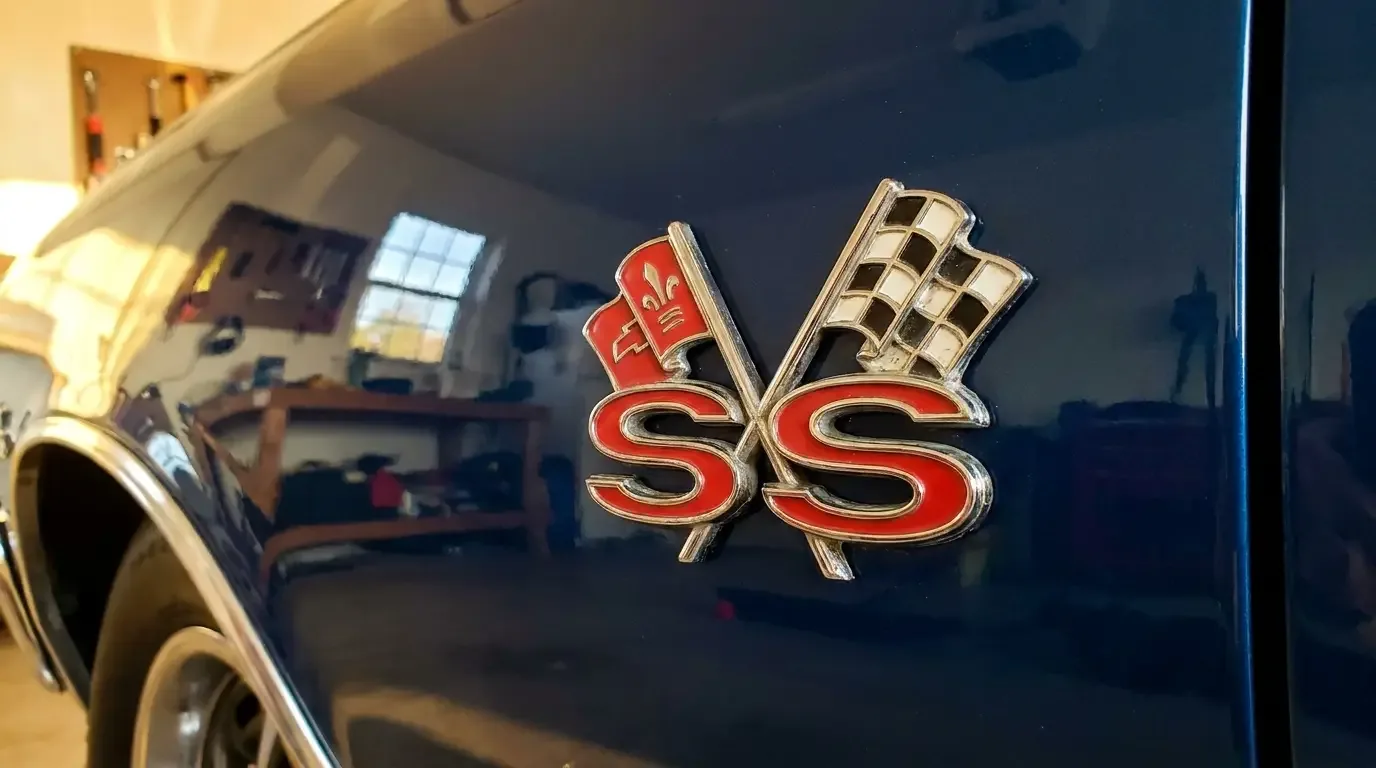
That instinct, choosing something permanent on purpose, is a big part of why the Chevelle shows up on skin almost as often as it shows up in driveways. Walk any regional car show and you'll find at least one arm, calf, or shoulder blade carrying some version of the SS badge, the crossed checkered flags, or a silhouette lifted straight off a fastback fender. It isn't a niche curiosity confined to a few obsessive owners. It's a real, recognizable strand of American car culture, and the Chevelle has earned a disproportionate share of the ink.
Why this particular car ends up under the needle
Not every classic gets tattooed onto its owners at the same rate. The Chevelle has a few things working in its favor. It was a mass-market family car that also happened to be available with some of the biggest engines General Motors ever put in a mid-size body, which means the emotional story behind most Chevelle tattoos isn't really about horsepower. It's about a specific car, in a specific driveway, that belonged to a specific person. A father's daily driver that became a son's project car. A first car bought with money saved from a summer job. A wrecked SS that never got rebuilt but never got forgotten either.
Tattoo artists who work car shows and SEMA-adjacent events will tell you the muscle car crowd tattoos differently than the exotic car crowd. Ferrari owners tend to get logos. Chevelle owners tend to get their own car, down to the stripe package and the wheel style, because the tattoo isn't a brand statement. It's a portrait.
The designs that keep coming back
Across three decades of car culture tattooing, a handful of motifs show up again and again. Some are lifted directly from the parts bin, some are more interpretive.
| Motif | What it usually represents |
|---|---|
| SS badge / bowtie | Ownership pride, brand loyalty, a specific trim level |
| Crossed checkered flags | Racing heritage, drag strip culture, competition history |
| Fastback silhouette | The car as a shape, often paired with a specific year |
| 396 or 454 badge script | Engine pride, a way of naming the car without drawing it |
| VIN digits or build sheet numbers | A specific, individual car, usually one that's gone now |
The VIN and build sheet tattoos are the ones that stop people in their tracks, because they're the most personal. A run of numbers means nothing to a stranger and everything to the person wearing it. It's the automotive equivalent of a loved one's birthdate, except it marks the birth of a machine instead of a person.
From the screen to the skin
Movies have done real work here too. A car that spends decades as a background player in muscle car culture gets a second life once it becomes a movie star, and the Chevelle's screen legacy has pushed a wave of younger fans toward the car who never owned one and may never have seen a real SS in person before a film introduced them to it. Tattoo shops near comic conventions and film festivals report a steady trickle of requests for a specific movie Chevelle rather than a generic one, matching paint code and stripe layout down to the reference stills.
That's a slightly different relationship than the owner getting his own car tattooed. It's fandom rather than ownership, but the two crowds overlap more than you'd expect at a swap meet. Plenty of people who got the movie car inked on their arm went out afterward and bought a real one.
What the artists who specialize in this say
Tattoo artists who've built a niche around car culture describe the Chevelle crowd as some of the most specific clients they work with. They don't want "a muscle car." They want their muscle car, the right year, the right stripe delete or stripe package, sometimes the exact stance the car sat at in a photo from 1974.
"People come in with a photograph, not a Pinterest board. It's usually a picture of the actual car, sometimes faded, sometimes creased from being carried in a wallet for years. My job is to get the proportions right so it still reads as that car and not just a generic Chevelle. That's the part that matters to them."
Nora Beckett
A permanent record of an impermanent hobby
Cars get sold. Projects stall. Engines get pulled for one build and never make it back into the original chassis. Owning a classic Chevelle is, by nature, a temporary arrangement, even for the people who keep one for forty years, because eventually every car changes hands. A tattoo doesn't have that problem. It's the one part of the hobby that can't be repossessed, and that permanence is exactly the appeal for a lot of the people wearing this car on their skin.
For the fuller picture of how a mid-size Chevrolet built to move families ended up this deeply embedded in personal identity, the classic Chevelle story traces the car from its 1964 debut through the muscle era that made it famous. And if the idea of a car earning permanent devotion from strangers sounds like something built for the camera, it partly is. Read next: Filming a Chevelle Chase for a look at what it actually takes to put one of these cars through a movie stunt sequence.
Sources and notes
Related Reading
Have a
Chevrolet Chevelle
for Sale?
Reach thousands of serious classic car collectors across the US.
Sell It Here →
Are You a Classic Car Dealer?
List your full inventory and connect with targeted classic car buyers.
Join as a Dealer →

About the author
Nora Beckett
Automotive features writer and photographer who tells the human stories behind the cars, from show fields to cross-country road trips.
Related Listings - Chevrolet Chevelle
More in Ownership & Lifestyle
Comments
Be the first to comment on this article.