
Every Chevelle that jumps a ditch, slides through an intersection, or takes a hit on screen has already been through a shop first. Nobody hands a stunt coordinator a stock 1970 SS off a trailer and says "go for it." What you're watching is the end result of weeks of fabrication work most people in the audience never think about. I've never built one for a movie, but I've built plenty for the street, and the difference between a street car and a movie car is bigger than most people assume.
Ownership & Lifestyle
7 min read
Filming a Chevelle Chase: Movie Stunt Work
Hero car, stunt car, wreck car. Here's what actually goes into building a Chevelle that can survive a movie chase sequence.
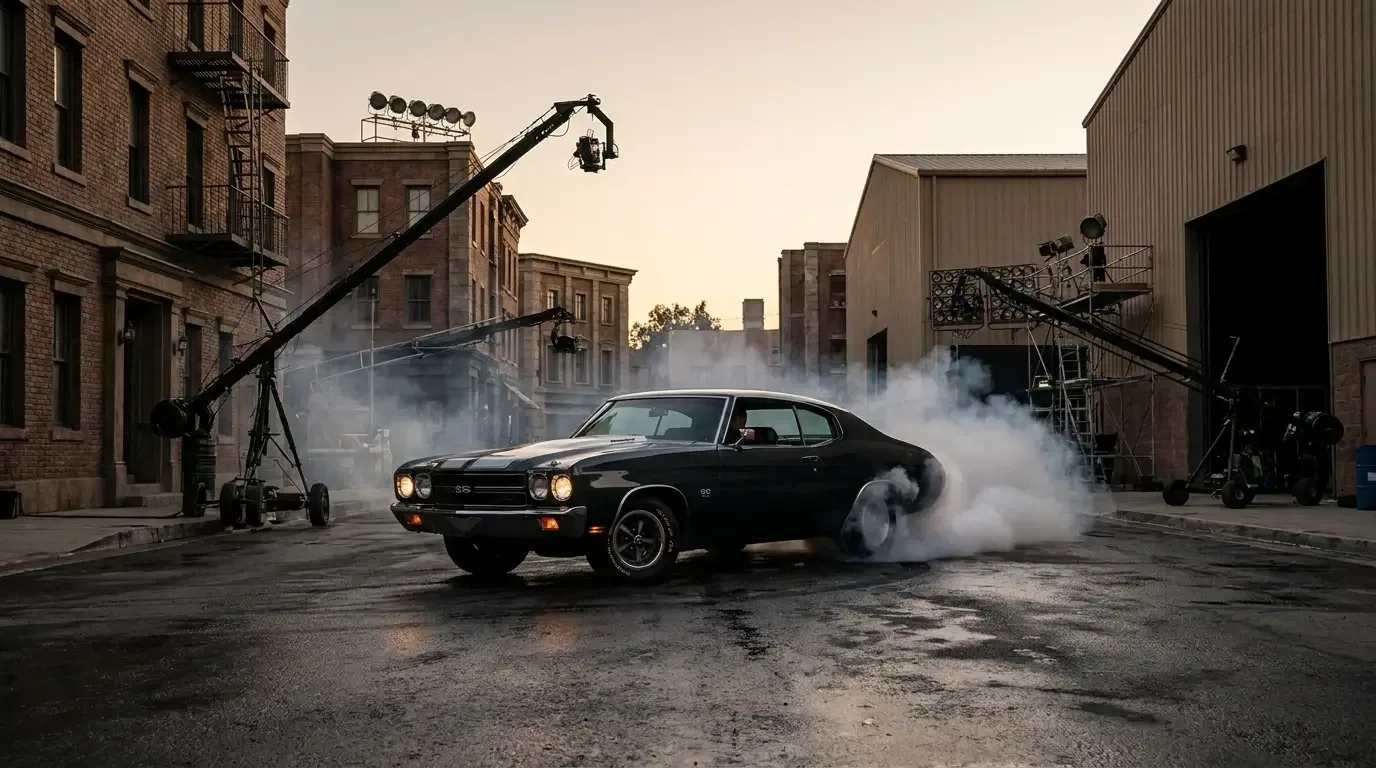
A stunt Chevelle isn't really a Chevelle anymore by the time it's ready to roll. It's a purpose-built machine wearing Chevelle sheet metal, and everything underneath that skin got reconsidered for one specific job: surviving whatever's about to happen to it on camera, more than once if the director wants another take.
What "stunt car" actually means on a movie set
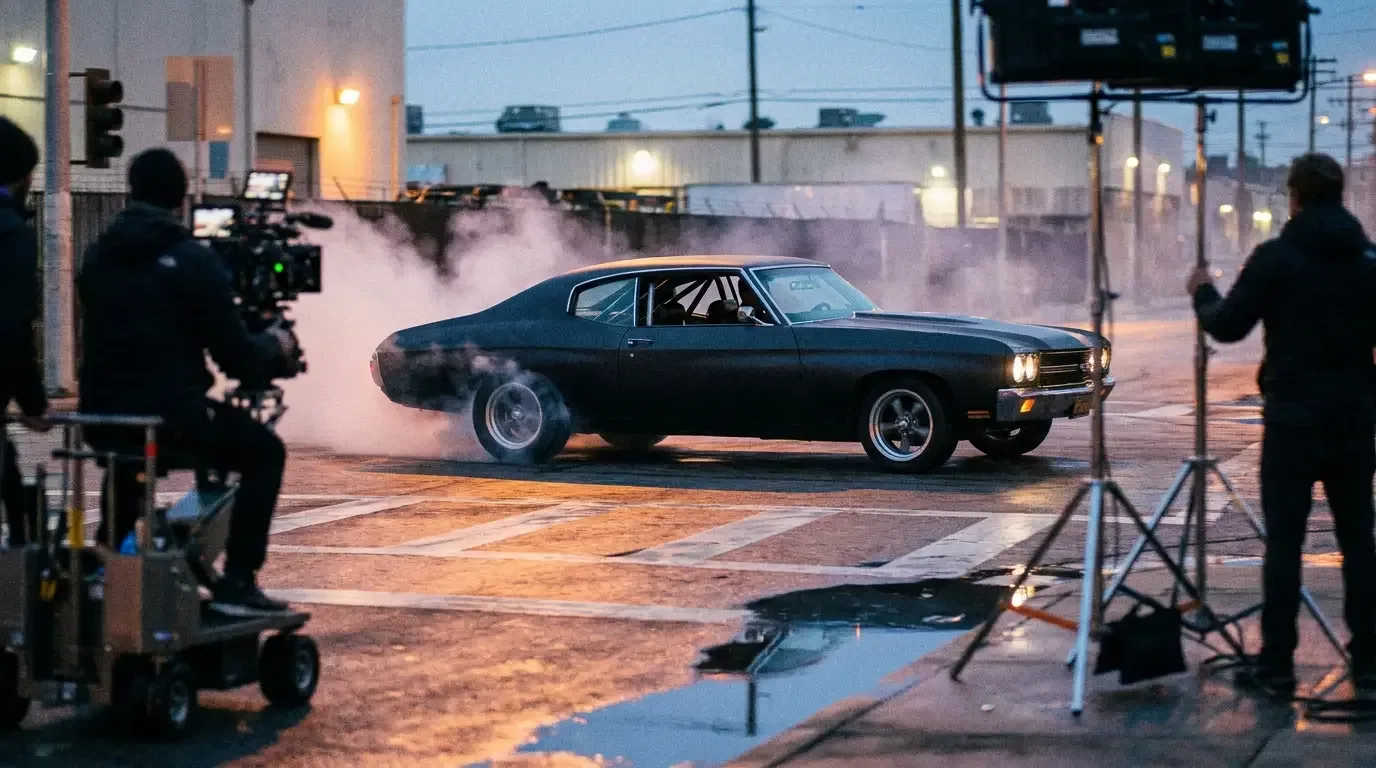
There's rarely just one car. A production doing a real driving sequence with a Chevelle typically runs several builds for the same shot: a hero car for close-up beauty shots with a stock-looking interior and correct trim, a stunt car with a reinforced cage and upgraded suspension for the actual driving, and often a dedicated wreck car if the script calls for a crash. Some productions run four or five Chevelles through a single chase sequence, each one built for a narrower job than the last.
That matters because it changes what "authentic" means on screen. The car doing the burnout in one shot might not be the same car doing the jump in the next. Cut together well, nobody notices. Cut together badly, and eagle-eyed owners in the audience will spot the wheel swap or the different stance from one shot to the next.
Building a Chevelle to take a hit
Underneath, a stunt build gets a full roll cage tied into the frame, not just a bolt-in unit. That cage does two jobs: it protects the driver, and it stiffens the whole car so it holds together through repeated hard hits instead of folding up after the first one. The stock unibody-adjacent A-body platform wasn't built for that kind of repeated abuse, so the cage is doing structural work the factory frame was never asked to do.
Suspension gets stiffened and the ride height gets adjusted for the specific stunt, not for how the car looks parked. A jump car sits different than a drift car. Brakes usually get upgraded across the board because a stunt driver hauling a nearly 3,800-pound Chevelle down from speed for a mark needs more stopping power than the factory drums ever offered. Glass gets swapped for breakaway safety glass or, in a lot of cases, clear polycarbonate that looks right on camera but won't turn into shrapnel if it takes a hit.
Tips from the fabrication side
The multiple-car problem, and why it's expensive
Sourcing four or five period-correct Chevelles for one production is not cheap, and it's gotten harder every year as clean donor cars get scarcer. Productions have leaned on reproduction sheet metal and fiberglass body clones mounted on modern or purpose-built chassis to stretch a smaller number of real cars further, especially for the wreck car that's only going to survive one take anyway. That's not a knock on the films. It's just the economics of it. A real numbers-matching SS454 is not going through a windshield for a paycheck, no matter what the script says.
The math gets uglier once you factor in insurance. A production insuring a real, correct 1970 SS396 for a driving sequence pays a different premium than one insuring a fiberglass clone on a purpose-built tube chassis, and that difference shows up in casting decisions long before anyone picks a paint color. It's a big part of why so many "hero" Chevelles you see parked in a driveway shot were never anywhere near the actual stunt work later in the same film. The insurance math decided that split before the fabricators ever touched a cage.
There's also a sourcing problem that has nothing to do with money. A clean, straight, rust-free A-body donor car in the right year is genuinely hard to find now, period. Productions competing for the same handful of usable donor cars as private restorers has pushed some builds toward later-production reproduction bodies mounted on custom chassis, which look correct on camera but share almost nothing mechanically with the real thing underneath.
Why the real thing still beats CGI
You can tell the difference between a real Chevelle sliding through a corner and a digital one, even if you can't always say exactly how. The weight transfer is different. The way the rear end steps out under real power, the way the suspension loads up under a real hit, none of that fakes cleanly yet, not for a car this heavy and this mechanically simple. That's part of why productions still spend real money building real stunt Chevelles instead of doing the whole sequence in a computer. The car has to move like a car, and a 1970 A-body moves in a way that's hard to fake.
Sound plays into it too. A real big-block under load has a specific low-end growl that sound designers still record on set with real cars, even in productions that will digitally alter the visuals later. Foley work built from an actual Chevelle exhaust note under real load is a different thing than a synthesized engine sound, and audiences pick up on the difference even when they can't name what's bothering them about a scene that doesn't sound right.
"A good stunt build isn't about making the car faster. It's about making it survivable. You want a car that can take the same hit three times because the director wants three takes, and still roll away under its own power afterward. That's harder than it sounds."
Mike Sullivan
None of this happens in a vacuum. The reason productions bother building these cars at all traces back to the Chevelle's cultural footprint, a car popular enough on screen that audiences notice when the stunt work looks wrong. And once a Chevelle proves it can hold its own in a chase scene, the next question is always who else was in the frame. Read next: The Chevelle's Onscreen Rivals for a look at the cars it's been racing on screen for decades.
Sources and notes
Related Reading
Have a
Chevrolet Chevelle
for Sale?
Reach thousands of serious classic car collectors across the US.
Sell It Here →
Are You a Classic Car Dealer?
List your full inventory and connect with targeted classic car buyers.
Join as a Dealer →

About the author
Mike Sullivan
Detroit-area muscle car enthusiast and restoration specialist with three decades of hands-on experience working on American iron.
Related Listings - Chevrolet Chevelle
More in Ownership & Lifestyle
Comments
Be the first to comment on this article.