
A classic car on a dealer's floor is worth what the market can see of it. Getting dealer inventory online is usually framed as a marketing job, but the first problem is data: whether the record for each car is complete, consistent and current enough for a listing site to accept it and for a buyer to trust it. A car with a thin record sells slower and closer to the bottom of its range. That is not a theory about websites. It is how condition, documentation and liquidity have always interacted, and the online listing only makes the gaps visible faster.
Ownership & Lifestyle
7 min read
Getting a Classic Car Dealership's Inventory Online
Feeds, manual uploads and APIs, the fields a listing site demands, the pricing rules that get listings pulled, and what it costs a classic car dealer.
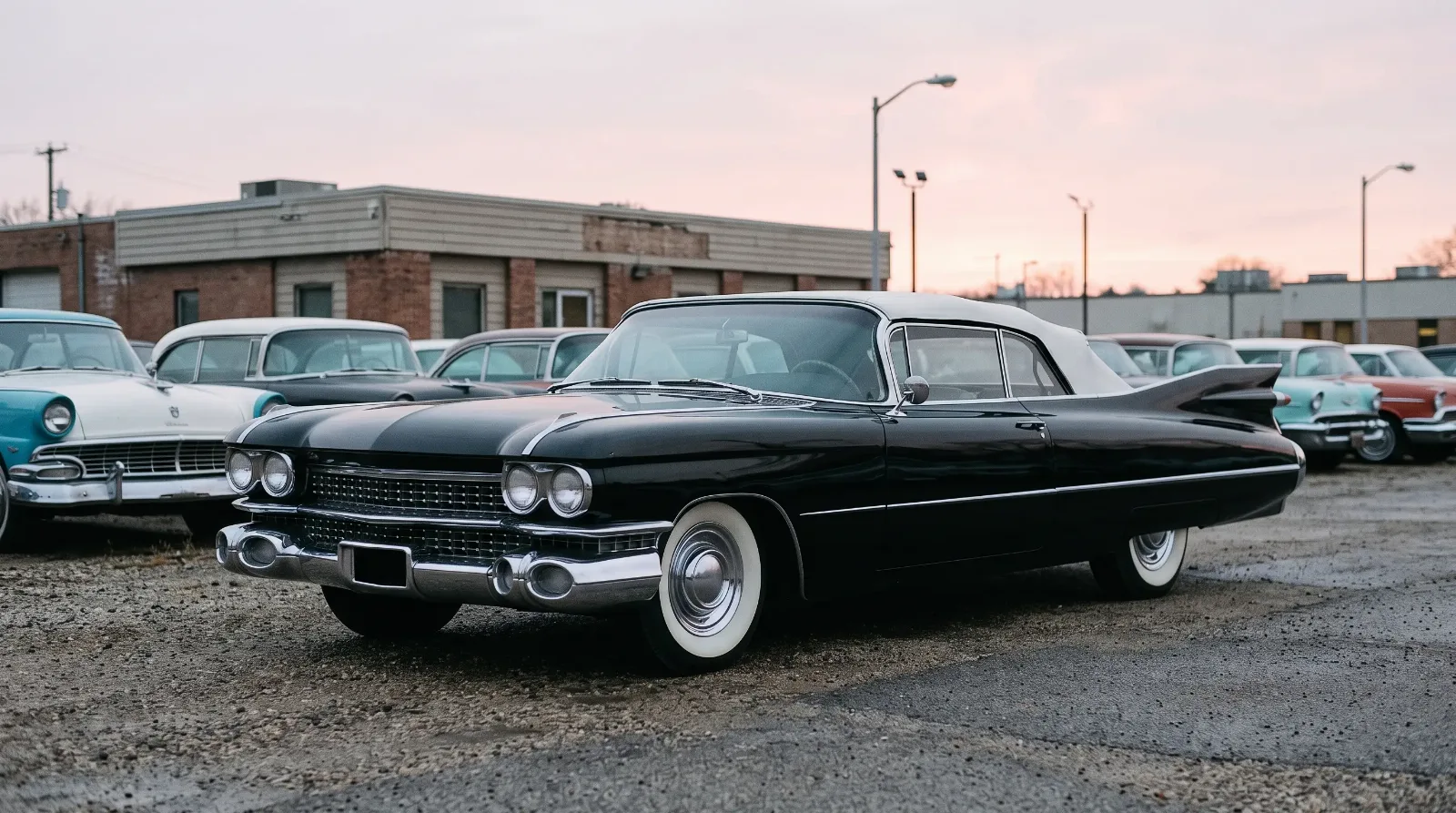
This guide covers the routes a dealership has for publishing its stock, the fields a listing site will demand, the rules that get listings pulled, and where a subscription and a referral fit into the cost. Platform terms below were read on October 19, 2026.
Three routes for getting dealer inventory online
Classic.com, a market-data site that also aggregates dealer listings, publishes the clearest description of the options, and it maps well onto what most platforms accept. It names three routes.
The first is a connection through an inventory management system (IMS). In practice this is typically a daily CSV file sent by FTP; the dealer contacts the IMS provider and copies the platform's partner support address so the two can set up the feed. The second is a guided manual upload. The third is a custom API connection, which the page says "may require a setup fee."
The trade-off is the usual one. A feed costs setup time once and then keeps every platform in step with the lot. Manual upload costs nothing to start and something every week after, because each sold car, price change and new photo set has to be entered by hand on each site. A dealer with a dozen cars can live with manual. A dealer with sixty will, sooner or later, have a car listed online that sold a month ago, and that is the kind of error buyers remember.
Our own dealer plans follow the same split. As shown on October 19, 2026, the Pro plan (75 listings) and the Elite plan (unlimited listings) include a feed import by URL pull or FTP push that syncs every night, and Elite adds an instant Sync Now. The Starter plan carries 30 active listings, a dealer profile page and manual CSV or XML upload. The plans are month-to-month with no setup fees.
The fields a listing actually needs

Every platform has its own schema, but the required fields converge. Classic.com's dealer feed is a fair benchmark because it publishes the list in full.
| Field | What the feed asks for | Where classic cars get it wrong |
|---|---|---|
| Unique ID | A uid unique to each vehicle, even if it is re-listed | Reusing a stock number after a car comes back on trade |
| VIN | Required on every listing; pre-1981 cars may use a chassis, frame or series number | Leaving it blank on older cars instead of giving the number they do have |
| Identity | Title, or year, make and model | Trim and option names typed differently on each car |
| Location and odometer | Location; odometer with mi or km stated | An odometer figure with no unit on an imported car |
| Description and URL | A description and the listing's own URL | Copy pasted from a previous car with the details unchanged |
| Photos | Image URLs, at least 5 photos including exterior and interior | Five exterior shots and nothing of the interior, engine bay or underside |
| Price | Asking price with an ISO currency code | "Call" where the platform requires a number |
The required minimum is not the useful minimum. Five photos clear the gate; they do not sell a car that a buyer will cross three states to see. The same goes for the description. A record that names what is original, what was replaced and what paperwork comes with the car answers the first questions a serious buyer asks, and it answers them before the phone call.
Price, accuracy and the rules that get listings pulled
Listing platforms reserve the right to say no. Classic.com approves or denies inclusion at its discretion and may remove sources or listings that lack transparency, are misleading or outdated, or are used as "click bait" to draw leads for other vehicles. It also asks dealers to keep data accurate, including final sale prices after auctions.
The asking price is where most dealers meet the rules first. That platform requires an asking price on every fixed-price listing.
The logic is sound from the buyer's side. An unpriced car is a car a buyer cannot compare, and price history is exactly what the market-data sites sell: since July 16, 2026, Classic.com keeps sold-price history older than 30 days behind a paid membership, while its active for-sale listings, over 50,000 from more than 2,000 sources, stay free to view. A dealer's asking prices end up in that dataset. Price them as if they will be read next to comparable sales, because they will be.
"An online listing is a claim about a car. The VIN, the photos and the paperwork are the evidence. A dealer who publishes the claim without the evidence is asking the buyer to discount the car, and buyers are happy to oblige."
Marcus Feld
What getting dealer inventory online costs, and where a referral fits
Costs come in two shapes: a subscription for a set number of listings, or a fee per car. Our dealer plans are subscriptions, shown on October 19, 2026, at $149 a month for Starter, $299 for Pro and $599 for Elite. We charge one price for a listing and take no cut of the sale, so a car that sells for more does not cost the dealer more. Prices are set in our system and can change, so check the plan page before budgeting.
The referral side matters to anyone who brings a dealer onto a platform. In our partner program, a partner who refers a dealer earns 20% of that dealer's subscription payments for the dealer's first 12 months, with a 60-day cookie and each commission confirmed 30 days after the sale. Anyone sharing that link has to disclose the commission, as the FTC requires. The terms, who qualifies and how state rules treat a referral fee are covered in the parent guide, with more on that here.
For a dealer, the more useful question is the reverse one: who is likely to send you a peer. Dealers already pass cars, buyers and trade-ins to one another, and the mechanics and legal lines of dealer-to-dealer referrals are their own subject. The point here is narrower. A dealer whose stock is clean, priced and online is a dealer other people can recommend without risk to their own name.
A short order of work
Start with the record, not the platform. Fix the IDs, the VINs or chassis numbers, the units and the photo sets in your own system. Then pick the route: manual if the stock is small and slow, a feed if it is not. Then price every car, because a car without a price is a car a buyer cannot compare.
The caveat is the one that applies to every listing everywhere. A clean record will not make a weak car sell. It will make a good car sell closer to what it is worth, and sooner, which on a dealer's floor is the same thing as money.
Sources and notes
- Classic.com dealer data specifications: routes and required fields (read October 19, 2026)
- Classic.com asking price requirements and the Ask for Price conditions (read October 19, 2026)
- Classic.com on the July 16, 2026 membership change for sold-price history
- Classic.com announcement of dealer listings
- Classic Cars Arena dealer plans, prices and import options (read October 19, 2026)
- Classic Cars Arena partner program: 20% of dealer subscriptions for 12 months (read October 19, 2026)
Related Reading


Have a
Classic Car
for Sale?
Reach thousands of serious classic car collectors across the US.
Sell It Here →
Are You a Classic Car Dealer?
List your full inventory and connect with targeted classic car buyers.
Join as a Dealer →
#classic car dealers
#dealer inventory online
#inventory feed
#car listings
#dealer subscriptions
#listing data

About the author
Marcus Feld
Accredited collector-car appraiser who reads the market through hammer prices, condition tiers and risk.
More in Ownership & Lifestyle

Comments
Be the first to comment on this article.