
Most car hauling businesses start the same way. One pickup, one trailer, one guy who already hauls his own cars to shows and figures he could get paid to haul somebody else's. That's a sound start, and it's also where the expensive mistakes get made, because the truck and the trailer you buy in month one decide your license class, your filings and your insurance bill for years. This is about how to start a car hauling business at that scale: one rig, run by the person who owns it. For the full picture of the transport trade, read more here.
Ownership & Lifestyle
8 min read
Starting a Car Hauling Business With One Truck and Trailer
How to set up a one-truck car hauling business: open or enclosed, weight ratings and the CDL line, startup costs, filings and insurance.
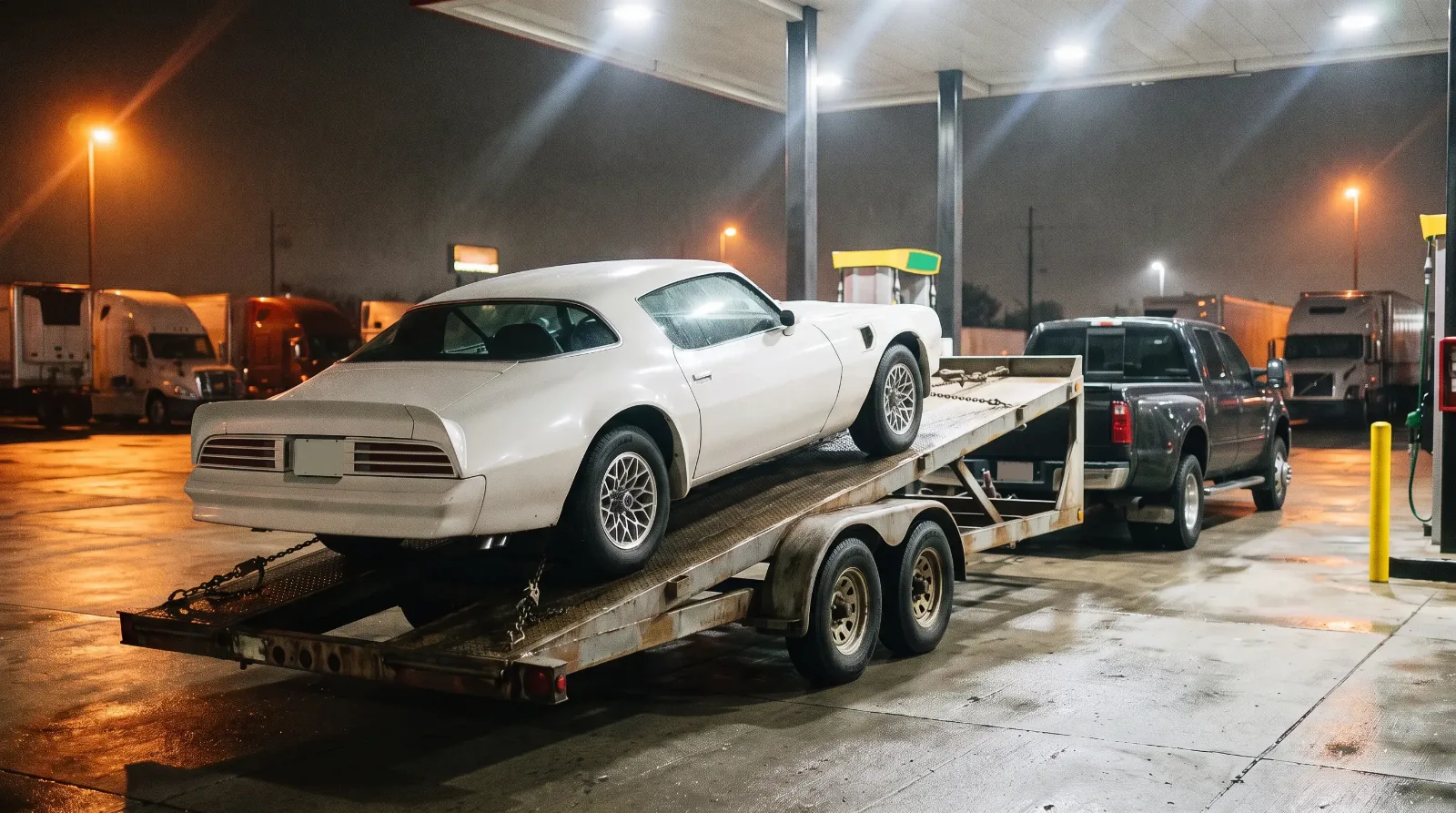
How to start a car hauling business: decide what you'll haul first
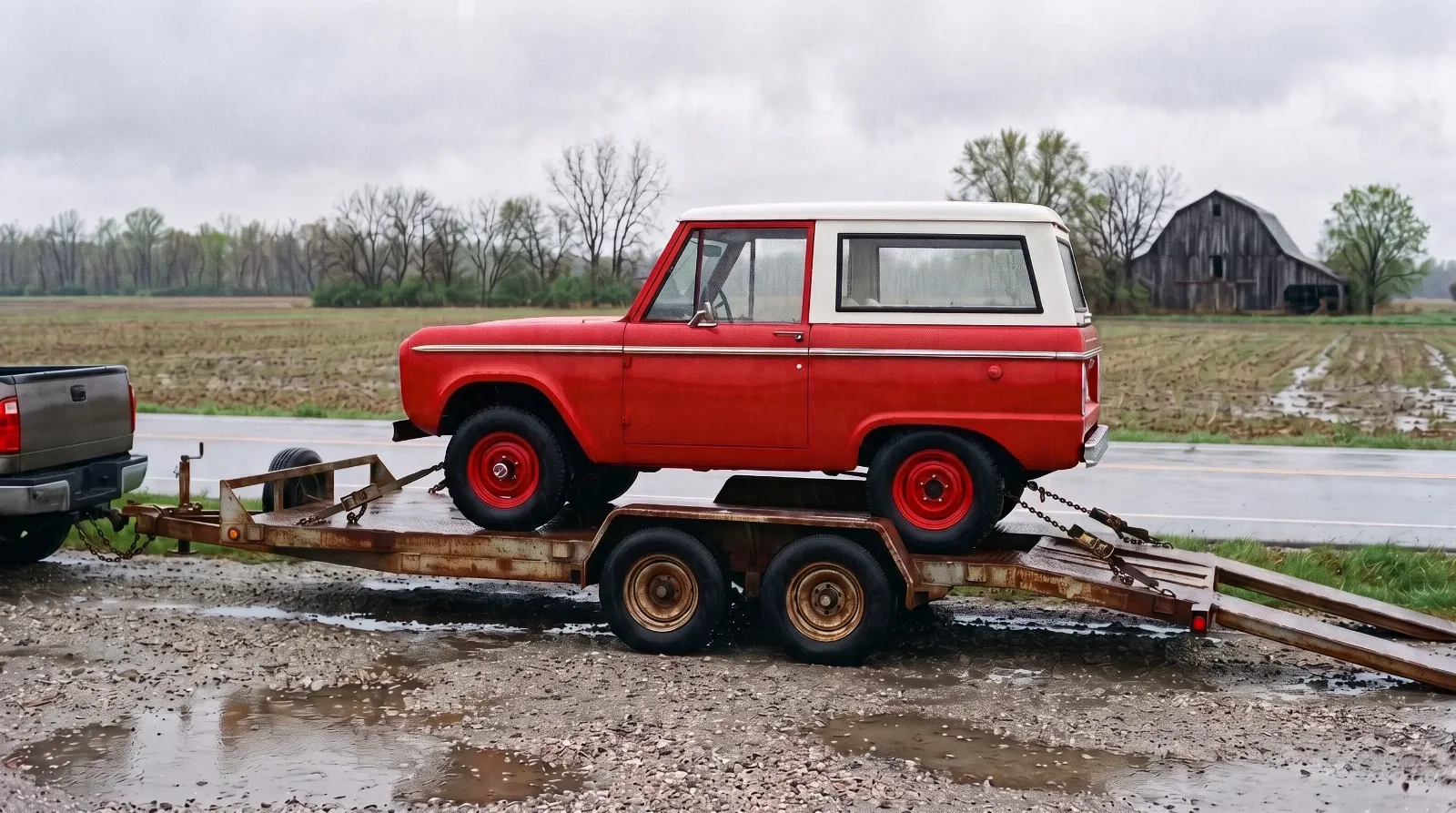
Before you price a truck, decide what kind of cars you want on the trailer. A one-truck operator hauling everyday cars and a one-truck operator hauling classics are in two different businesses.
The everyday-car hauler runs open. The common one-truck version is called a hotshot: a heavy-duty pickup pulling a three- or four-car wedge trailer. You chase volume, you take dealer and auction work, and the margin lives in keeping the deck full.
The classic-car hauler usually runs enclosed. An enclosed trailer typically carries two to six vehicles, against seven to ten on a common open-carrier load, so you move fewer cars per trip. What you sell is protection: no road grit, no weather, no rock chips on fresh paint, and a driver who knows a low-slung car needs a gentle ramp angle. Owners of good cars pay for that, and they're the customers who call again.
You can start open and add an enclosed trailer later. Plenty do. But buy the truck for the heaviest trailer you plan to pull, not the one you can afford this spring.
Pick the weights before you pick the truck
Two federal numbers shape a one-truck business, and both are about ratings, not what's actually on the scale today.
The first is 10,001 pounds. A vehicle or combination used in interstate commerce becomes a commercial motor vehicle when its gross vehicle weight rating or gross combination weight rating (or its actual weight) is 10,001 lb or more, whichever is greater. A pickup and a car trailer clear that on paper almost every time. So plan on being a commercial operation from day one.
The second is 26,001 pounds. You need a Class A CDL when the combination is rated at 26,001 lb or more and the towed unit is rated over 10,000 lb. Both conditions have to be true. That's the whole reason a one-ton pickup with a trailer can stay non-CDL: keep the combined rating under 26,001 lb and you're clear of Class A.
Do the arithmetic before you sign. For example, say a trailer is rated at 14,000 lb. That alone is over the 10,000 lb towed-unit line, so everything now rides on the combined figure. Behind a truck rated at 12,000 lb, the combination sums to 26,000 lb, one pound under. Pick a truck rated a little higher and you need a Class A license. Read the rating labels on both before money changes hands, and check how your state applies the rule.
"Nobody ever lost money buying a trailer that was a little too small for the truck. I've watched a few lose plenty doing it the other way around."
Robert Halloran
What one truck and one trailer cost to put on the road
There's no clean, two-source number for what a classic-capable enclosed setup costs. The only structured estimate is a generic start-up guide for hotshot haulers, last updated in October 2026. It's a vendor page, the ranges aren't sourced, and it's built around an open wedge trailer, so use it to plan, not to borrow against.
| Line item | Range or fee | Where the number comes from |
|---|---|---|
| Truck | $10,000 to $50,000 | Start-up guide estimate, October 2026 |
| Car hauler trailer | $8,000 to $30,000 | Start-up guide estimate, October 2026 |
| First insurance payment | $2,000 to $6,000 | Start-up guide estimate, October 2026 |
| Fuel reserve | $3,000 to $8,000 | Start-up guide estimate, October 2026 |
| Load boards | $400 to $1,200 a year | Start-up guide estimate, October 2026 |
| Operating authority application | $300 per authority type | FMCSA fee, as reported by practitioners in 2025 and 2026 |
| BOC-3 process agent filing | About $30 to $75 | Filing services |
| UCR registration, 0 to 2 vehicles | $46 for 2026; $55 for 2027 | UCR plan fee brackets |
The same guide puts a whole hotshot setup at $15,000 to $40,000, which sits oddly beside its own line items: the truck line alone runs to $50,000. An enclosed trailer built for classics sits at the heavy end of the trailer line, and the truck to pull it does too. Keep a cash cushion beyond the table. Not every customer or broker pays on delivery, and the fuel and insurance bills don't wait.
Filings and insurance, in the right order
The paperwork has an order to it, and getting it backwards costs weeks. A for-hire carrier hauling across state lines needs a USDOT number and, unless it hauls only exempt commodities, operating authority (the MC number) before it runs. You file the application with the fee, your insurer files proof of coverage, and you designate a process agent for all 48 contiguous states and DC. The authority goes active once those filings are in order. Timelines reported by practitioners run from a few weeks to over a month. The detail on each filing is in operating authority and insurance.
Insurance is the line that sinks small haulers. The federal minimum public liability for a for-hire carrier of general property on a rig rated 10,001 lb or more is $750,000. Brokers, shippers and dealer contracts often ask for $1,000,000 and up. Cargo cover isn't set by that federal minimum; the market sets it. One source puts open carriers at roughly $100,000 to $250,000 per load, shared across every car on the deck, and enclosed carriers at about $250,000 to $1,000,000 or more. Think about that with a trailer full of classics: one limit, several cars.
Premiums are harder to pin down. An insurance publisher, in a July 2026 update, puts a one-truck owner-operator buying close to the minimums at about $3,000 to $7,000 a year, and says new ventures pay a surcharge for their first year or two. Rates vary by state, carrier, driving record and cargo, so get quotes from insurers who write car haulers before you buy the rig. This is not legal or insurance advice.
Running it with one truck
One truck means you're the dispatcher, the driver, the bookkeeper and the guy who answers the phone at a gas pump. Keep it simple. A log of every car, with photos at pickup and delivery from the same angles. A bill of lading signed both ends. An invoice that goes out the day the car comes off the trailer.
Loads come from load boards, dealers and word of mouth. Central Dispatch, one of the large boards, is listed from $139.95 a month for its Core plan, as reported by a comparison site in July 2026. The classic work comes mostly from people: restoration shops, appraisers, club members, sellers who need a car moved before the money clears. Those are the calls worth earning, because they repeat.
That same network gives a hauler a small second line. You meet a seller right before a sale, which is why our partner program lists transport alongside inspection and appraisal as a partner type. As of October 2026 it pays 25% of listing packages and 20% of dealer subscriptions for the first 12 months, with a 60-day cookie, commissions confirmed after 30 days and PayPal payout from a $50 balance. For example, a Featured listing at $99 pays the partner $24.75. If you share the link in a quote or a follow-up email, say plainly that you earn a commission from it; the FTC requires that disclosure. It's a side line, not a plan to pay off the truck, and you can read how the hobby earns on referrals for the wider picture.
Start with one rig you can pay for, rated where you want it, filed in the right order and insured for the cars you mean to carry. Add the second truck when the first one is turning work away, not before.
Sources and notes
- ZenBusiness: how to start a car hauling business (start-up cost estimates, updated October 7, 2026)
- 49 CFR 383.91: commercial motor vehicle groups and the Class A CDL threshold
- Unified Carrier Registration plan: fee brackets for 2026 and 2027
- Insuranceopedia: car hauler insurance cost (updated July 25, 2026)
- RFP.wiki: Central Dispatch plans and pricing (verified July 23, 2026)
- Classic Cars Arena partner program terms (read October 19, 2026)
Related Reading

Have a
Classic Car
for Sale?
Reach thousands of serious classic car collectors across the US.
Sell It Here →
Are You a Classic Car Dealer?
List your full inventory and connect with targeted classic car buyers.
Join as a Dealer →
#classic car transport
#car hauling business
#hotshot hauling
#enclosed trailer
#CDL
#owner operator

About the author
Robert Halloran
Texas-based classic truck enthusiast with decades of experience buying, restoring, and writing about American pickups from the 1940s through the 1980s.
More in Ownership & Lifestyle

Comments
Be the first to comment on this article.