
Every car referral program answers one question before it answers any other: who pays whom, and for what. The pitch on the sign-up page is usually about the person sharing the link. The terms are about the payer, what the payer is buying, and how long the payer is willing to keep paying for it. Read them that way and most programs in the car world sort themselves into a handful of shapes. Our own sits in one of them, and you can see how the CCA partner program pays before reading the rest, so you have a fixed point to compare against.
Ownership & Lifestyle
8 min read
Car Referral Programs Explained: Who Pays Whom
Platforms, software firms, dealers and insurers all pay for referrals, in cash, credit or perks. Here is who pays whom, on what base, and for how long.
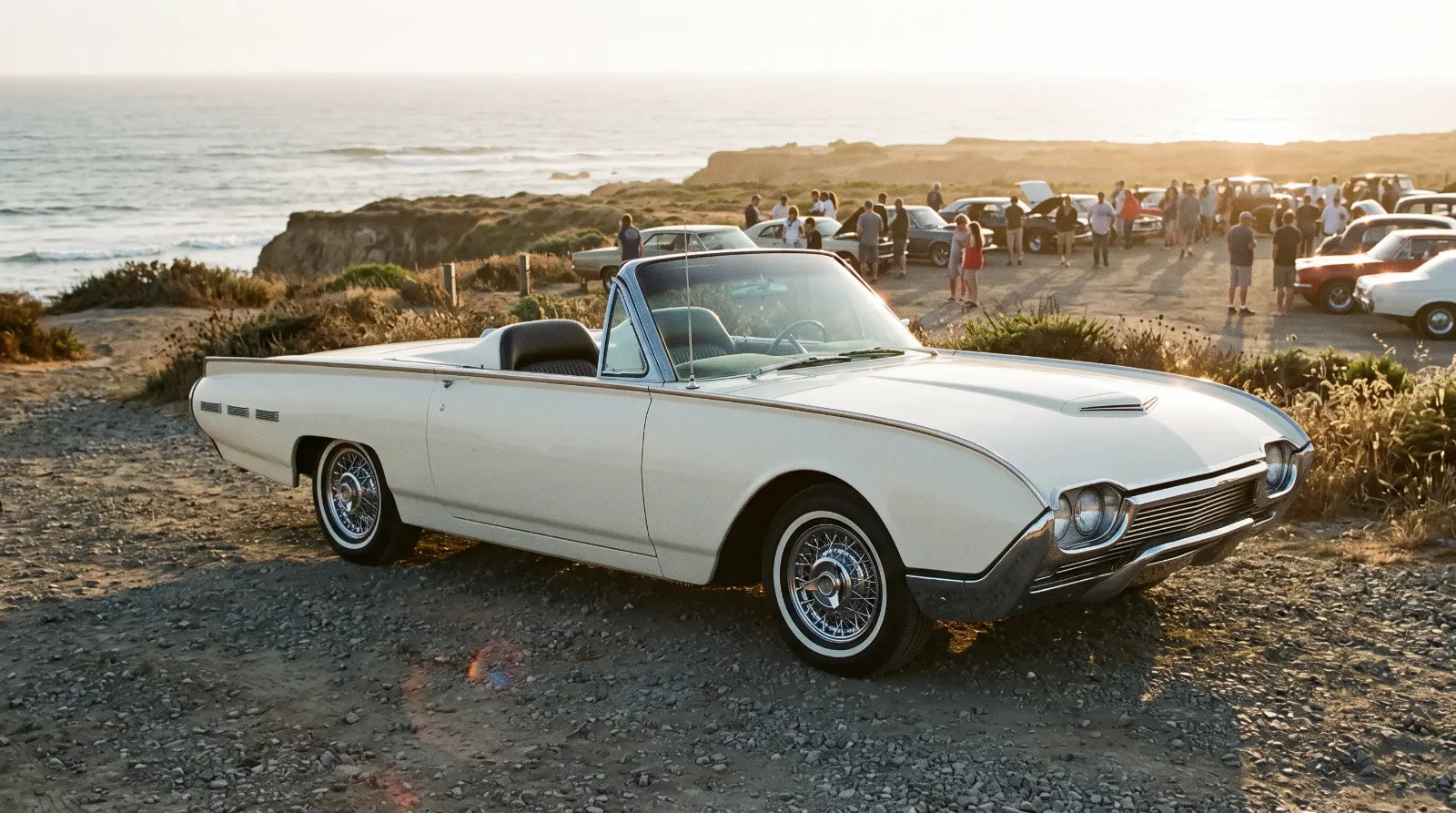
This piece maps the money flows and puts real terms next to each one. All rates below were read on October 19, 2026, unless another date is given.
Who pays whom in a car referral program
Strip the branding off and there are four payers. A listing or marketplace platform pays the person who sent it a paying seller. A software or services company pays an existing customer, usually a dealer, who brought in another customer. A manufacturer or a dealer pays a car owner who sent in a buyer. An insurer pays the agency or the club that introduced a policyholder.
Each payer shares what it earns. A platform selling listing packages shares a slice of the seller's payment. A software company pays in discounts against its monthly fee. A dealer earns on a car sale, which is where state licensing rules bite. An insurer earns on premium, and its commission is rarely published.
A dealer can be the customer someone refers or the one doing the referring. The parent guide covers referring a dealer in detail, including who qualifies.
The four money flows, side by side
The table puts one sourced example against each flow. Where a program publishes no rate, the table says so rather than filling the gap.
| Who pays | Who gets paid | What is paid | Example and terms (as read) |
|---|---|---|---|
| Listing platform | Partner who sent a paying seller | Percentage of what the seller pays | Our partner program: 25% of listing packages and upgrades, 20% of a dealer's subscription for the first 12 months, 60-day cookie (October 19, 2026). ClassicCars.com on Awin: 5% on listings purchased, 30-day attribution window (October 19, 2026). |
| Software or platform company | Existing dealer customer | Discount or account credit | DealersCloud: 25% off per referral, free subscription at 4 or more (page read October 19, 2026). OPENLANE Europe: EUR 300 credit to both the referrer and the referred company, valid 6 months (announced October 2, 2025). |
| Manufacturer or dealer | Car owner who sent a buyer | Cash, credit or perks | Tesla's 2015 owner program offered a $1,000 reward. Tesla shut its referral program in all markets on April 30, 2024, then brought back a smaller, credit-based version in October 2024. |
| Insurer | Agency or club that introduced the policyholder | Commission on premium | Hagerty (US) says the insurer pays it a fixed percentage of each premium, not published. Hagerty's UK club programme pays clubs an introducer commission, rate not published. |
Two things stand out. First, only the platform row publishes a percentage you can do arithmetic on. Second, the platform row is the only one where the referrer is usually an outsider (a writer, a club, a shop) rather than a customer or a licensed intermediary. Platforms sell a fixed-price product, so a fixed share is easy to promise.
Some names are missing for a reason. Hemmings' program on impact.com was marked inactive, removed February 18, 2025, and a tracker showed it on no network as of October 19, 2026. American Collectors Insurance's referral page says the program is no longer active. For Bring a Trailer and Cars & Bids, we found no public affiliate program as of the same date.
Cash, credit or a discount: what the referrer actually receives
The form of payment tells you who the payer thinks you are. Cash assumes a publisher with an audience. Credit against your own bill assumes a customer who will stay.
DealersCloud is a clear example of the credit model. One active referral takes 25% off the referring dealer's bill, two take 50%, three take 75%, and four or more make the subscription free. Past four active referrals, each extra one earns 25% of that customer's subscription for as long as they stay.
OPENLANE's European scheme is the two-sided version: the EUR 300 credit goes to both companies, and only once the referred company has paid for its first vehicle. Nothing moves on a sign-up alone.
With cash programs, read the duration term twice. A percentage on a listing pays once; a share of a subscription pays monthly, but only inside a window. In our partner program the window is the dealer's first 12 months, and a yearly plan earns the same 20%, prorated to the months left in that window. For example, on the Dealer Pro plan at $299 a month as shown on October 19, 2026, 20% is $59.80 a month and $717.60 at most over the 12 months. That is arithmetic on a price list, not a forecast; the payout depends on whether a dealer signs up and stays.
"A referral rate is only half a number. The other half is the base it is taken from and how long the payer keeps paying. Five percent of a listing and twenty percent of twelve monthly bills are not the same kind of deal, and the sign-up page will rarely do that comparison for you."
David Mercer
This is also where selling models matter. A platform that charges a flat fee per listing shares that fee; a platform that takes a cut of the sale price would share something very different. The trade-offs on the seller's side are set out in flat fee versus commission selling.
Where the law steps in
When a dealer pays a private person for sending a car buyer, the payment has a name in the trade: a bird-dog fee. Attorney Tom Hudson, writing in Auto Dealer Today in February 2011, put it plainly: "Most states have either laws or regulations that prohibit or regulate these fees in some manner." Some states bar a dealer from paying anyone who is not a licensed salesperson; in others, a cash referral can count as brokering, which needs a license or is banned.
The same year, California's new car dealers' association told the state DMV that a $1,000 owner referral reward made owners unlicensed salespeople. That was an advocacy letter, not a ruling. Referring a seller to a listing platform is a different transaction from steering a buyer to a dealer for a fee, which is why the platform row in the table carries less legal friction. These rules vary by state, so confirm with your state's motor vehicle board or dealer licensing agency before taking a fee on a car sale; this is not legal advice.
On tax, our partner program asks US partners for a W-9, and partners outside the US for a W-8BEN, before the first payout. How that income is reported depends on your situation, so confirm the treatment with an accountant.
Reading the terms before you share a link
A short checklist covers most of what separates one program from another:
- The base: a percentage of what, exactly, and before or after discounts. Ours is taken from what the customer actually paid, after discounts.
- The window: the cookie length and the commission period. Ours uses a 60-day cookie, and the most recent partner link wins.
- The holdback: how long before a commission is confirmed. Ours is 30 days after the sale, and a refund or chargeback removes it.
- The payout: the threshold and the method. Ours pays by PayPal once a confirmed balance reaches $50, after review.
- The exclusions: our program pays nothing on privately negotiated dealer offers, the Ad-Free subscription, payments under $5, your own purchases or customers already with us.
Disclosure is the one rule that applies to all of them. The FTC expects a clear statement, placed near the link, that you earn a commission; its guidance says a bare "Affiliate link" label is not enough, while "Paid link" next to the link is adequate. Our partner rules require the same disclosure.
If the reason you would share a link is that you know dealers, the practical work of putting dealer inventory online is where those conversations usually start. And if you want every program we compared, with networks, rates and dates, that is the long version. My own view: start with the programs that publish their base, their window and their payout on one page. The ones that will not tell you who pays whom are telling you something too.
Sources and notes
- Classic Cars Arena partner program terms and dealer plan examples (read October 19, 2026)
- ClassicCars.com merchant profile on Awin: 5% on listings, 30-day window (read October 19, 2026)
- DealersCloud partner and customer referral programs (read October 19, 2026)
- OPENLANE Europe dealer referral credit (announced October 2, 2025)
- Electrek on Tesla ending its referral program on April 30, 2024 (with The Driven, October 6, 2024, on its return)
- Auto Dealer Today: Tom Hudson on bird-dog fees (February 2011); FTC Endorsement Guides FAQ for the disclosure wording
Related Reading


Have a
Classic Car
for Sale?
Reach thousands of serious classic car collectors across the US.
Sell It Here →
Are You a Classic Car Dealer?
List your full inventory and connect with targeted classic car buyers.
Join as a Dealer →
#FTC disclosure
#referral fees
#bird dog fees
#car referral program
#affiliate programs
#car dealers

About the author
David Mercer
Classic car market analyst with two decades of experience tracking collector car valuations, auction results, and investment trends.
More in Ownership & Lifestyle

Comments
Be the first to comment on this article.