
Here's the bottom line first. If you haul other people's cars for pay across state lines, you need a USDOT number, MC authority for car hauling, a liability policy of at least $750,000 filed by your insurer, a process agent in every state, and a yearly UCR registration. The government's share of that is small. As of October 2026 it's $300 for the authority application and $46 for 2026 UCR on a one- or two-truck outfit. The insurance is where the real money goes, and it's the number that decides whether a small hauler survives year one. This piece is the paperwork and the policies, in order, with the numbers attached. The business side is covered in how to start a car transport business.
Ownership & Lifestyle
7 min read
USDOT Number, MC Authority and Insurance for Car Haulers
The filings, fees and insurance a for-hire car hauler needs: USDOT, MC authority, BOC-3, UCR, the $750,000 liability floor and cargo limits.
Who needs MC authority for car hauling
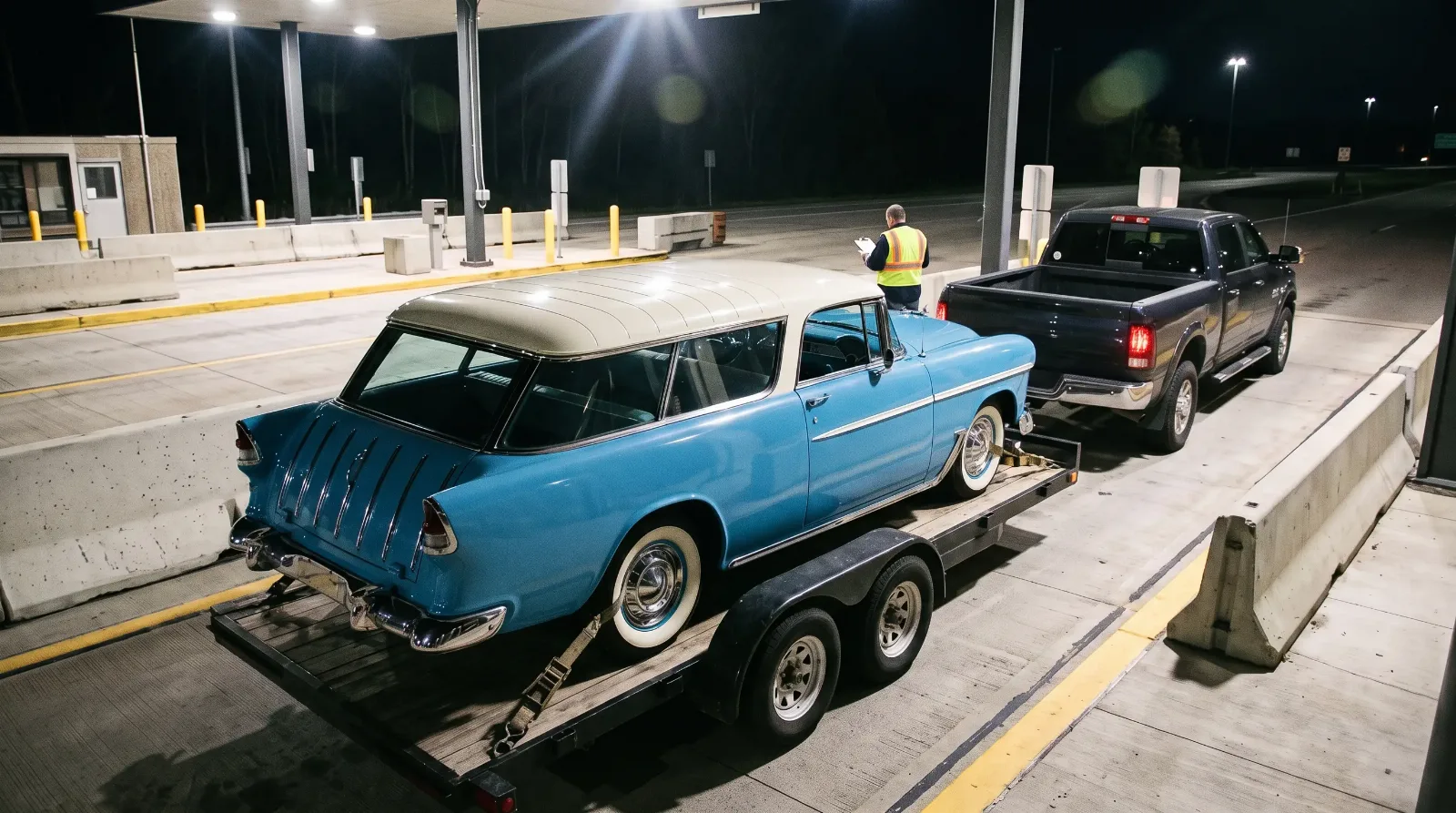
The federal rule is short. A for-hire motor carrier must get a USDOT number and, unless it hauls only exempt commodities, operating authority (the MC number) before it operates in interstate commerce. Hauling a customer's car for a fee is for-hire. Crossing a state line, or carrying a car that's on an interstate trip, puts you in interstate commerce.
The weight line that makes you a commercial operator is 10,001 lb. A vehicle or combination becomes a commercial motor vehicle when its gross vehicle or gross combination weight rating, or its actual weight, is 10,001 lb or more, whichever is greater. A pickup with a loaded car trailer is well over that on paper. If you're running something lighter, we couldn't confirm from FMCSA's own pages how the authority rules apply, so ask FMCSA before you assume you're exempt.
Two things people confuse with authority. A CDL is a driver license question, triggered for a combination at 26,001 lb or more when the trailer is rated over 10,000 lb; it has nothing to do with whether you need an MC number. And hauling only inside one state brings in state rules, which vary. Check with your state's DOT or motor carrier office before your first intrastate job.
The filings, the fees and the order they go in
Four pieces have to be in place before your authority goes active. Get the order right and it's a few weeks. Get it wrong and you're paying for a truck that can't legally move a car.
| Filing | What it does | Cost |
|---|---|---|
| USDOT number and MCSA-1 application | Registers the carrier and applies for authority | $300 per authority type, non-refundable (FMCSA fee, as reported by practitioners in 2025 and 2026) |
| Proof of liability insurance | Your insurer files it (BMC-91 or 91X) | The premium; no separate federal fee |
| Process agent designation (BOC-3) | Names agents for all 48 contiguous states and DC | About $30 to $75 through a filing service |
| UCR registration, 0 to 2 power units | Annual interstate carrier registration | $46 for 2026; $55 for 2027 |
| UCR registration, 3 to 5 power units | Same, next bracket | $138 for 2026; $167 for 2027 |
The sequence: file the application with the fee, have your insurer file proof of coverage, designate your process agents. You get a USDOT number, but it sits inactive, and you can't operate or mark your truck as an authorized carrier until FMCSA finds the fees and filings in order. Practitioners report a few weeks to over a month for that. One start-up guide says about 21 days. Plan for the longer number and don't book loads against the shorter one.
One more line if you ever pass a load to another truck for a cut. That's brokering, and a property broker needs a $75,000 surety bond or trust fund in force before FMCSA registers it. A carrier MC number doesn't cover it.
Federal filing details change, and FMCSA's own pages weren't readable when this was written, so confirm current fees and forms on FMCSA's site before you file. Whether IRP, IFTA or the federal heavy-vehicle use tax apply to a light rig depends on weights and states; ask your state. None of this is legal advice.
Liability: the federal floor and the real floor
The federal minimum public liability for a for-hire carrier of non-hazardous property on a rig rated 10,001 lb or more is $750,000. That figure has stood in the CFR since 1985. It's the number FMCSA needs to see filed.
It isn't the number your customers will ask for. Brokers, shippers and dealer contracts commonly want $1,000,000 and up. If you buy the federal minimum, you've bought the right to exist, not the right to haul for the people who pay best. Price both before you choose.
What does it cost? The honest answer is a range with a wide spread. One insurance publisher, in a July 2026 update, puts a one-truck owner-operator buying close to the minimums at about $3,000 to $7,000 a year. The same page gives $700 to $1,500 a month per truck for a full program and a $12,600 to $13,200 average for full programs, figures that don't line up with each other. It also says new ventures pay a surcharge for their first year or two, without saying how much. Treat every premium you read online as a rough guide. Your quote depends on your state, your driving record, your equipment and what you haul, and it can vary a lot between carriers.
"The $300 filing fee gets all the attention. The premium is the line that decides whether you're still hauling next spring. Get three quotes before you buy the truck, not after."
Dan Reeves
Cargo insurance when the cargo is a classic
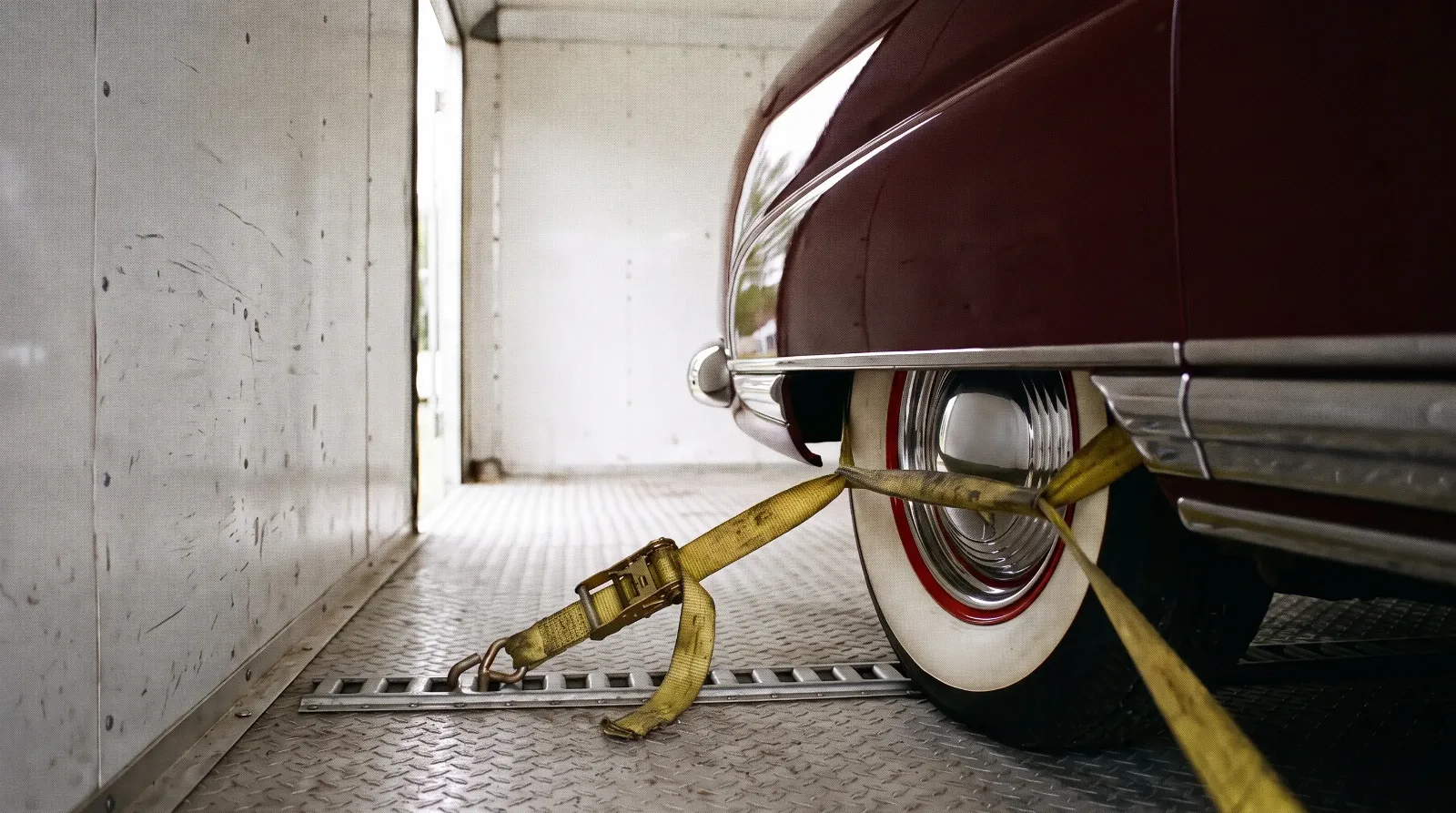
Here's what surprises new haulers. The federal rule sets a liability minimum, not a cargo minimum, for carriers that aren't moving household goods. Your cargo limit is set by the market: what shippers, brokers and dealers require before they'll hand you a car.
The market numbers from one source, updated in September 2026: open carriers generally carry $100,000 to $250,000 per load, shared across every vehicle on the trailer. Enclosed carriers carry roughly $250,000 to $1,000,000 or more, though that enclosed range comes from a single broker's statement. The same source lists the usual exclusions: pre-existing damage, mechanical failure, acts of God and diminished value.
Now do the arithmetic, because the limit is per load, not per car. For example, three cars worth $90,000 each on one enclosed trailer add up to $270,000. A $250,000 cargo limit leaves $20,000 uncovered if the whole load is lost. Put one more car on and the gap grows. Classic owners ask about this, and the good ones ask for your certificate before they hand over the keys.
Two questions to put to your agent. First, is a car covered while it sits in your shop or yard overnight, or only while it's on the trailer? Second, does the policy exclude diminished value outright? On a restored car, the value lost after a repair can be the part the owner cares about most. Get the answers in writing. Coverage terms vary by carrier and state, so confirm them with your insurer. The equipment side of keeping cars safe is in the enclosed trailer setup.
The first 18 months: new entrant monitoring
Getting authority isn't the finish line. New carriers are monitored for 18 months from the time all pre-operational requirements are met. A safety audit comes once you've operated long enough to build records, typically no sooner than three months in.
That audit looks at the records you were supposed to keep from day one. If FMCSA sends a notice asking for corrective action and you don't answer within 30 days, your authority can be revoked. So keep the files current from the first load: driver records, vehicle maintenance, insurance certificates, every bill of lading.
The numbers in one place: $300 to apply, $30 to $75 for the process agent, $46 in UCR for 2026, a $750,000 liability floor that customers will push to $1,000,000, a cargo limit sized for the most expensive load you'll ever carry, and 18 months of watching. Budget for all of it before the first car rolls onto the deck.
Sources and notes
- 49 CFR 385.301: registration and operating authority before interstate operation
- J.J. Keller: new entities, MCSA-1 application and the $300 fee (page dated March 11, 2025)
- Unified Carrier Registration plan: fee brackets for 2026 and 2027
- 49 CFR 387.9: financial responsibility, minimum levels
- Insuranceopedia: car hauler insurance cost (updated July 25, 2026)
- WebAutoTransport: what a carrier's cargo insurance covers (updated September 29, 2026)
Related Reading

Have a
Classic Car
for Sale?
Reach thousands of serious classic car collectors across the US.
Sell It Here →
Are You a Classic Car Dealer?
List your full inventory and connect with targeted classic car buyers.
Join as a Dealer →

About the author
Dan Reeves
Performance engine builder from North Carolina's motorsports corridor, focused on swaps, forced induction and making real, repeatable power.
More in Ownership & Lifestyle


Comments
Be the first to comment on this article.