
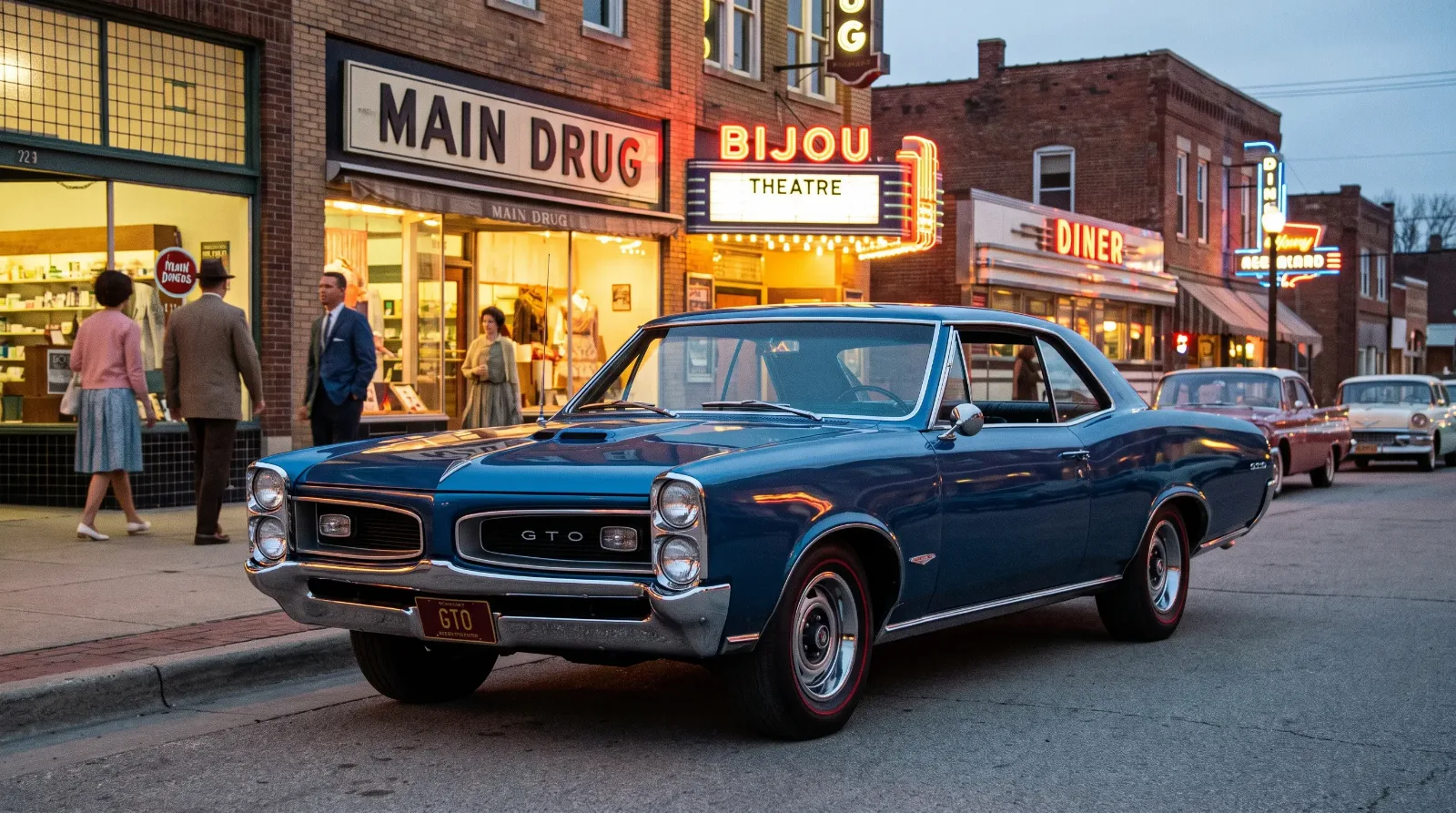
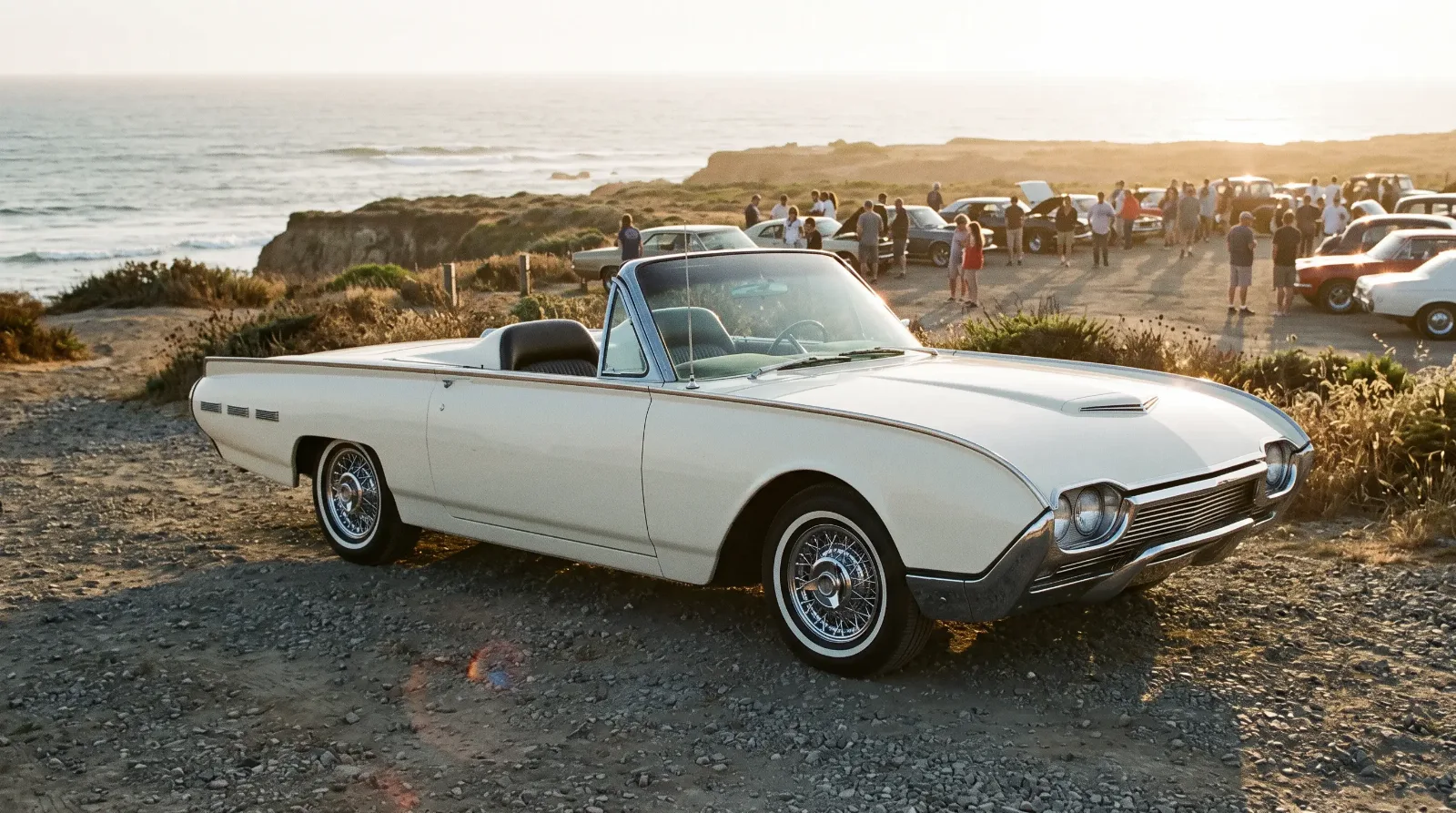
On a warm Thursday evening a strip mall parking lot outside almost any American town turns into something else. Folding chairs come out of trunks. Hoods go up in a long row. A 340 Duster idles next to a Chevelle SS, and two guys who have never met before are already deep in a conversation about carburetor jetting. Nobody bought a ticket. Nobody is selling anything. This is cruise night, the weekly heartbeat of muscle car culture, and it has been running on the same simple fuel for sixty years.
Ownership & Lifestyle
6 min read
Cruise Nights and Car Show Culture
How cruise nights and car shows became the heartbeat of muscle car culture, from Woodward and Back to the Bricks to the weekly parking-lot gathering.
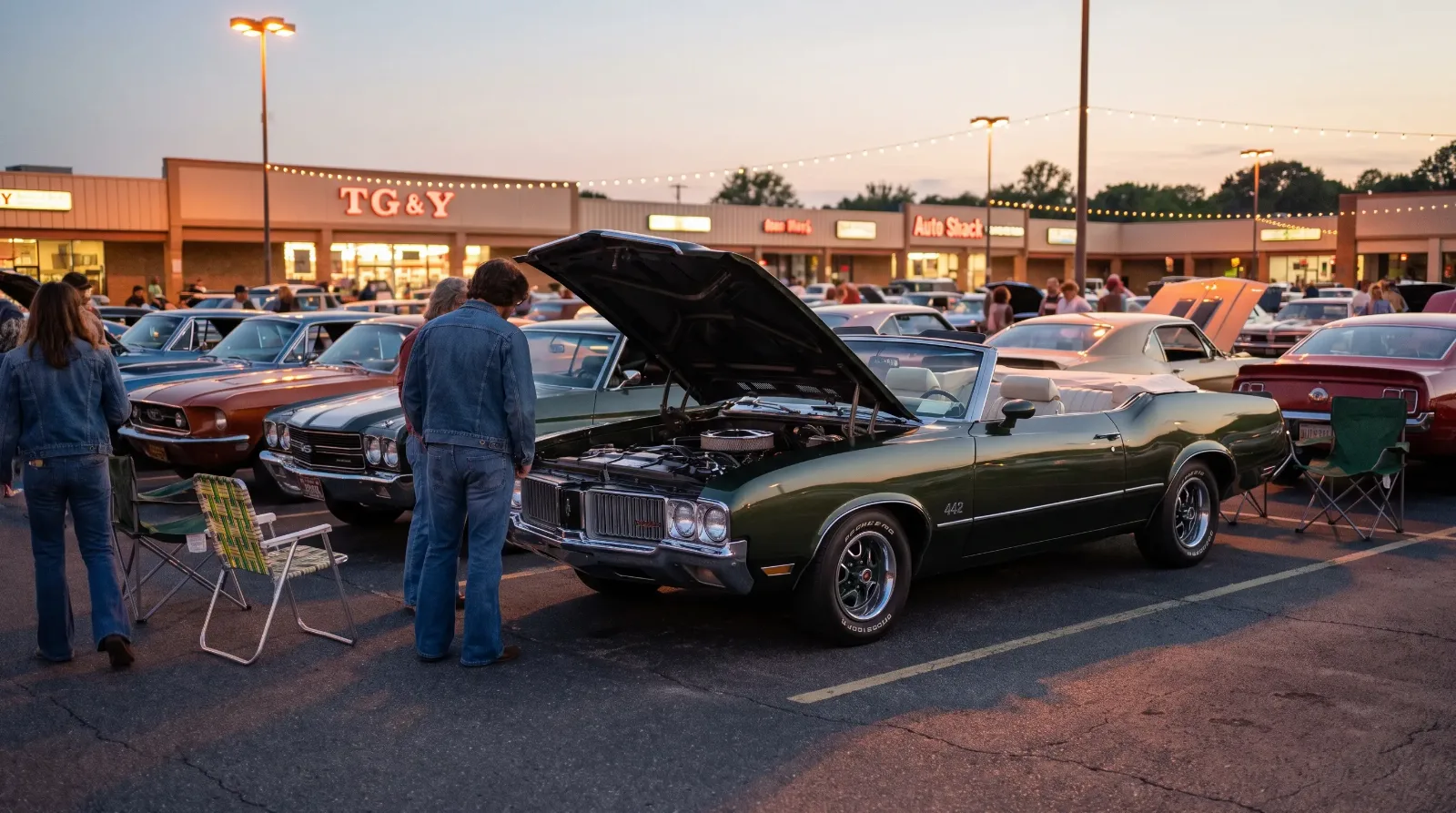
The cars matter, but the cruise is really about the people who bring them. I have spent a lot of Thursday and Saturday nights in these lots across the country, and the pattern holds everywhere. The machines are the excuse. The community is the point. If you want the wider frame around all of this, here is the story of muscle car culture and where the weekly cruise fits inside it.
Where cruise night came from
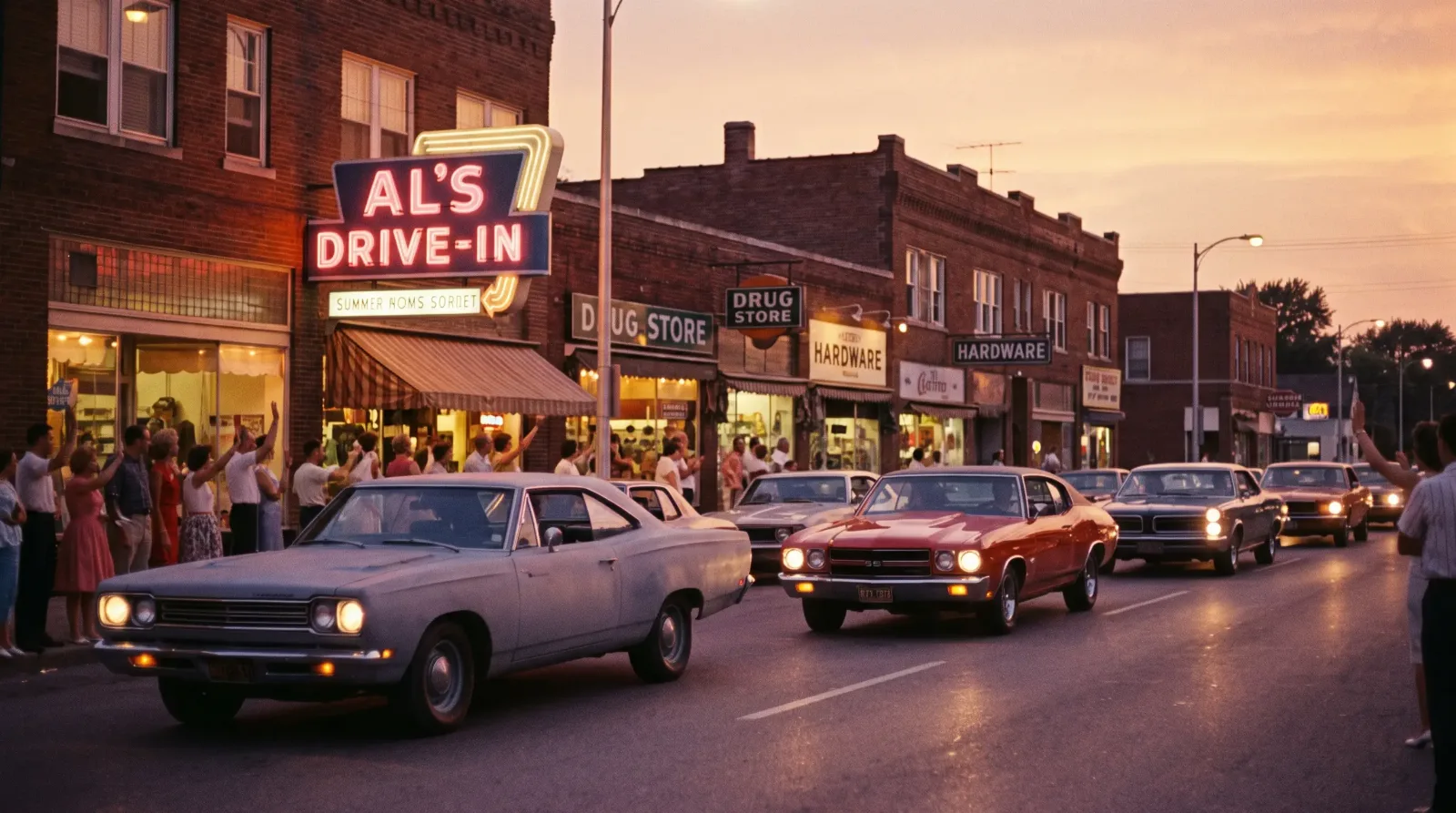
Cruising started long before anyone called it a scene. In the 1950s and 1960s, teenagers with cars and gas money did the only thing there was to do on a Friday night. They drove the main drag, slow, back and forth, windows down, seeing who was out and what they were driving. Woodward Avenue in Detroit did it. Van Nuys Boulevard did it in the San Fernando Valley. Every town had its own stretch of road where the ritual happened.
The drive-in restaurant gave the ritual an anchor. You cruised the strip, then you parked, then you cruised again. When the open-road cruising got squeezed out by traffic laws and changing neighborhoods, the culture did not die. It moved into the parking lots. The organized weekly cruise night is what grew in that soil, a stationary version of the same thing, and it kept the social engine running even after the boulevards closed to the practice.
The big cruises that anchor the calendar
Some cruises outgrew the parking lot entirely. The Woodward Dream Cruise is the giant. Held on the third Saturday of August along the same Woodward Avenue where the whole thing started, it draws enormous crowds and tens of thousands of cars strung out across the metro Detroit suburbs. People plan vacations around it. Families set up along the curb early in the morning and watch American iron roll past all day.
Flint answered with Back to the Bricks, a summer event built around the brick-paved stretch of Saginaw Street, a nod to the city's own deep tie to the auto industry. These big cruises share a quality the weekly ones have too, just multiplied. They are free to watch, open to anyone, and they turn a public street into a rolling museum for a day. The muscle car earned its place as a cultural icon partly on strips like these, which is one reason people drive hundreds of miles to be part of it. You can read the full story of how that status was built.
What actually happens at a car show
A cruise night and a car show are cousins, not twins. The cruise is loose and social. The show is a little more formal, usually with a registration table, class judging, and a row of trophies waiting under a canopy. At a show you park on the grass, detail the car one more time, and then spend the day answering questions and talking to strangers who wander over because your Road Runner reminded them of one their uncle owned.
The rhythm of a show day is its own thing. Morning is quiet, the good talking hours before the crowds arrive. Midday is busy. Late afternoon the awards get handed out, and half the field cares deeply about the trophy while the other half never entered the judging and came purely to hang out. Both groups are having the same good time. That mix is what keeps these events healthy.
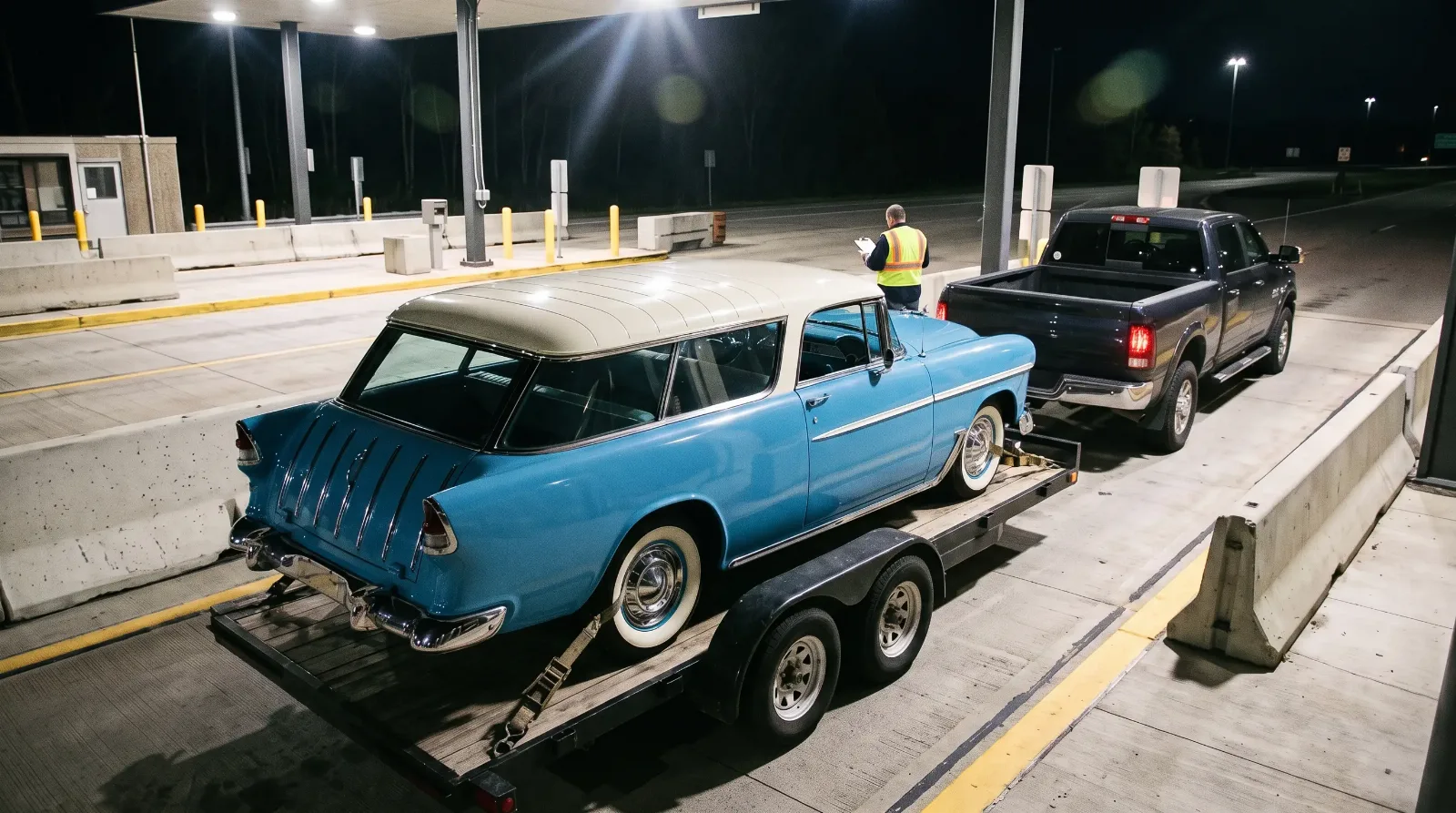
"I asked a guy at a Saturday cruise why he still trailered his Super Bee out every week when he'd already won every award the local circuit had. He looked at me like the question was strange. He said the trophies were fine, but he came for the parking lot. Sixty years old and he still wanted to hear the lot fill up with V8s at dusk. That's the whole thing right there."
Patrick Walsh
How to get the most out of it
You do not need a show-quality car to belong at a cruise night. Some of the best regulars roll in with a driver-grade project that still needs paint. Showing up is the only requirement, and the culture rewards people who keep coming back more than it rewards people with the shiniest fenders.
Why the culture keeps pulling people back
The weekly cruise survives because it asks so little and gives so much. It costs nothing. It happens close to home. It connects a nineteen-year-old with a first-project Nova to a retiree with a numbers-matching Hemi car, and for a few hours on a summer evening the gap between them disappears. That is rare in American life now, a free public space where strangers gather around a shared love and just talk.
Muscle cars gave that space a soundtrack and a reason to exist, and the cruise gave the cars somewhere to go. Six decades in, the lots still fill up every week the weather allows. New faces show up, older ones keep coming, and the ritual passes down the way it always has, one Thursday night at a time. The machines will keep changing hands. The gathering they built stays exactly where it is.
Related Reading
Have a
Classic Car
for Sale?
Reach thousands of serious classic car collectors across the US.
Sell It Here →
Are You a Classic Car Dealer?
List your full inventory and connect with targeted classic car buyers.
Join as a Dealer →

About the author
Patrick Walsh
Automotive journalist covering classic car shows, events, and the enthusiast community across North America.
More in Ownership & Lifestyle
Comments
Be the first to comment on this article.