
For a lot of people, the first muscle car they ever owned was six inches long and came in a box. Before you had a license, before you had the money, you had a plastic kit on the workbench and a tube of glue, and you built the Charger or the Camaro you could not yet drive. Later the same thing happened again on a television screen, where a kid with a controller could put a big-block Chevelle into a corner at speed with no risk of wrapping it around a tree. The muscle car has always lived a second life in miniature and on the screen, and for millions of fans that is where the love actually started.
Ownership & Lifestyle
6 min read
Muscle Cars in Video Games and Model Kits
How model kits, Hot Wheels, and games like Gran Turismo and Forza carried the muscle car to generations who met it in miniature first.
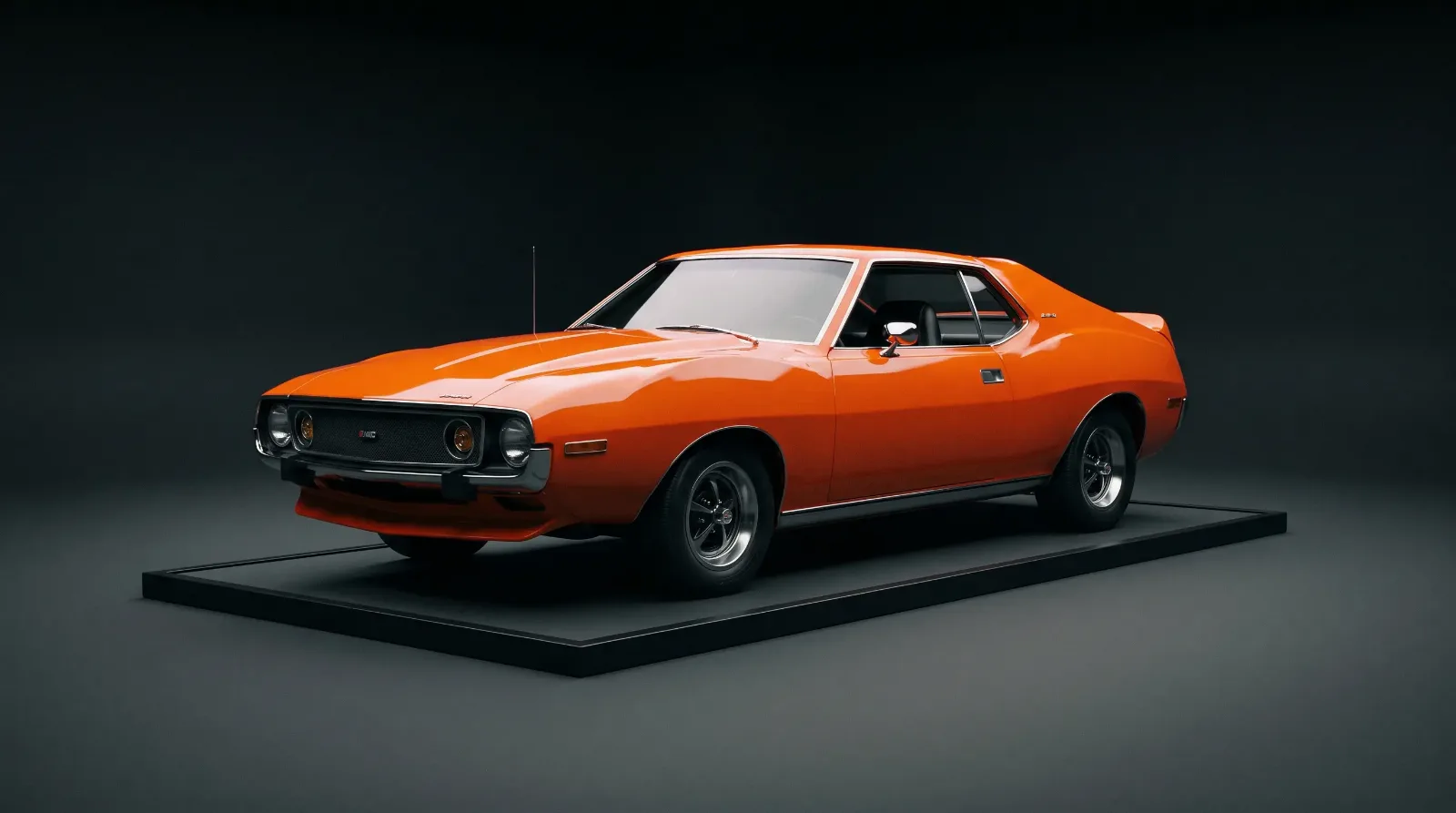
These small-scale versions did more than pass the time. They kept the cars alive for generations who missed the original era completely, and they taught a surprising amount about the machines themselves. To see how these threads tie into the larger culture, you can dig into the details of how muscle cars spread through American life.
The model kit era
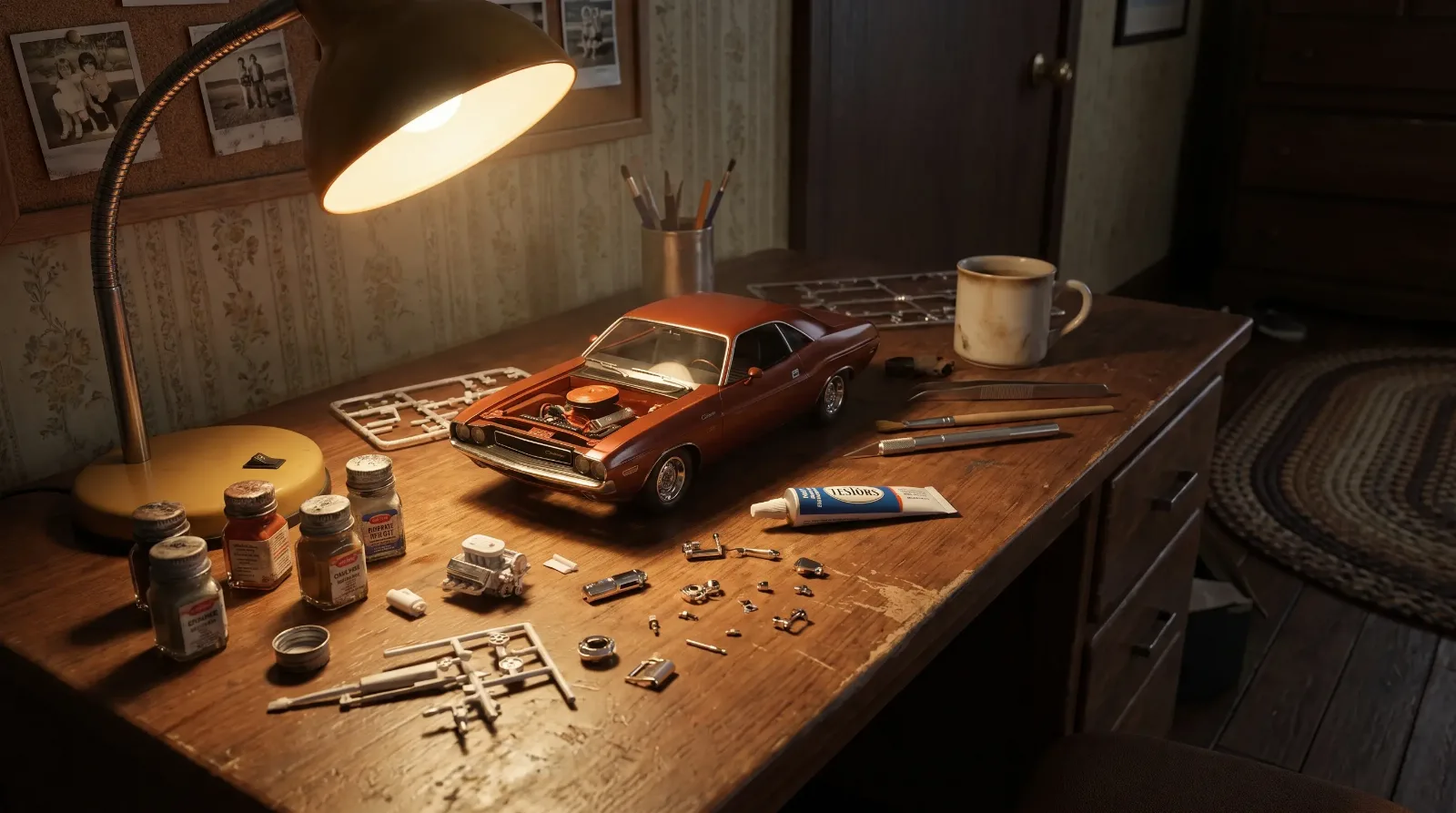
The plastic model kit boom ran right alongside the real muscle cars. Companies like AMT, Revell, Monogram, and MPC turned out detailed scale versions of nearly every important American performance car, usually in the popular 1/25 or 1/24 scale. AMT was especially tied to Detroit. It produced promotional models, small pre-built replicas that dealers handed out and gave away, in the actual colors of that year's lineup.
The kits that hooked people hardest were the ones that let you make choices. AMT built its reputation on what it called three-in-one kits, which came with the parts to build the car stock, as a custom, or as a race version. That was the genius of it. A kid was not just gluing a car together. He was deciding what kind of car it would be, learning about engine swaps and custom wheels and body modifications with nothing at stake but a bottle of glue and an afternoon. A lot of real builders got their first education exactly that way.
Hot Wheels changes everything
Then in 1968 Mattel launched Hot Wheels, and the small-scale car was never the same. These were not scale replicas for patient builders. They were fast, flashy die-cast toys with low friction wheels and wild custom paint, and they landed exactly when muscle car mania was peaking. The early Hot Wheels leaned hard into the same hot rod and muscle aesthetic that was selling full-size cars, all flames and metallic Spectraflame paint and dragster stance.
Hot Wheels and its older rival Matchbox put a muscle car in the pocket of practically every American kid, whether their family had any interest in cars or not. That reach mattered. The plastic kits taught the dedicated few, but the die-cast cars planted the image of American muscle in a whole generation at once, on the floor of every living room in the country. Plenty of grown collectors chasing a real Boss Mustang today started with a two-inch version they pushed across the linoleum.
Muscle goes digital
The video game did the same job for a later generation. As racing games got serious in the late 1990s, they started including classic American iron alongside the exotics. The Gran Turismo series, which arrived in 1997, built its reputation on obsessive detail and a huge garage of real cars, and picking up a vintage muscle car in the game became a lot of young players' first real introduction to what a Corvette or a Charger even was.
The Forza series took it further after it launched in 2005, with its Motorsport and later Horizon games treating classic muscle cars as stars rather than filler. A teenager could earn a virtual 1969 Camaro, learn its rough manners, tune it, and paint it, all before ever sitting in a real one. The games got the sounds close, the handling closer, and for a kid a thousand miles from any car show, that was the whole world of muscle cars delivered through a screen.
"Half the people I meet at shows built the car in plastic or drove it in a game decades before they found the real one. The small version was never a substitute. It was the on-ramp."
Patrick Walsh
Even the fakes count
Some of the most-played games never used the real names at all. The Grand Theft Auto series built its own fleet of clearly muscle-inspired cars, thinly disguised versions of the Mustang, the Charger, and the rest, and millions of players who could not tell you a single real model still absorbed the shape and the attitude. The disguise did not matter. The silhouette of a long-hood fastback with a rumbling engine read as American muscle no matter what the game called it.
That is the quiet power of all these small-scale versions. They spread the visual language of the muscle car to people who never encountered the genuine article, and they kept it circulating long after the factories stopped building the real thing. The image outlived the production run, carried forward on toy shelves and game discs.
| Format | Key names | What it did for the culture |
|---|---|---|
| Plastic model kits | AMT, Revell, Monogram, MPC | Taught dedicated fans how the cars were built and customized |
| Die-cast toys | Hot Wheels, Matchbox | Put a muscle car in nearly every American kid's hands |
| Racing video games | Gran Turismo, Forza | Let a new generation drive and tune the classics virtually |
From the shelf to the driveway
The through-line in all of this is simple. The model kit, the die-cast car, and the video game are how most people meet the muscle car long before they can afford one, and that early contact is what turns a casual kid into a lifelong enthusiast. The obsession usually starts small, on a bedroom floor or a game console, and grows up into the person standing at a show years later.
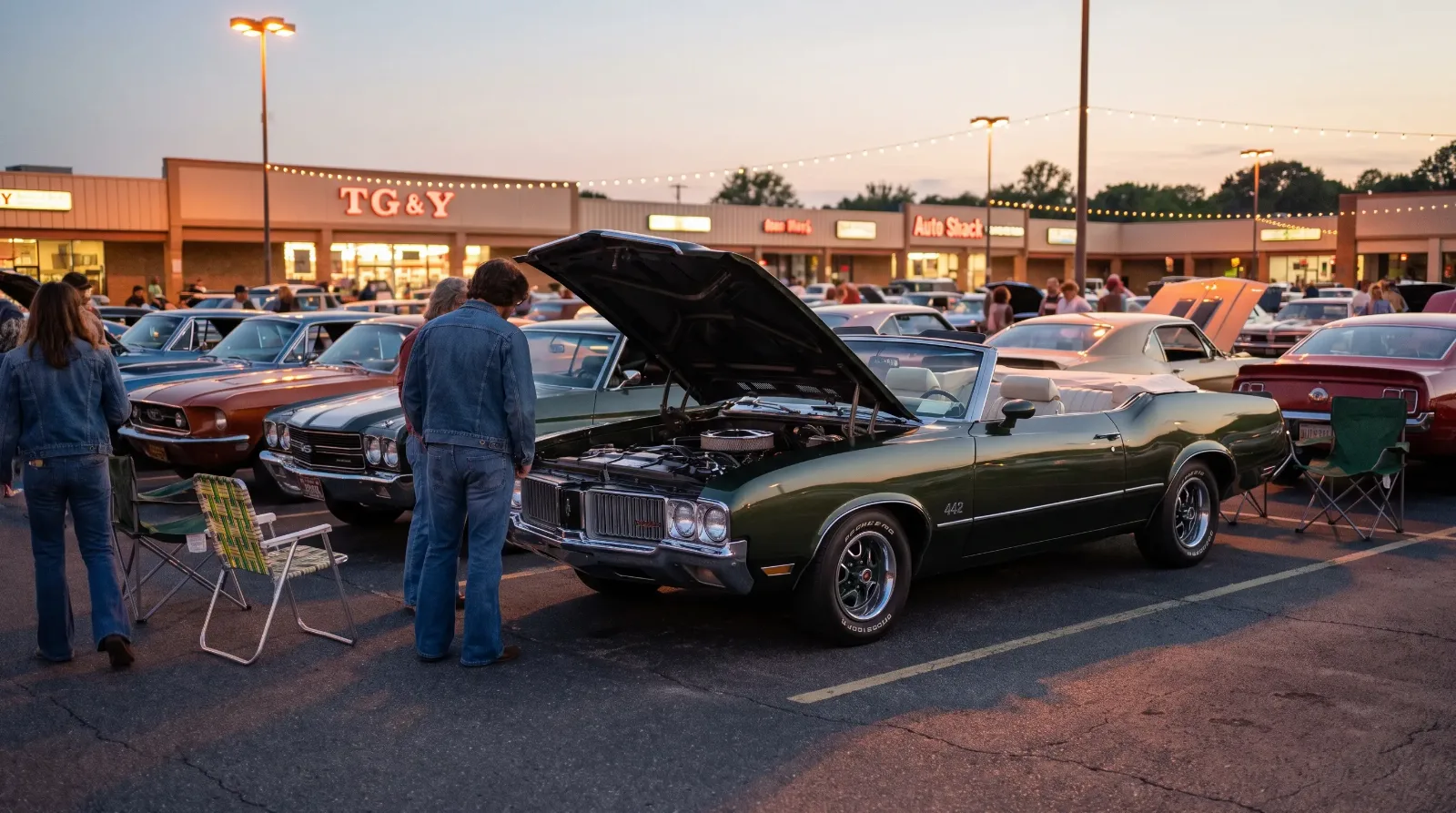
Those same fans eventually graduate to the real thing, gathering at the events where the full-size cars come out to play. You can read the full story of the cruise night and car show world where the childhood dream finally meets the driveway. The plastic and the pixels were never the end of the road. They were the beginning of it.
Related Reading
Have a
Classic Car
for Sale?
Reach thousands of serious classic car collectors across the US.
Sell It Here →
Are You a Classic Car Dealer?
List your full inventory and connect with targeted classic car buyers.
Join as a Dealer →

About the author
Patrick Walsh
Automotive journalist covering classic car shows, events, and the enthusiast community across North America.
More in Ownership & Lifestyle
Comments
Be the first to comment on this article.