
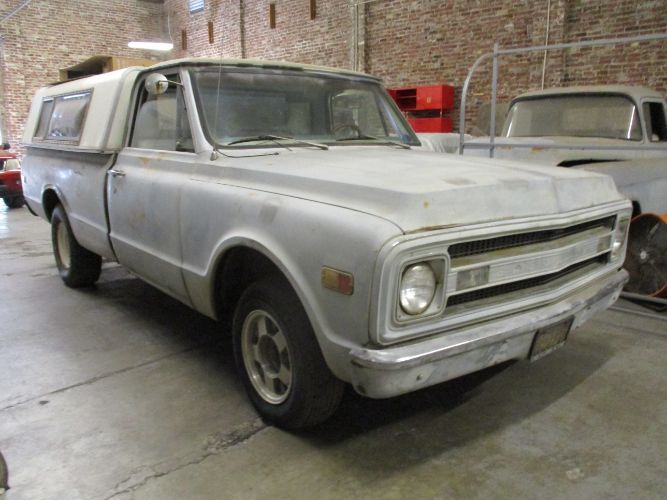
Somewhere past mile marker 140 on a two-lane stretch of Texas highway, a woman named Carol felt her C10 start to hum through the steering wheel, a low, rhythmic shudder that got worse the faster she went and eased, but never quite vanished, when she backed off the gas. She'd owned the truck eleven years by then, driven it to three different states and back, and she knew its sounds the way you know a person's breathing in the next room. This wasn't one she recognized. She pulled off at the next exit, sat with the engine idling in a gas station lot, and tried to decide whether to keep driving or turn around.
Ownership & Lifestyle
7 min read
Diagnosing Highway Vibration on a Classic C10
A story of one C10 owner's highway shudder becomes a guide to isolating driveshaft, U-joint, tire, and wheel bearing vibration before it turns into a roadside breakdown.

That moment, the not-quite-sure moment, is the one most C10 owners eventually have. The truck feels fine at a stoplight and fine in town, and then somewhere around fifty-five or sixty miles an hour, something starts to talk to you through the floor or the wheel. It's rarely one thing. It's almost always worth chasing down before the drive gets longer.
The vibration that changes with speed, not with load
The first thing to notice is whether the shudder tracks with your speed or with your engine's RPM. Roll into neutral at highway speed and coast, engine still running but not driving the wheels. If the vibration continues at the same intensity while coasting, it's coming from something spinning with the wheels, tires, wheel bearings, or a driveshaft out of balance. If it eases up or disappears the moment you're out of gear, look toward the engine and its mounts instead.
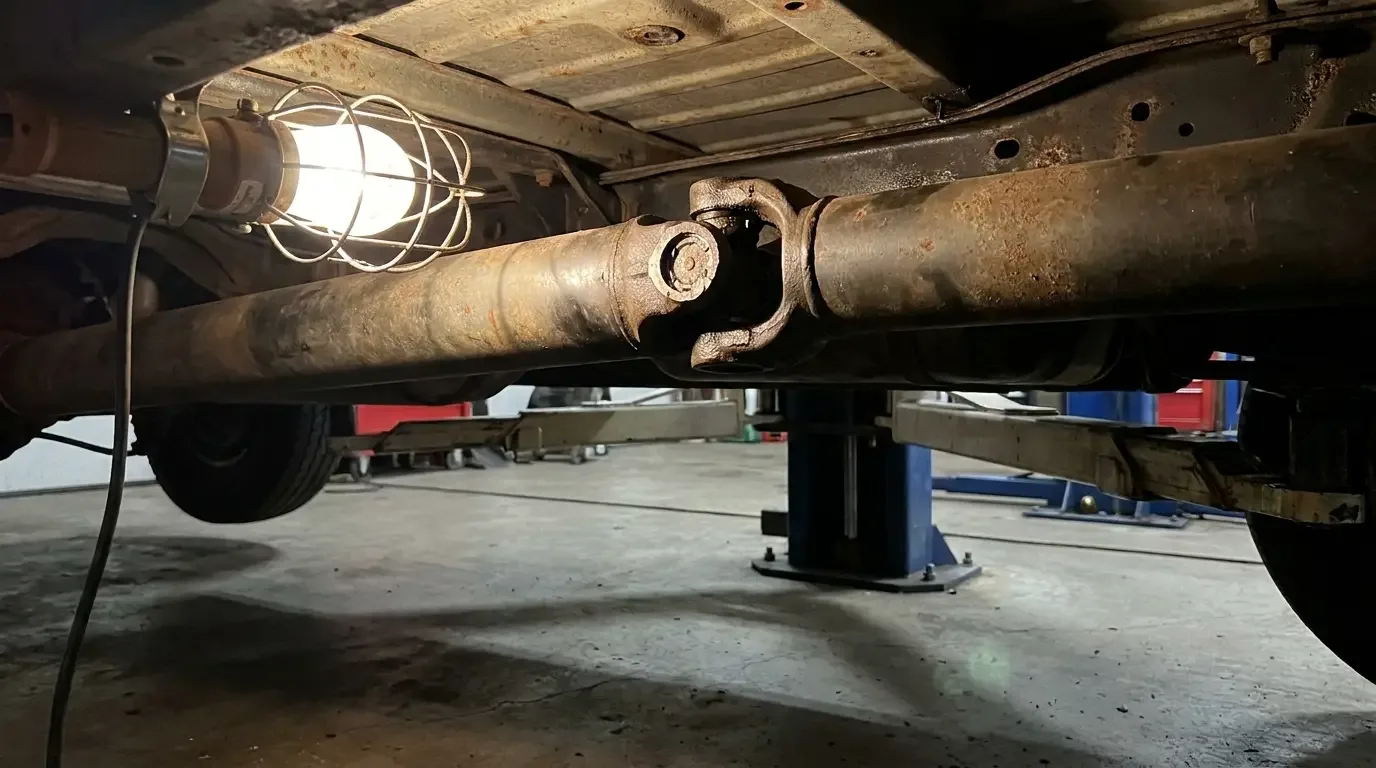
Most highway vibration on a C10 traces back to the driveline. These trucks carry a long driveshaft, sometimes in two pieces with a center support bearing depending on wheelbase, and decades of use, U-joint wear, and the occasional lift or gear swap all nudge that shaft slightly out of true. A driveshaft that's even a little unbalanced announces itself right in that fifty-five to seventy mile an hour window, the exact speed where most people are settling in for the long haul on a road trip, which is exactly when Carol felt hers.
What a worn U-joint actually feels like
A failing universal joint doesn't always clunk before it vibrates. Sometimes the first sign is a fine buzz through the seat, not a knock, that gets sharper under acceleration and softer when you let off the gas. Park the truck, put it in neutral, and try to twist the driveshaft by hand with the truck safely supported. Any looseness or a dry, gritty feel when you rotate it is worth acting on before it becomes a roadside problem instead of a driveway one. A U-joint that fails completely at speed can drop the driveshaft, let it hammer the transmission tunnel or frame, and in the worst case lock up the rear wheels, so this isn't a symptom to let ride for another few thousand miles.
Tires, balance, and the wear pattern that tells the story
Tires cause more highway shudder than people expect, especially on a truck that sees long stretches of straight road punctuated by years of sitting. A tire that's developed a flat spot from sitting still, or one that's simply lost its balance weights over time, will produce a vibration that rises and falls with road speed in a way that feels almost identical to a driveline issue at first. Run your hand along the tread. Cupping, feathering, or an uneven wear pattern on one side tells you the tire itself, or the alignment behind it, is part of the story.
| Symptom | Speed onset | Likely cause |
|---|---|---|
| Fine buzz through seat/floor, worsens with acceleration | 50-70 mph | Worn U-joint or unbalanced driveshaft |
| Steering wheel shake, comes and goes with speed | 45-65 mph | Tire balance or flat-spotting |
| Vibration present at all speeds, worse under load | Any speed | Wheel bearing wear |
| Vibration disappears in neutral coast | Varies | Engine mount or accessory imbalance |
Carol's turned out to be a combination, a driveshaft that had gone slightly out of balance sometime in the last few thousand miles, made worse by a rear tire that had developed a flat spot from a winter spent parked on a slight incline. Neither problem alone would have announced itself so clearly. Together, at that particular highway speed, they amplified each other into something she couldn't ignore.
Wheel bearings and the vibration that gets worse, not better
A wheel bearing going bad doesn't behave like the others. It tends to build steadily rather than showing up cleanly at one speed and vanishing at another. It often carries a low growl alongside the vibration, one that changes pitch slightly when you weave gently side to side on an empty road, weight shifting off the affected wheel and back onto it. This is the symptom that worries me most when I hear it described, because a wheel bearing that fails completely doesn't give you the polite warning a U-joint usually does. If the growl is there alongside the shake, get it looked at before the next long drive, not after.
What Carol did, and what most people should do
She didn't turn around. She drove the truck slowly into the next town, found a shop willing to look at it that afternoon, and left it there overnight rather than push on toward the coast with a shudder she couldn't explain. The driveshaft went out for a rebalance, the tire got replaced instead of patched, and she was back on the road two days later than planned, which she said afterward felt like nothing compared to what it would have felt like if she'd kept driving and found out the hard way what the noise had been trying to tell her.
That's really the whole lesson in it. A vibration on the highway is a truck talking to you in the only language it has, one system at a time, if you're willing to listen closely enough to tell which one is speaking. Isolate the speed it happens at, isolate whether it changes with the engine or the wheels, and you'll usually find the answer before it finds you.
"She kept his truck in the barn for eleven years before she could sell it. When the new owner started it, she cried in the driveway, because some engines still sound like a person."
Nora Beckett
Before the next long drive
Anyone who drives an old truck any real distance eventually builds a relationship with its sounds, which ones are just the truck being a truck, and which ones mean pull over. Owners keeping up with maintenance guide routines tend to catch driveline wear before it turns into a highway surprise, because a lot of this comes down to noticing small changes early rather than waiting for a shudder loud enough to feel through the seat.
And if you're the kind of owner who takes a C10 on real road trips, not just Sunday drives around town, it's worth thinking ahead to what to carry in case it happens on the road, because a U-joint or a bearing rarely picks a convenient moment to finally let go, and the difference between a two-hour delay and a two-day one is usually just what's already in the truck bed when it happens.
Sources and notes
Related Reading


Have a
Chevrolet C10
for Sale?
Reach thousands of serious classic car collectors across the US.
Sell It Here →
Are You a Classic Car Dealer?
List your full inventory and connect with targeted classic car buyers.
Join as a Dealer →

About the author
Nora Beckett
Automotive features writer and photographer who tells the human stories behind the cars, from show fields to cross-country road trips.
Related Listings - Chevrolet C10
More in Ownership & Lifestyle


Comments
Be the first to comment on this article.