
There's a photograph a friend of mine keeps taped inside her garage, her father standing next to a loaded C10 in 1979, a cooler bungeed in the bed next to a wooden toolbox that had belonged to his own father. She never met that grandfather. But she knows the shape of his hands from the wear pattern on the toolbox handle, decades of gripping in the same two spots. When she took over the truck and started driving it on her own long trips, she kept the box. She just changed what was inside it.
Ownership & Lifestyle
7 min read
Essential Spare Parts to Carry for a Classic C10 Road Trip
A road trip story frames the practical case for what belts, fluids, and small parts to carry in a classic C10 before a long highway drive.
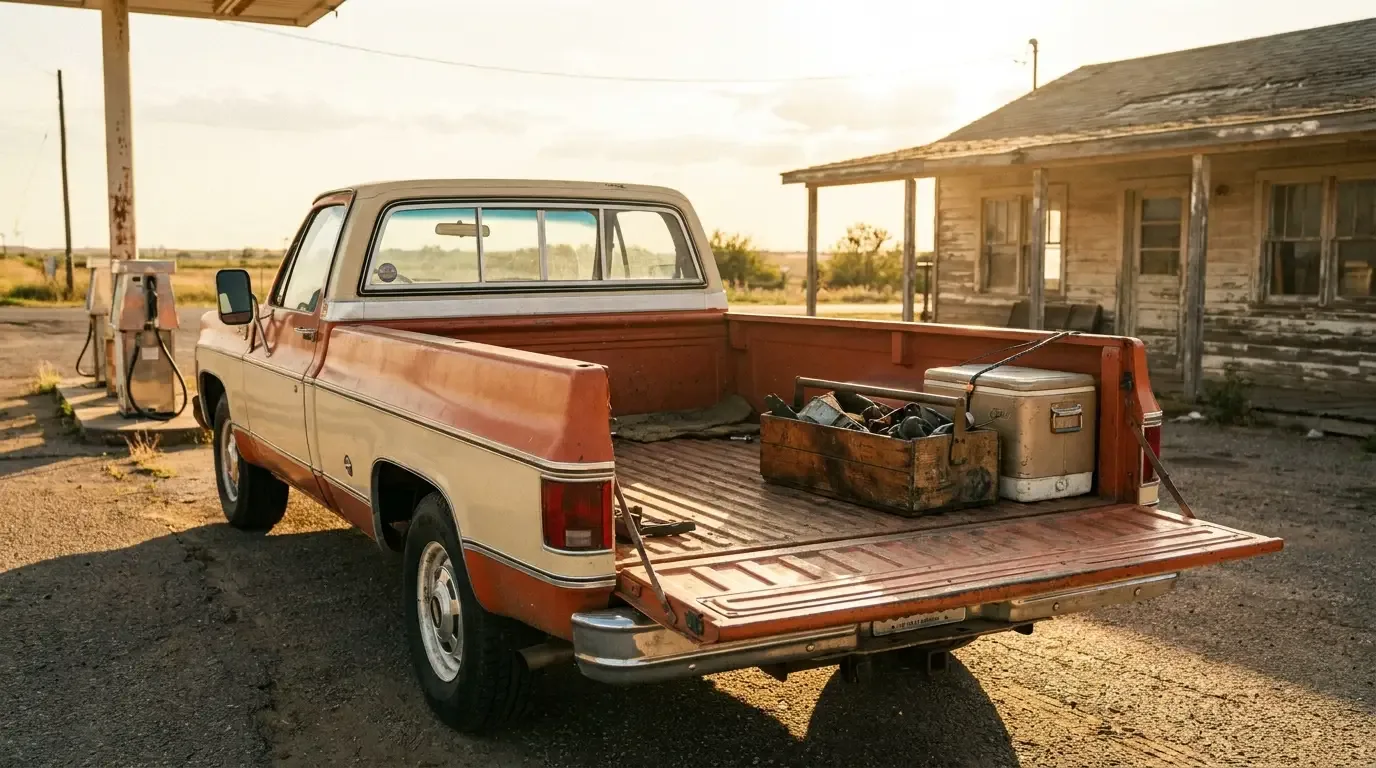
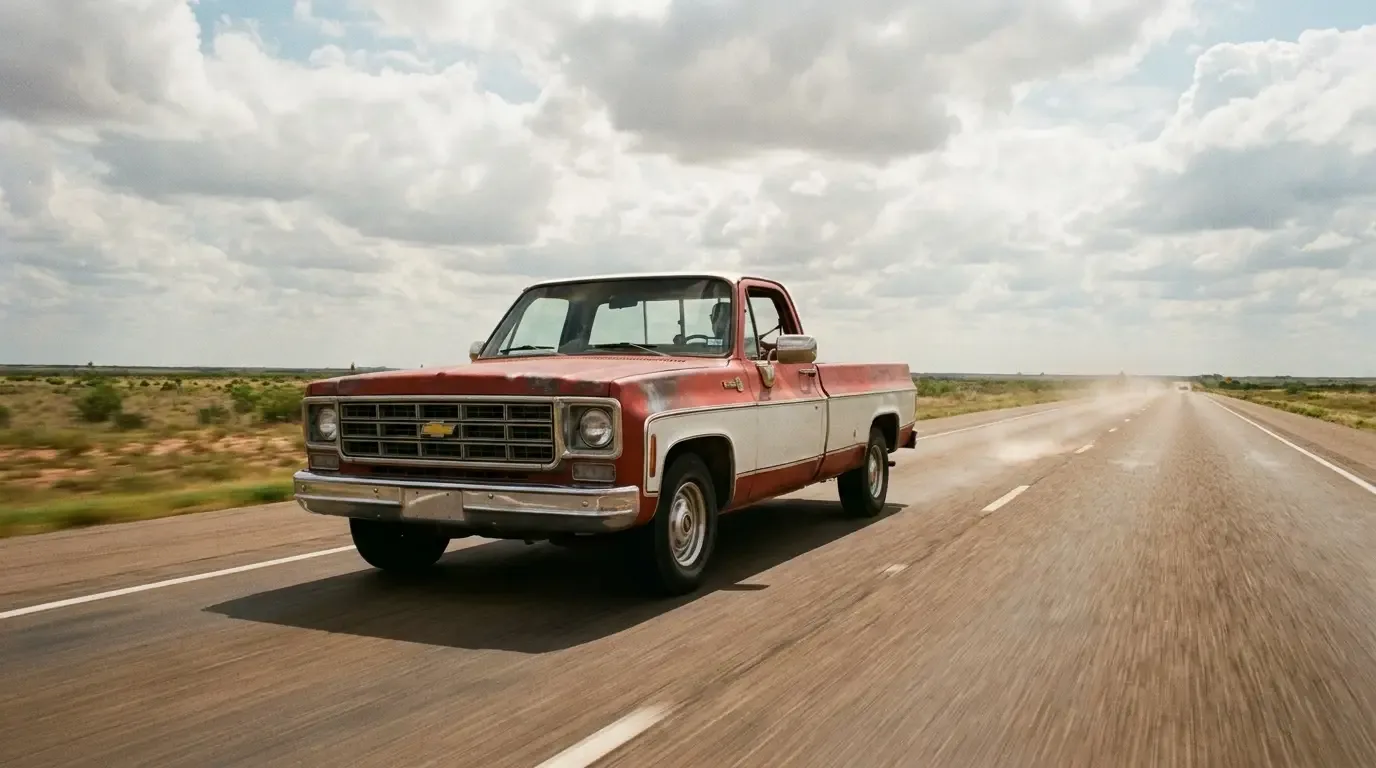
That's really what a spare parts kit for an old truck is. Not a hedge against disaster so much as a small act of respect for the machine you're asking to cross three states without complaint. Old trucks give plenty of warning before they strand you, but only if you're carrying the handful of things that turn a roadside problem into a fifteen-minute delay instead of a flatbed call.
The parts that actually strand people
Ask around at any C10 gathering about what left someone stuck on the shoulder, and the same short list comes up again and again. It's rarely the big, dramatic failures. It's small, cheap parts that happen to be load-bearing in ways people forget until they're gone. A water pump belt snapping on a hot afternoon. A fuel pump finally giving out after decades of soft use. A U-joint that's been humming quietly for a thousand miles deciding today is the day.
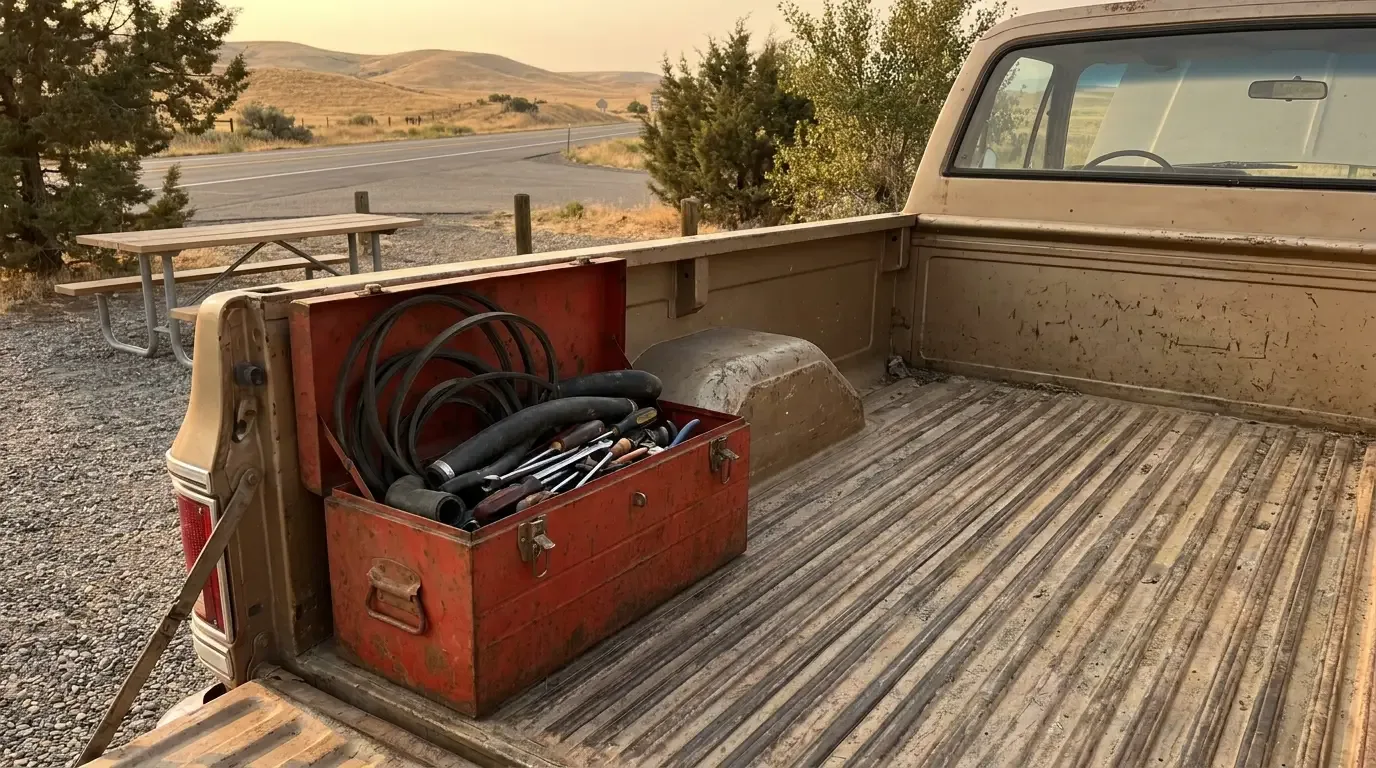
Carrying spares for the parts that fail without warning, and carrying the tools to actually install them roadside, is the difference between a story you tell later and a truck sitting on a trailer while you wait for a tow truck that may not show up for hours out in the kind of country these trucks were built to cross.
| Item | Why it earns a spot in the kit |
|---|---|
| Spare drive belts | Cheap, light, and a snapped belt on an old accessory setup can end a trip in an afternoon |
| Fuel pump (mechanical, if applicable) | A known failure point on higher-mileage originals, small enough to carry pre-gapped and ready |
| U-joints and a strap or two | Wear is often audible before it's terminal, worth having on hand before a long haul |
| Radiator hoses, upper and lower | Rubber ages regardless of mileage, and a split hose on a hot day is a fast way to overheat |
| Fuses, a spare relay, electrical tape | Old wiring has old grounds, and a five-minute fix beats sitting in the dark at a rest stop |
| Basic hand tools plus a torque-appropriate socket set | None of the above matters if you can't actually turn the wrench roadside |
Fluids and the small things that get forgotten
It's easy to remember the parts and forget the fluids that go with them. A quart of the correct oil, a jug of coolant mixed to the right ratio for your climate, and a small bottle of brake fluid take up almost no space and solve problems that otherwise turn into a long walk to the nearest parts store in a town you've never heard of. Carry a tire plug kit and a way to air a tire back up, whether that's a small compressor or a can of sealant as a stopgap, because a slow leak found forty miles from anywhere is a different problem than one found in your own driveway.
A lot of owners also carry a spare ignition coil or condenser if their truck still runs a points-and-condenser distributor, since a weak or failed condenser is a well-known cause of stalling and no-start trouble on these older ignition systems, and it's a small enough part that there's no reason not to have one riding along.
What to actually pack, not just what to buy
Buying the parts is the easy half. Packing them so you can find the right one at ten at night on the shoulder of an unfamiliar highway is the part people skip. Keep the kit in one container, labeled if you have to, and go through it before every long trip the way you'd check the oil, not something you assembled once five years ago and never opened again. A belt that's been sitting loose in a toolbox for half a decade can dry-rot just as badly as the one currently on the engine.
Keep a paper copy of your truck's basic specs in the glove box too, the fuel pump pressure it needs, the belt sizes, the tire size and pressure, because cell signal isn't guaranteed on the kind of back roads these trucks tend to end up on, and a mechanic three counties over will move faster if you can hand them the numbers instead of making them guess.
The trip that made her a believer
My friend, the one with the toolbox, had her fuel pump go on her somewhere in west Texas, on a stretch of road with more mesquite than mile markers. She had the spare in the bed, wrapped in a shop rag exactly where her father had told her to keep it. Forty minutes later, hands black to the wrist, she was back on the road, and she said the whole time she was working on it, she kept thinking about her grandfather doing the same thing on the same kind of road decades earlier. The truck hadn't stranded her. It had just asked her to keep up her end of an old bargain.
That's the real case for carrying spares. Not fear of the road, but respect for it, and for a machine old enough to need a partner instead of a passenger.
"She kept his truck in the barn for eleven years before she could sell it. When the new owner started it, she cried in the driveway, because some engines still sound like a person."
Nora Beckett
Before you load the truck bed
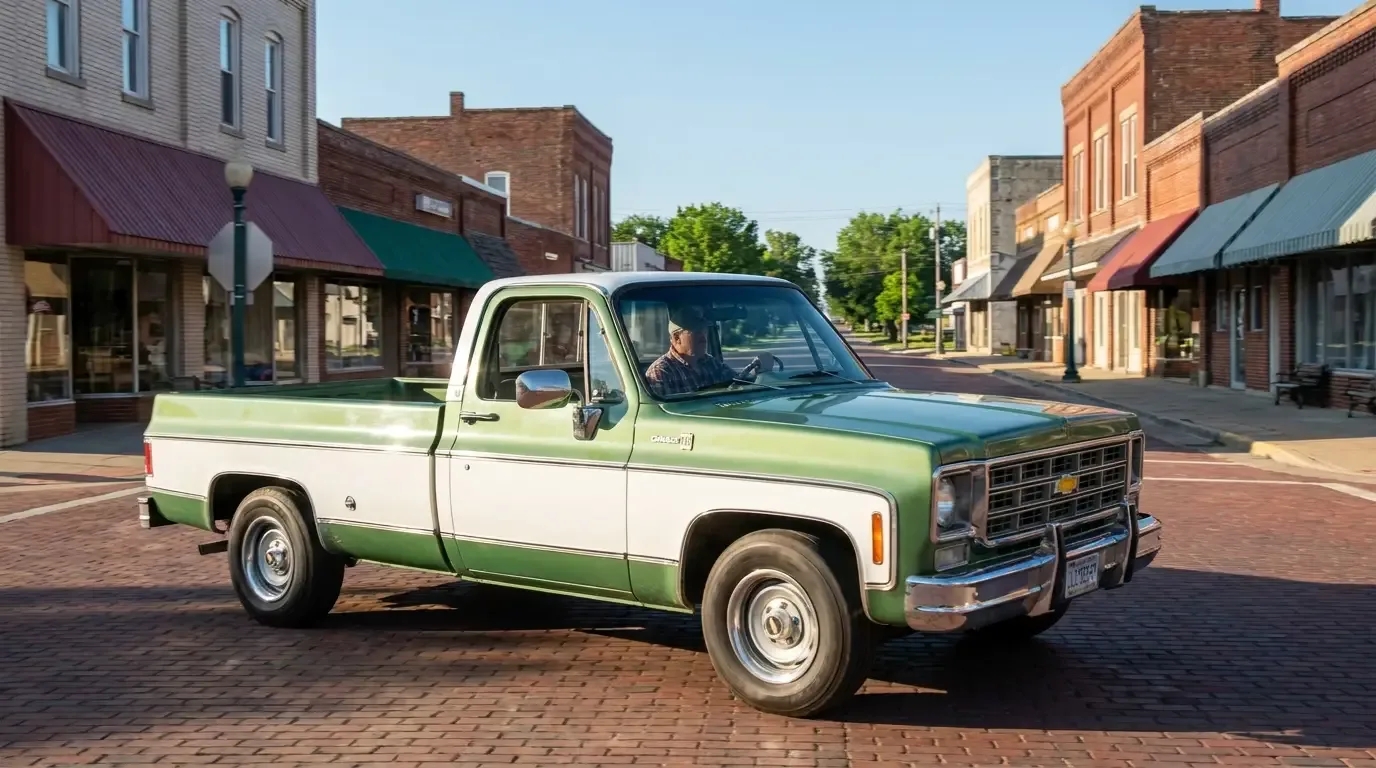
If you haven't already gone through the C10 story, it's worth understanding what these trucks were actually built for before you ask one to cross three states, because the work-truck bones under a modern road trip are the same ones that hauled feed and lumber sixty years ago. And before any long drive, run through the full maintenance guide so the truck is already in good health before it leaves the driveway, since no spare parts kit replaces catching a problem at home instead of on the shoulder.
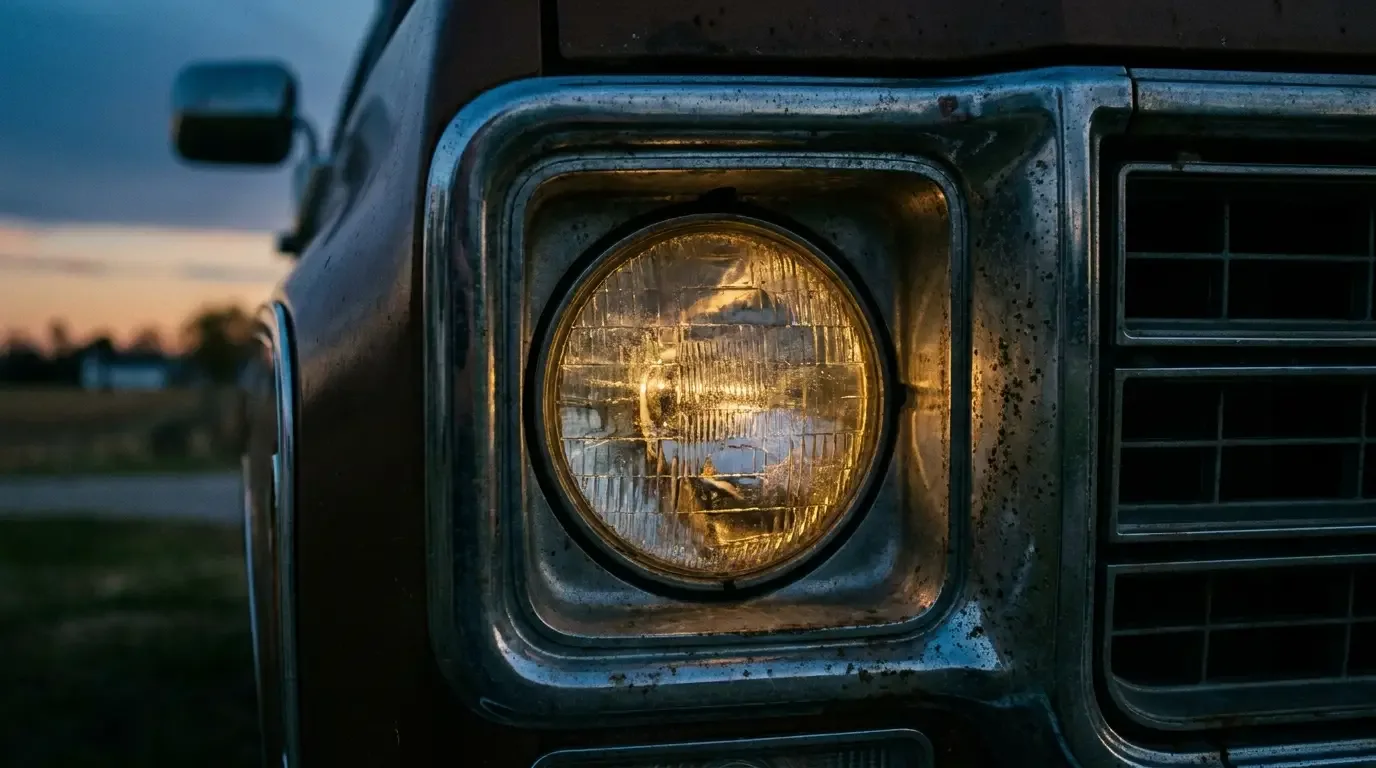
Electrical gremlins deserve a special mention here too. If your headlights have ever dimmed at idle or flickered over bumps, that's worth chasing down before a trip, not during one, since it's often the electrical gremlins that top most owners' lists of small annoyances that turn into real problems the first time you need your headlights on a dark road you don't know.
Sources and notes
Related Reading
Have a
Chevrolet C10
for Sale?
Reach thousands of serious classic car collectors across the US.
Sell It Here →
Are You a Classic Car Dealer?
List your full inventory and connect with targeted classic car buyers.
Join as a Dealer →

About the author
Nora Beckett
Automotive features writer and photographer who tells the human stories behind the cars, from show fields to cross-country road trips.
Related Listings - Chevrolet C10
More in Ownership & Lifestyle
Comments
Be the first to comment on this article.