
A speedometer that bounces between 40 and 60 on a straight stretch of highway isn't a mystery. Nine times out of ten it's the cable, not the gauge, and I've been chasing this same problem on C10s since before half the parts stores carried the right cable in stock. The needle jump makes people think the instrument cluster is failing. Usually it's a dry, kinked, or worn-out cable trying to do a job it can't do anymore.
Restoration & Tech
9 min read
Replacing a C10 Speedometer Cable and Fixing Gauge Bounce
How to diagnose a bouncing C10 speedometer needle, replace the cable correctly at both ends, and rule out the driven gear before you blame the gauge.
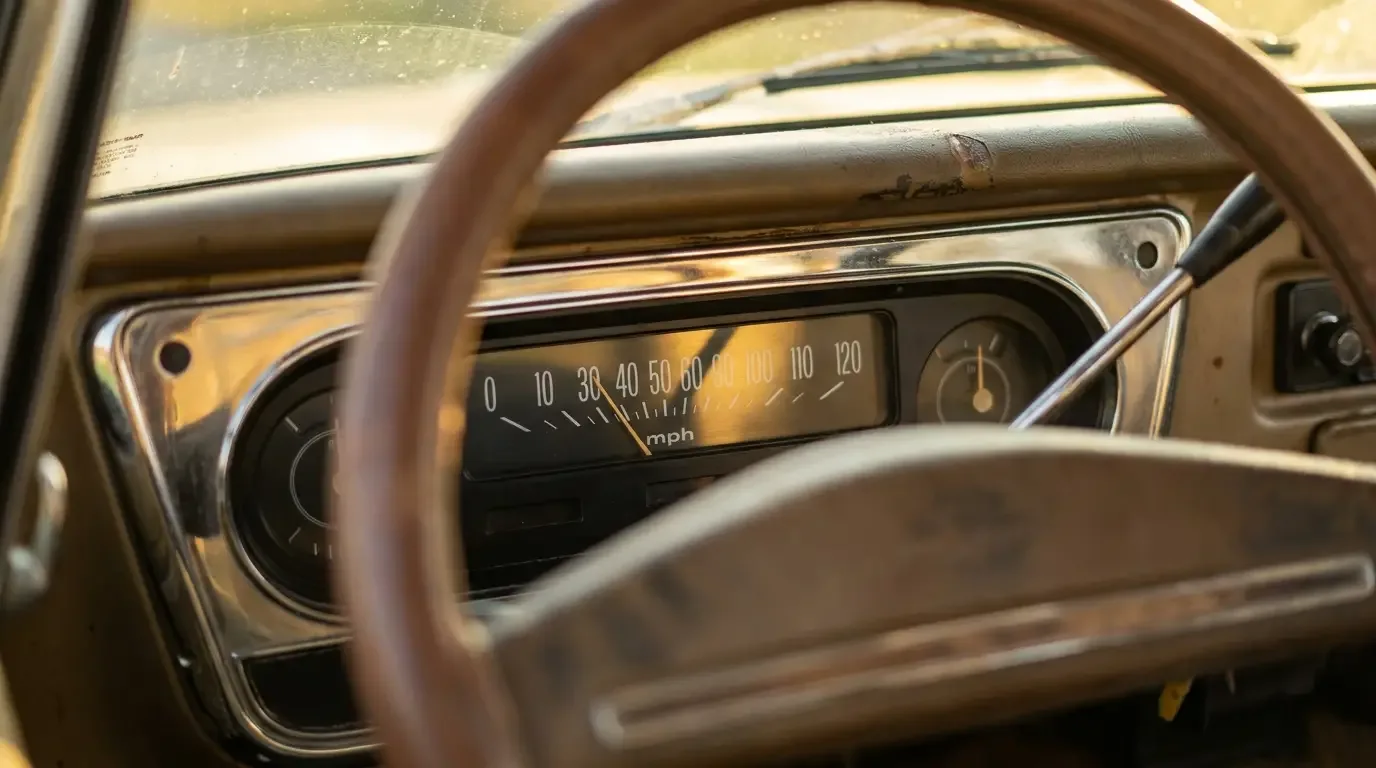
This is a Saturday-morning job if you've got the truck up on stands and the patience to do it right. It's a two-hour headache if you rush the transmission-end connection and have to pull it back apart. I'll walk through both ends of the cable, what causes the bounce specifically, and where the job usually goes sideways.
Why the needle bounces instead of just reading wrong
A speedometer cable is a spinning steel core wire inside a housing, driven off the transmission and turning a magnet in the speedometer head. When the core is lubricated and running true inside the housing, that spin is smooth and the needle tracks steady. When the housing has a kink, or the lubricant has dried out and turned to varnish, the core binds and releases, binds and releases. That stick-slip is what shows up on the gauge as a bounce instead of a steady climb.
A worn speedometer head can also cause a flutter, but that usually shows up as a fine vibration in the needle at a constant speed, not the wide swings people describe when they say the needle is "bouncing between numbers." If you're seeing 10 to 15 mph swings at a steady highway speed, look at the cable and the driven gear before you condemn the head.
Tools and parts to have ready
You don't need much. A cable is cheap enough that I tell people to just replace it rather than try to save the old one, especially if it's original to the truck. Have on hand: a new speedometer cable rated for your transmission (C10s went through several driveline combinations depending on year and engine, so match it to what's actually under the truck, not what the parts book says for the base model), speedometer cable lubricant (not chassis grease, not white lithium, the actual cable lube made for this), a small pick or dental tool for the retaining clips, and a flashlight you can wedge under the dash.
Before you order a new cable, check three things that get blamed on the cable but aren't always the cable. Housing kinks near the firewall grommet are where the cable gets pinched over decades of engine movement and body flex, and a kinked housing will chew up a brand new core in under a year, so replace the housing along with the core if you find a bend that doesn't spring back straight. The driven gear at the transmission is worth pulling too, since a stripped or worn nylon gear causes intermittent readings that look exactly like a bad cable. And speedometer head bushing wear, the felt wick and bronze bushings inside the head drying out or wearing with age and adding drag right where the cable connects, is often why a brand new cable still binds at idle speeds.
Removing the old cable
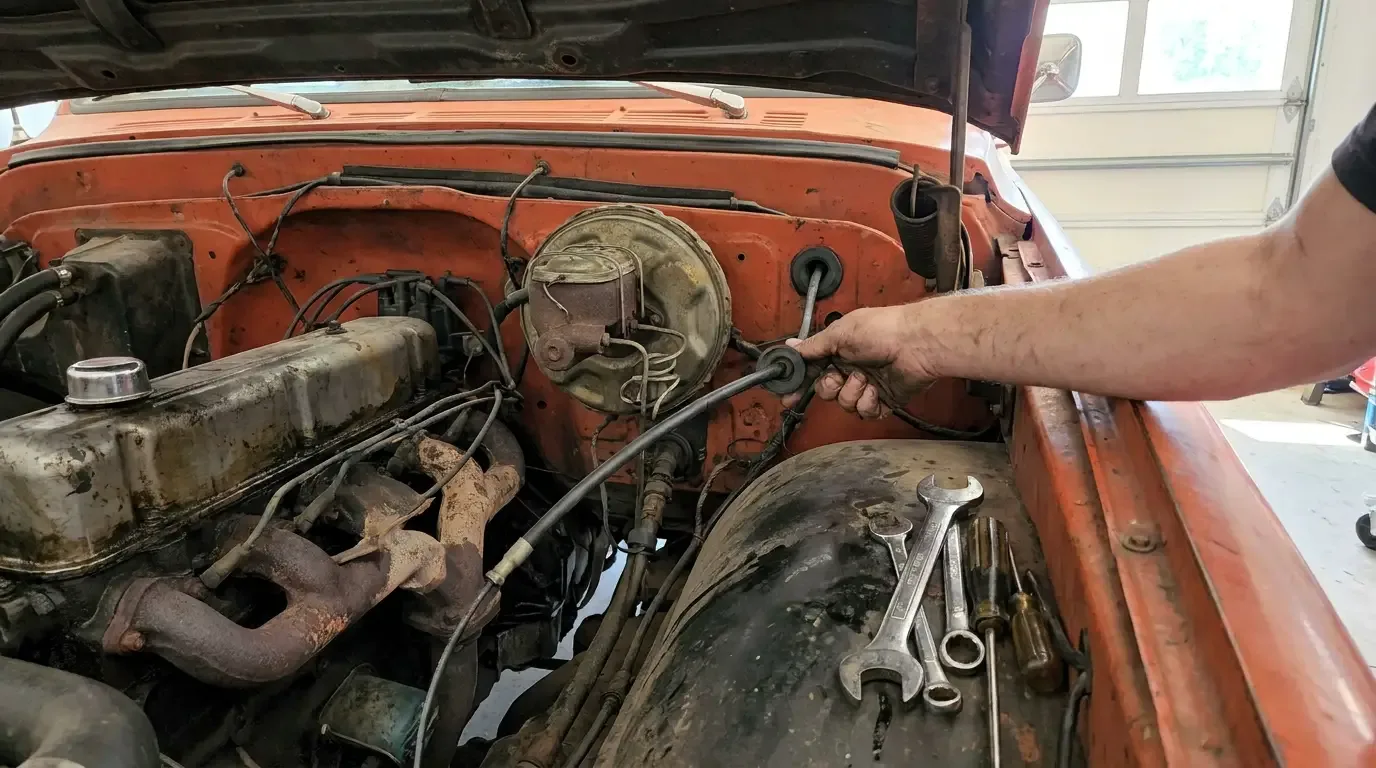
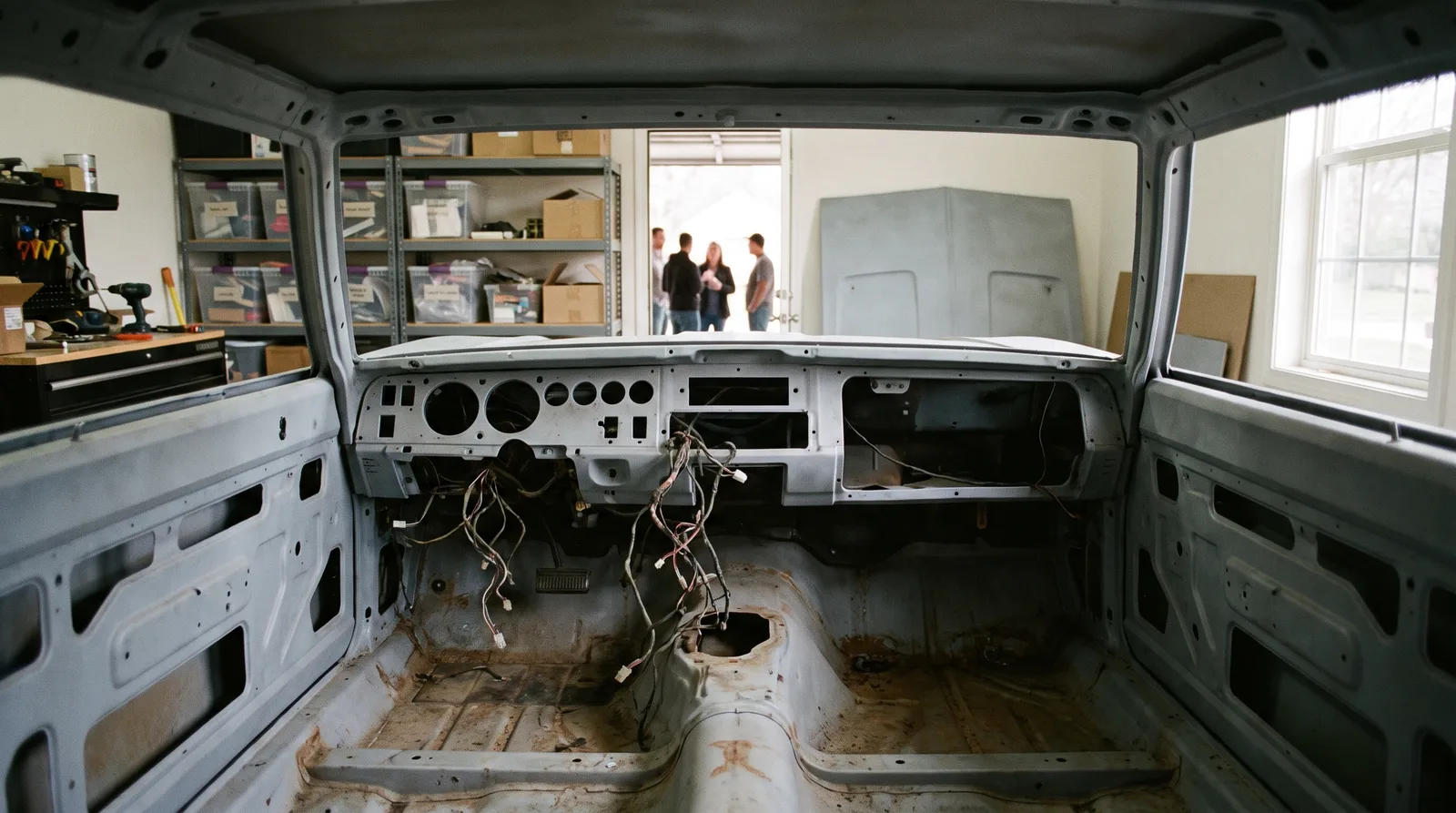
Start under the dash. There's a knurled fitting behind the speedometer head, usually reached by feel more than sight unless you pull the cluster bezel. Loosen it by hand, it should not need a wrench, and if it does, that's a sign someone overtightened it at some point and cross-threaded things slightly. Pull the cable through the firewall grommet from the engine bay side, not the cab side, so you're not dragging a dry, possibly rusty cable through the interior carpet.
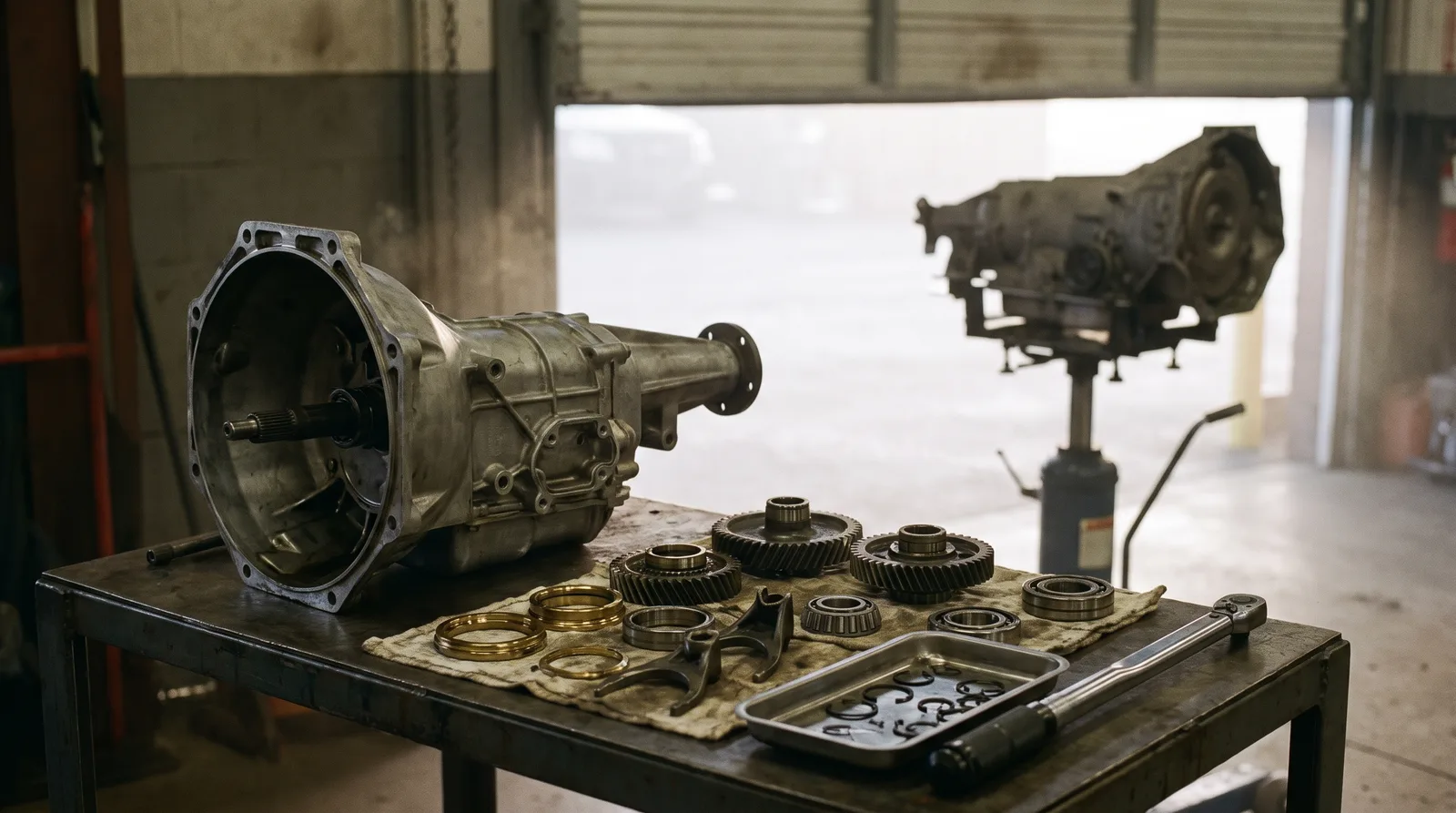
At the transmission end, the cable connects to a small gear housing, usually held by a single bolt and clip, sometimes a threaded fitting depending on the transmission. Note how the housing seats before you pull it, there's usually a specific orientation the gear housing needs to sit at to mesh correctly, and it's easy to forget once you've got grease on your hands and the housing is loose in your palm.
Installing the new cable correctly
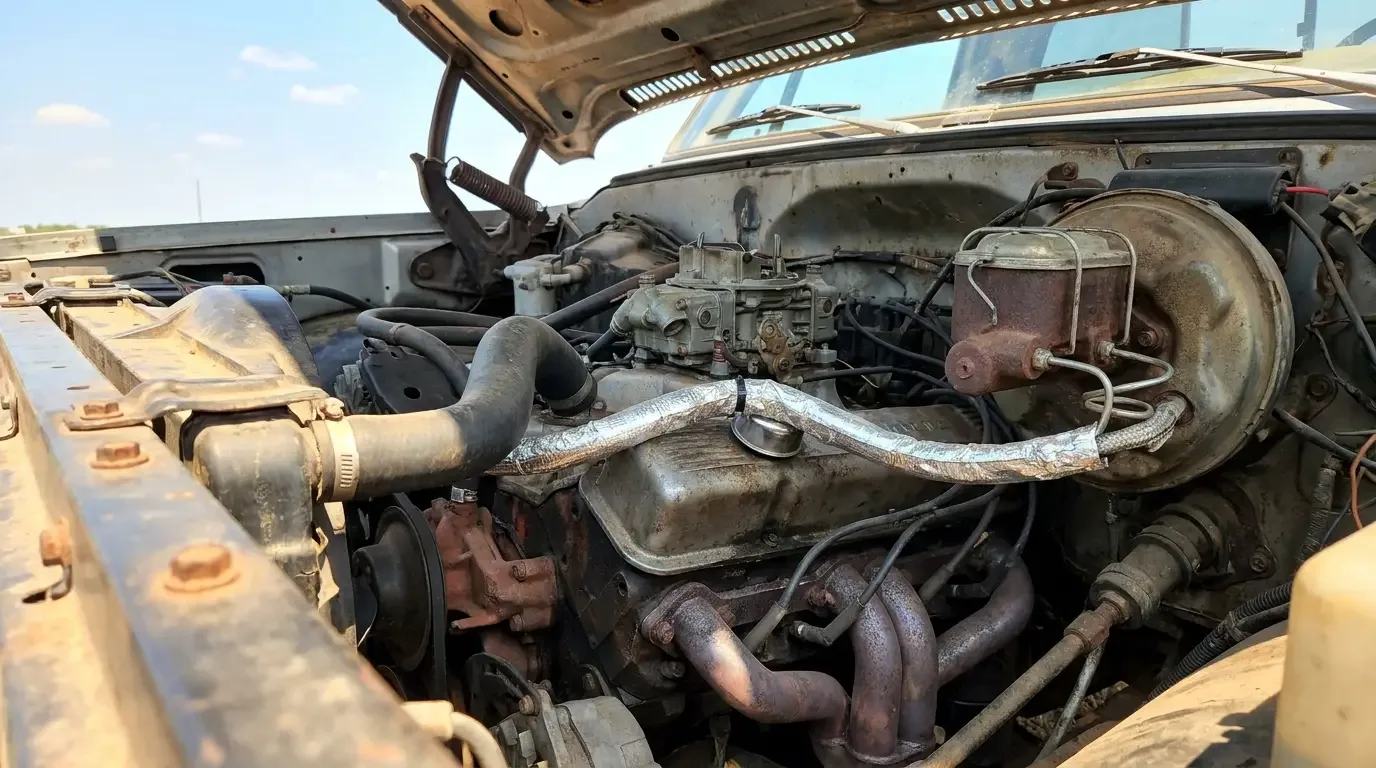
Feed the new cable through the firewall from the engine side, following the same path the old one took. This matters more than people think. The routing isn't arbitrary, it's kept away from the exhaust manifold heat and clear of the steering column on purpose. A cable routed lazily against a header will cook the housing within a season and you'll be back under the dash by next summer.
Before you connect either end, pull the inner core out of the housing about eight inches and apply a light coat of cable lubricant along its length. Not a heavy coat, a thin film. Too much lube attracts road grit at the lower end and actually accelerates wear. Work the core back into the housing slowly, twisting slightly as you feed it, until you feel it seat into the drive gear at the bottom.
Connect the transmission end first, hand-tight is usually enough, then route the cable up through the firewall and connect it to the back of the speedometer head. Don't force the knurled fitting. If it's not threading smoothly, back it off and start again rather than cross-threading brass fittings that are older than most of the mechanics working on them today.
Testing before you close everything up
Before you put the cluster bezel back together, start the truck and roll it slowly in the driveway or up on stands with the wheels free to turn, watching the needle. It should move smoothly with wheel speed, no hesitation, no jump. If you still get a flutter at low speed that clears up above 20 mph, that's usually the driven gear again, not the cable you just installed. Don't assume the new cable fixed everything just because it's new. Confirm it.
Take it on an actual drive once you've confirmed smooth movement in the driveway. Highway speed is where the old bounce showed up, so that's where you need to see it gone. If the bounce persists at speed after a fresh cable and a good driven gear, it's worth checking the mount points along the frame or fender well where the cable housing is clipped. A cable that's rubbing against sheet metal on its way to the transmission can develop a false bind that mimics the exact symptom you started with.
Why this is worth fixing before anything bigger
I've had guys tell me they just live with the bouncing needle because the truck still runs fine otherwise. That's backwards thinking on an old truck. A speedometer that bounces is telling you something is dragging or binding in a mechanical system connected directly to your transmission's output shaft. It's a small, cheap job now. Left alone long enough, a cable that's binding hard enough to bounce the needle can eventually seize completely, and a seized cable at the transmission end has been known to strip the driven gear, which is a bigger job with the pan or tailhousing involved depending on your setup.
It's the kind of thing that takes a Saturday morning to do right and saves you a much longer Saturday down the road. If you've already been through the maintenance guide for keeping a C10 running as a daily driver, this fits right alongside it, a small mechanical system that gets ignored until it's loud enough to notice, then costs more to fix than it would have the first time around.
"A C10 that spent its life in Texas has a different rust profile than one from Minnesota, and that's not automatically good news. The floors might be solid. The rockers might be fine. But the frame rails on anything that worked a ranch, and most of them worked something, will show you things that a steam clean won't hide. Get under it with a light. Not a flashlight held at arm's length. Get under it."
Robert Halloran
Related maintenance worth doing at the same time
If you're already under the dash for the speedometer cable, it's a good time to check the rest of the gauge cluster wiring and connections while you have access. Owners following the maintenance guide for keeping a truck reliable as a daily driver know that small electrical and mechanical gremlins tend to show up in clusters, one loose ground or dry cable this month, another next season. Catching them together saves repeat trips under the dash.
And if you've fixed the cable but still feel an odd vibration through the floor or steering wheel at highway speed that has nothing to do with the needle, don't assume it's related to the speedometer at all. That's more likely highway vibration, a bigger version of the same drivetrain gremlins, driveshaft balance, u-joint wear, or tire issues that show up the same way a bad cable does: intermittent, speed-dependent, and easy to misdiagnose if you don't isolate the systems one at a time.
Sources and notes
- JEGS: choosing the correct transmission speedometer gears
- ThirdGen.org: calibrating a speedometer for new rear-end gears
- Ecklers: 1955-72 classic Chevy speedometer, cable, and odometer repair
- Ford Truck Enthusiasts: diagnosing a bouncing speedometer needle
- For A Bodies Only forum: speedometer head felt wick and bushing wear
Related Reading

Have a
Chevrolet C10
for Sale?
Reach thousands of serious classic car collectors across the US.
Sell It Here →
Are You a Classic Car Dealer?
List your full inventory and connect with targeted classic car buyers.
Join as a Dealer →

About the author
Robert Halloran
Texas-based classic truck enthusiast with decades of experience buying, restoring, and writing about American pickups from the 1940s through the 1980s.
Related Listings - Chevrolet C10
More in Restoration & Tech
Comments
Be the first to comment on this article.