
I have been around enough SEMA halls and swap meets to know that most "famous" builds fade after a season or two. Somebody spends the money, wins a trophy, gets the magazine spread, and eighteen months later the truck is sitting in a corner of a shop getting sold to cover the next project. The C10 builds that actually stuck around and changed how people build these trucks are a much shorter list, and they earned that spot by solving a real problem instead of just spending more than the last guy.
Ownership & Lifestyle
7 min read
From SEMA to the Street: Famous Custom C10 Builds
The C10 builds that actually changed the scene were never the ones with the biggest budget. Here is what set the influential trucks apart from the merely expensive ones.
The builds that set the template
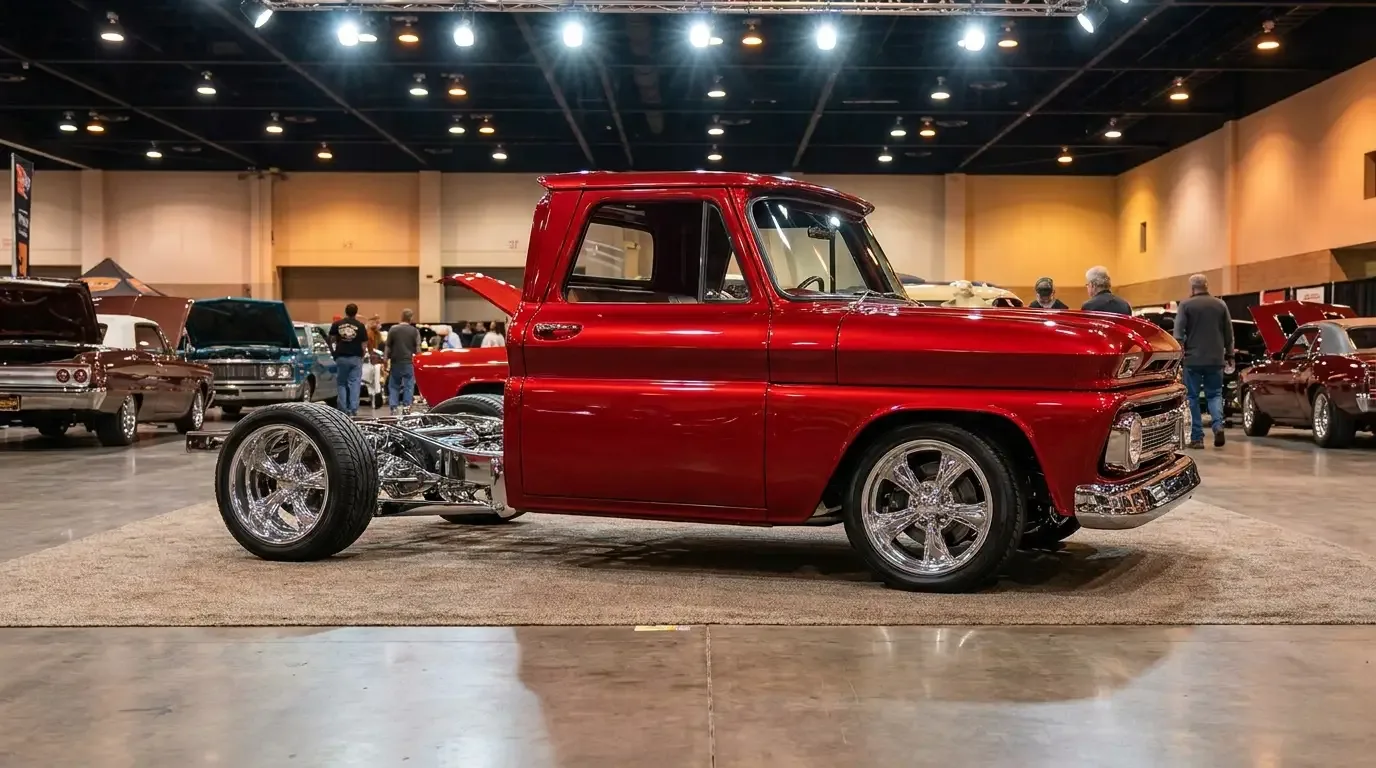
Every custom scene has a handful of trucks that everybody who came after was copying whether they admitted it or not. In the C10 world, that started with the early pro-touring builds out of California and Texas in the late 1990s and early 2000s, trucks that took a square body and put real suspension underneath it instead of just a lowering kit and a set of big wheels. Those early builds proved something the rest of the scene had not fully accepted yet: that a half-ton work truck could handle like it belonged on a road course if somebody was willing to engineer the chassis properly instead of treating the frame as untouchable.
What made those trucks matter was not any single component. It was the sequence. Boxed frame first. Then a real four-link or a well-sorted independent front end. Then the engine, because a fast truck that cannot put power down through a chassis built for hauling feed sacks is just an expensive way to break parts. Builders who skipped that order in the years after learned the hard way why the sequence existed.
The truck that made LS swaps normal
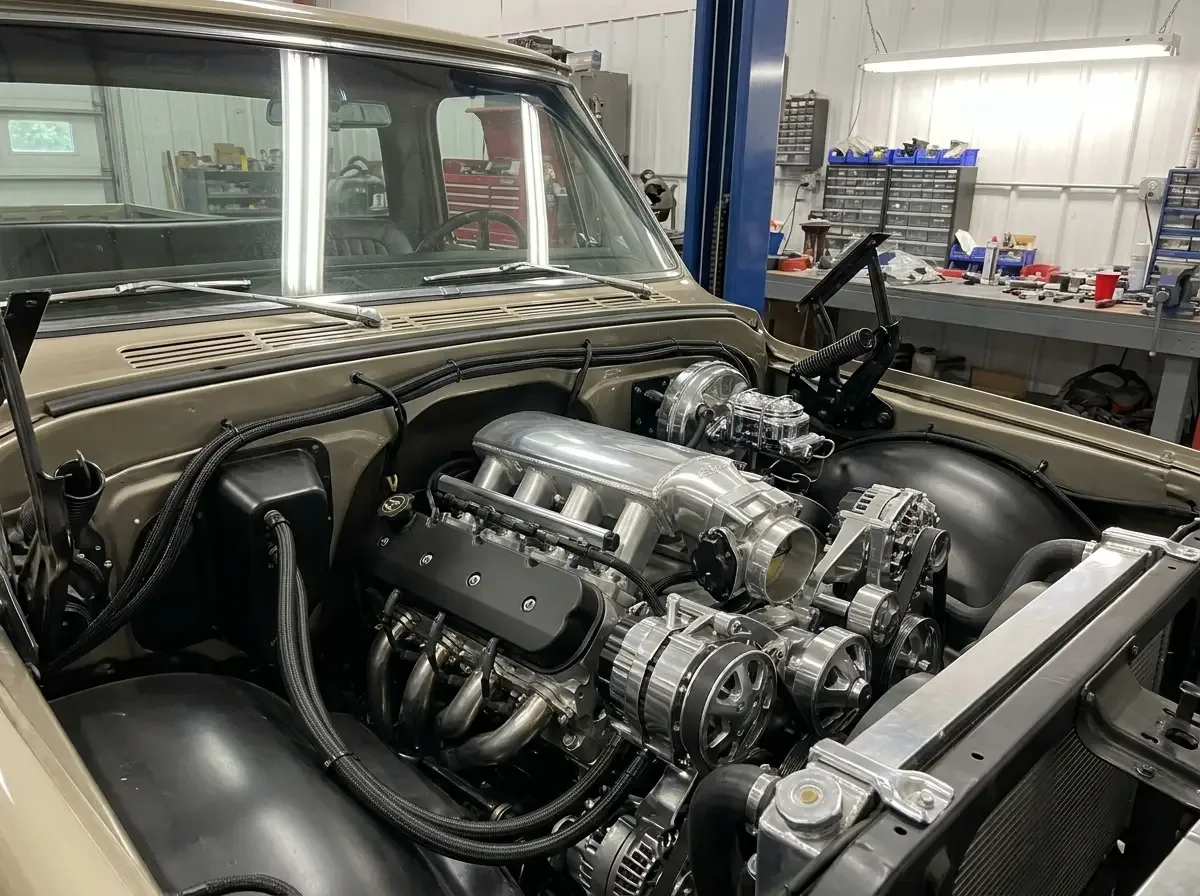
There is a particular generation of C10 build, the ones that started showing up around the mid-2000s with a 5.3 or 6.0 under the hood instead of a warmed-over 350, that changed the whole economics of building one of these trucks. Before that, a serious power upgrade meant a built small block with real machine work and a tuner who understood carburetors down to the jet. After, it meant a junkyard LS, a wiring harness kit, and a computer that did most of the tuning work itself. That shift did not happen because of one famous truck. It happened because enough well-documented builds proved the swap was reliable, and the parts suppliers who watched those builds responded by making the whole process easier for the next guy.
I have torn into plenty of these swaps myself over the years, and the trucks that hold up are the ones where the builder did not cut corners on the mounts and the cooling system just because the engine itself was cheap to source. A junkyard LS is a bargain. The subframe work, the driveshaft angle, the fuel system, none of that got any cheaper just because the block did.
Lowriders, low trucks, and where the scenes overlapped
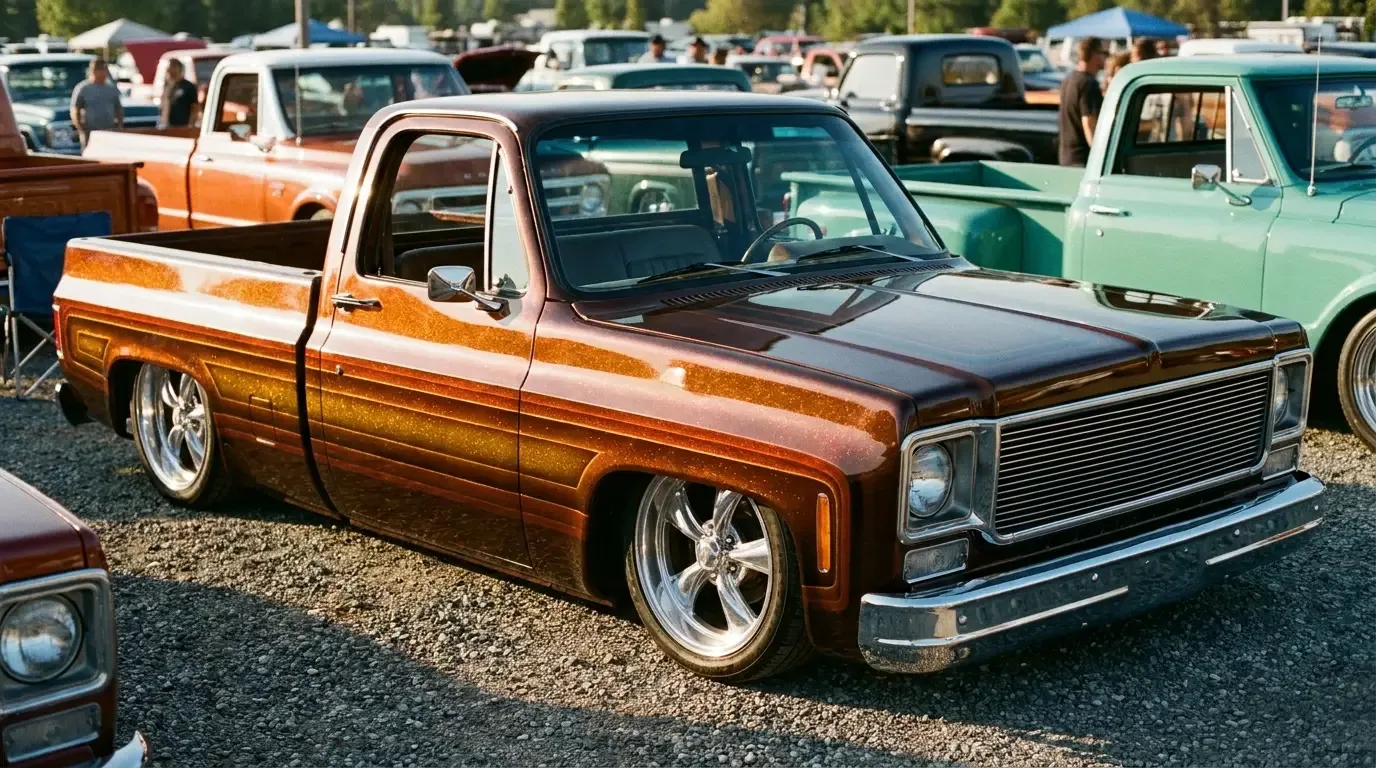
Not every famous C10 came out of a pro-touring shop. Some of the most influential trucks in this platform's history came out of the lowrider scene, where builders were laying frames on the ground with hydraulics years before the restomod crowd started paying attention to ride height as a design decision rather than a stance trend. Those trucks proved the C10's sheet metal could carry a completely different build philosophy, from candy paint and patterns to show-quality undercarriages, and plenty of the detailing standards that show up in high-end restomods today trace straight back to that scene's insistence that the parts nobody sees still had to look finished.
The overlap between those worlds is part of why the platform has stayed interesting for as long as it has. A truck built for a slow, low cruise and a truck built to run a road course have almost nothing in common mechanically, but they came out of the same starting point, and both scenes kept pushing the platform in directions the factory never planned for.
What the awards actually tell you
The Goodguys Truck of the Year award is a decent shorthand for tracking which builds the wider community actually rated, since the trucks that keep getting referenced years after their show season tend to be the same ones that placed well there. Mark Sandfort's 1965 Chevy C10, built by South City Rod and Custom with a Roadster Shop chassis and a deliberately period-correct small-block instead of an LS, took the LMC Truck of the Year Late honor in 2022, and first-generation C10s have kept showing up near the top of that award in the years since. What's consistent across the winners is the same pattern that shows up in every genuinely influential build: the chassis work came first, the paint and the engine got the attention afterward, and none of it looked rushed to make a show deadline.
SEMA's own Battle of the Builders competition, which launched in 2014, changed the incentive structure in a way that's easy to miss if you only ever see the finished trucks in a magazine spread. Builders suddenly had a formal, judged reason to document the engineering decisions behind a build instead of just the finished paint and interior, and that shift pushed a lot of shops toward showing more of the chassis and fabrication process than they used to bother explaining. The C10 builds that did well in that format were rarely the flashiest trucks on the floor. They were the ones where a judge could look underneath and see the reasoning behind every panel gap and every suspension mount.
What separates a famous build from an expensive one
Plenty of trucks have had six-figure budgets thrown at them and never got talked about twice. The builds that actually became famous, the ones other builders still reference, all did one thing the expensive-but-forgettable trucks did not: they solved a specific problem in a way nobody else had quite gotten right yet, whether that was a suspension geometry, a swap combination, or a fabrication technique that made the next hundred builds easier. Money buys good parts. It does not buy the kind of build that changes what the rest of the scene thinks is possible.
That is worth remembering for anyone starting a build today and hoping it turns into something people talk about later. The famous trucks were rarely trying to be famous. They were trying to solve a problem the builder actually cared about, and the recognition came after, not before.
"The trucks people still talk about years later were never the ones with the biggest budget. They were the ones where somebody figured out a problem the rest of us were still guessing at."
Robert Halloran
None of this happens in a vacuum. Anyone new to the platform is really stepping into a much bigger story about C10 culture as a whole, one that these individual builds are just the most visible chapters of. And it explains a good part of why so many new collectors start here instead of somewhere else. The platform has a fifty-year track record of rewarding builders who take the time to do the chassis work right, and that track record is exactly what draws people in who have never owned an old truck before.
Sources and notes
Related Reading
Have a
Chevrolet C10
for Sale?
Reach thousands of serious classic car collectors across the US.
Sell It Here →
Are You a Classic Car Dealer?
List your full inventory and connect with targeted classic car buyers.
Join as a Dealer →

About the author
Robert Halloran
Texas-based classic truck enthusiast with decades of experience buying, restoring, and writing about American pickups from the 1940s through the 1980s.
Related Listings - Chevrolet C10
More in Ownership & Lifestyle
Comments (1)
R
Rick Fontaine
3 months ago
Two-door versions always carry a premium, but the wagons are starting to get serious collector attention. Keep that in mind if you're budget-conscious.