
Ten years ago a good C10 restomod meant a crate 350, a set of budget shocks, and enough paint to make it look like it belonged at a cruise night. Today the same build might carry an LT4, a triple-adjustable coilover corner, and a wiring harness with more processing power than the truck's original engine had cubic inches. The numbers tell the story better than the hype does. A stock 1972 C10 with a two-barrel 350 made around 165 net horsepower, the figure GM settled on across its lineup that year once the industry switched from gross to net ratings. A well-built modern restomod on the same chassis is regularly clearing 450 to 650 horsepower at the wheel, and it does it while getting better fuel mileage than the truck it replaced. That is not nostalgia. That is engineering catching up to a shape everybody already loved.
Inside the Modern C10 Restomod Scene
LS swaps, air ride, and real suspension engineering have turned the C10 restomod scene into something closer to a chassis engineering problem than a paint job. Here is what actually separates the good builds from the expensive ones.
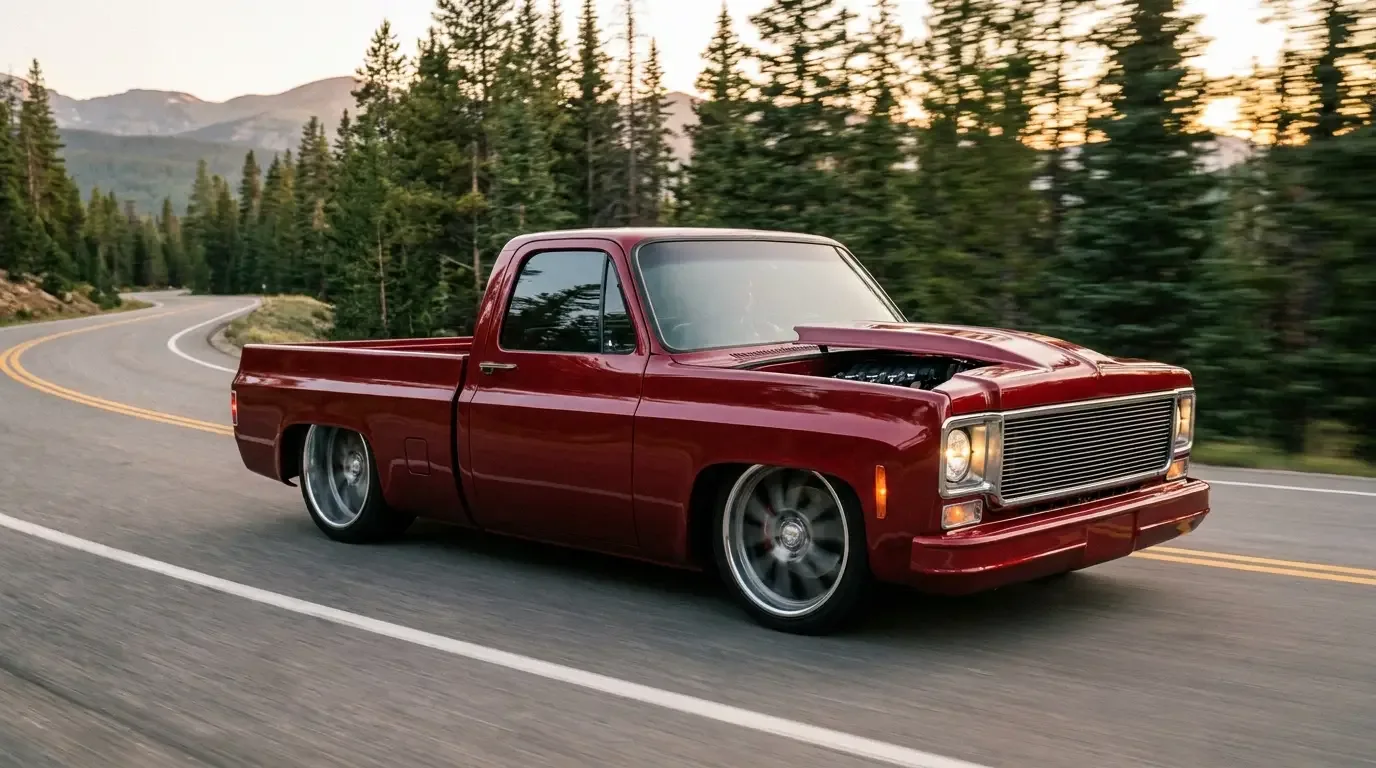
What separates a restomod from a resto
A restoration puts the truck back to what left the factory. A restomod keeps the sheet metal and the silhouette and swaps out almost everything that makes the truck move, stop, and handle. The C10 did not invent that approach, but it became one of the platforms that defined the broader restomod truck movement, mostly because the chassis is simple enough that a shop can solve the engineering without fighting the truck's original design at every step. On a C10 that usually starts with the drivetrain. Out goes the tired small block and the three-on-the-tree, in goes an LS or an LT-based engine paired to a 4L60E or 4L80E, sometimes a 10-speed automatic if the builder has the budget and the patience for the tuning it demands. The frame gets boxed for stiffness, and a lot of shops are moving to a full independent front suspension conversion or a four-link rear rather than leaving the factory leaf springs to do a job they were never asked to do at this power level.
None of that is cheap, and none of it is fast. The C10 restomod scene right now rewards builders who treat the truck as a chassis engineering problem first and a paint problem second. The ones who skip that order end up with something that looks finished in photos and drives like it is fighting itself on the road.
Why the LS swap won and stayed on top
The LS engine family did not become the default C10 swap because it is the most powerful option. It became the default because it is the most solved option. Parts availability, tuning software, motor mount kits, header fitment, all of it got figured out years ago by enough people that a first-time swapper can now follow a documented path instead of inventing one. A basic 5.3 or 6.0 swap with a mild cam and headers puts a truck in the 350 to 400 horsepower range at a cost that a Coyote or Hemi swap usually cannot match once you account for wiring and computer complexity. The LS is not exotic anymore. It is the reliable answer, and reliable answers are what most builders actually want once the check has already been written for the frame work.
What has changed more recently is the top end of the scene. Builders with real budgets are pushing into LT platforms, and a few are running boosted combinations that would have been unthinkable on this chassis a decade ago. The blower looks great sitting under a polished shroud for the show photos. On the dyno, the number that actually matters is whether it made real, repeatable power over a properly built cam and header combination that cost a third as much, and plenty of blower trucks disappoint on that math. A dyno sheet does not lie about that the way a spec sheet on a build thread can.
Suspension has become the real arms race
Ask around any C10 build shop right now and the conversation has shifted away from horsepower bragging and toward corner weights and shock valving. That shift makes sense once you put 500 horsepower through a chassis engineered in the 1960s for a truck doing farm work at 55 miles an hour. Air ride systems have gone from a stance accessory to a genuine handling upgrade, with height-adjustable bags paired to real shock tuning instead of just a compressor and a switch. Subframe connectors, tubular control arms, and rack-and-pinion steering conversions show up on serious builds as often as the engine swap itself does now. A truck that stops and turns the way the drivetrain suggests it should is a different experience than one that just goes fast in a straight line, and buyers who have driven both know the difference immediately.
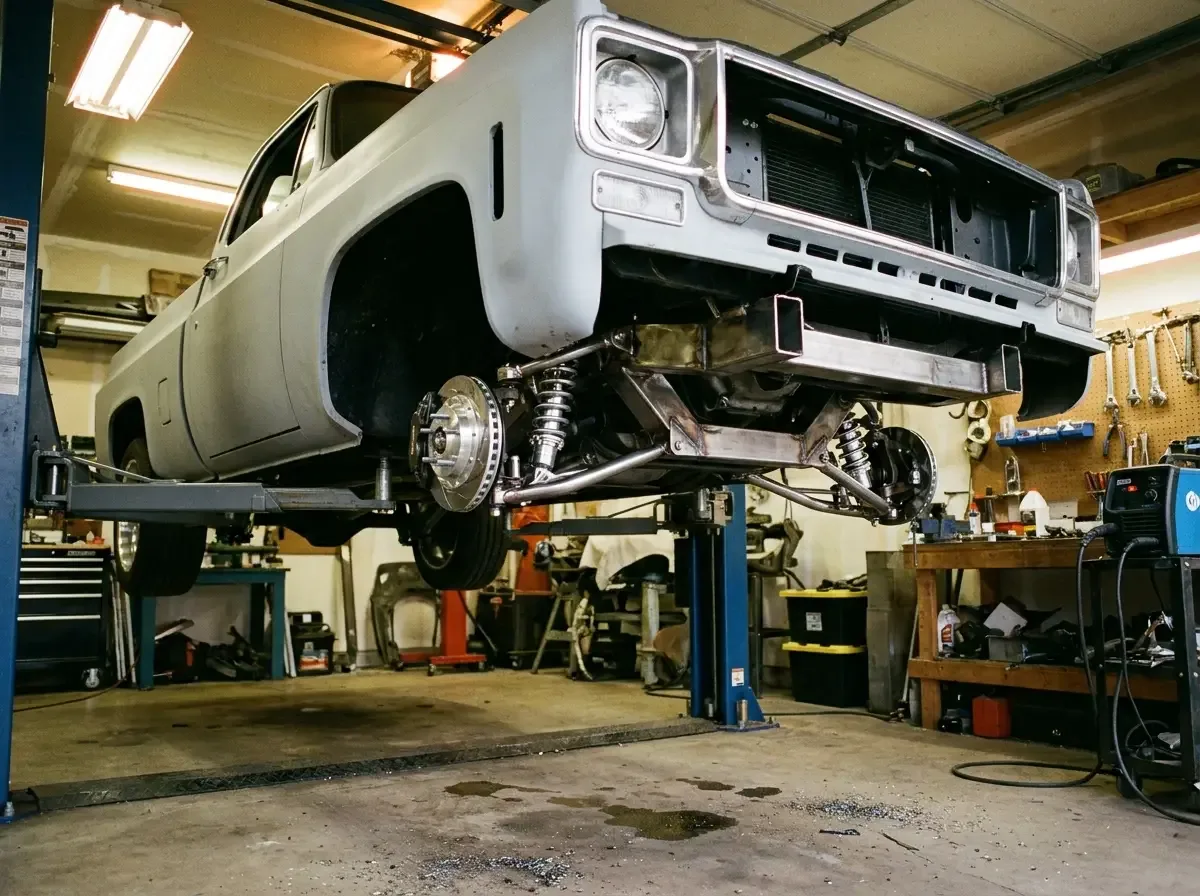
The honest number nobody likes to talk about is cost. A frame-off restomod with a documented LS swap, a real suspension package, and paint and interior work done properly routinely lands somewhere in the $50,000 to $100,000-plus range, depending on the shop and the parts list. That is not a budget hobby anymore for the top tier of this scene, even if a driver-quality truck can still be built for much less by someone doing the labor themselves.
Where the scene is actually headed
The next wave in the C10 restomod world is not another engine option. It is electrification, and it is happening slower and more carefully than the headlines suggest. A handful of shops are building EV-swapped C10s using drivetrain components pulled from wrecked production electric vehicles, and the early results are interesting mostly for the torque curve rather than any straight line speed number. It is a small, deliberate slice of the market right now, not a wave that has swept the mainstream builds, and most serious builders are still watching from the sidelines rather than jumping in. That patience says something. A scene this deep into internal combustion does not switch platforms because a demo truck looked good at a show. It switches once the parts, the tuning, and the resale value all line up, the same way the LS swap did fifteen years ago.
For newcomers looking at where to start, reading the C10 story first is not wasted time. Understanding what the platform actually was before anyone modified anything explains why it takes modification so well. And for anyone who wants the full picture of how this truck became a build platform in the first place rather than a stack of engine swap threads, the full culture piece covers the ground this article does not have room for.
"Everybody wants to talk about the engine. The dyno sheet is where the real conversation happens, and it separates the builds that make power from the ones that just make noise."
Dan Reeves
The C10 restomod scene did not get here by accident. It took a chassis that was cheap, plentiful, and simple enough to modify without a factory service contract getting in the way, and it took ten thousand builders comparing notes on forums and at shows until the good ideas outlasted the bad ones. That is still how it works. Anyone reading up on some of the builds that started it will notice the same pattern repeating: the trucks that mattered were the ones that solved a real problem, not the ones that just looked expensive.
Sources and notes
Related Reading

Performance engine builder from North Carolina's motorsports corridor, focused on swaps, forced induction and making real, repeatable power.
Related Listings - Chevrolet C10
More in Ownership & Lifestyle
Comments
Be the first to comment on this article.