
Walk the fairgrounds at a big traditional hot-rod meet and you can date the crowd by the cars. Flame jobs and billet wheels in one row, then a channeled '32 roadster on skinny bias-plies, primer-gray, no chrome, a young guy in a cuffed pair of jeans and a greased pomade wave leaning on the cowl. That second guy is what this story is about. Sometime in the 1990s a whole generation decided the hot rod had gone soft, and they went back to how it looked before 1960. They brought the music with them.
Ownership & Lifestyle
8 min read
Rockabilly and the Hot Rod Revival
The 1990s-2000s comeback of pre-1960 hot-rod style, and why a new generation of builders chose the slow, traditional way.
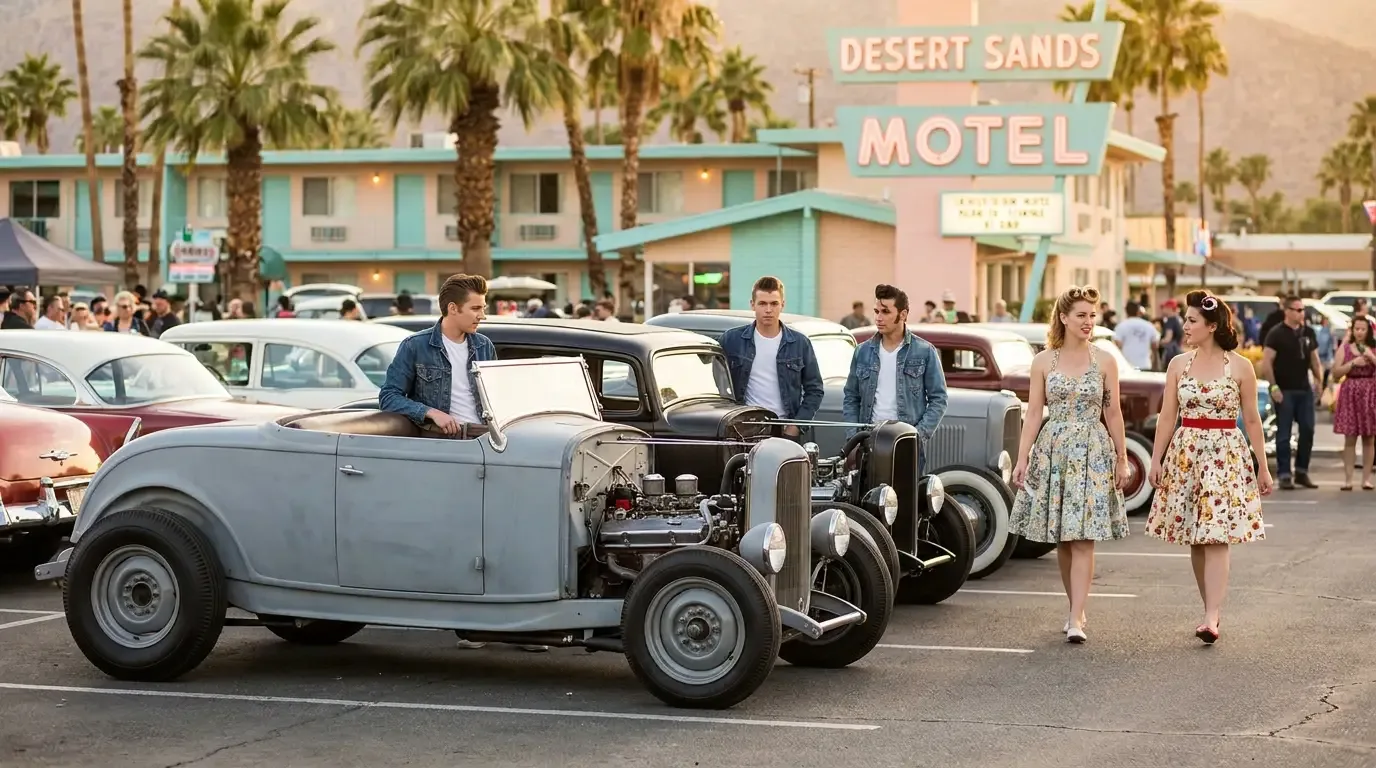
Rockabilly and the traditional hot rod grew up together in the 1950s, split apart for thirty years, and then found each other again. The revival was not about building faster cars. It was about building the right cars, in the right style, for the right reasons, and doing it with the same attitude the old guys had.
Where the traditional look went, and why it came back
By the 1980s the American street rod had drifted a long way from its roots. The typical show car had independent front suspension, a smooth fiberglass body, air conditioning, a small-block crate motor, tweed interior, and a candy paint job that cost more than the whole car used to. Clean, comfortable, and, to a lot of younger builders, boring. It had lost the thing that made a hot rod a hot rod: the sense that somebody took a cheap old Ford and made it dangerous and beautiful in a home garage.
The reaction started small. Builders who had grown up on old copies of Hot Rod and Hop Up magazines began chasing the pre-1960 aesthetic on purpose. That meant a proper chop, a nose and deck job, a body channeled over the frame, and no fiberglass anywhere. Flathead V8s came back out of barns. Bias-ply tires, steel wheels, small hubcaps or none at all. Suicide front ends. Primer instead of paint, sometimes because that was the budget and sometimes because that was the statement. The word for it was "traditional," and by the mid-1990s it was a movement.
The music was never separate from the cars
Rockabilly is a 1950s sound, Sun Records, Carl Perkins, early Elvis, Eddie Cochran, slapback echo on a hollow-body guitar and an upright bass being smacked around. It faded commercially by the early 1960s the same way the traditional hot rod did, buried under polish and progress. And it came back the same way, through people who dug up the old records and refused to modernize them.
The scene that rebuilt rockabilly in the 1980s and 1990s, first in the UK and then across the US, was never just about music. It was a whole look and a whole set of objects. Vintage clothing, cuffed denim, work shirts, victory rolls and pompadours, and the cars. If you were into the music you ended up into the hot rods, and if you built a traditional roadster you ended up at the shows where the bands played. Psychobilly, the louder, wilder cousin that came up through bands like The Cramps and the Meteors, brought a harder edge and a younger crowd, but the same appetite for old iron.
"You cannot fake it. Kids can smell a poseur car across the field. If your rake is wrong, your stance is wrong, your motor is wrong, it does not matter how shiny it is. The traditional crowd respects the guy in primer who got every proportion right over the guy with a fifty thousand dollar paint job and billet everything."
Jim Vasquez
Viva Las Vegas and the calendar that held it together
A revival needs somewhere to gather, and rockabilly got its big one in Viva Las Vegas, a weekender that started in 1998 and grew into the anchor event of the whole scene. Bands, burlesque, a tiki pool party, a vintage vendor market, and out in the parking lots and the dedicated car show, hundreds of traditional hot rods and kustoms. It is part concert, part swap meet, part rolling museum of pre-1960 style. For a lot of younger builders it was the place that showed them the culture was real and national, not just a few weirdos in their town.
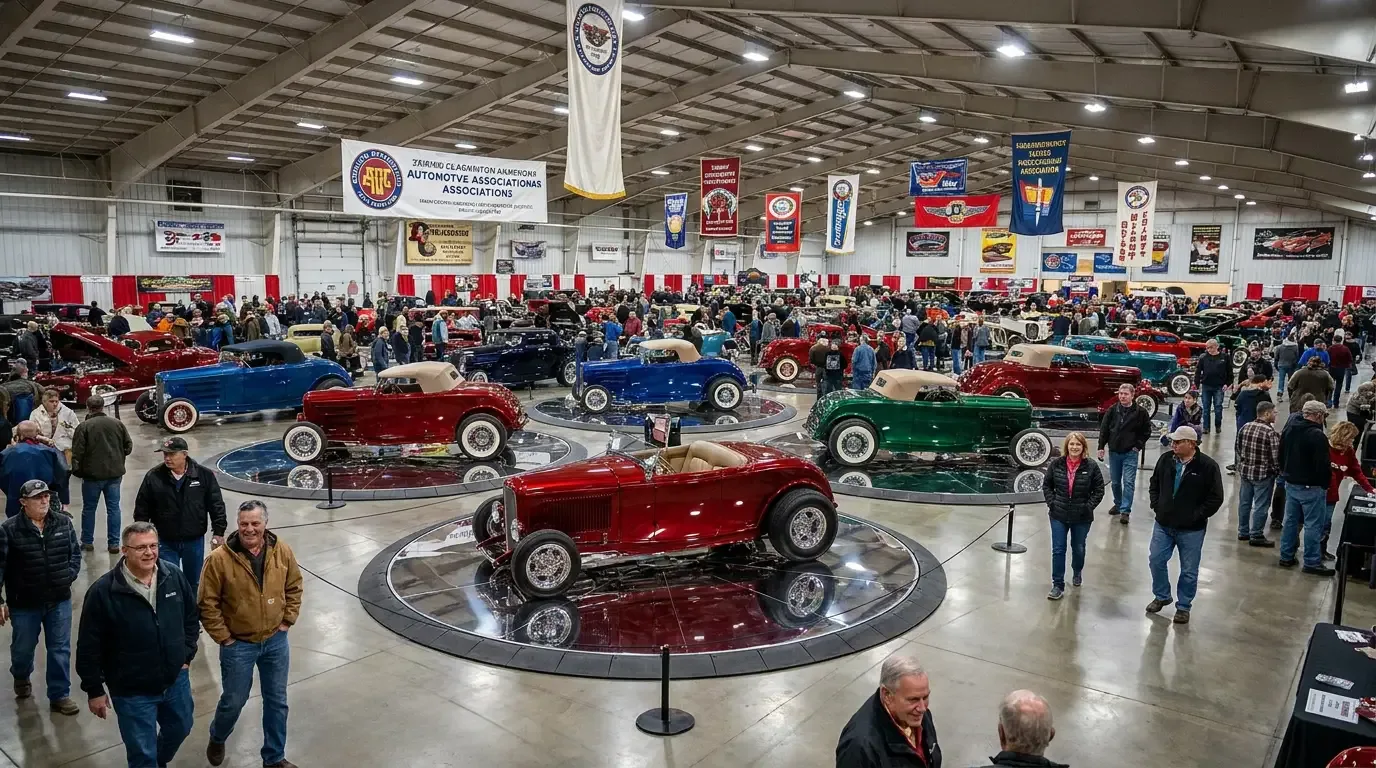
The traditional car calendar filled in around events like it. The old lakes and dry-lake racing heritage got honored at the Bonneville-adjacent meets and at nostalgia drags. On the show side, the historic Oakland roadster show, now the grand national roadster show, connected the new traditional builders back to the exact stage where the postwar hot rod first got its trophies. Standing your homebuilt roadster next to that history is the point. You are not inventing a style, you are joining one.
Tattoos, tiki, and the objects around the cars
The revival came with a full visual world, and it was not decoration bolted on afterward. Traditional American tattooing, the bold-line, heavy-black Sailor Jerry style, came back through the same crowd and the same decades. Pinup art, dice and eight-balls, sparrows and hot rods and flaming skulls, moved from tattoo flash onto club jackets, guitar cases, and car club plaques. Tiki, the midcentury Polynesian-bar aesthetic, got adopted alongside it because it was another honest slice of the same postwar era that the music and the cars came from.
None of this is separate from the garage work. The same builder who spends a winter on lead work and a chop is the one collecting old speed-shop signs, wearing a club shirt with hand-painted lettering, and hanging out at a tiki bar after the show. The kustom side of the family tree runs straight through this world too. You cannot understand the revival without Ed Roth, Von Dutch and the Kustom Kulture Icons who invented the pinstriping, the monster shirts, and the outsider attitude that the younger crowd rediscovered and ran with.
Why young builders went backward on purpose
The obvious question is why a generation with access to fuel injection, tube chassis, and modern everything chose to build cars the hard old way. Part of it is honesty. A traditional hot rod is something a person can actually build in a home garage with hand tools and patience, the way it was always meant to be done. Part of it is reaction against the polished, disposable, computer-designed world. And part of it is that the old proportions simply look right in a way that keeps working sixty and seventy years later.
There is also a craft argument. Doing a proper chop, hammer-welding a roof back together, doing your own lead work instead of plastic filler, these are real skills that were nearly lost. The revival kept them alive by giving young people a reason to learn them. Every traditional car at a show is somebody who chose the slow way.
| Element | Street rod (1980s) | Traditional revival |
|---|---|---|
| Body | Fiberglass, smoothed | Original steel, chopped and channeled |
| Finish | Candy or metallic paint | Primer, gloss single-stage, or lacquer |
| Engine | Small-block crate V8 | Flathead or period small-block, dressed correct |
| Wheels and tires | Billet, radials | Steelies and bias-ply, wide whites |
| Front end | Independent suspension | Dropped solid axle, sometimes suicide mount |
The revival did not fade the way the original scene did. It settled in. The traditional hot rod and the rockabilly weekend are now a permanent part of the American car calendar, run by people who care more about getting it right than getting it noticed. That is exactly the attitude the first hot-rodders had, which is the whole point.
Sources and notes
- Period hot-rod press and reprints (Hot Rod, Hop Up and similar postwar titles) for the pre-1960 traditional aesthetic.
- Traditional and kustom builder interviews on chops, channeling, and lead work technique.
- Show and event records from the historic Oakland/Grand National Roadster Show and nostalgia drag and dry-lakes meets.
- Rockabilly and psychobilly scene histories covering the 1980s-2000s revival and its gathering events.
Related Reading
Have a
Classic Car
for Sale?
Reach thousands of serious classic car collectors across the US.
Sell It Here →
Are You a Classic Car Dealer?
List your full inventory and connect with targeted classic car buyers.
Join as a Dealer →

About the author
Jim Vasquez
Southern California hot rod and custom car builder with roots in the traditional kustom kulture scene.
More in Ownership & Lifestyle
Comments
Be the first to comment on this article.