
The math is the part people forget. In 1964 the oldest baby boomers were turning eighteen, and behind them came the largest wave of young people the country had ever produced. They had jobs, allowances, and something their parents' generation never had at that age, which was money to spend on themselves. Detroit looked at that crowd and saw the future. The muscle car was the answer it gave them. Not a family sedan, not a first practical car, but a machine built to say something about who you were the second you turned the key.
Ownership & Lifestyle
6 min read
Muscle Cars and the 1960s Youth Market
How Detroit built the muscle car for the 1960s youth market: baby-boomer money, cartoon names, wild colors, and advertising aimed at the young.
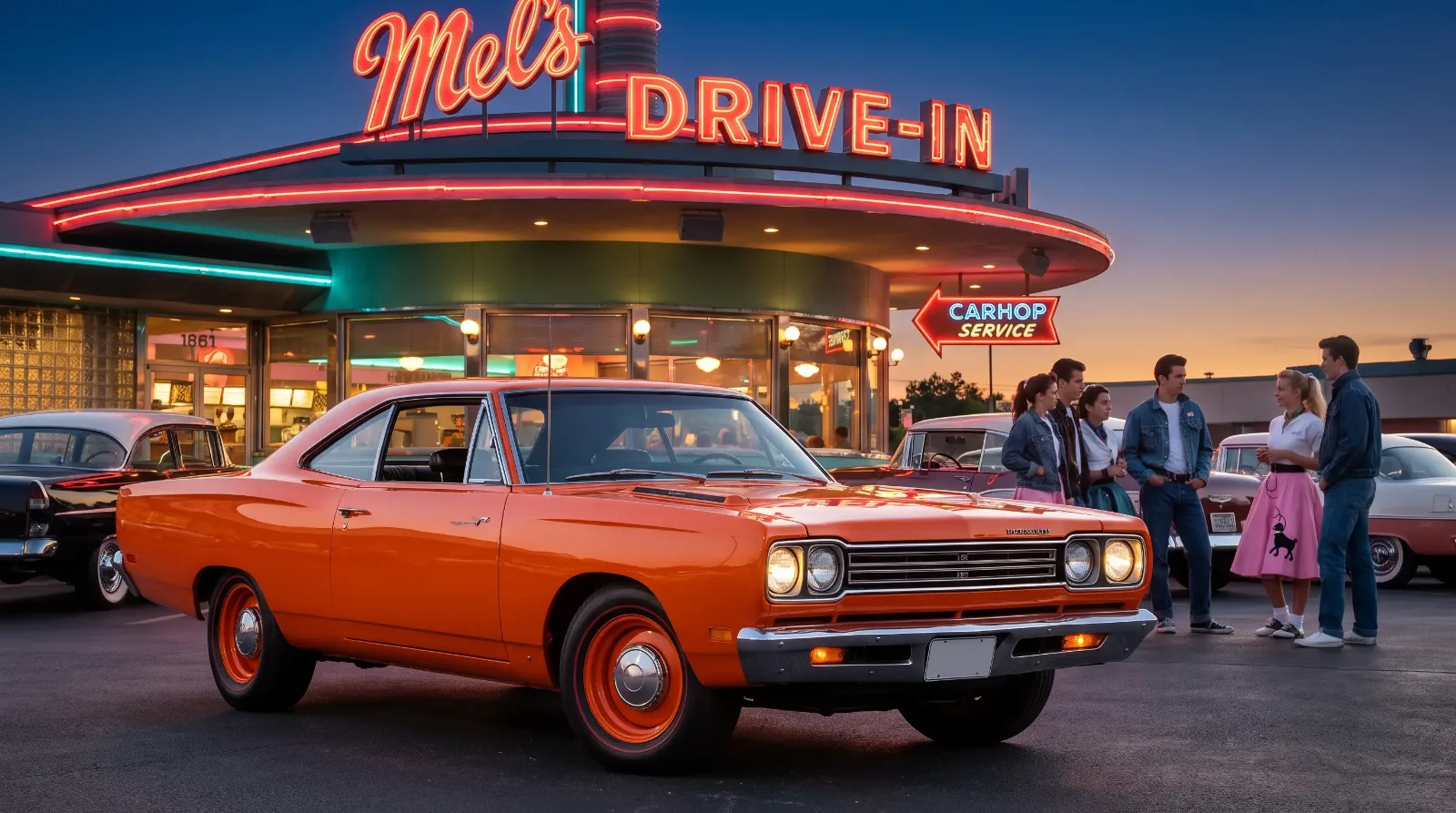
The story of the muscle car is really the story of an industry discovering the teenager and the twenty-something as a customer worth chasing. Everything about these cars, the names, the colors, the advertising, the price, was aimed at a buyer who had never mattered much before and suddenly mattered more than anyone. For the wider picture, our muscle car culture guide traces how deep that youth market ran.
A generation with money to burn
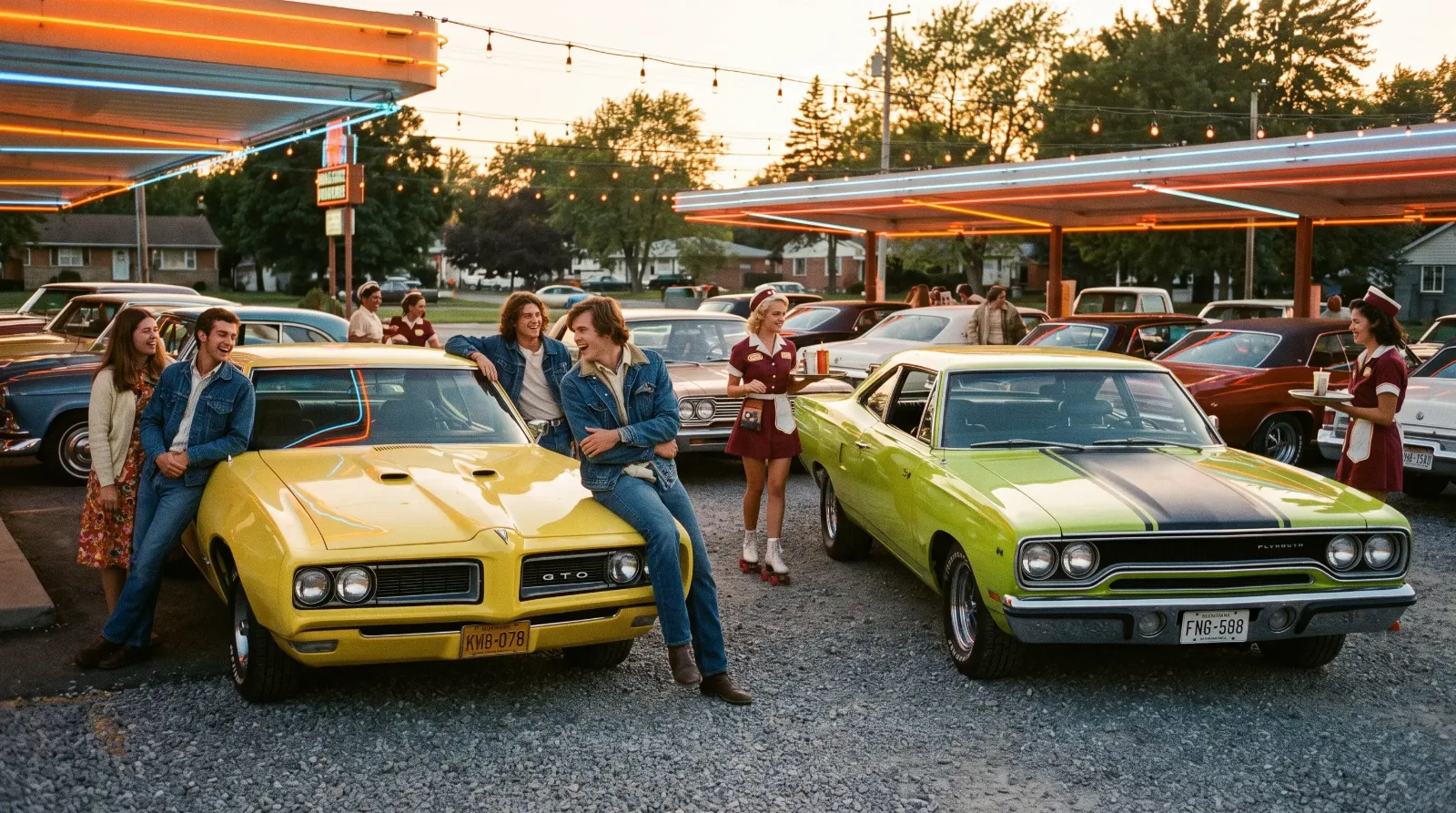
Before the sixties, a young man's first car was almost always a used one. New cars were for established adults with families. What changed was demographics and economics at the same time. The postwar boom had put steady wages in reach of working people, and their kids came of age in a country richer than any before it. A single young worker, or a college kid with a summer job, could suddenly think about a new car with a payment book.
The carmakers were slow to see it at first, then very fast once they did. When Pontiac slipped a big engine into a midsize body in 1964 and called it the GTO, the thing sold far beyond what anyone at the division had projected. That surprise taught Detroit a lesson it never forgot. There was a young audience out there hungry for performance, and it would pay for it. Every other division scrambled to build its own version, and the horsepower race was on.
Cars named and colored for the young
Look at what these cars were called. Road Runner. Super Bee. Judge. Cobra. The names came from cartoons, from slang, from comic books, from the exact cultural well a seventeen-year-old drank from. No division was naming a car after a cartoon bird to reach a forty-five-year-old accountant. Plymouth even paid to license the Road Runner character and its beep-beep horn, because the buyer they wanted grew up watching it on Saturday mornings.
The colors told the same story. High Impact paint in eye-searing oranges, greens, and purples, with names like Plum Crazy and Panther Pink, existed for one reason. A kid wanted his car seen from across the drive-in lot. No sober adult buyer was ordering a car in a color called Go Mango. The whole visual language of the muscle car, loud paint, stripes, hood scoops, spoilers, was a costume aimed at youth.
Marketing that spoke their language
The advertising abandoned every convention of selling a car to a grown-up. Instead of talking about comfort, reliability, and resale value, the muscle car ads talked about winning stoplight races, embarrassing your friends, and the trouble you could get into. They ran in the buff books that young enthusiasts actually read, and they sold an attitude more than a product.
Some of it got the companies in trouble. Selling raw speed to teenagers drew fire from safety advocates and eventually from the insurance industry, which figured out exactly who was buying these cars and priced them accordingly. But for a stretch of years in the late sixties, the marketing was gloriously unapologetic. It treated the young buyer not as a problem to be managed but as the hero of the story.
"These cars were the first thing Detroit ever built that treated a nineteen-year-old like the most important person in the showroom. That's why the people who were nineteen then have never gotten over them."
Patrick Walsh
The culture that grew up around it
The youth market did not just buy cars. It built a whole world around them. Drive-in restaurants, cruise strips, and the endless ritual of Friday and Saturday nights turned the muscle car into the center of teenage social life in a way no vehicle had been before. The car was transportation, but it was also a clubhouse, a status symbol, and the reason to go out in the first place.
That culture spilled into everything the young generation touched, and music picked it up fast, turning specific cars and engines into hit records. You can read the full story of how the radio put muscle cars into the soundtrack of the decade. The point is that the car did not stand alone. It was woven into the identity of a generation that had money, freedom, and a set of wheels loud enough to announce both.
| Youth-market signal | What it really was |
|---|---|
| Cartoon and slang names | Language borrowed straight from teenage culture |
| High Impact paint colors | Visibility and identity in the drive-in lot |
| Buff-book advertising | Messaging aimed at enthusiasts, not families |
| Attainable pricing | Performance a young worker could actually finance |
Why it could not last
The same things that made the muscle car a youth phenomenon eventually undid it. Selling maximum horsepower to the youngest, least experienced drivers on the road was never going to sit well forever. Insurance companies loaded the hottest models with surcharges that gutted the very market the cars depended on. A young buyer who could swing the payment on a Road Runner often could not swing the insurance on top of it.
Add the emissions rules and the fuel crisis that arrived at the same time, and the youth-market muscle car had nowhere left to go. But for the years it ran, it was one of the purest examples of an industry building something specifically for the young and getting it exactly right. The buyers who were teenagers then are collectors now, and the cars they chased at nineteen are the ones they are still chasing today.
Related Reading
Have a
Classic Car
for Sale?
Reach thousands of serious classic car collectors across the US.
Sell It Here →
Are You a Classic Car Dealer?
List your full inventory and connect with targeted classic car buyers.
Join as a Dealer →

About the author
Patrick Walsh
Automotive journalist covering classic car shows, events, and the enthusiast community across North America.
More in Ownership & Lifestyle
Comments
Be the first to comment on this article.