
For a lot of people who grew up in the 1970s and 1980s, the first muscle car they ever fell for was not parked in a driveway. It came through the television on a Friday night, sideways, midair, with a horn playing Dixie. The car did not need a backstory. It just needed to jump, and a whole generation of kids decided right then that a Dodge Charger was the coolest object in America.
Ownership & Lifestyle
5 min read
Muscle Cars on Television
How muscle cars on TV became characters, from the Dukes of Hazzard's General Lee Charger to the Starsky and Hutch Gran Torino and Rockford's Firebird.
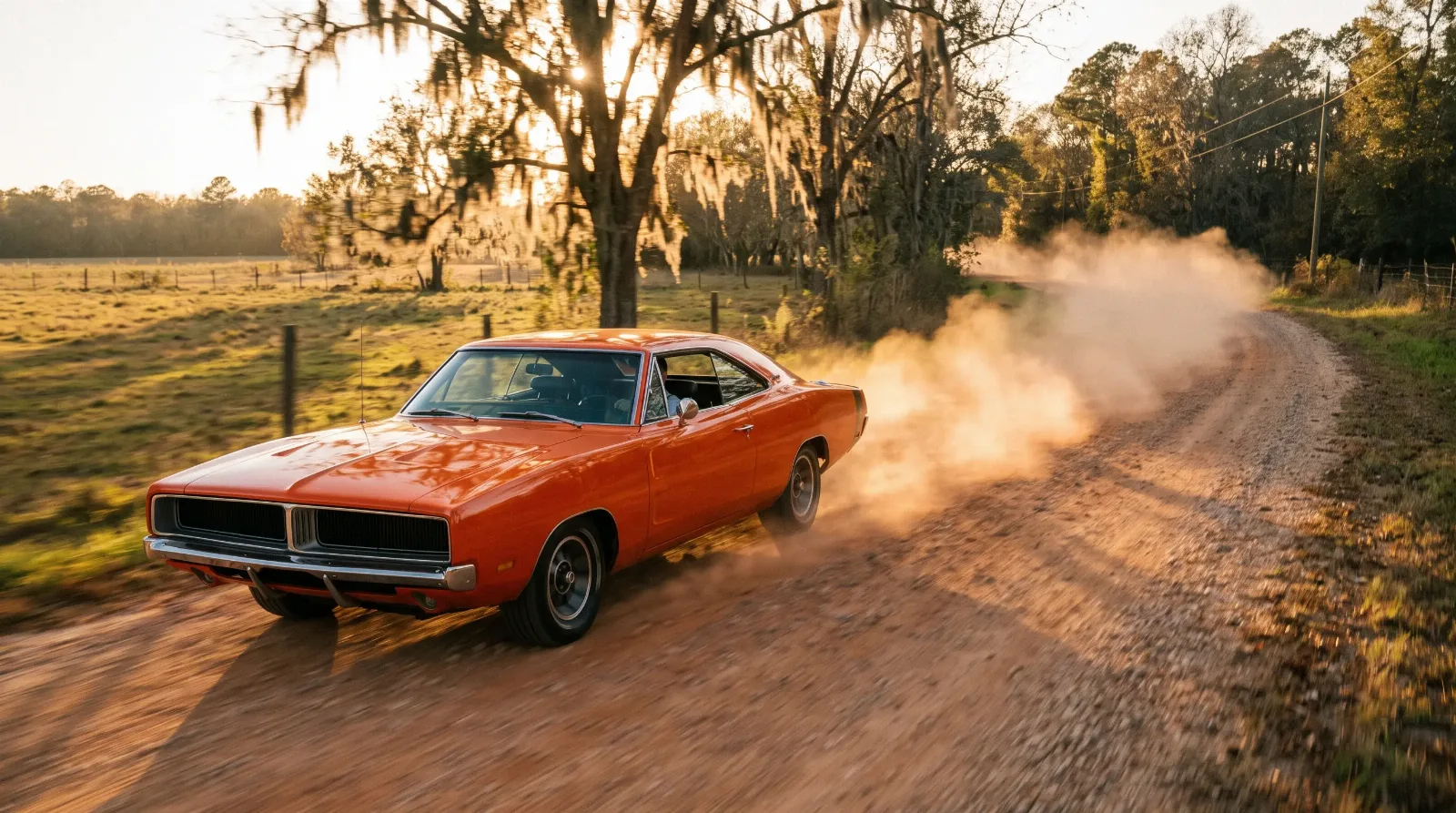
Television did something the magazines and the drag strips never could. It put these cars in the living room, week after week, until a specific make and color became inseparable from a character. You did not think "1969 Charger." You thought General Lee. That fusion of car and story is one of the strangest and most durable pieces of the whole muscle car legend, and if you want the wider context, the muscle car culture breakdown covers how these machines wound their way into every corner of pop culture.
The General Lee and the car that became the star
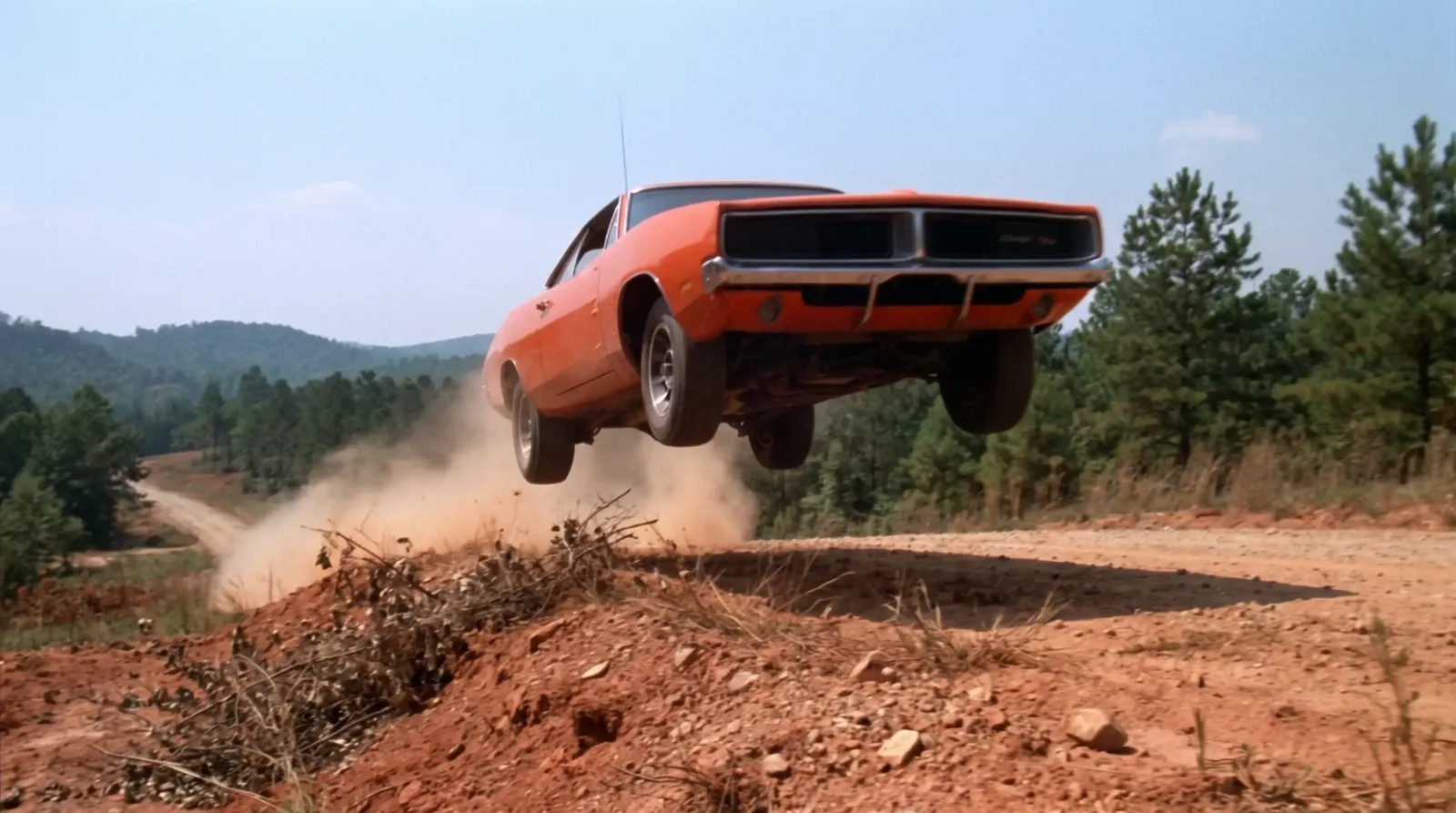
The Dukes of Hazzard ran from 1979 to 1985, and its real lead was orange. The General Lee was a 1969 Dodge Charger, painted a loud orange with the number 01 on the doors, the doors welded shut so the Duke boys had to climb through the windows. It jumped. That was the whole gimmick and it never got old. Every episode built to a moment where the Charger left the ground over a creek, a ditch, or a police cruiser, and the show went through an enormous number of cars doing it.
The estimates vary, but the production is widely reported to have used and wrecked more than 300 Chargers over its run, because a car that lands a forty-foot jump rarely lands twice. Real 1969 Chargers were cheap in 1979. By the time the show ended, that supply had been thinned out considerably, which is one small reason clean survivors climbed in value later. The car got fan mail. Actual fan mail, addressed to a car.
Cop shows and the muscle car as a character
The other place muscle showed up was the crime drama, where the hero's car was shorthand for the hero himself. Starsky and Hutch, which ran from 1975 to 1979, gave Starsky a bright red Ford Gran Torino with a broad white stripe swept across the flanks. Fans nicknamed it the Striped Tomato, and the car got so much attention that Ford eventually sold a limited replica edition to the public. A television prop turned into a factory option. That almost never happens.
Go back a little further and you find Mannix, the private-eye show that ran from 1967 to 1975, where Joe Mannix worked his way through a series of convertibles across the seasons, including Detroit iron that let the camera frame a man driving fast with the top down. The Rockford Files gave Jim Rockford a gold Pontiac Firebird Esprit that he threw into reverse J-turns in nearly every episode, and that stunt alone probably sold more Firebirds than any print ad Pontiac ever ran.
Why the car mattered more than the plot
Here is what these shows understood that the ad men had only guessed at. A muscle car on screen was not set dressing. It was casting. The Charger's leap told you the Duke boys were reckless and good-hearted before anyone said a word. The red Torino told you Starsky was flash and instinct. The Firebird told you Rockford was quick and a little bit shabby. Writers used the cars to do character work, and audiences read them fluently without ever being taught the language.
That is also why the wrong car in the wrong role fell flat. You could not put a sensible sedan under a maverick hero and expect the audience to buy it. The muscle car carried meaning the way a cowboy's horse used to, and television leaned on that meaning hard because it was free storytelling. The engine did the exposition.
The long afterlife of the TV muscle car
Decades later, the cars from these shows sit near the top of the collector world, and the reason is almost entirely emotional. A screen-used General Lee, verified as one of the real jump or beauty cars, commands prices that have nothing to do with what a 1969 Charger is otherwise worth. The premium is the memory, not the metal. People are not buying a Dodge. They are buying a Friday night from 1981.
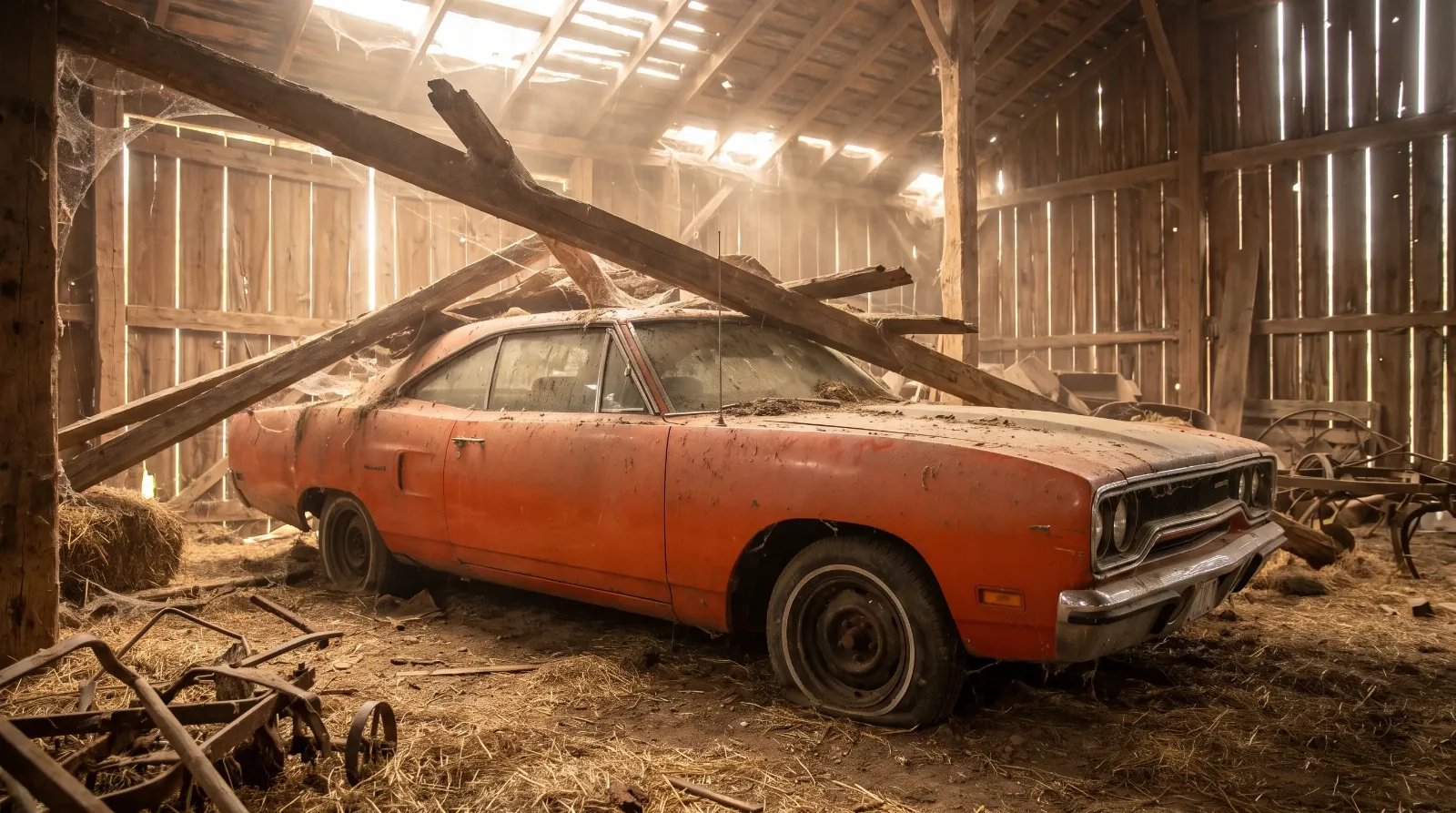
That emotional weight explains why replicas are their own whole hobby. Thousands of orange Chargers and striped Torinos have been built by fans who wanted the object that television planted in their heads as children. Some of the most passionate builders are the same people who go looking for forgotten cars in the first place, and if that chase interests you, you can read the full story of barn-find culture and the pull it has on people who grew up watching these machines fly across a screen.
"I've talked to grown men who teared up describing a car chase from a show that got cancelled before they were ten. That's not about horsepower. That's television reaching into a kid and planting a want that never left. The car was the hook, and it set deep."
Patrick Walsh
The shows themselves aged in the usual ways. Some hold up, some are period pieces now, a few carry baggage that later years judged harshly. But the cars they made famous never lost their grip, because the association got welded on as tight as those Charger doors. Put a 1969 Charger in front of the right person and they still hear the horn. That is what television did, and no advertisement ever managed it half as well.
Related Reading
Have a
Classic Car
for Sale?
Reach thousands of serious classic car collectors across the US.
Sell It Here →
Are You a Classic Car Dealer?
List your full inventory and connect with targeted classic car buyers.
Join as a Dealer →

About the author
Patrick Walsh
Automotive journalist covering classic car shows, events, and the enthusiast community across North America.
More in Ownership & Lifestyle
Comments
Be the first to comment on this article.