
Somewhere in a filing cabinet in Warren, Michigan, there's probably a folder of rejected Chevelle ad copy, headlines some copywriter drafted at midnight and a creative director killed the next morning. What survived, the ads that actually ran in Life and Look and on Saturday afternoon television, tell you almost as much about the 1960s and 1970s as the car itself does. An advertisement is a kind of time capsule. It has to sell to the person sitting in that exact living room, that exact year, worried about that exact set of things. Look back at forty years of Chevelle print ads in sequence and you're not just watching a car evolve. You're watching America's idea of what a family wanted from a car evolve right along with it.
Ownership & Lifestyle
6 min read
Period GM Advertising: How Chevrolet Sold the Chevelle Dream
A look at period Chevrolet Chevelle print and TV advertising, from family-practical positioning to muscle car bravado and back again.
Selling a new kind of Chevrolet
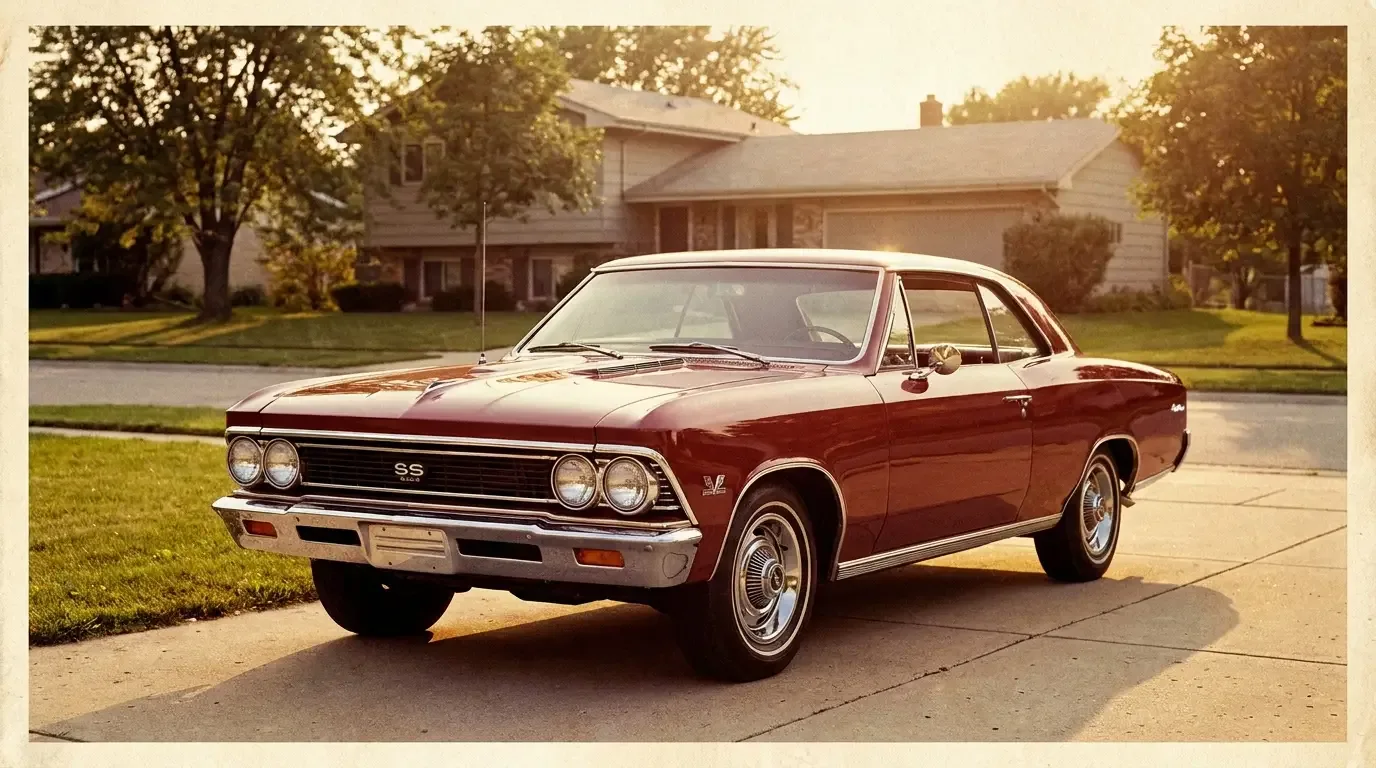
When the Chevelle launched for the 1964 model year, Chevrolet's ad department had a genuinely tricky job. The car sat in a gap the brand hadn't filled cleanly before, bigger and more substantial than the compact Corvair, smaller and more affordable than the full-size Impala and Bel Air. The early campaigns leaned hard into that positioning, "right size" language, family-practical framing, photography that put the car in driveways next to split-level houses rather than on a raceway. That changed fast once the SS 396 arrived. By the mid-1960s, Chevrolet was running two parallel messages under one nameplate: a sensible family car for the buyer who wanted room and value, and a genuine performance machine for the buyer who wanted to embarrass a Pontiac GTO at a stoplight. Reading the period ads side by side is almost funny. One page shows a mother loading grocery bags into a Malibu wagon. Another, sometimes in the same magazine issue, shows a young man in sunglasses next to an SS 396 with copy built entirely around horsepower and quarter-mile bragging rights.
The visual language of the era
Automotive advertising in this period had a house style you could pick out from across the room. Bold, oversized headline type. Hand-lettered or heavily stylized display fonts for model names. Photography shot at low angles that made the cars look longer and lower than they actually sat. Chevrolet's agency work followed that playbook closely, though Chevelle ads tended to favor a slightly more grounded, everyday tone than the more aspirational Corvette campaigns running in the same magazines. Color printing technology of the 1960s also shaped what these ads looked like. Reds and oranges reproduced vividly on the era's print stock, and Chevrolet had real factory colors like Hugger Orange to point the camera at, which is part of why so many surviving Chevelle ads lean on those colors for the hero car even when a given ad's actual sales mix skewed toward more common shades like white or blue. The ads were selling an idea of vibrance as much as a specific car.
Television spots and the changing pitch
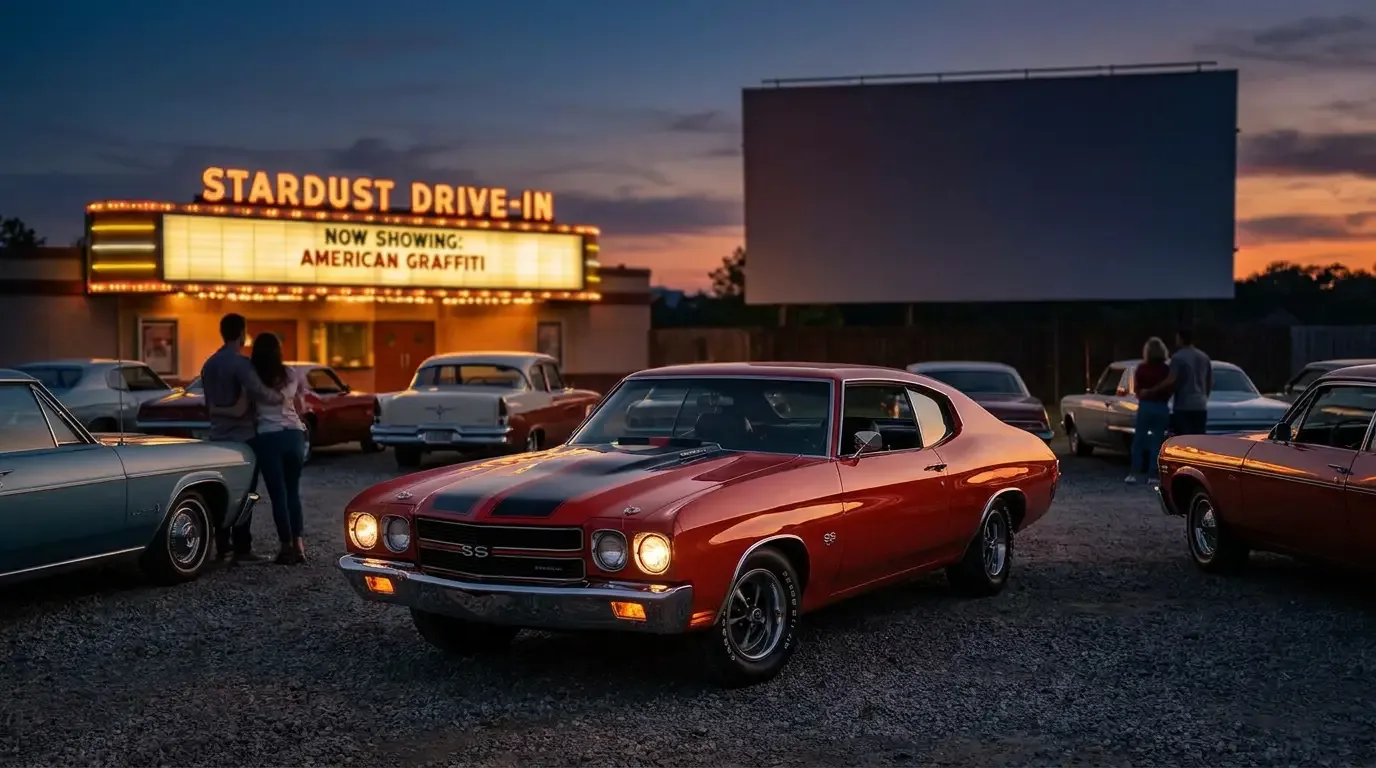
By the early 1970s, television had become the dominant medium for new car campaigns, and the Chevelle spots from this window reflect a shift in tone. The straightforward horsepower boasting of the muscle car years started softening as insurance costs rose and the era's cultural mood shifted, the ads leaning more on styling, comfort, and value language even for performance-oriented models. A Chevelle SS spot from 1973 reads almost nothing like one from 1970, not because the car changed that dramatically, but because the country's appetite for straight muscle car bravado had cooled considerably by then. That shift lines up with Chevelle in pop culture more broadly during that stretch, where the car's image in film and television started drifting from raw performance icon toward something more nostalgic, a process that was really just getting started in the early 1970s and wouldn't fully take shape until decades later.
What these ads are worth now
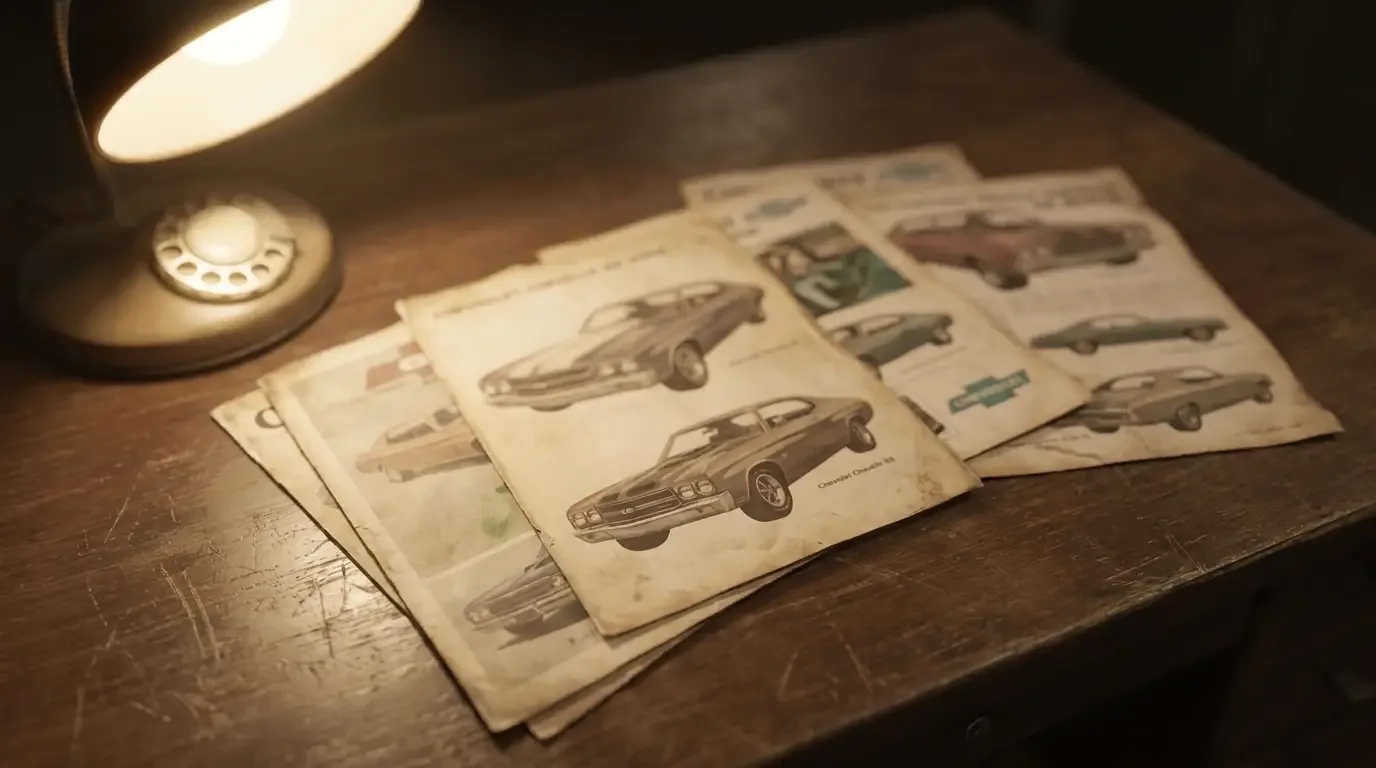
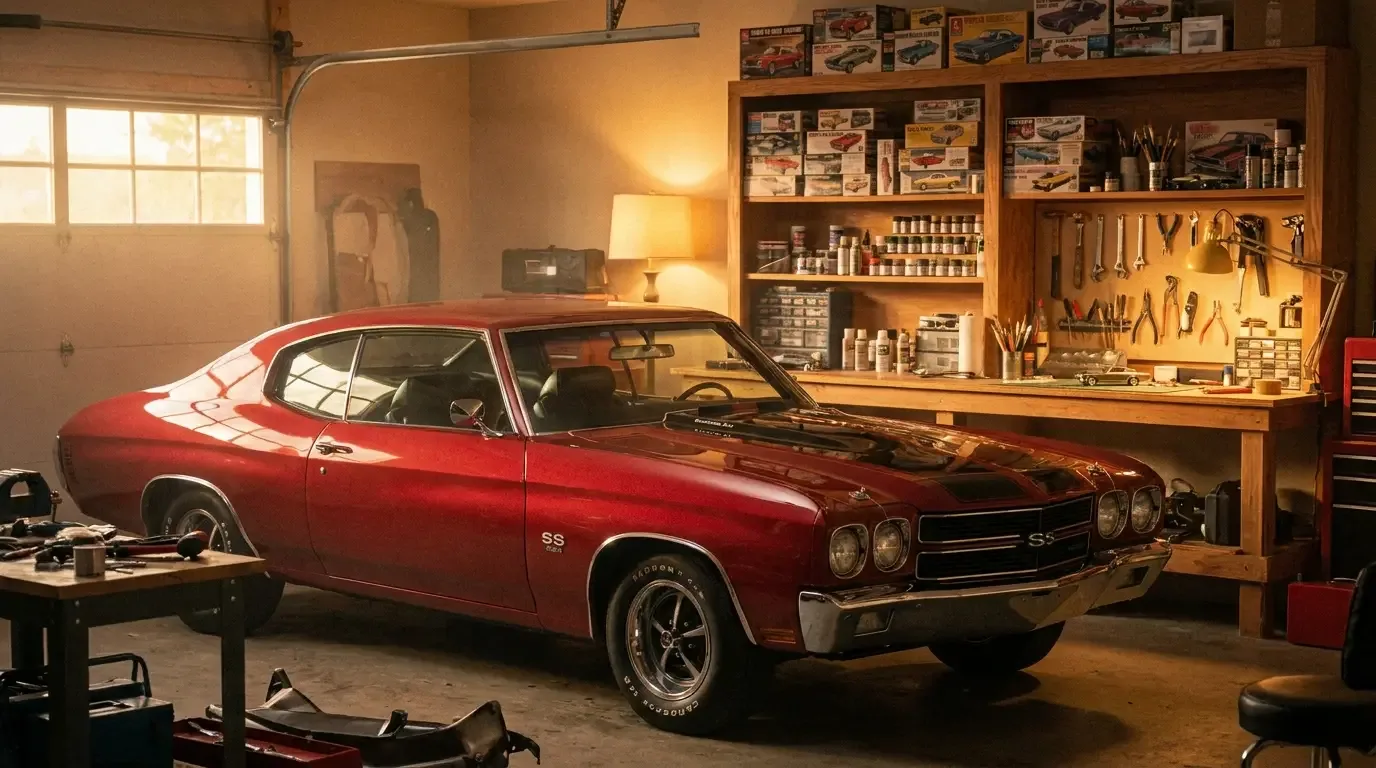
Original period Chevelle advertisements, the physical tear sheets pulled from vintage magazines, have become a small but persistent collector category of their own. Prices vary enormously depending on the specific ad, its condition, and whether it features a desirable variant like the SS 454 or LS6. A clean tear sheet from a well-known publication typically runs somewhere in the ten-to-thirty-dollar range at a swap meet or online, with rarer dealer showroom posters and factory brochures commanding significantly more. There's a specific kind of collector who buys these not to display alongside a real car, but instead of one, framing a stack of period ads on a garage wall because the car itself is out of reach financially or practically. It's a cheap, legitimate way to own a piece of the era.
Reading the ads as history
Taken together, the surviving Chevelle advertising archive works almost like a decade-by-decade mood ring for the American car buyer. Optimistic and family-focused early on. Loud and performance-obsessed at the muscle car peak. Quieter and more defensive once fuel prices and insurance premiums started squeezing the segment. None of that is unique to Chevrolet, but the Chevelle's long production run and wide model range means its ad archive covers more emotional ground than almost any other single nameplate from the period. For anyone tracing the full story of this platform from origin to finish, the period advertising is arguably a more honest record than the sales brochures, because it shows what Chevrolet's marketing team believed would actually move buyers off the fence in that specific year, not just what the car could technically do on paper.
"You can date an old Chevelle ad almost to the year just by the mood of the copy. Nobody writes 'four-on-the-floor and a lump under the hood that means business' in 1974. That confidence has a shelf life, and the ads track exactly when it ran out."
Nora Beckett
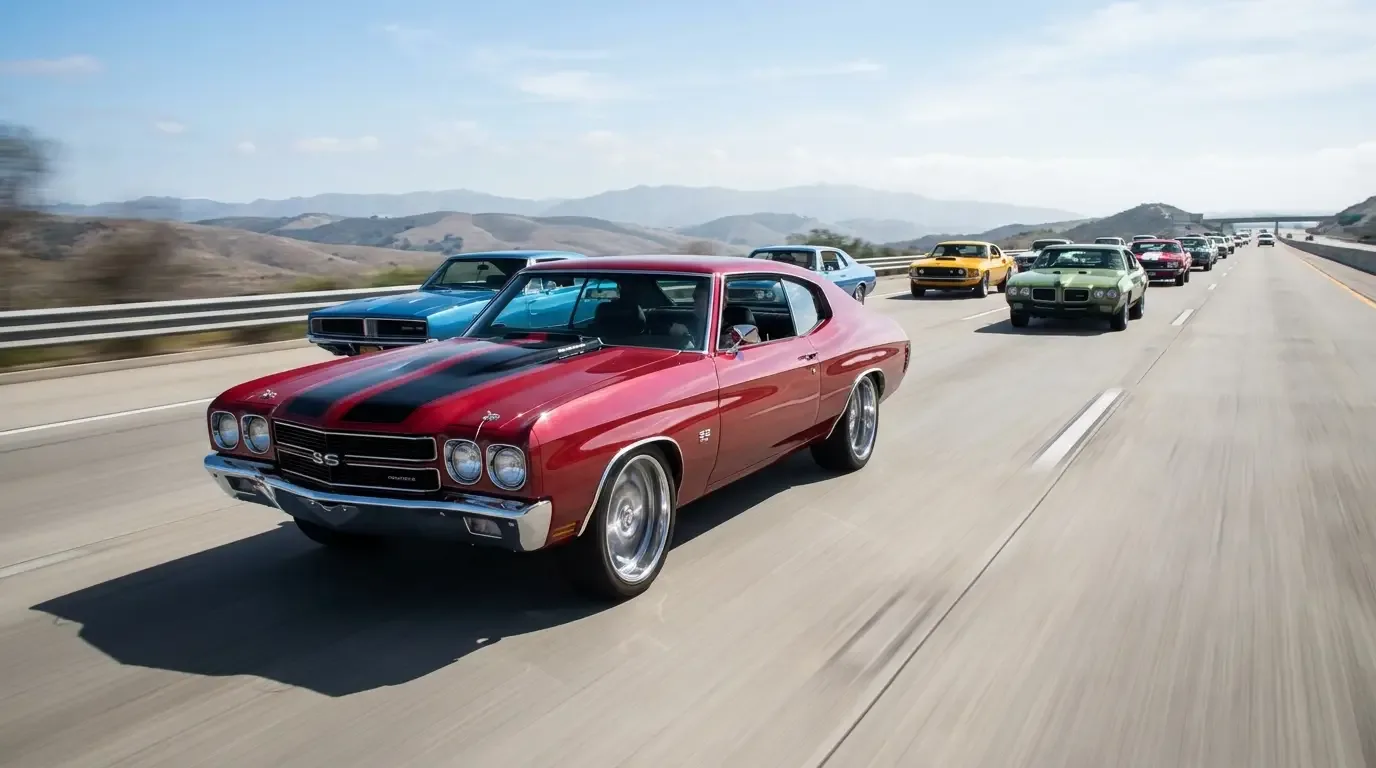
next: Chevelle at Power Tour, where the marketing stops being a magazine page and becomes a few thousand real cars rolling down the interstate together.
Sources and notes
- Tunnel Ram: Vintage Chevrolet Chevelle and Malibu advertising archive
- MotorCities: Remembering the popular 1964 Chevrolet Chevelle
- Wikipedia: Chevrolet Chevelle
- Hagerty: 1964-67 Chevrolet Chevelle buyer's guide
- WorthPoint: Magazine ad / tear sheet collecting guide
- eBay: 1970 Chevelle SS vintage advertisement listing (period pricing reference)
Related Reading
Have a
Chevrolet Chevelle
for Sale?
Reach thousands of serious classic car collectors across the US.
Sell It Here →
Are You a Classic Car Dealer?
List your full inventory and connect with targeted classic car buyers.
Join as a Dealer →

About the author
Nora Beckett
Automotive features writer and photographer who tells the human stories behind the cars, from show fields to cross-country road trips.
Related Listings - Chevrolet Chevelle
More in Ownership & Lifestyle
Comments
Be the first to comment on this article.