
Walk into any hobby shop that survived the 1990s and there's a good chance a Chevelle kit is still sitting on the shelf, box art faded from sun through the front window. AMT, MPC, Revell, they all took a run at the A-body at some point, and the kits they produced did something the die-cast makers never quite managed: they taught a generation of builders what was actually under the sheet metal, one plastic sprue at a time.
Ownership & Lifestyle
6 min read
Model Kit Heritage: Building the Chevelle
How AMT, MPC, and Revell turned the Chevrolet Chevelle into a plastic model kit staple, and what to know before building or collecting one today.
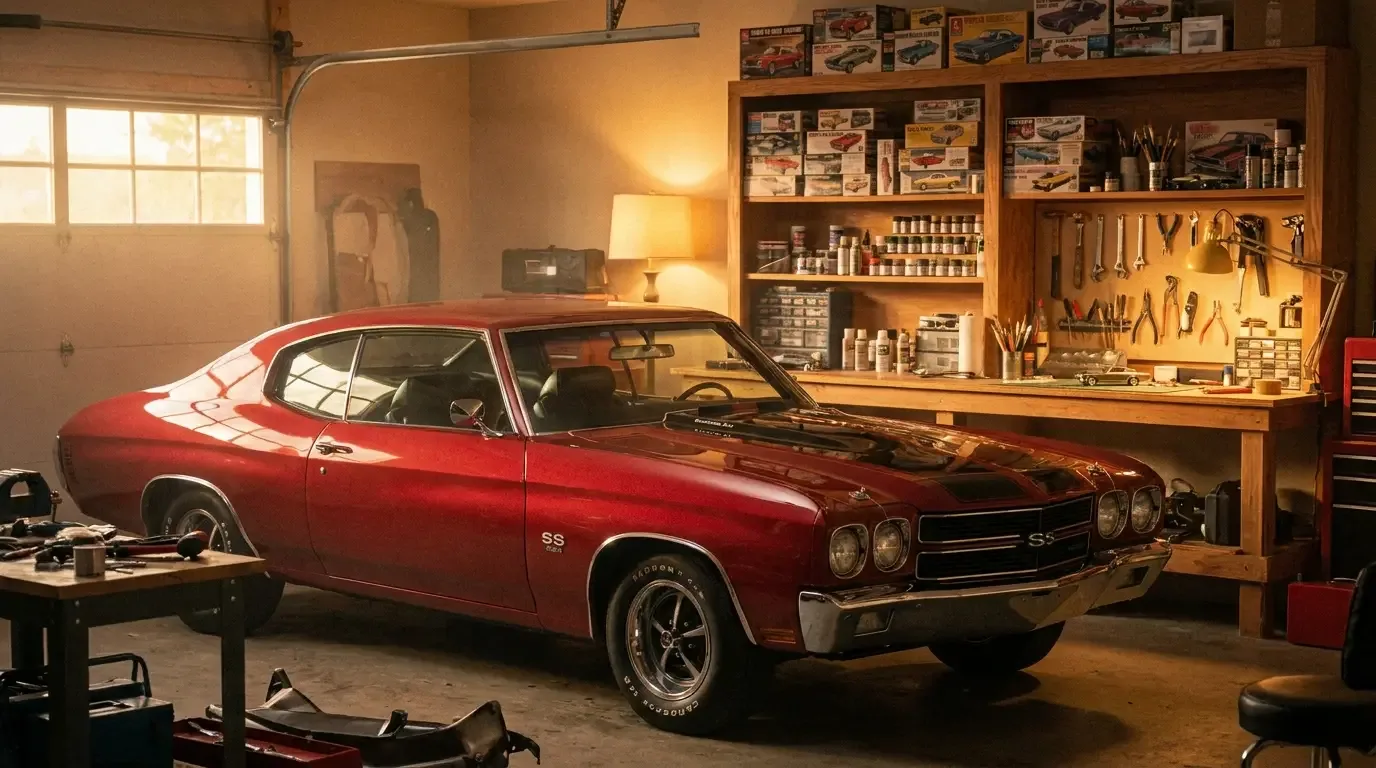
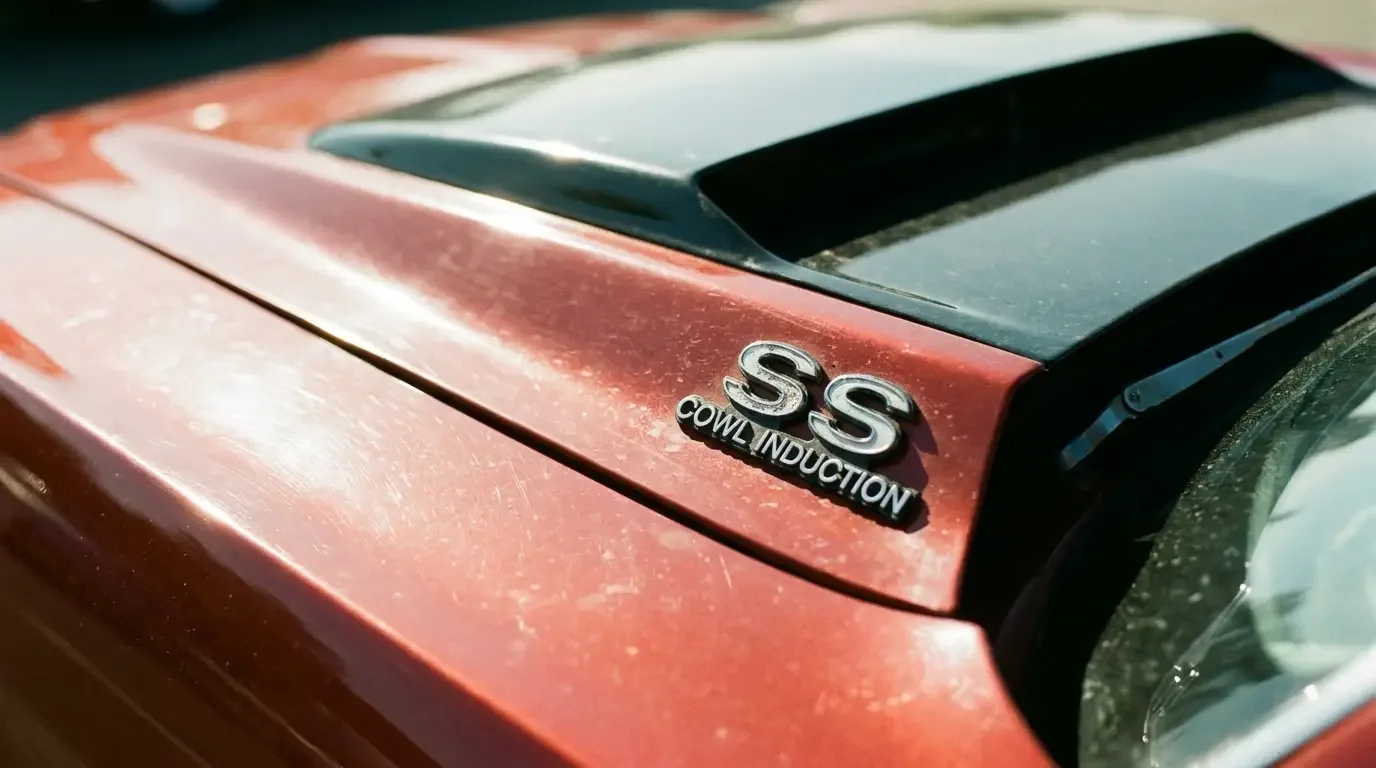
I've spent a lot of Saturday afternoons at model car shows watching guys my father's age argue about whether the 1970 MPC kit had the correct cowl induction hood or not. It's a small thing to care about. It's also exactly the kind of thing that keeps a car's memory alive in households that never owned the real one.
The kits that mattered
AMT and its later corporate stablemate MPC (both eventually consolidated under Round 2's ownership decades later) were the two big players in Chevelle plastic, but they came to the car at different times. AMT held the GM promotional-model contract through most of the muscle car era and had a habit of issuing "annual" kits tied to the actual model year: it released Chevelle SS 396 tooling for the 1968 redesign, regained the promo contract for 1969 (hardtop, convertible, and the El Camino SS 396), then followed with 1970, 1971, and 1972 annual releases. That practice, common across Detroit's Big Three, meant the model kit industry functioned almost like a marketing arm for the factory. Kids who couldn't afford the real thing built the 1:25 scale version instead, and more than a few of them grew up to buy the real one decades later. MPC came to the Chevelle later than AMT. Its first Chevelle tooling was its own 1971 "Mild & Wild" kit, followed by a 1972 SS 454 (kit 1-0736) and a run of NASCAR stock-car variants once the Chevelle body changed again for 1973. AMT's 1970 Chevelle SS 454 is the one that has been reissued the most, resurfacing under AMT/Ertl in the 1990s, again in the 2000s, and as a Revell-branded release in 2009, because the tooling held up and the subject never stopped being popular. The two brands' Chevelle histories get conflated a lot online; MPC's contribution starts a couple of years later than people often assume. Revell came to the party later and with less annual-model urgency, but their Chevelle offerings, especially from the 1990s onward, tended to focus on the SS as an aftermarket-friendly build, aimed at builders who wanted to customize rather than replicate a factory-stock car exactly.
What the kits got right, and where they cut corners
Anyone who has actually built one of these will tell you the engine detail on a mid-1960s AMT kit is genuinely impressive for injection-molded plastic of that era. Distributor caps, plug wire routing, alternator brackets, the kind of stuff a ten-year-old builder never notices and a serious modeler obsesses over. Where the old tooling falls down is usually interior detail and engine bay accuracy on trim-level specifics; the kit makers worked from press photos and factory literature, not from crawling under a real car with calipers, so some panel gaps and underhood plumbing are approximated rather than exact. The die-cast side of the hobby took a different approach entirely, prioritizing a finished look over buildable accuracy. Plastic kits are the opposite: unfinished by design, judged on how faithfully the builder can turn flat plastic into something that reads as a real car at ten inches away. It's part of the Chevelle's cultural footprint that gets overlooked next to the movie and TV appearances, but the model kit aisle did as much to keep the shape alive in people's memory as any screen credit did.
Building one today
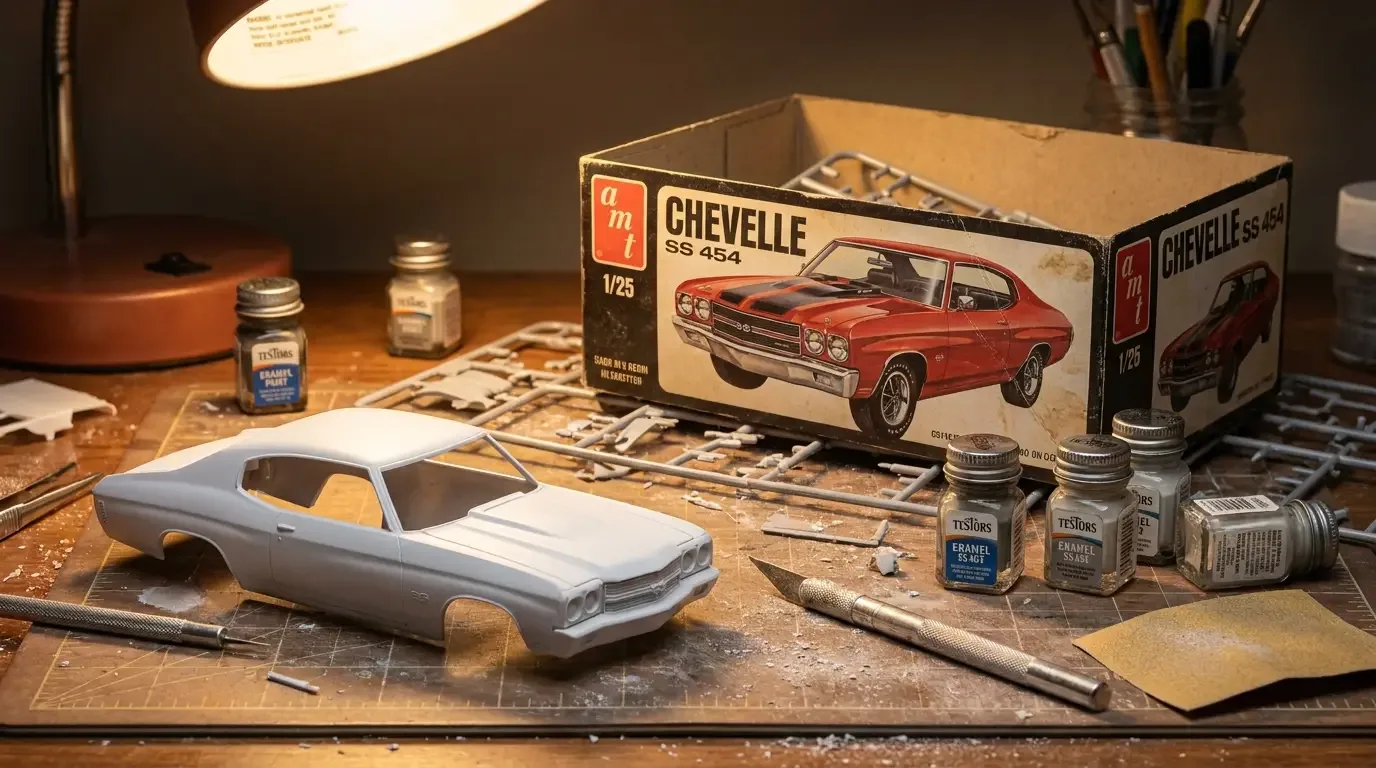
The reissue market keeps this hobby alive. Round 2 Models, which now owns much of the old AMT and MPC tooling, regularly reissues the classic Chevelle kits, sometimes with corrected decals or updated instructions, sometimes as a straight rerun of the old box art. Original-issue boxes from the 1960s and 1970s, sealed and unbuilt, command real money among collectors who care as much about the cardboard as the plastic inside it. Sealed original-issue muscle car promos and kits from AMT and MPC regularly bring several hundred dollars on the collector market in mint, boxed condition, well beyond what any of them cost new. For a builder starting out, the practical advice is simple: buy a currently available reissue rather than chasing a decades-old sealed box, unless the box itself is the point. The plastic inside a fresh reissue is the same tooling, minus the collector premium, and it builds just as well. Aftermarket resin and photo-etch companies have also stepped in to fill gaps the original tooling left behind, offering correct engine detail sets, wheel and tire combinations, and decal sheets that fix errors baked into kits fifty years ago. A patient builder today can turn a basic 1970s AMT or MPC kit into something closer to museum-accurate than anything that came out of the box new.
The community around the hobby
Model car clubs still meet in VFW halls and hobby shop back rooms across the country, and Chevelle builds show up at nearly every regional contest. It's a slower, quieter corner of car culture than the shows covered in next: Period GM Advertising, but it runs on the same fuel, a genuine love for a shape and a era that the builders want to hold in their hands, literally, at 1:25 scale.
| Kit | Manufacturer | Scale | Notable detail |
|---|---|---|---|
| 1969 Chevelle SS 396 | AMT | 1:25 | Annual-issue tooling from AMT's original GM promo contract |
| 1970 Chevelle SS 454 | AMT | 1:25 | Widely reissued, among the most popular Chevelle kits ever produced |
| 1972 Chevelle SS 454 | MPC | 1:25 | MPC's own tooling, later reissued by Round 2 |
"You can tell which builders grew up with these kits versus which ones came to the hobby later. The old-timers build stock. They're chasing the car they remember from the box art on their shelf when they were nine. The younger builders customize because to them it's just a cool shape to work with, not a memory they're trying to recreate."
Patrick Walsh
Whether it's the classic Chevelle story told in full-size steel or in a hundred-piece plastic kit on a workbench, the appeal comes from the same place. The Chevelle earned its shelf space the honest way, by being a car people wanted badly enough to build twice: once in the driveway, once in miniature.
Sources and notes
Related Reading
Have a
Chevrolet Chevelle
for Sale?
Reach thousands of serious classic car collectors across the US.
Sell It Here →
Are You a Classic Car Dealer?
List your full inventory and connect with targeted classic car buyers.
Join as a Dealer →

About the author
Patrick Walsh
Automotive journalist covering classic car shows, events, and the enthusiast community across North America.
Related Listings - Chevrolet Chevelle
More in Ownership & Lifestyle
Comments
Be the first to comment on this article.