
People ask me all the time where the barn finds are hiding. They picture a numbers-matching muscle car under a tarp, forty years of dust on it, waiting for the right person to walk in. That happens. It just does not happen the way the internet makes you think. Most of what I turn up is a rough project that needs everything, bought from somebody who never planned to sell until the day they did. If you want to actually find one, you stop chasing the fantasy and start working the places where old cars really sit.
Ownership & Lifestyle
7 min read
Where Barn Finds Still Hide
Rural estates, old farms, back roads, estate auctions, and the knock on the door: where old cars really hide, and the honest odds of finding one.
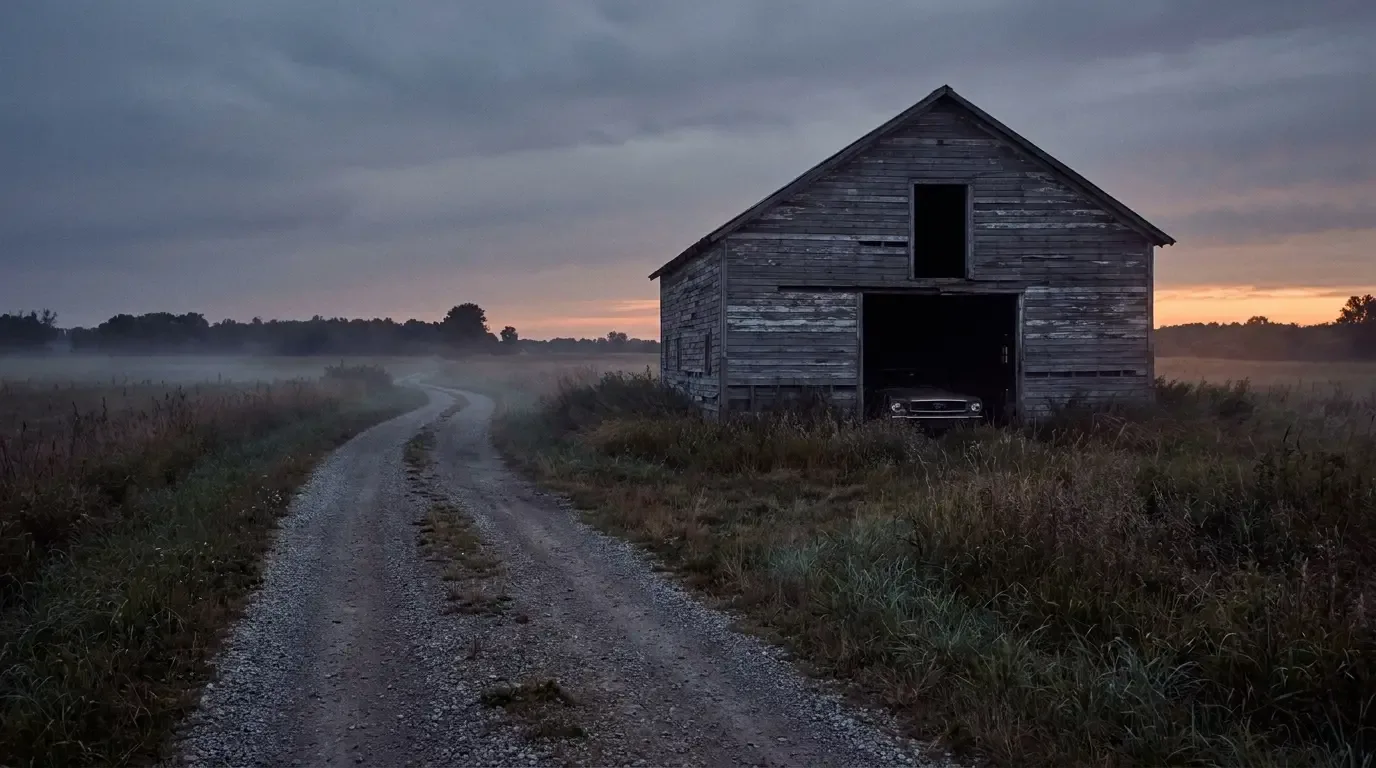
Rural estates and old farms are still the ground zero
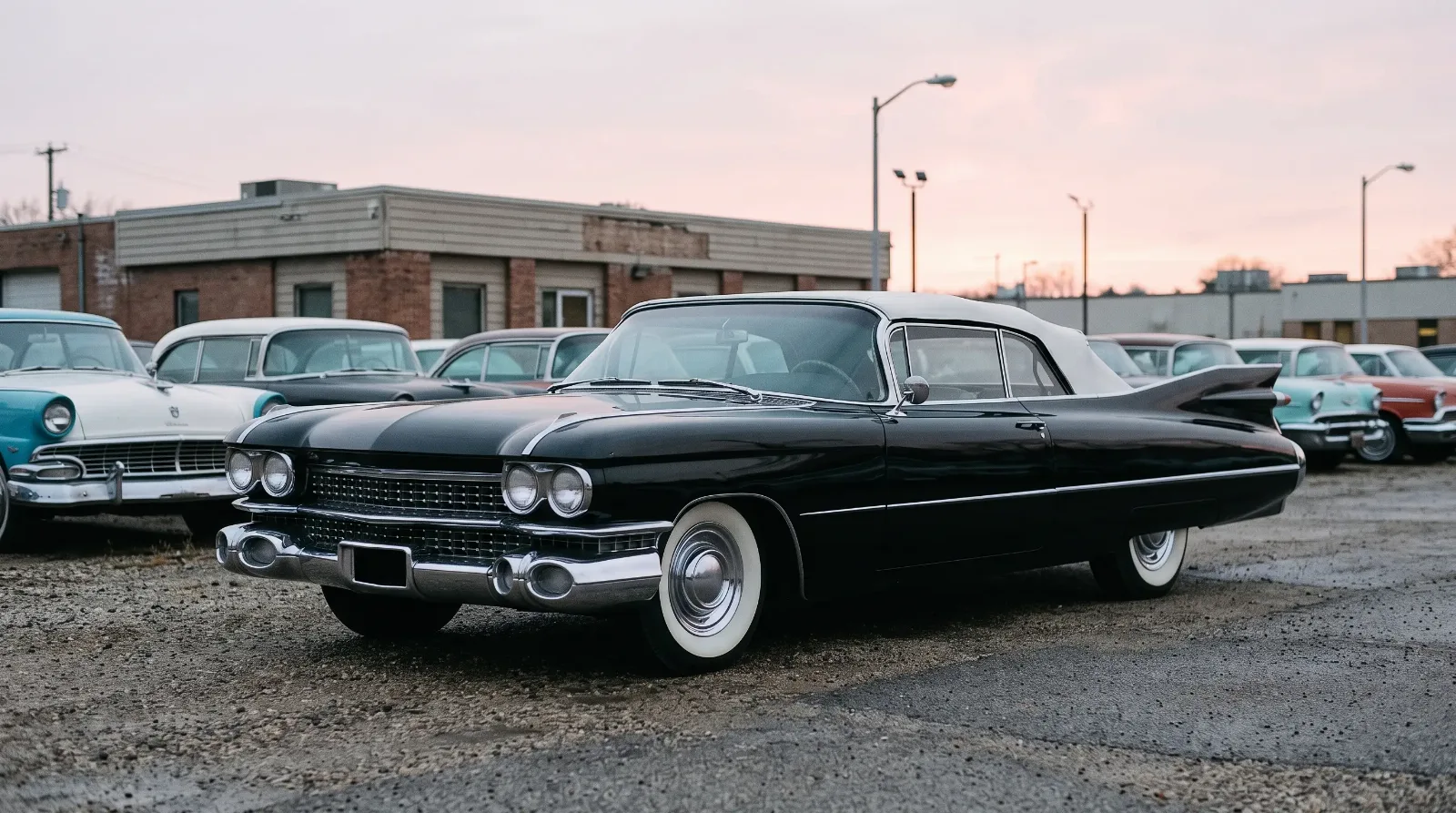
Farmland is where cars go to wait. A working farm buys a truck or a car, uses it hard, parks it when it quits, and the family never gets around to hauling it off. There is always room for one more dead vehicle behind the equipment shed. I have pulled trucks out of hedgerows where the trees grew up through the bed. The farther you get from a city, the longer things sit, because land is cheap and nobody is pressuring the owner to clear the yard.
The tricky part is that these cars belong to people who do not think of themselves as sellers. The car is not for sale because nobody ever asked. That is the whole game right there. If you want the full method, read how to find barn finds from front to back, because the finding and the buying are the same skill. You are not shopping a listing. You are finding a car nobody listed and giving the owner a reason to let it go.
Back roads, word of mouth, and the knock on the door
My best tool is a truck and a tank of gas. I drive the back roads, the county routes that do not go anywhere in particular, and I look at what is parked behind houses and barns. When I see something with potential, I write down the address and come back another day to knock. Not to lowball anybody. Just to ask, politely, whether they would ever consider selling.
Word of mouth beats driving every time, though. Tell the feed store, the tractor mechanic, the guy who runs the scrapyard, the rural mail carrier. These people know every yard in the county. Let them know you buy old cars and pay fair and haul them off clean, and eventually the phone rings. Here is how I run the knock-on-the-door approach:
- Go in the daytime, alone, in a normal vehicle. Nobody wants two strangers in a big trailer showing up at dusk.
- Compliment the car honestly before you talk money. These are usually family cars, not commodities.
- Leave a card even if they say no. People change their minds a year later.
- Never badmouth the condition. If it is rough, they already know, and running it down just gets you shown the driveway.
"I have knocked on a hundred doors to buy three cars. That is a fine ratio. The ninety-seven no's cost me nothing but gas, and every yes was a car nobody else was even looking for."
Robert Halloran
Estate auctions and obituaries do the sorting for you
When somebody passes, the family has to deal with the car whether they want to or not. That is why estate sales and small-town estate auctions are worth your time. The heirs usually live somewhere else, they want the estate closed, and they have no emotional attachment to a truck in the barn. A car that was not for sale for thirty years becomes very much for sale the month after the owner dies.
I read the obituaries in the rural papers. It sounds grim, and I understand why it makes some people uncomfortable, so I will be plain about it: you are not preying on anybody. You are offering to take a problem off a grieving family's hands and pay them for it. When I see an older gentleman passed who the notice says loved cars or worked as a mechanic, I make a respectful call to the estate a few weeks out, never at the funeral. Half the time there is nothing. The other half, there is a car in a garage the family does not know what to do with.
| Source | Realistic odds of a find | What you actually get |
|---|---|---|
| Back-road driving | Low per mile, steady over time | Rough projects, occasional gem |
| Word of mouth network | Best long-term return | Cars before they hit the market |
| Estate auctions | Moderate, but competitive | Complete cars, motivated sellers |
| Obituary follow-up | Low hit rate, high quality | Untouched, one-owner cars |
| Knock on the door | Roughly one buy per hundred doors | Cars nobody else can reach |
The honest odds, and why paperwork decides everything
I owe you the truth about the numbers. The genuine, low-mileage, correct-and-complete barn find is rare, and it gets rarer every year as more people go looking. Most of what is left in barns is a car that was parked because it stopped running, sat in damp air for decades, and now needs metal, brakes, brake lines, fuel system, wiring, and interior. That is not a treasure. That is a project with a good story attached. If you go in expecting the fantasy, you overpay and you quit. If you go in expecting a rough car at a fair price, you win more than you lose.
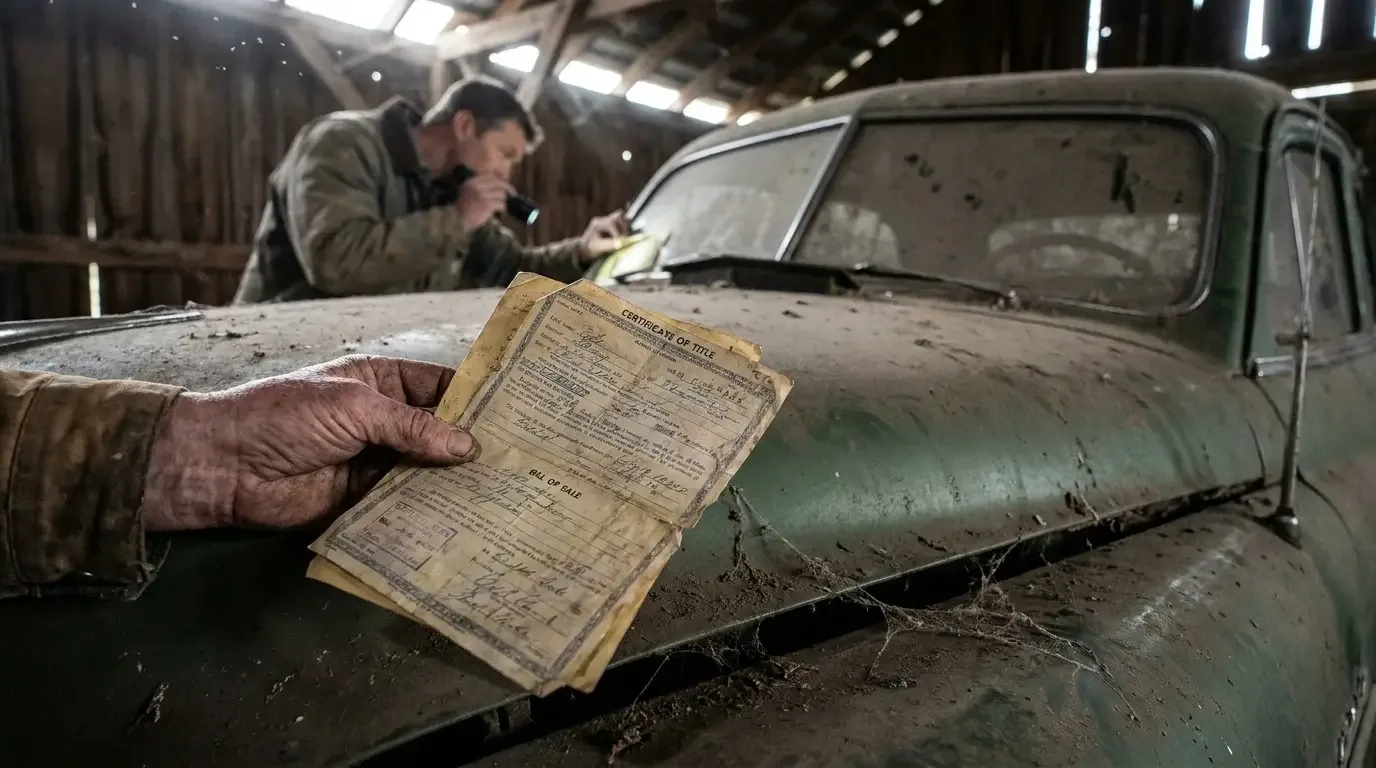
And here is the part that ends more deals than rust ever does. The title. A car that sat forty years often has no clean paperwork, a dead owner, an out-of-date registration, or a title in a name three owners back. Before you hand anybody cash, understand what you are getting into, because Buying a Barn Find: Titles and Paperwork is where the real risk lives. A cheap car with no clean path to a title is not cheap. It is a lawn ornament.
None of this is glamorous, and that is the whole point. The romance of it, the part everybody actually loves, lives in the story of the barn find. The finding itself is patience, gas money, and a willingness to knock on doors and hear no. Do that long enough, treat people right, and the cars come to you.
Sources and notes
- Regional auction and estate-sale records for typical barn-find lot conditions and pricing.
- Rural classified and swap-meet listings for private-sale patterns.
- Interviews with pickers and long-time collectors on finding methods and realistic hit rates.
- Club and registry notes on titling problems common to long-stored vehicles.
Related Reading
Have a
Classic Car
for Sale?
Reach thousands of serious classic car collectors across the US.
Sell It Here →
Are You a Classic Car Dealer?
List your full inventory and connect with targeted classic car buyers.
Join as a Dealer →

About the author
Robert Halloran
Texas-based classic truck enthusiast with decades of experience buying, restoring, and writing about American pickups from the 1940s through the 1980s.
More in Ownership & Lifestyle
Comments (1)
C
Carol Hendricks
2 months ago
The cooling system note is accurate. Gets overlooked because these cars run fine at idle. Not fine on a highway in July.