
Most people think finding a barn find is about luck. A door swings open, the light hits a dusty fender, and there sits a forgotten car worth a fortune. That happens about as often as winning a raffle. The real work is dull and slow. You knock on doors, you make phone calls, you drive past the same old property four times before you stop. If you want one of these cars, you have to go looking, and you have to know how the buying part actually works once you find it.
Ownership & Lifestyle
10 min read
How to Find and Buy a Barn Find
A plain-spoken guide to finding barn finds, approaching owners the right way, negotiating on a car that hasn't run in decades, and getting the paperwork right.
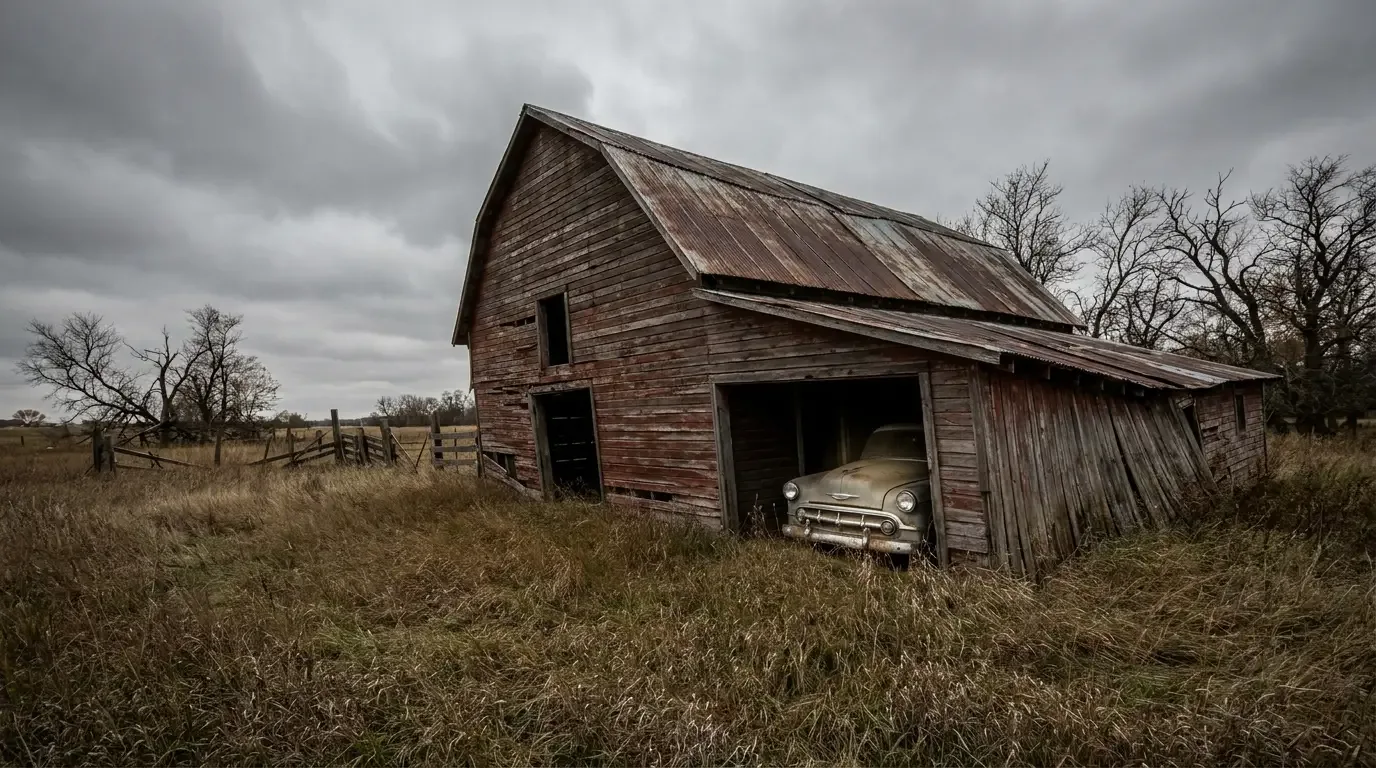
I have bought and passed on more of these than I can count. What follows is how I go about it. None of it is glamorous, and that is the point. The people who do well with barn finds treat it like a job, not a treasure hunt. If you want the background on where this whole idea came from, it helps to understand how barn finds began before you chase your first one.
Where the cars actually hide
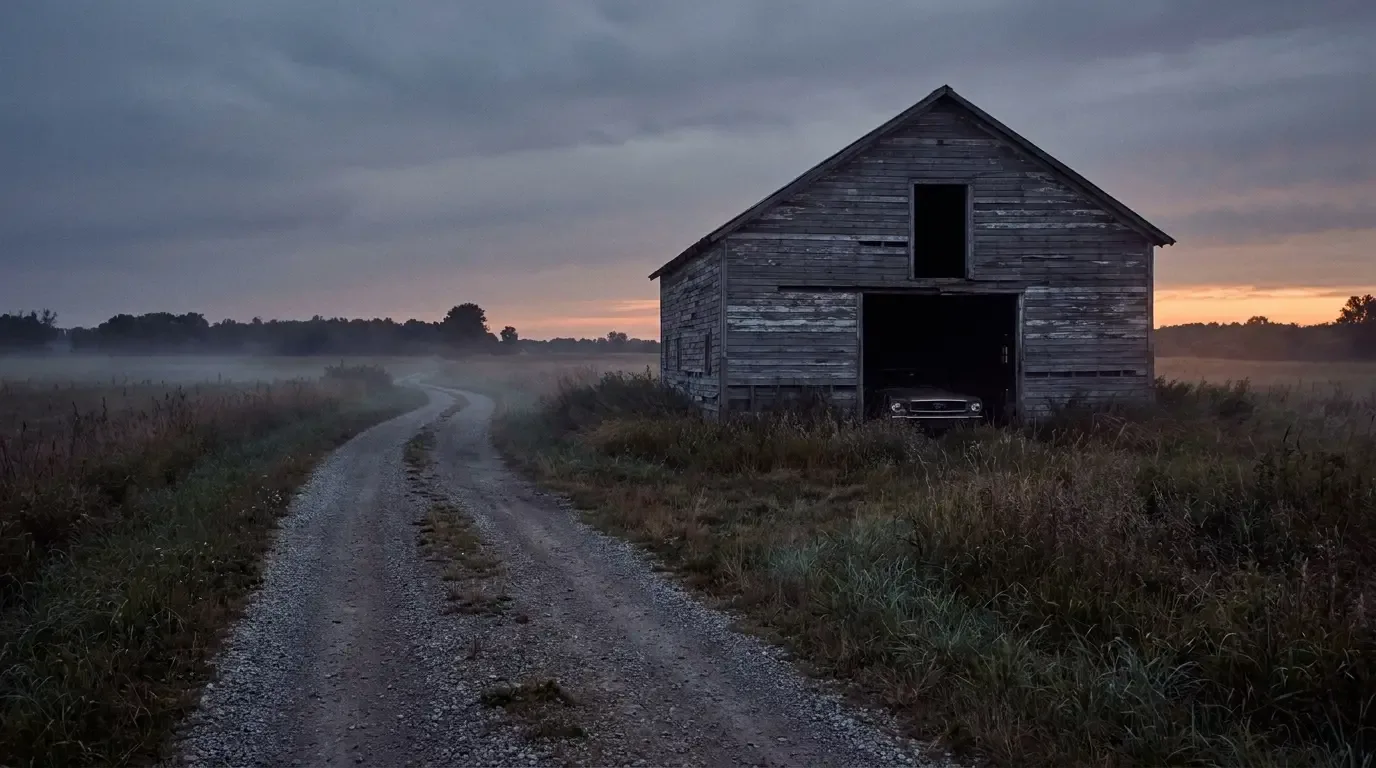
Cars do not hide in barns because someone tucked them away for safekeeping. They hide because a person stopped driving one and never got around to dealing with it. A guy parks the car when the clutch goes, tells himself he will fix it next spring, and then twenty years pass. That is the story behind almost every car I have pulled out of a building. Nobody was preserving anything. Life just moved on.
So you look where life stalls out. Rural properties with more outbuildings than the family needs. Old farms that have passed to kids who live in the city. Estates where the owner died and the heirs are three states away. Storage lots on the edge of small towns. The car is usually not in a picturesque barn at all. It is under a collapsed carport, behind a machine shed, or sitting in a side yard with a tree growing through the grille.
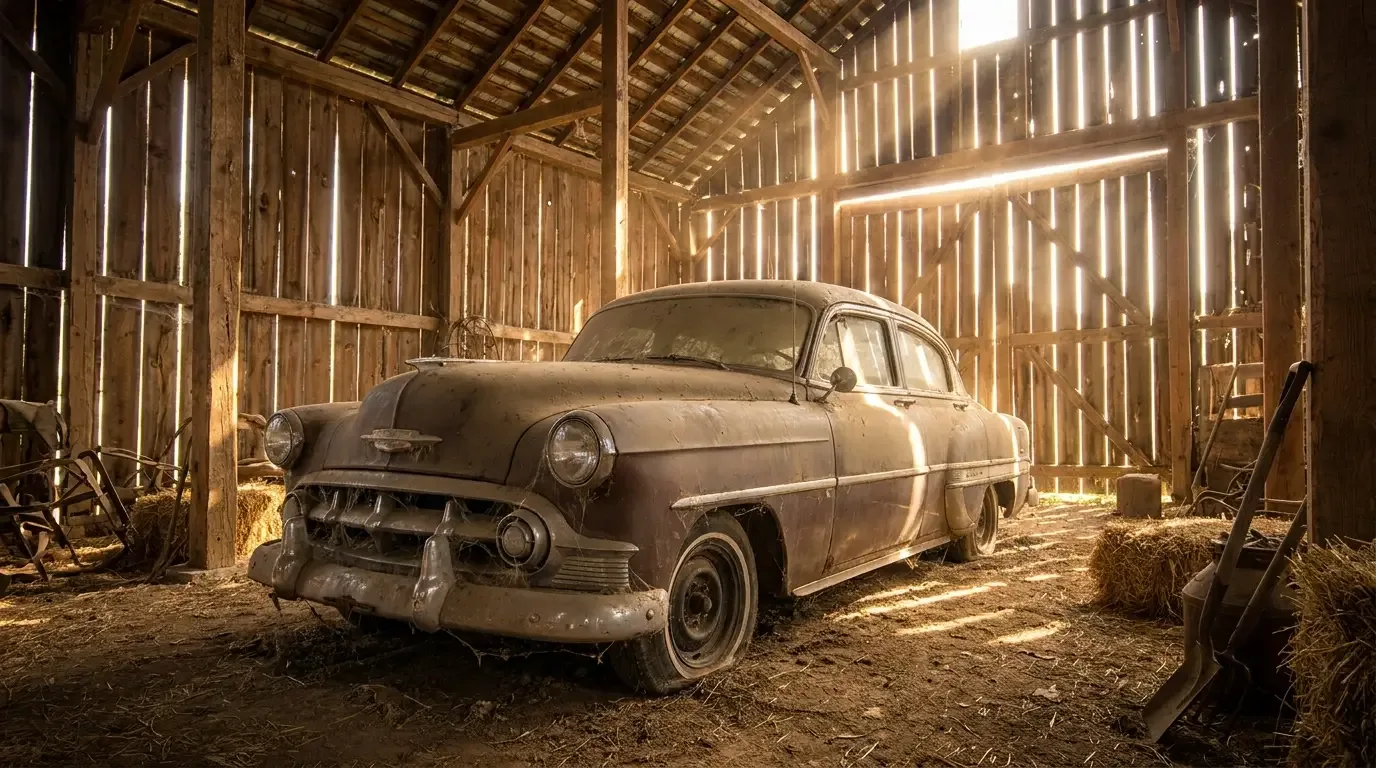
Before you go hunting, be honest with yourself about what you are likely to find. If you are fuzzy on what actually counts, read what is a barn find so you are not chasing a car that has been sitting in a dry garage for two years and calling it a discovery. A true long-stored car comes with rot, rodents, and rust, and the price should reflect that.
Estate sales, auctions, and the slow paper trail
Estate sales are the most reliable source I know of, and most people ignore them because they are looking for a bargain hidden in a field instead. When someone passes and the family clears the property, the cars go too. Watch local estate auction listings, the small ones run by county auctioneers, not the big national houses. The photos are often bad, the descriptions are worse, and that keeps the crowd thin. A car listed as "old sports car, sold as is, no key" in a blurry thumbnail is exactly the kind of listing you want to chase down.
The paper trail matters here more than the car. Estate sales usually come with clean provenance because a lawyer or executor is handling the transfer. That is worth real money. A car with a clear chain of ownership is far easier to title than one a guy bought at a swap meet in 1988 with a handshake. Ask the auctioneer up front what documentation comes with the vehicle. If they cannot tell you, treat that as a warning, not a detail.
- County and rural estate auctions, especially farm dispersal sales
- Local classified boards and small-town newspaper listings
- Online marketplace posts with no keywords, bad spelling, and one photo
- Probate notices, which sometimes list vehicles among estate assets
Word of mouth beats every website
The best leads I ever got came from people, not screens. The mail carrier who runs a rural route knows which properties have a car sitting out back. The guy at the parts counter hears things. The old mechanic who closed his shop remembers whose car he last worked on and where it went. None of this is on the internet, and that is exactly why it is worth having.
You build this by being a known quantity. Tell people what you are after. Leave a card at the feed store, the diner, the tractor repair place. Be specific but not greedy about it. "I buy old project cars, running or not, and I pay fair" gets you more calls than "looking for rare classics." The word rare scares people or makes them think you are going to lowball them. Plain talk opens doors.
"I have found more cars standing in a parts store parking lot talking to a stranger than I ever found scrolling listings at my kitchen table. The car you want belongs to somebody who has no idea you exist. Your job is to fix that."
Robert Halloran
Approaching an owner without blowing it
Here is where most people ruin a good lead. They spot the car, they get excited, and they come on like a buyer who already owns it. That is the fastest way to get a no. The person who has let a car sit for thirty years often has feelings tied up in it. It was their dad's. It was their first car. They meant to fix it. You have to respect that before you talk money.
Go slow. Knock on the door, introduce yourself, and say you noticed the car and wondered about its story. Then let them talk. You are not there to close a deal on the first visit. You are there to become a person they trust, not a vulture circling a dead animal. Half the time the answer is no, and you leave a card and thank them. A year later the phone rings because they finally decided to let it go, and they call you because you were decent about it.
Never insult the car. Even if the floors are gone and the engine is a block of rust, do not stand there listing everything wrong with it to knock the price down. The owner knows the car has problems. Pointing them out just makes them dig in. Let the condition speak for itself when you make an offer, and make the offer honest.
Negotiating on a car that has not run in decades
Pricing a barn find is not like pricing a car you can drive and test. You are buying a question mark. The engine may be seized. The frame may be rotten under nice paint. So you price for the worst case and adjust up only for what you can actually verify. I would rather walk away from ten cars than overpay for one that turns out to be a parts donor.
Do not anchor to auction headlines. The million-dollar barn find you read about was a rare car in a specific chassis with documentation to match. The car in front of you is probably a common model that needs everything. Value it as a project with a long, expensive road ahead. The table below is roughly how I sort what I am looking at before I say a number.
| Factor | What lowers value | What holds or raises it |
|---|---|---|
| Body and frame | Rot in floors, frame rails, cowl | Solid structure, surface rust only |
| Completeness | Missing trim, glass, engine parts | All original pieces present |
| Paperwork | No title, unclear ownership | Clean title or clear estate transfer |
| Desirability | Common model, no options | Rare trim, documented history |
| Storage | Damp dirt floor, open to weather | Dry, off the ground, covered |
When you make the offer, make it clean and explain it in plain terms. "The body is solid but it needs a full drivetrain, so this is what it is worth to me as a project." People respect a number they understand more than a number that feels like a trick. And carry the cash or the certified funds if you think there is any chance of closing. A deal that sits overnight often dies overnight when a relative talks the seller into holding out for more.
Title and paperwork, the part that sinks people
This is where a good find turns into a nightmare, and it is the part buyers skip because it is boring. A car with no title, no registration, and an owner who has been dead for a decade can be a legal headache that costs more than the car. Before you hand over money, know exactly what you are getting on paper.
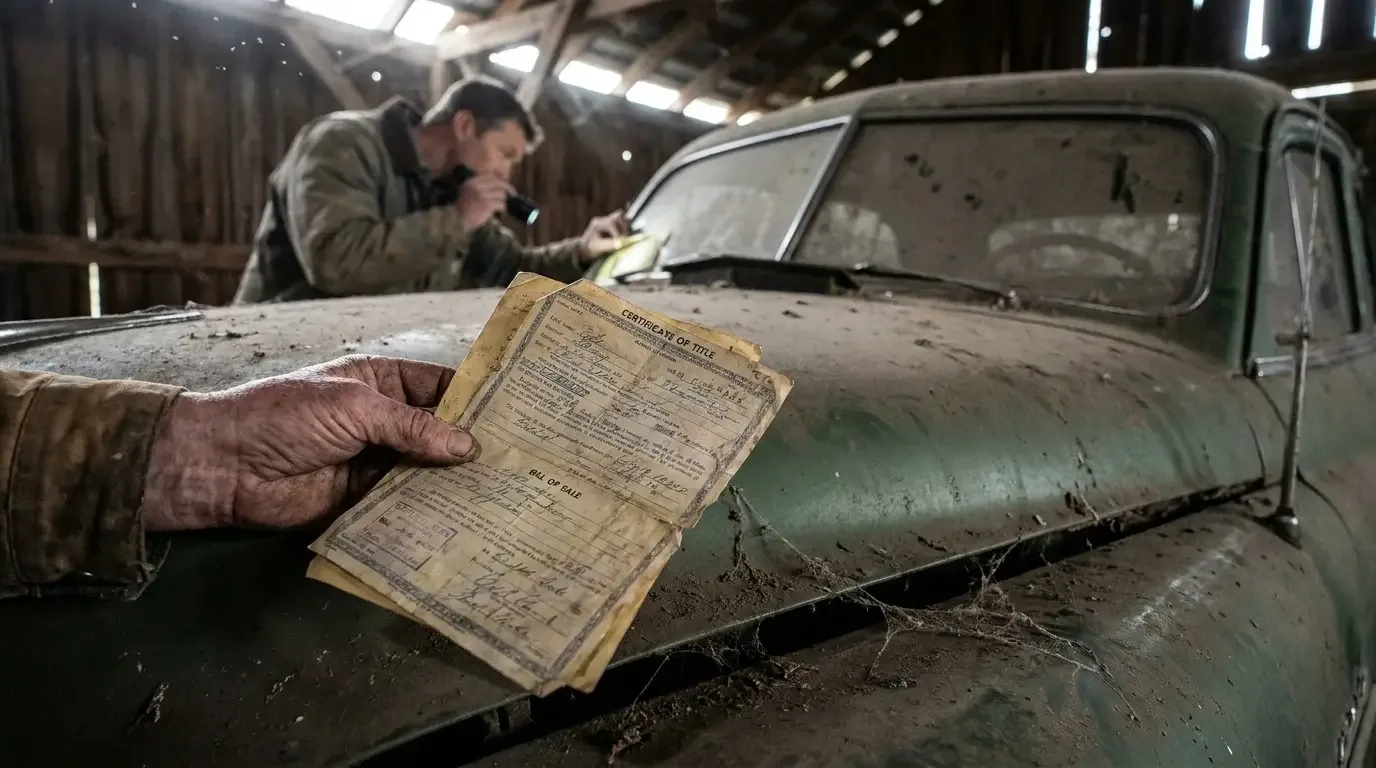
Ask for the title first, always. If there is a title, confirm the name on it matches the seller or the estate, and that there are no liens. If there is no title, you are now in the business of getting one, and the rules vary by state. Some states offer a bonded title process. Some require a court order. Some want a mechanic's lien or a lengthy bureaucratic dance. A missing title is not always a dealbreaker, but it has to be priced into what you pay because your time and filing fees are real costs.
"I have watched people pay good money for a car and then spend two years fighting the DMV to make it legal. Sort the paperwork before the passion. A car you cannot title is a lawn ornament you overpaid for."
Robert Halloran
Get a bill of sale for every purchase, signed and dated, with the seller's name, the vehicle description, and the VIN. Even a private, cash, as-is deal deserves a piece of paper. If you are buying from an estate, the executor should sign, and you want a copy of the document that gives them the authority to sell. Photograph the VIN plate and the odometer. None of this is exciting, but it is the difference between a car you own and a car you merely possess.
Knowing when to buy and when to walk
The hardest skill in this whole business is the walk away. You have driven three hours, you found the car, and every part of you wants to load it up. But if the frame is gone, the title is a mess, and the seller wants collector money for a rusted shell, the right move is to shake hands and leave. There will be another car. There is always another car.
Buy when the structure is sound, the paperwork is workable, and the price reflects a project and not a finished restoration. Walk when you are paying for a dream that the metal cannot back up. And if you would rather skip the door knocking entirely, there is a steady supply of these cars already sorted and listed. Browsing used barn finds for sale will show you what real examples cost once someone else has done the hunting and the title work for you.
Sources and notes
- Period and current classic-car press coverage of notable barn find discoveries and auction results
- Public auction and estate sale records for pricing patterns on long-stored vehicles
- State titling and bonded-title guidance for vehicles lacking documentation
- Interviews and firsthand accounts from dealers and pickers who source stored cars
Related Reading
Have a
Classic Car
for Sale?
Reach thousands of serious classic car collectors across the US.
Sell It Here →
Are You a Classic Car Dealer?
List your full inventory and connect with targeted classic car buyers.
Join as a Dealer →

About the author
Robert Halloran
Texas-based classic truck enthusiast with decades of experience buying, restoring, and writing about American pickups from the 1940s through the 1980s.
More in Ownership & Lifestyle
Comments
Be the first to comment on this article.