
Imagine the evening after. The trailer pulled away at four, the buyer waved from the passenger seat, and the oil stain on the driveway is the only thing left where the car stood for twenty years. You have a check that has cleared, a signed bill of sale, and a strange quiet in the garage. It feels finished. It isn't quite, and the hour you spend that evening on a few small tasks is what keeps the car from following you around for the next six months.
Market & Values
8 min read
After the Sale: Release of Liability, Plates, Insurance
What to do after selling a car privately: file the release of liability, pull the plates, cancel insurance in the right order, keep the paper.
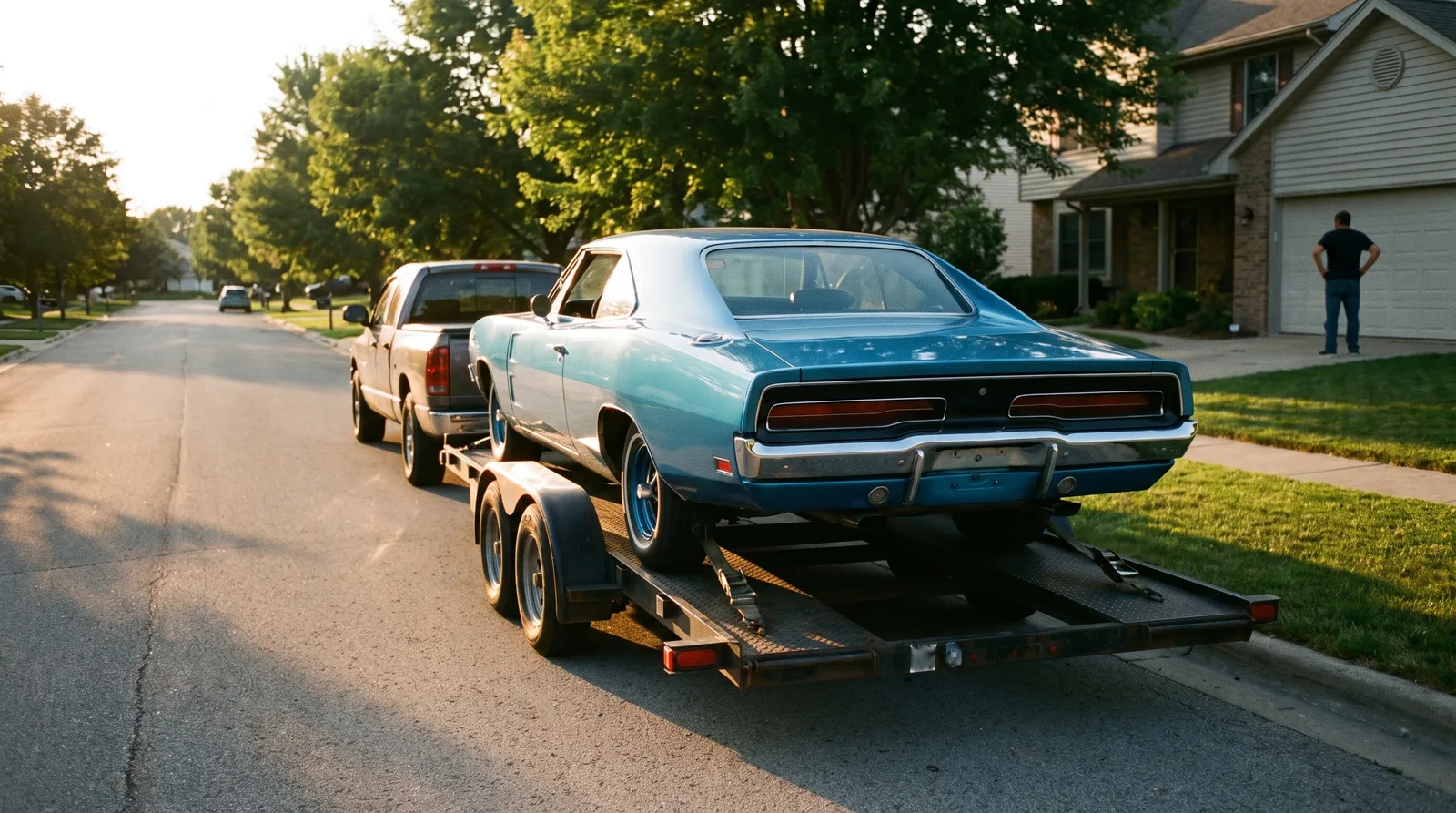
This is a short guide to what to do after selling a car privately, written for owners of older cars, where the paperwork tends to be a little stranger and the attachments a little stronger. The title and bill of sale come before all of this and are covered in the main guide on this. What follows starts the moment the keys leave your hand. Rules differ from state to state, so check your own DMV's site before you rely on any one detail here.
File the release of liability the same day
Until the buyer registers the car, the state's records still say it is yours. If they take a month to get around to it, or never do, every parking ticket, toll violation and red-light camera notice in that window is mailed to the name on file. In the worst case, an accident in a car still recorded under your name can draw you into a claim you have nothing to do with.
The release of liability is the document that closes that gap. States call it different things: a notice of transfer, a notice of sale, a vehicle transfer notification. Many let you file online in a few minutes with the VIN, the plate number, the date of sale, the buyer's name and address, and the odometer reading. Deadlines vary and some are short. California requires sellers to file within five days. Texas asks for its vehicle transfer notification within 30 days, and Florida expects its notice of sale within 30 days as well. Elsewhere the form, the deadline and even whether a separate notice exists differ, so look up your own state's version before the buyer leaves.
Whatever your state's deadline, file that evening. Print or screenshot the confirmation and put it in the folder with your copy of the signed title and the bill of sale. If a ticket ever does arrive, that confirmation, with its timestamp after the sale, is usually all it takes to send it on to the right person.
Plates, registration and the little things still attached
In most states the plates belong to the owner, not the car, and they come off at the sale; Texas and Florida both tell sellers to remove them. A few states do it the other way. California is the big one: standard plates generally stay with the vehicle, while personalized and special interest plates belong to the owner and can be reassigned. So check your state's rule before you reach for a screwdriver. Where plates do belong to you, it is easier to hand one over later than to retrieve it from a stranger's car three states away, and personalized or special plates can often be moved to another vehicle you own.
Once the plates are off, deal with the registration. Depending on the state, you may need to surrender the plates, cancel the registration online, or transfer it to another car, and some states refund part of the unused registration fee; New York, for example, refunds part of a two-year registration surrendered in its first year. Surrendering plates matters most in states that tie insurance status to the registration. New York says plainly that you must surrender plates and registration before cancelling liability insurance, or it will suspend the registration and can suspend your license, and Florida warns of license trouble for a plate that is not transferred or surrendered.
Then walk back through the car in your head, because older cars collect things. The toll transponder stuck to the windshield is linked to your account and will keep paying the buyer's tolls until you remove it from the account. A garage door opener clipped to the visor opens your garage. A club membership card, a parking permit or a storage facility gate tag may still be in the glovebox. If you had a later car with a paired phone or a tracking device, clear it. None of these are dramatic. All of them are easier to fix tonight than after someone else has used them.
Insurance: cancel last, not first
The instinct is to call the insurer the moment the deal is agreed. Wait. If the car is still on your property waiting for a shipper, still parked in your driveway for a day or two, or still in your name on paper, it can still be damaged, and it can still cause damage. Cancel coverage once three things are true: the money has cleared and is irreversible, the car has physically left, and the release of liability is filed.
Collector car policies, usually written on an agreed value basis, are often billed annually, so cancelling mid-term usually leaves unused premium on the table. Ask how your insurer handles it. A pro rata cancellation refunds the unused portion in full; a short-rate cancellation keeps a penalty, typically a few percent of the annual premium, and is the method some insurers use when the policyholder cancels. The cancellation clause in your policy says which applies. If you are keeping other collector vehicles on the same policy, remove the sold car instead of cancelling, so you do not lose a multi-car discount or a continuous coverage history you may want later. If you plan to buy another classic soon, ask whether the insurer can hold the policy open for a short gap.
The table below is the whole evening in one place.
| Task | When | Why it matters |
|---|---|---|
| File release of liability or notice of sale | Same day, within your state's deadline | Moves tickets, tolls and accident liability to the buyer |
| Remove plates | At handover | In most states plates belong to you, not the car; check yours |
| Surrender or transfer registration | Within days | Avoids insurance lapse flags; in some states brings a partial refund |
| Remove toll transponder from your account | Same day | Otherwise you pay the buyer's tolls |
| Cancel or amend insurance | After funds clear and the car is gone | Coverage while the car may still be your responsibility |
| File copies of title, bill of sale and confirmation | That evening | Your proof of the sale date and price |
| Keep restoration invoices or copies | Before handing originals over | Your cost basis if the sale produced a gain |
The paper trail, and the calls that come later
Keep the folder. A copy of the signed title, both pages of the bill of sale, the release of liability confirmation, the payment record and the insurance cancellation notice belong together, and they are worth keeping for at least three years after you file the tax return for the year of the sale, which is the IRS's general rule for property records. If the sale produced a profit, the restoration receipts in that folder are also your cost basis for the tax return, so keep copies even if the originals went to the buyer with the car's history file.
"Everyone remembers handing over the keys. Hardly anyone remembers the five quiet minutes at the kitchen table afterward, filing a form and pulling a plate. Those five minutes are the part that actually ends the ownership."
Nora Beckett
And expect, now and then, that the story has an epilogue. Most buyers send a photo of the car in its new garage and that is the last you hear. Occasionally a call comes that is less friendly: a claim that something failed on the drive home, a request to "undo" the deal, a stranger claiming to be from the DMV or a shipping company who needs your bank details to "release" something. An as-is bill of sale settles most of the first kind. The second kind deserves suspicion, because payment reversals and fake follow-up contacts are among the common car selling scams that aim at sellers after the handshake rather than before it. Never send money or account details to anyone in response to a call you did not initiate; look up the agency or company yourself and call them back.
Then, when the folder is closed and the plate is on the shelf, let it be done. Sweep the garage. Leave the oil stain if you like. Some people keep it a while.
Sources and notes
- TxDMV: Remove plates and file a vehicle transfer notification within 30 days
- Florida (Sarasota County Tax Collector): Selling your vehicle, notice of sale within 30 days
- California DMV: License plates
- New York DMV: Surrender your plates and registration
- Short rate and pro rata insurance cancellations explained
- IRS: How long should I keep records?
Related Reading

#classic car insurance
#selling a classic car
#release of liability
#what to do after selling a car privately
#notice of sale
#license plates

About the author
Nora Beckett
Automotive features writer and photographer who tells the human stories behind the cars, from show fields to cross-country road trips.
More in Market & Values




Comments (1)
M
Marty Haggerty
6 days ago
Pull the E-ZPass n the garage opener before the trailer leaves. Mine paid some stranger's turnpike tolls for a month.