Consignment fees get quoted as a single number, and the single number is the least useful thing about them. A dealer says 8%. Another says 5%. A third says the program is free to the seller. All three statements can be accurate, and the seller who picks the lowest headline rate can still walk away with the smallest check. Classic car consignment fees are a schedule, not a percentage, and the schedule only makes sense when you run it against a sale price and a timeline.
This piece does that arithmetic. It assumes you already know how consignment works and why owners choose it; if you don't, start with Classic Cars Arena's classic car consignment guide. Here the question is narrower: what does each fee structure actually cost you, at what price point, and over how many months.
The five fee structures you will be quoted
Nearly every consignment offer in the US market falls into one of five shapes, or a blend of two. Across the market, commissions run from about 5% to 15% of the sale price, with flat fees as the main alternative.
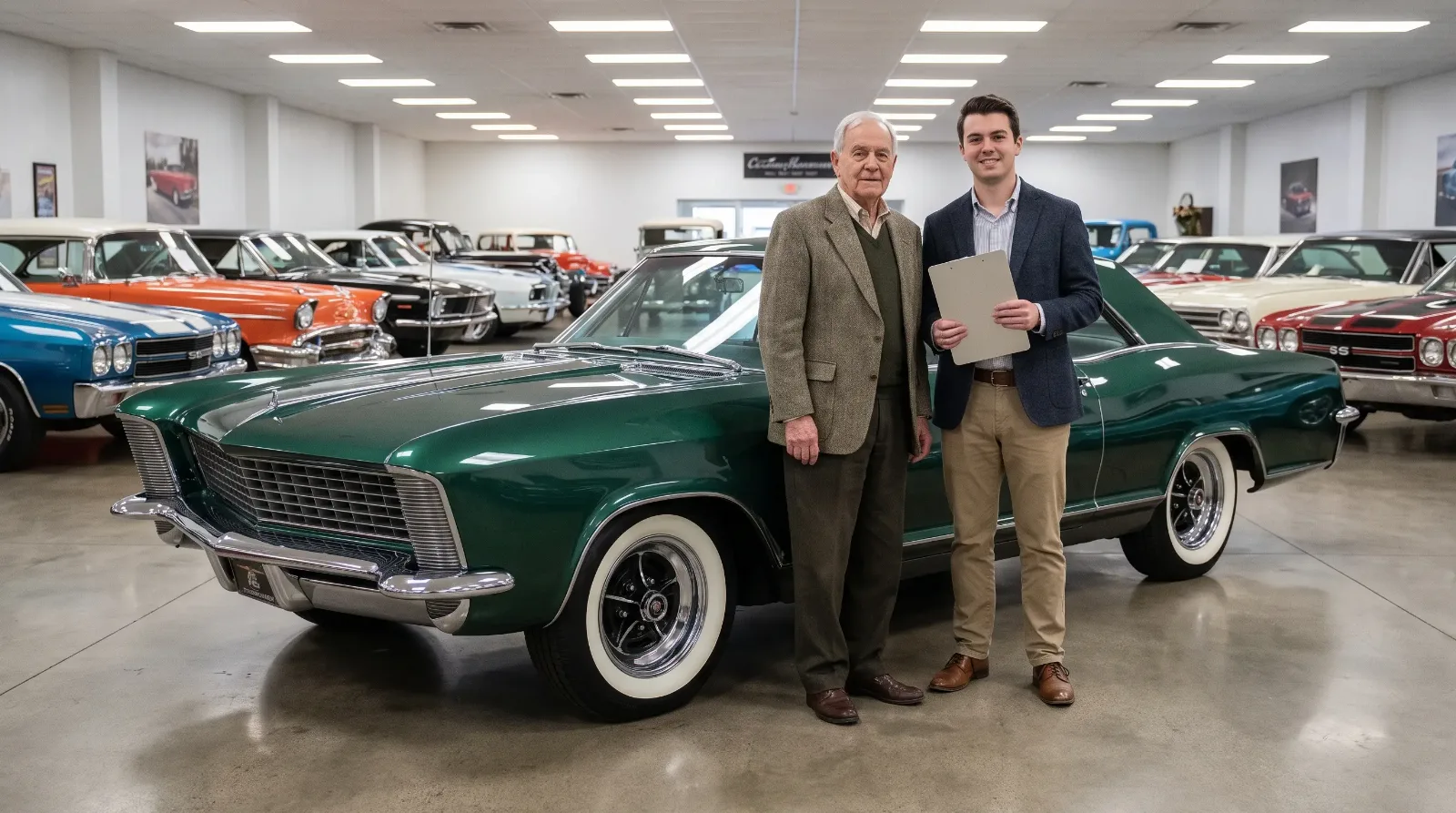
Straight percentage. The dealer takes a fixed share of the final sale price. Remote consignment, where the car stays in your garage, tends to sit at the low end of the range. Showroom consignment, with floor space, staff and walk-in traffic built in, sits higher. Some showroom schedules slide downward as the price rises, so a $150,000 car pays a smaller percentage than a $25,000 one.
Percentage with a minimum. Same idea, with a dollar floor. A $500 minimum is irrelevant on a $40,000 car and decisive on a $6,000 one. Real floors can be much higher: Classic Auto Mall in Pennsylvania publishes 10% of the sale price with a $3,000 minimum, which works out to 10% on any car above $30,000 and a bigger share below it.
Flat fee. A fixed dollar amount regardless of the sale price, often tied to a price band. Flat fees reward expensive cars and punish cheap ones.
Net price, or dealer markup. You name the figure you want to receive, and the dealer keeps whatever the car sells for above it. This is how "free to the seller" programs earn their money; Streetside Classics, for example, tells consignors there are no fees because its commission is built into the sale price. The fee is real, paid through a higher asking price that can slow the sale.
Listing fee plus commission. An upfront charge for marketing and intake, then a smaller percentage at closing. The upfront portion is usually gone whether the car sells or not.
What the percentages cost at different price points
The table below runs the common structures against four sale prices. The $3,000 flat fee and $500 minimum are illustrative figures chosen to show the effect, not quotes from any specific dealer.
| Sale price | 5% commission | 10% commission | 15% commission | 5% with $500 minimum | $3,000 flat fee |
|---|---|---|---|---|---|
| $10,000 | $500 | $1,000 | $1,500 | $500 (5.0%) | $3,000 (30.0%) |
| $25,000 | $1,250 | $2,500 | $3,750 | $1,250 (5.0%) | $3,000 (12.0%) |
| $50,000 | $2,500 | $5,000 | $7,500 | $2,500 (5.0%) | $3,000 (6.0%) |
| $100,000 | $5,000 | $10,000 | $15,000 | $5,000 (5.0%) | $3,000 (3.0%) |
Two patterns stand out. First, the spread between the low and high end of the percentage range is wide in dollars even when it looks narrow in points. On a $50,000 car, the difference between 5% and 15% is $5,000. Second, flat fees cross over. Below roughly $30,000, a $3,000 flat fee costs more than a 10% commission. Above it, the flat fee wins, and the gap widens with every dollar of sale price.
The net-price model doesn't fit in the table because its cost depends on a number you may never see. If you set a net of $45,000 and the car sells for $52,000, the dealer earned $7,000, or about 13.5% of the sale. If it sells for $47,000, the dealer earned $2,000. Ask in writing whether you will be shown the final sale price. Some agreements disclose it. Some do not, and the contract is the only place that question gets answered; you can read more on that before you sign anything.
The charges that sit outside the commission
The commission is the fee everyone negotiates. The extras are the fees that decide the outcome on a car that doesn't sell quickly. Common ones include:
- Monthly storage on showroom consignments. Policies vary widely: Classic Auto Mall charges no storage for the first 120 days, while Classic Car Studio in St. Louis includes storage for the whole term, so ask when the clock starts and what it costs per month after that
- Detailing or reconditioning before the car goes on the floor
- Professional photography and video, sometimes waived if you supply your own images
- Transport to and from the dealer, which you typically pay if the car comes home unsold
- An early-withdrawal fee, sometimes calculated as a percentage of the asking price
Each is defensible on its own; storing, cleaning and photographing a car is real work. The problem is accumulation. Storage that is easy to ignore in month one becomes a meaningful share of the proceeds by month five, and it keeps running whether or not a single buyer has called.
How time on the market changes the real rate
The headline percentage assumes a sale. The real rate depends on when the sale happens and at what price. Consider a $55,000 car at a showroom charging 8%, with $400 for detailing, $300 for photography, and storage of $200 a month after the first 30 days. These figures are our illustrative example, not a specific dealer's schedule.
| Outcome | Sale price | Commission | Storage | Prep and photos | Total cost | Effective rate |
|---|---|---|---|---|---|---|
| Sells in 30 days | $55,000 | $4,400 | $0 | $700 | $5,100 | 9.3% |
| Sells in 120 days after one price cut | $50,000 | $4,000 | $600 | $700 | $5,300 | 10.6% |
| Unsold at day 90, car comes home | None | $0 | $400 | $700 | $1,100 plus transport | No sale |
The second row is the one that matters. The commission went down because the price went down, but the seller's net fell from $49,900 to $44,700. That $5,200 loss is mostly the price cut, not the fees. This is the mechanism that most fee comparisons miss. A high asking price, agreed at signing to win the consignment, produces a slow sale, and a slow sale ends in a reduction. The fee schedule and the pricing conversation are the same conversation.
The third row is the worst case, and it's more common than dealers advertise. The owner pays four figures, gets the car back, and now has a listing history that every serious buyer in the segment has already seen. Consignment agreements commonly run 60 to 90 days. Plan for what happens on day 91 before you sign on day one.
"The percentage is the number dealers compete on. The asking price is the number that decides your net. I would take a 10% dealer who prices the car at the comps over a 5% dealer who prices it 15% above them, every time."
— David Mercer
Negotiating the fee, and the alternative of selling it yourself
Consignment fees are negotiable more often than sellers assume, particularly on cars a dealer wants on the floor. The levers worth pulling are specific. Ask for storage to be waived for the full term, not just the first month. Ask for prep costs to be deducted from the commission at closing rather than billed upfront. Ask for the commission to step down if the car sells within 30 days at or above the agreed price, which aligns the dealer's interest with a realistic number. On a net-price arrangement, ask for disclosure of the final sale price and a cap on the markup.
Then compare the total against the other routes. A private sale removes the commission entirely and puts all of the work on you: screening calls, arranging showings, verifying payment, handling the title. Listing costs are small by comparison. Craigslist charges $5 for a vehicle ad by owner. eBay Motors charges a single insertion fee of $34 or $79 depending on the vehicle's value, with no final value fee. ClassicCars.com private-seller packages run from $149.99 to $349.99, and its newsletter reaches a larger subscriber list than ours. Classic Cars Arena charges a one-time fee of $49, $99 or $179, with no commission, and the listing stays up until the car sells; Featured and Premium include sends to more than 15,000 newsletter subscribers who signed up for new listings.
On the $55,000 example, the gap between a 9.3% consignment and a $99 listing is roughly $5,000. That is the price of the dealer's time, network and buyer screening. For some owners it is worth every dollar. For owners with the time to answer the phone and the patience to wait for the right buyer, it is money left on the table. If you fall in the second group, you can sell your classic car online and keep the commission. If you fall in the first, run the dealer's full schedule through all three rows of that table before you sign.
Sources and notes
- Classic Auto Mall: basic steps of the consignment process (10% with $3,000 minimum, no storage for 120 days)
- Classic Car Studio: consignment fees (10% commission, storage included, 90-day minimum term)
- Streetside Classics: consignment guide (commission built into the sale price, 90-day agreement)
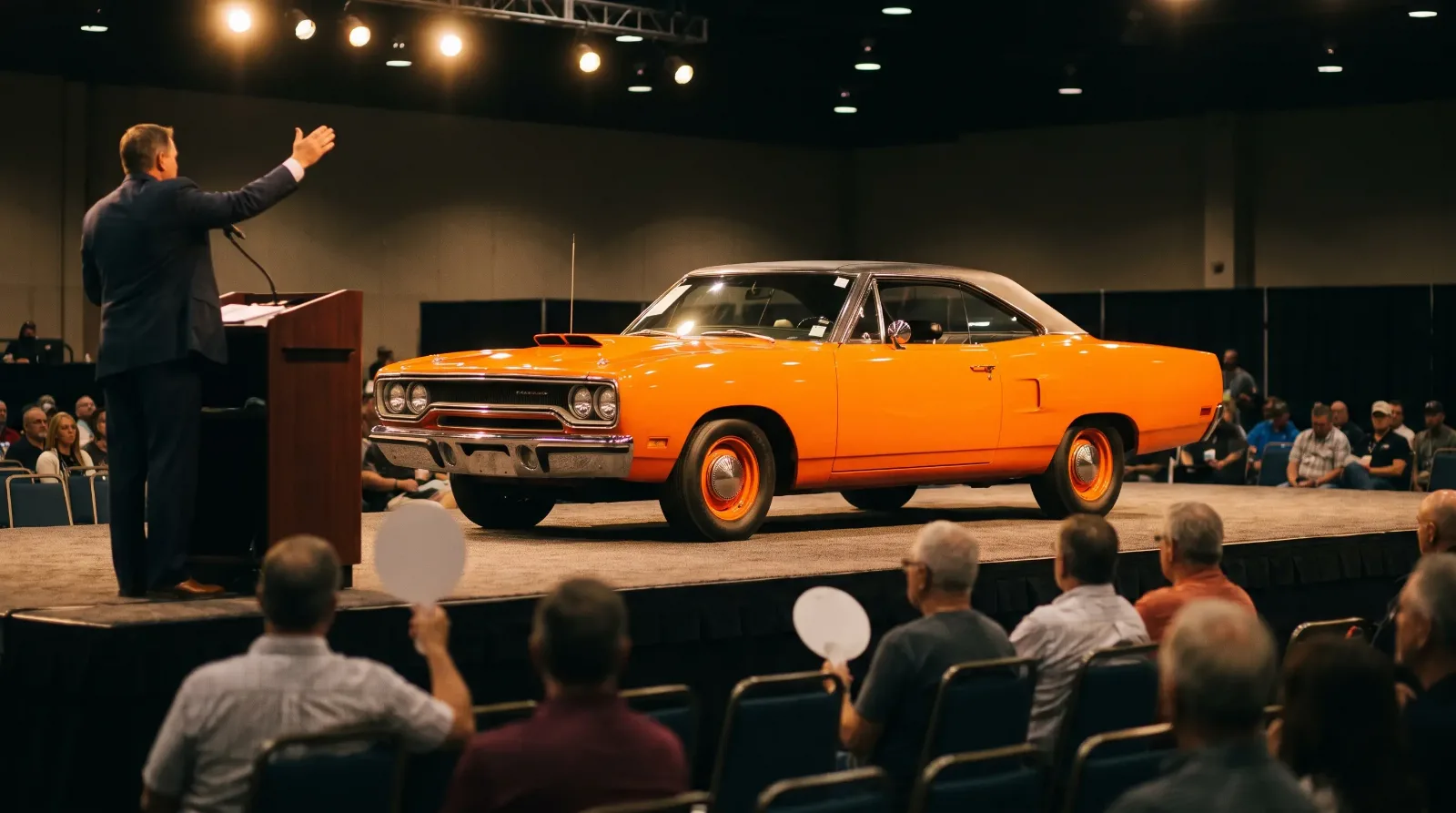
- Mecum Auctions: consign with Mecum (entry fees from $350 plus commission)
- eBay Motors: vehicle selling fees ($34 or $79 insertion fee, no final value fee)
Worked examples in the tables are illustrative figures chosen to show how the math behaves, not quotes from any specific dealer. Dealer terms are as published in October 2026 and change often; confirm the current schedule in writing.