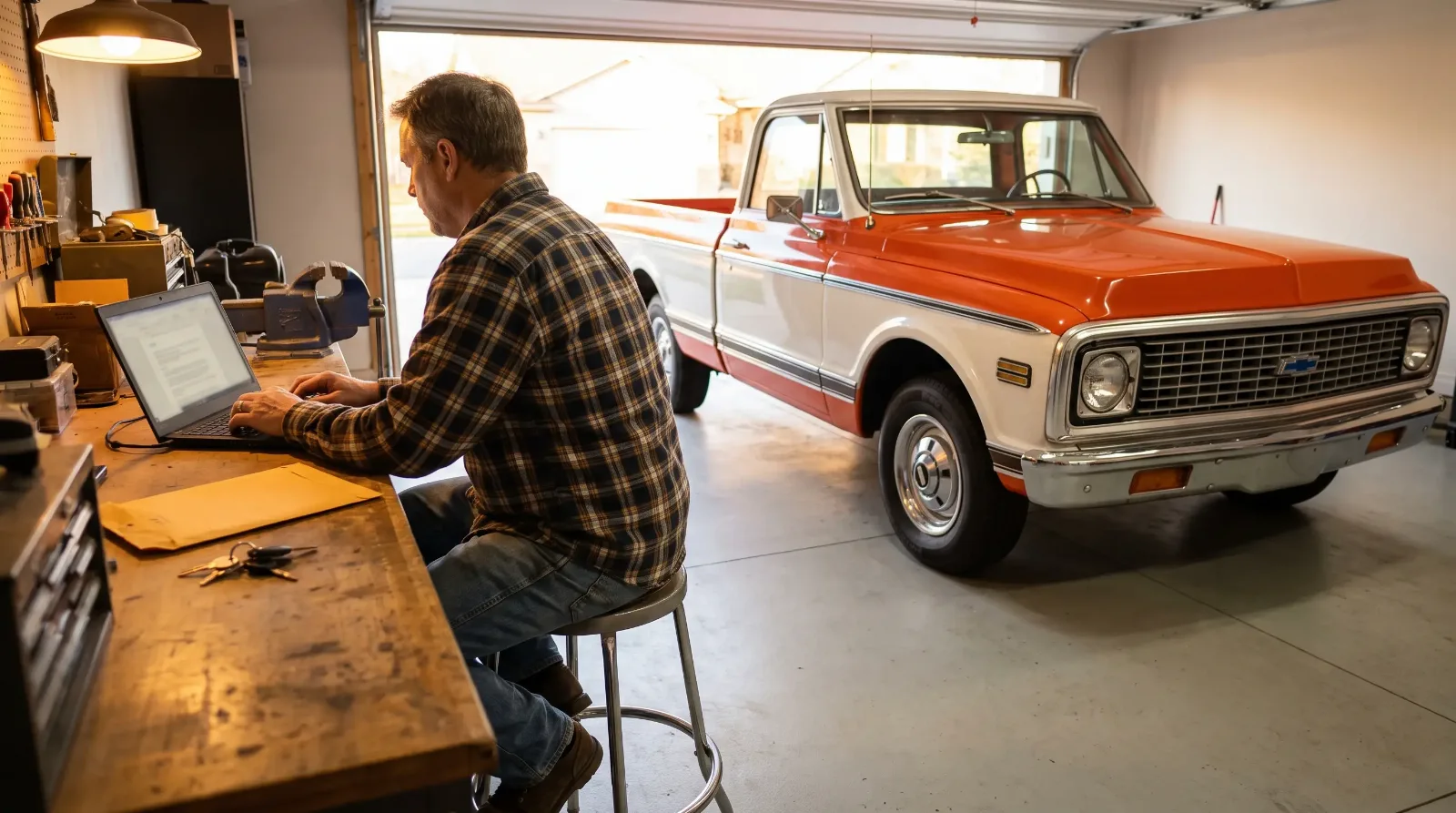
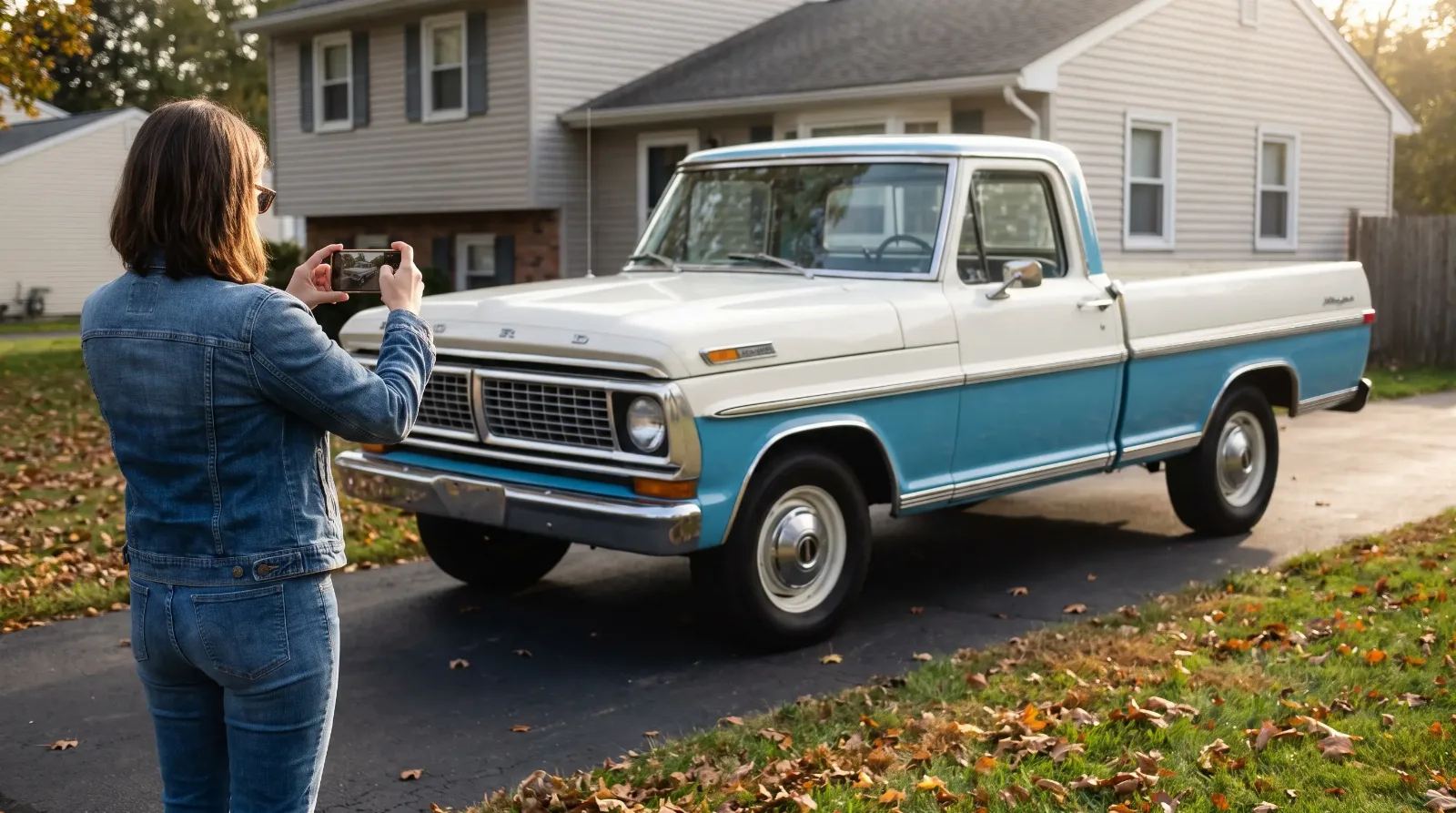
Picture a Saturday morning in late September. A woman stands in her driveway with her phone held sideways, taking the fourteenth photo of her father's 1972 Ford pickup, the one he kept waxed for thirty years and drove to church twice a month. She has the listing half-written in the Facebook app. It is free, everyone she knows is on it, and somewhere in the next county there is surely someone who wants this truck. By Sunday night she has forty-one messages. Three of them are about the truck.
That scene is the whole question in miniature. Deciding to sell a car on Facebook Marketplace is easy, because nothing stands in the way. Deciding whether it is the right place for a classic takes a little longer. This piece narrows one choice out of the full guide to listing sites: the free local giant against the specialist sites where people go looking for old cars on purpose. Each has a real claim. Neither wins every time.
What Facebook Marketplace does better than anyone
It costs nothing to list a vehicle for a local sale. Not a reduced fee, not a trial. Nothing. For a seller who is unsure what the car is worth, or who simply wants it out of the garage before the first snow, that removes the only barrier there is. You can post on a Tuesday evening and have someone standing beside the car by Thursday.
The reach is the other gift, and it is enormous. Marketplace sits inside an app that about seven in ten American adults use, according to Pew Research Center, so your truck appears in front of people who were not shopping for a truck at all. Some of them remember a grandfather who had one just like it. Some of them have a trailer and an empty bay in the barn. Those impulse buyers do not exist on the specialist sites, and for a driver-grade classic under about $15,000 they are often the people who end up paying.
There is a warmth to it, too. A buyer can see your profile, you can see theirs, and the conversation tends to happen the way a sale between neighbors always has: come look at it, start it up, kick a tire. For a car whose value is mostly in being driven and loved, that is not a small thing. Classic-specific Facebook groups sit alongside Marketplace and can be far better targeted than the main feed, though each group sets its own rules about what you can post.
Where the classic car sites pull ahead
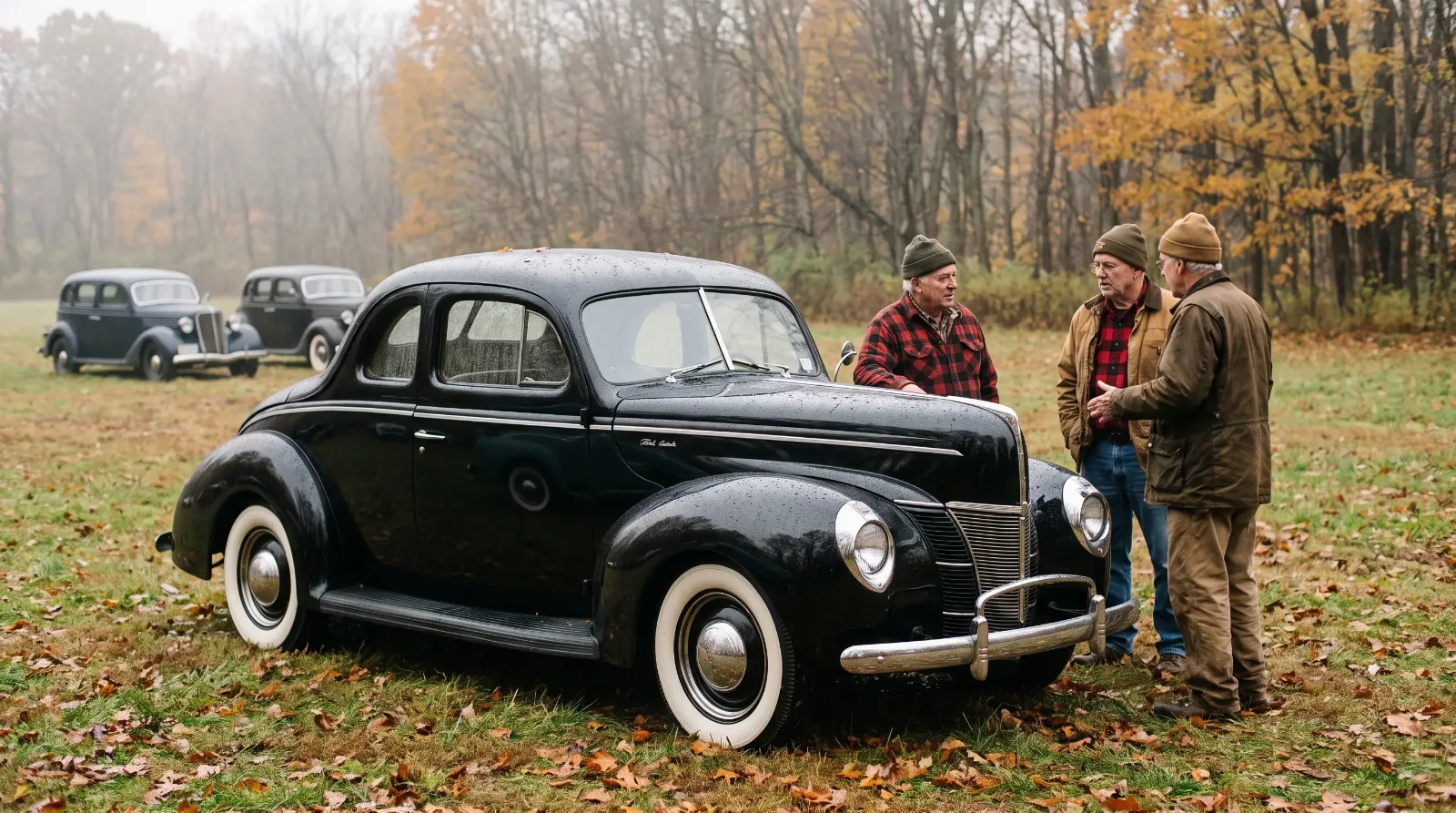
The specialist sites are quieter, and the quiet is the point. Everyone browsing a classic car site came for exactly that. They are not scrolling past a used crib on the way to your Mercury. Their questions sound different: where the rust starts on this body style, whether the engine is original, what the trunk floor looks like underneath the mat. Fewer messages arrive, but more of them lead somewhere.
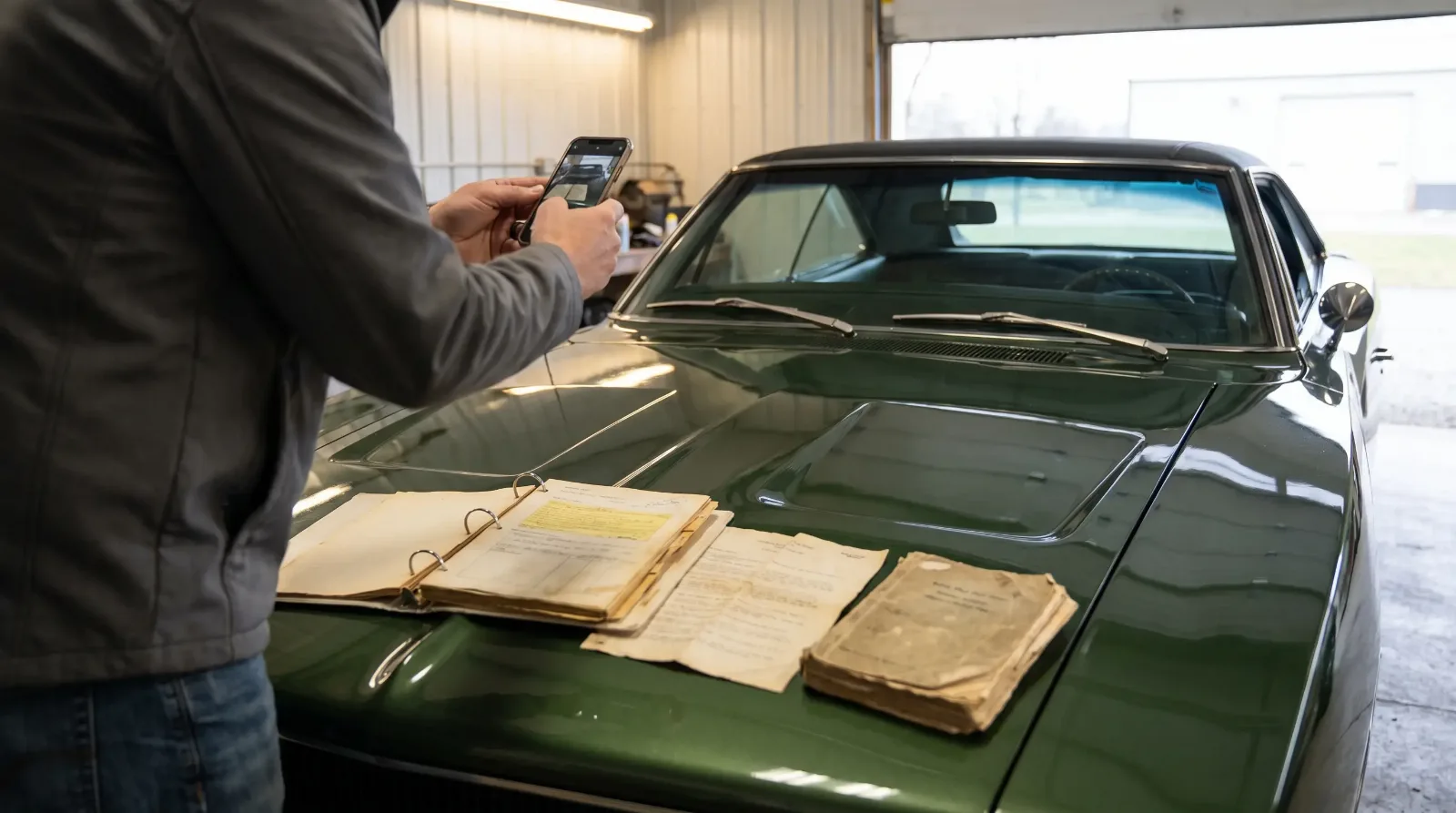
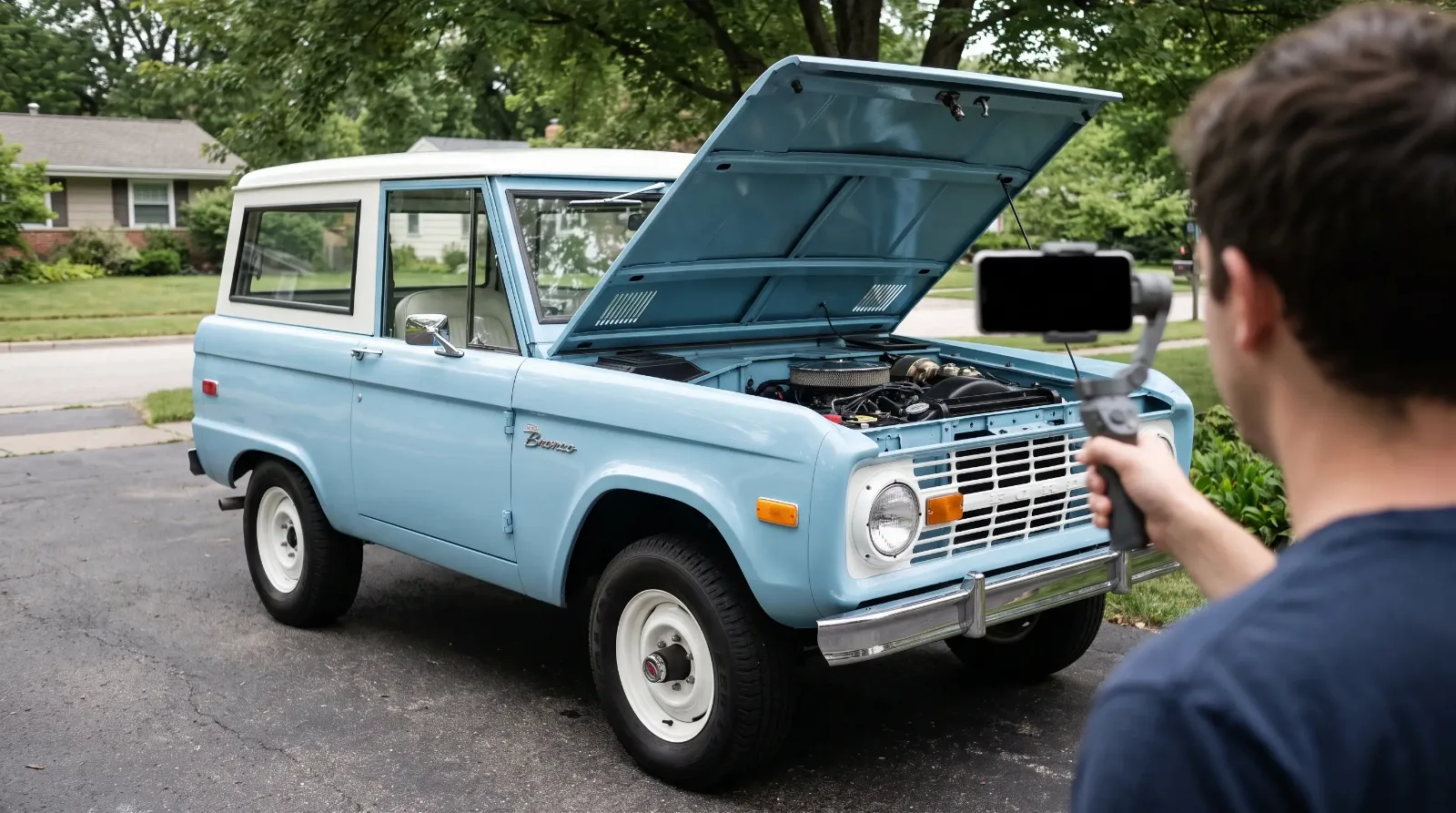
They also give a car room to tell its story. A Marketplace post is built for a quick read and a quick decision, while the specialist sites allow long descriptions and large galleries: up to 100 photos plus video on ClassicCars.com, up to 50 with a video on Classic Cars Arena's Featured package, unlimited photos with video on its Premium. A documented car, with its receipts and its original window sticker, loses value when it is reduced to a handful of pictures and three lines of text.
And they reach past the county line. A rare car may have only a handful of serious buyers in the whole country, and none of them may live within driving distance of you. Many specialist listings also stay up until the car sells, which matters for a car that needs months, not days, to find its person. If you are weighing a $5 Craigslist classic car ad as well, its trade-offs sit close to Marketplace's: cheap, local, and short on room.
Marketplace and the specialist sites, side by side
| What matters | Facebook Marketplace | Specialist classic car sites |
|---|---|---|
| Cost to list | Free for a local vehicle sale | Flat fees, for example Classic Cars Arena $49 to $179, ClassicCars.com $149.99 to $349.99; Hemmings charges a flat fee per listing |
| Who sees it | A huge local audience, mostly general shoppers | People shopping for classic cars, often nationally |
| Speed | Often fast for a fairly priced driver | Slower, but better matched buyers |
| Photos and story | A limited gallery and a short listing; check the current cap in the app | Large galleries, video on some packages, long descriptions |
| How long it runs | No paid term to renew | Many packages run until the car sells |
| Message volume | High, with many "is this available" notes and scam attempts | Lower, and usually more specific |
| Best fit | Drivers, projects and parts cars under about $15,000 | Documented, restored or uncommon cars, and anything priced above about $20,000 |
The money question: free versus a flat fee
Free is a lovely word, and it is honest here: Marketplace charges you nothing to list. The cost shows up elsewhere, in hours. Hours answering messages from people who will never come, hours on test drives with buyers who wanted an afternoon out, hours sorting the genuine offer from the one with a cashier's check for more than your asking price and a request to refund the difference.
Payment is where a free platform asks the most of you. Meta's own Purchase Protection Policy excludes vehicles, and any item handed over in person, so on a local car sale the money moves straight between you and the buyer and its safety rests on you. The usual payment apps are no shield either.
None of that disappears on a specialist site. A buyer still pays you directly, and the same rules apply: confirm the funds with the issuing bank, never accept overpayment, and keep the title until the money has truly cleared. What changes is the proportion. When fewer messages arrive and most of them come from people who already know what a 1972 F-100 should cost, there are simply fewer strangers to sort through.
"A free listing is free the way an open house is free. Nobody charges you to unlock the door. You pay in Saturdays, in phone calls, in the patience it takes to let the wrong people walk through before the right one arrives."
— Nora Beckett
Using both, and when each one is enough
For a lot of cars, the honest answer is both. A specialist listing reaches the collector three states away; a Marketplace post catches the neighbor who has wanted one since high school. They rarely compete for the same buyer. Keep the asking price identical in both places, because a buyer who finds two prices will believe the lower one, and take both listings down the day the car is sold.
Marketplace alone is enough when the car is a driver or a project, priced under about $15,000, and you would rather it go to someone local who can tow it home this weekend. A specialist site alone makes sense when the car is documented, uncommon, or valuable enough that the right buyer is worth waiting for. And if you want national reach with a deadline attached, our piece on selling a classic car on eBay lays out how that option compares.
Go back to the woman in the driveway. In the version of her story that ends well, she keeps the Marketplace post up and adds a listing on a classic site with every photo she took. The buyer who drives six hours to see the truck, and brings his son, is the one who found it there. If your car deserves that kind of buyer, go to the seller page and see which listing package fits it.
Sources and notes
- Meta Purchase Protection Policy (Facebook and Instagram checkout): vehicles and in-person exchanges not covered
- Pew Research Center: social media fact sheet (71% of U.S. adults use Facebook, 2025)
- ClassicCars.com: private seller packages and photo allowance
- FTC: how to spot, avoid and report fake check scams
- Classic.com: listing and auction fee comparison across classic car platforms
Platform terms checked October 2026 and can change. This is general information, not legal or financial advice.