Selling a car to someone who has never seen it is an information transfer problem. The buyer needs enough data to trust a car that is a thousand miles away, and you need enough certainty about the money to let a stranger's truck drive off with it. Both problems have known solutions. The failures, when they happen, almost always come from skipping a step or doing two steps in the wrong order.
Remote buyers are normal in the classic market. The pool of people who want a specific car is small, and the best-matched buyer is rarely in your county. This piece covers the process of a sight-unseen sale in sequence: what to send, how the buyer verifies it, how the money moves, how the title moves and how the car leaves. For choosing between buyer types in the first place, the full guide is the place to start.
Treat the listing as a data set
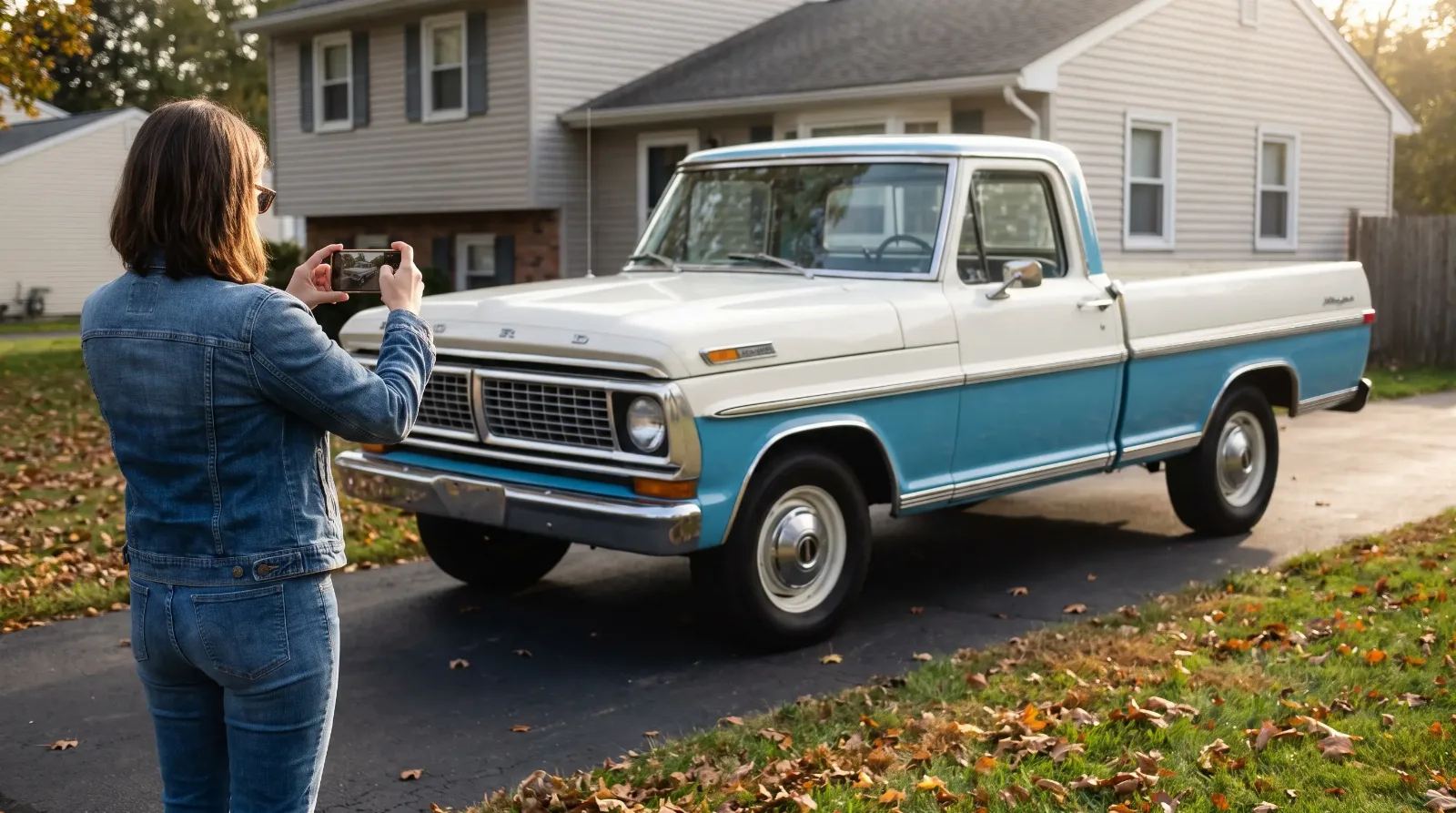
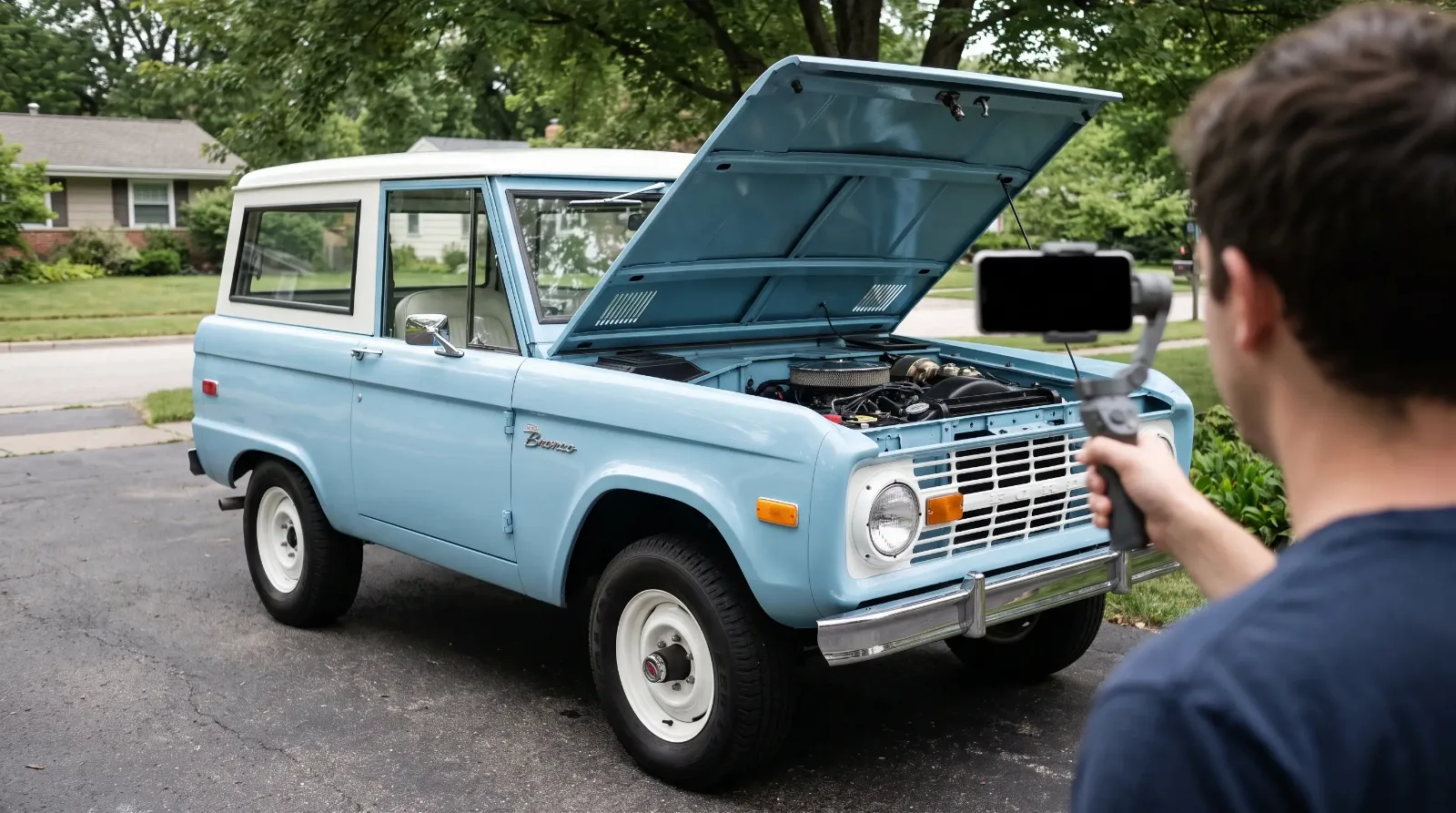
A remote buyer cannot touch the door gaps or smell the carpet, so every question he would answer in person has to be answered by your photographs and video instead. The useful mindset is documentation, not marketing. You are trying to reduce his uncertainty, and a flattering photo set does the opposite, because experienced buyers read missing angles as hidden problems.
If you have measured anything, include the numbers. A compression test with all cylinders listed, a paint-thickness reading per panel or a recent alignment printout carries more weight than an adjective. Note the date of each measurement, since a buyer will reasonably ask whether a three-year-old compression test still describes the engine.
Let the buyer verify independently
Your photographs are evidence, but they are your evidence. A careful remote buyer will want an independent pre-purchase inspection, and you should expect and welcome it. Typically the buyer hires an inspector or a specialist shop near you, pays for it and receives the report directly. Your part is access: a cold car at the appointment, the keys, the file of receipts and, if possible, time on a lift.
Do not offer your own mechanic's report as a substitute. It may be entirely accurate, but the buyer cannot verify the relationship, and a seller who pushes his own report reads as a seller steering the result. Offer it as additional material, not as the inspection.
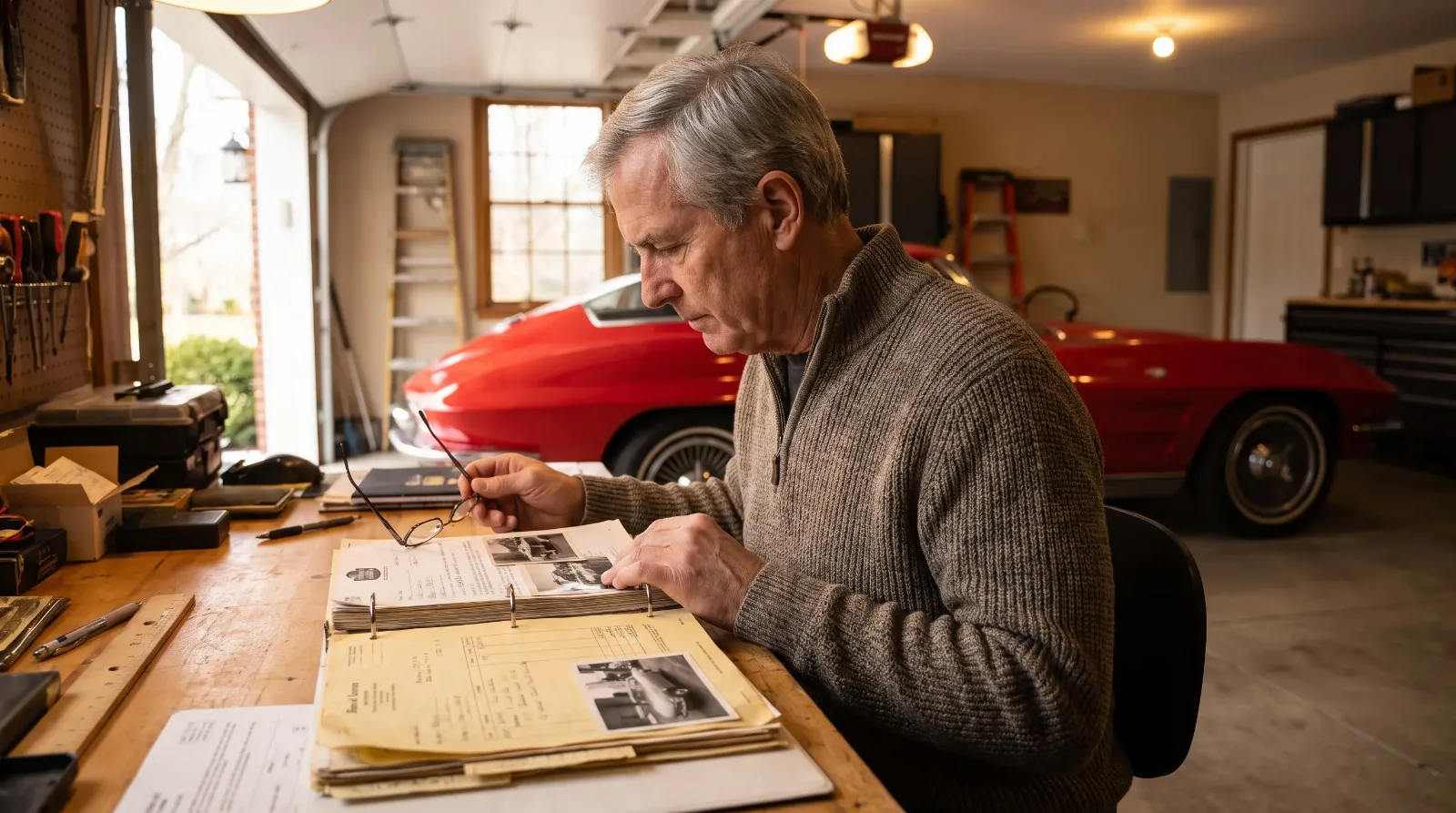
Put your condition disclosure in writing before the inspection, and keep it consistent with the listing. If the inspector finds something you did not know about, the honest move is to treat it as new information and discuss the price, not to argue with the finding. An as-is bill of sale that describes the car as represented closes the loop on paper.
The payment sequence: funds first, everything else after
The rule that prevents most remote-sale losses is simple: confirmed, cleared funds before the title is signed and before the car moves. Not funds showing as pending, not a screenshot of a transfer. Cleared, confirmed by your own bank. The FTC warns that money appearing in your account does not prove a check is good, and a fake can take weeks to surface.
| Method | Cost to the parties | Protection for the seller | Main failure mode |
|---|---|---|---|
| Bank wire | Outgoing domestic about $25 to $35; incoming often about $15 or free | Strong once your bank confirms receipt | Spoofed confirmation emails; verify by calling your bank |
| Escrow service | Escrow.com standard vehicle fee 2.4% for $5,000 to $50,000, 1.9% for $50,000 to $200,000 | Strong if the service is real and licensed | Fake escrow websites suggested by the buyer |
| Cashier's check | Low | Weak at a distance | Counterfeits that clear provisionally, then bounce |
| PayPal or Venmo | Varies | Purchase protection excludes motor vehicles | Not suited to a car sale |
| Zelle | Usually none | No purchase protection | Irreversible payments to the wrong party |
At escrow rates, a $40,000 car costs roughly $960 in fees, which the parties can agree to split. For many sellers that is a reasonable price for a neutral party holding the money. If the buyer proposes an escrow company, do not follow his link. Type the address yourself, or use one you have already checked.
Watch for two patterns in particular. A buyer who sends more than the price and asks you to refund the difference, often "for shipping," is running an overpayment scam. A buyer who insists on his own shipping company and his own escrow service, and will not speak by phone, has assembled a sale in which he controls every party but you.
Title, paperwork and the handover
Only after funds have cleared do you sign the title. Fill in the buyer's name, the sale price, the date and any odometer field your state's form includes, and never hand over an open title. Some states add steps: Pennsylvania and Ohio require the seller's signature to be notarized, and California expects a Notice of Transfer and Release of Liability within 5 days of the sale. Check your own state's requirements before the buyer's money arrives, so the paperwork is not the delay.
Ship the title and a signed bill of sale by a tracked overnight service, and keep copies of everything. Some buyers prefer that the title travel with the car; that works, provided the funds have already cleared and the carrier gives you a receipt that lists the documents.
Shipping and the pickup
The buyer usually arranges and pays for transport, but it is your driveway the truck pulls into, so it is worth checking the carrier. Ask for the company name and its USDOT or MC number, and confirm it in the FMCSA database. A broker should be registered and carry the $75,000 bond or trust required under 49 CFR 387.307. As rough guidance, open transport coast to coast runs about $1,400 to $2,500 depending on route and season, enclosed costs about a third to a half more, and carriers typically quote a pickup window of 1 to 5 business days rather than a fixed hour.
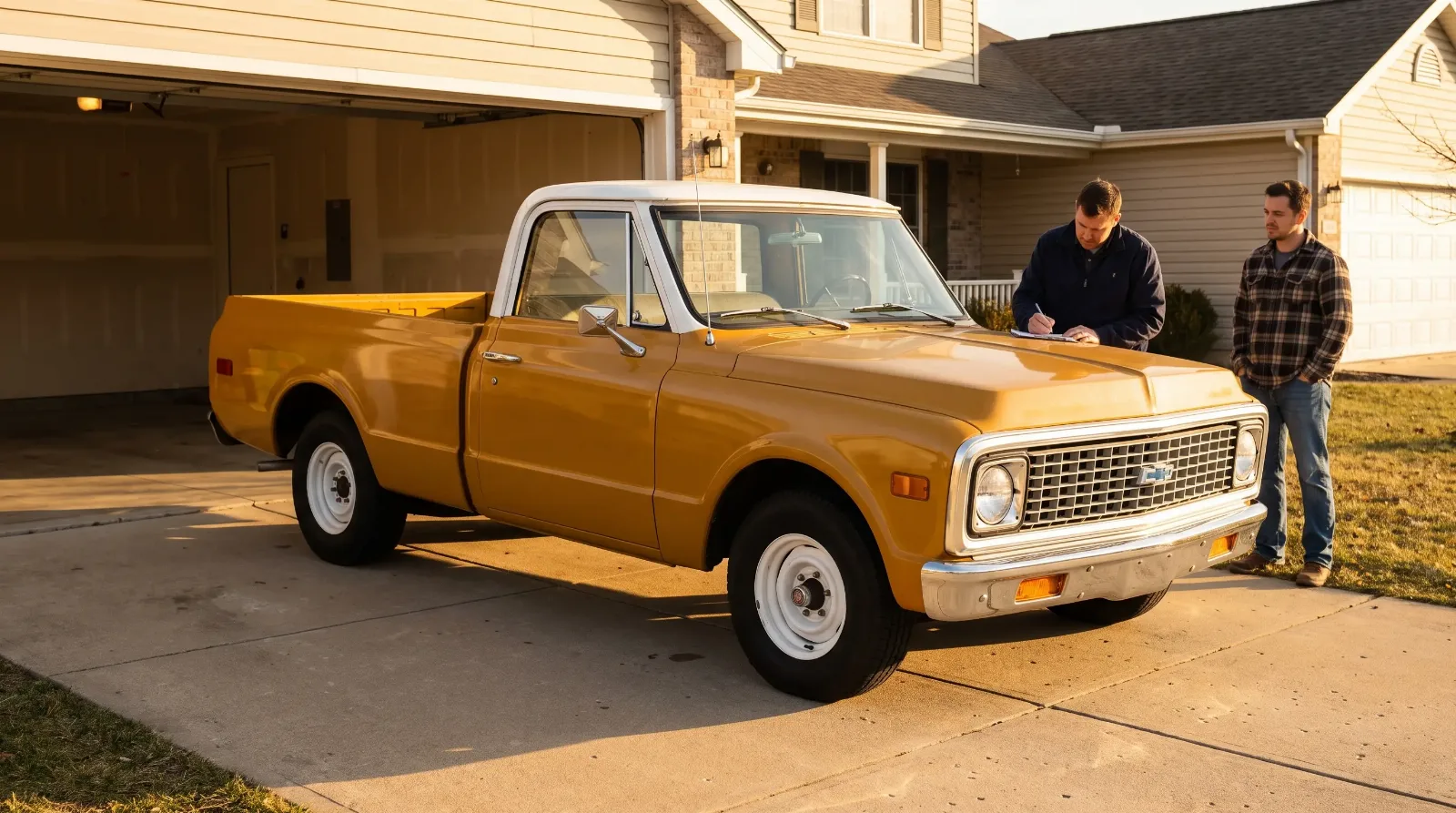
Remove personal items before pickup. The carrier's cargo insurance covers the car, not what is inside it. Walk around the car with the driver, photograph it from every side with a timestamp, and make sure the bill of lading records its condition accurately before you sign. That document is the reference point if the car arrives with a mark it did not have when it left.
"A remote sale is a sequence, and the sequence is the safety system. Cleared money, then signed title, then car on the truck. Change the order and you have removed the part that was protecting you."
— Emily Chen
Is all of this worth the effort compared with selling locally? That depends on the gap between a local offer and what a distant private buyer will pay, and the gap can be large; here's how that works on a single car with the numbers laid out. If the remote process is more than you want to manage, the alternative is a local company that buys outright, the kind that turns up when you search for classic car buyers near me, at a lower price but with less to coordinate.
If you decide to reach buyers wherever they are, list where they already look. ClassicCarsArena charges a flat one-time fee of $49, $99 or $179, takes no commission, keeps the listing up until the car sells and has the buyer pay you directly. Starter allows up to 25 photos, Featured up to 50 plus video, and Premium unlimited photos plus video, which matters when photographs are doing the work of an in-person viewing. When the photo set and the file are ready, start your listing here.
Sources and notes
- Escrow.com: fee schedule (2.4% for $5,000.01 to $50,000, 1.9% for $50,000.01 to $200,000)
- FTC: how to spot, avoid and report fake check scams, including overpayment
- 49 CFR 387.307: $75,000 surety bond or trust fund for property brokers
- California DMV: Notice of Transfer and Release of Liability within 5 days
- 12 CFR 229.13: why a bank can hold a large check deposit longer
Fees, transport prices and state title rules change. Confirm current terms with your bank, the escrow service, the carrier and your DMV, and treat this as general information, not legal or financial advice.