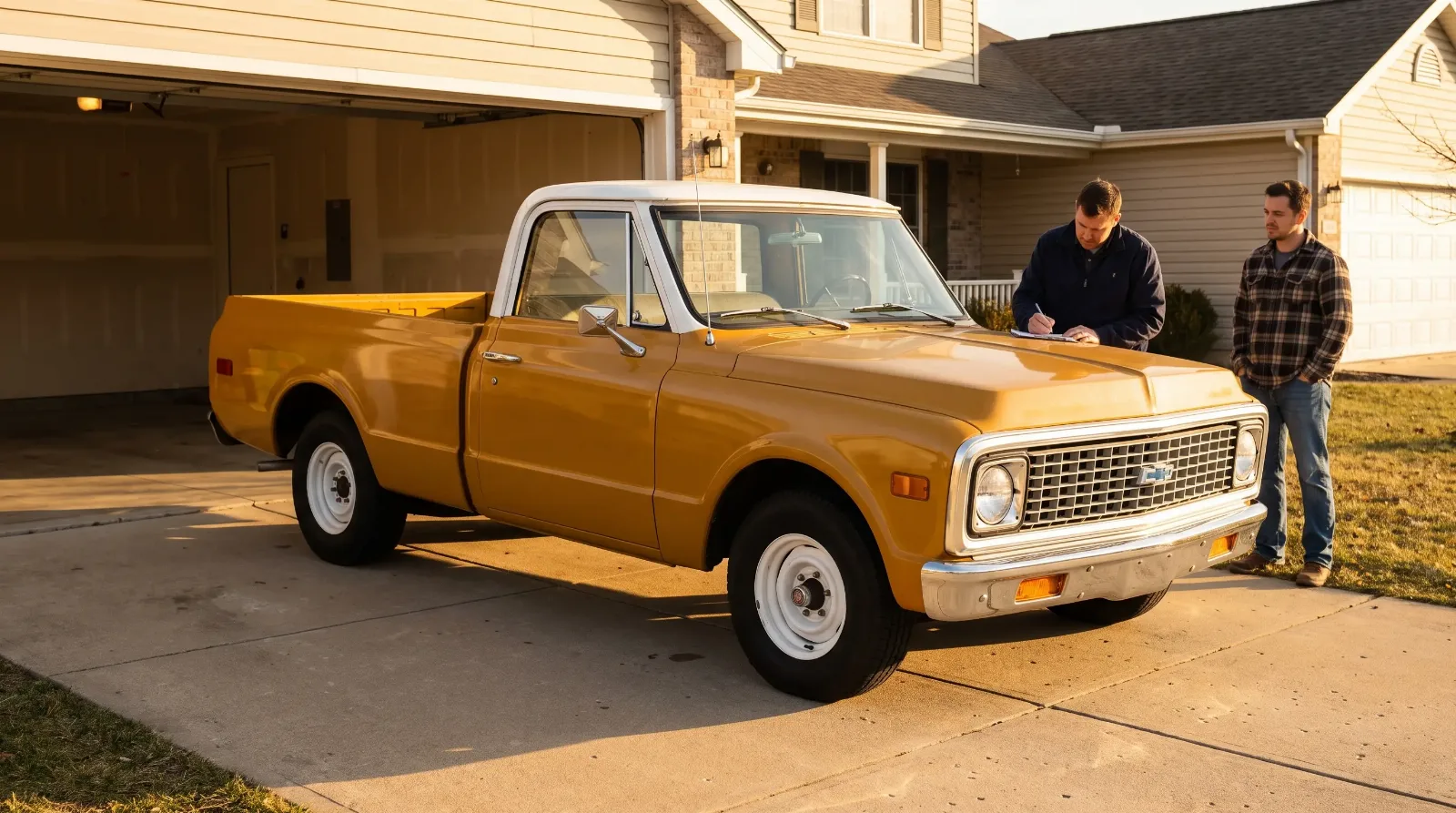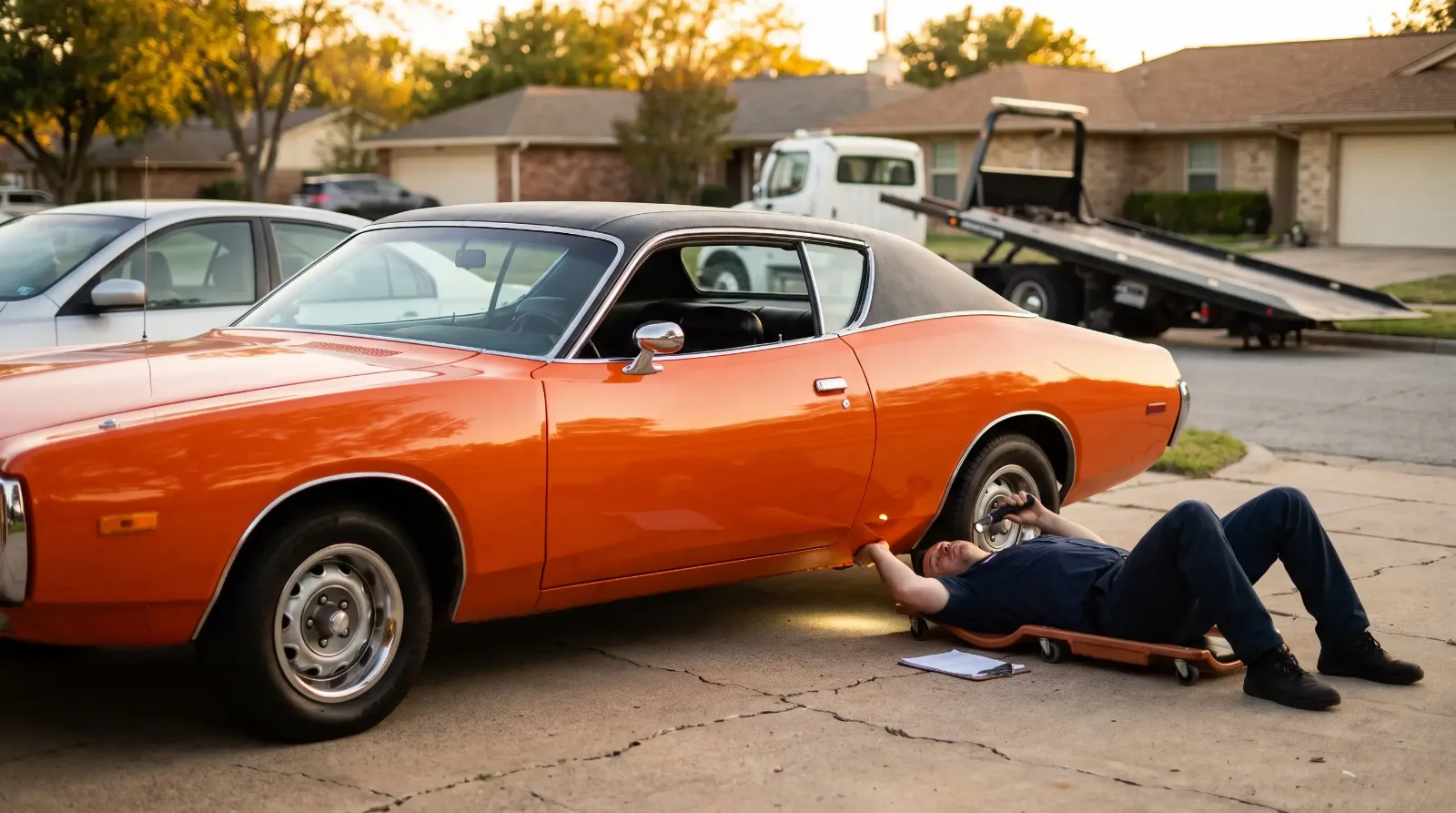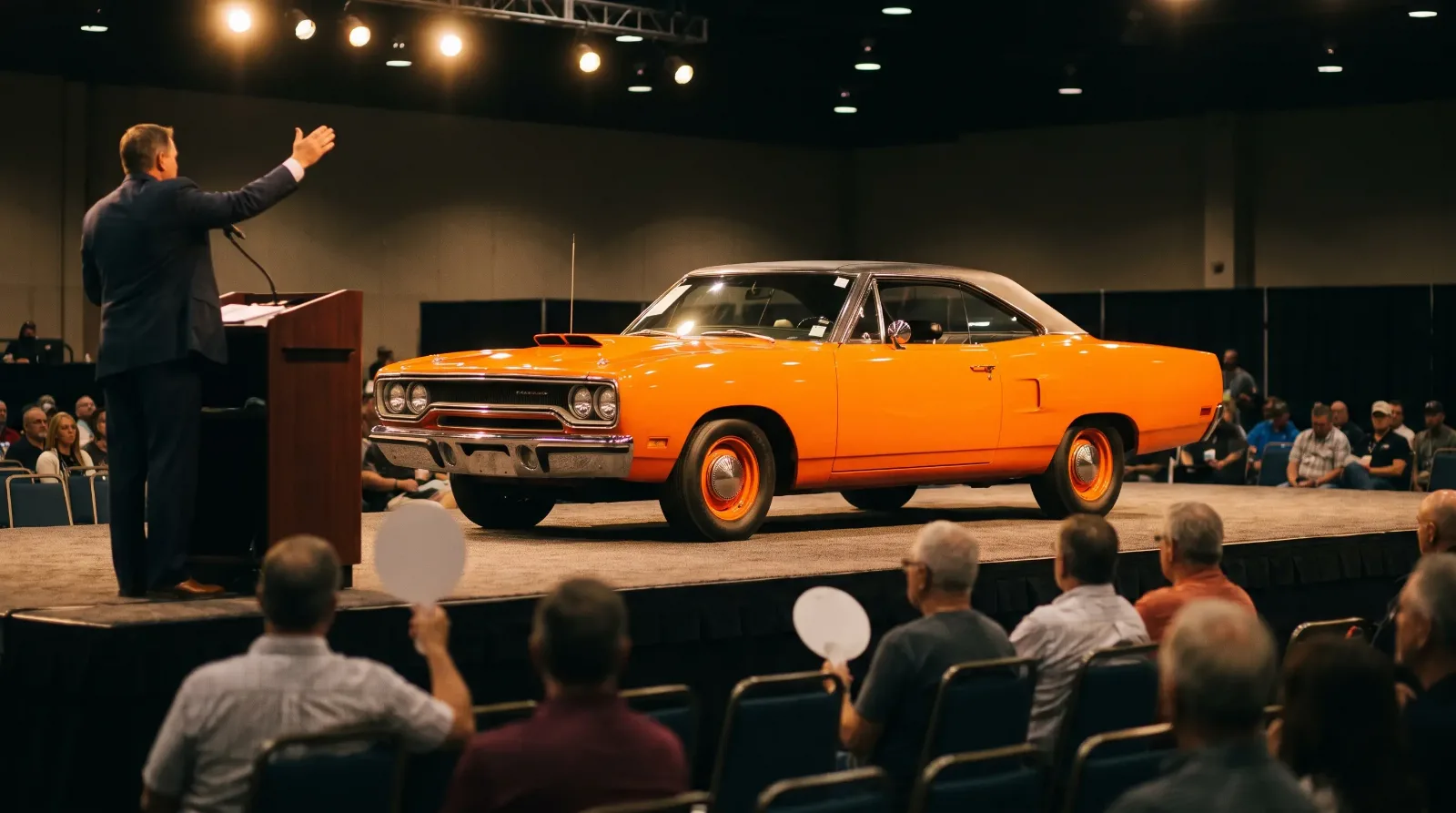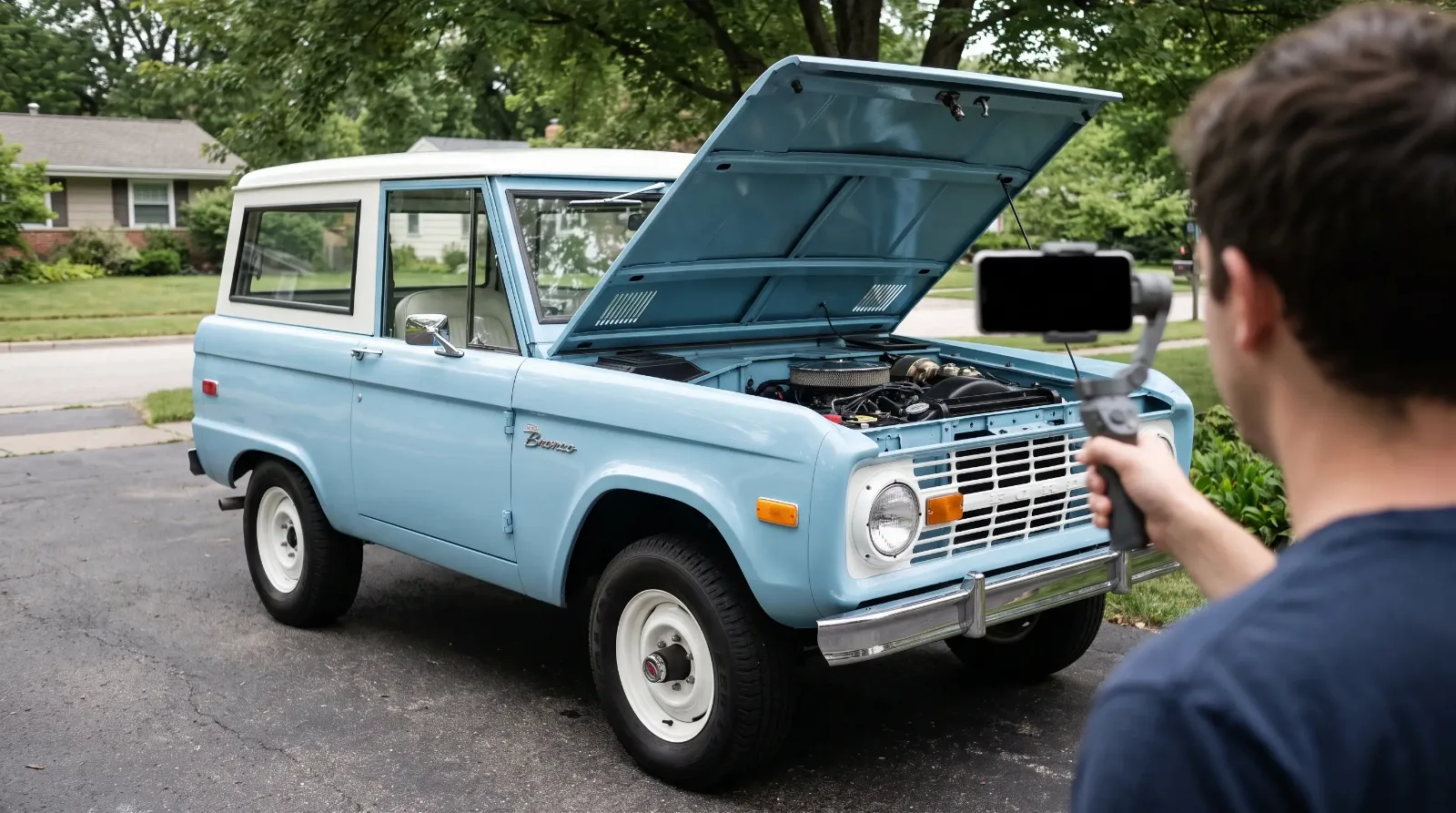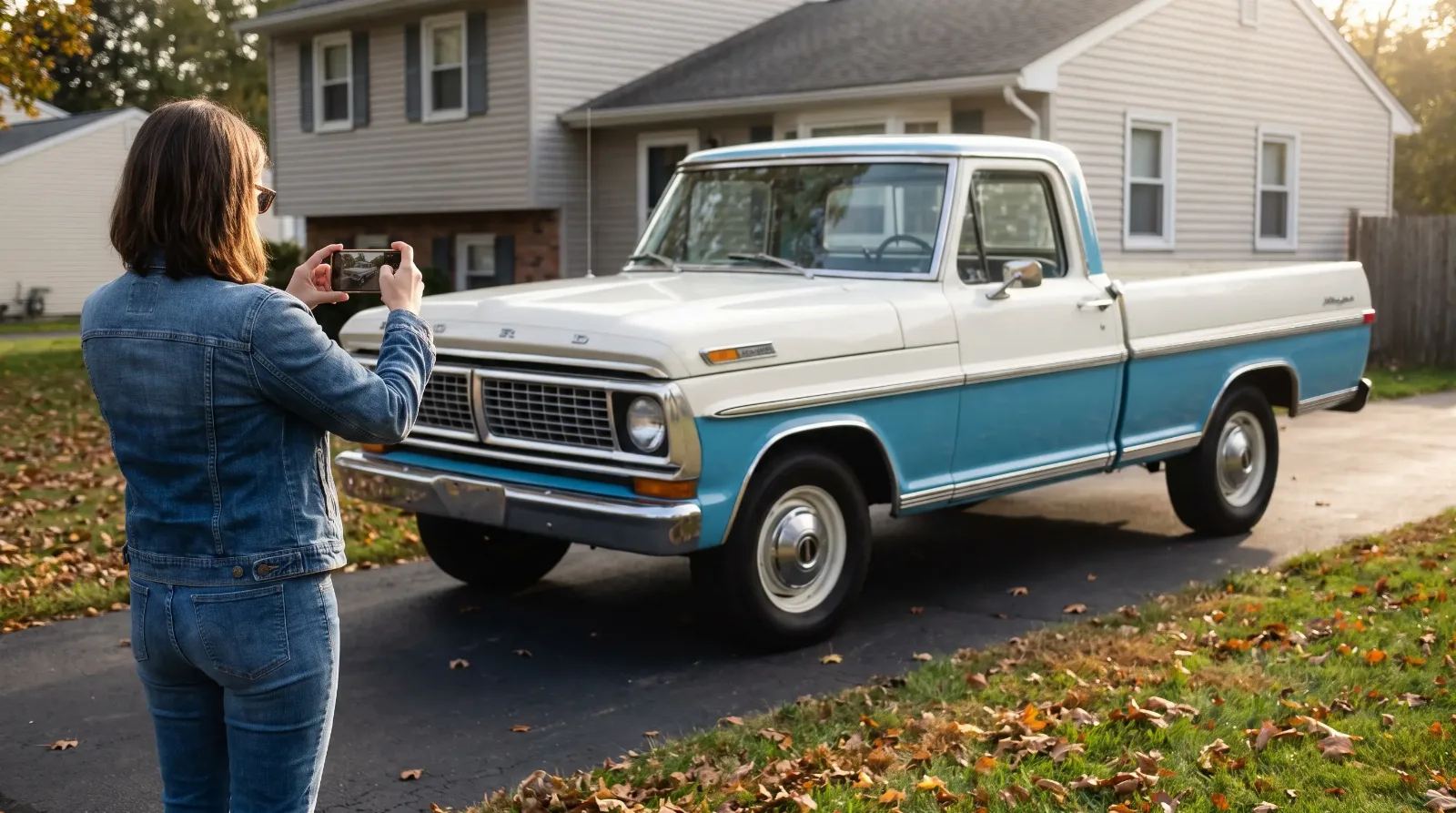
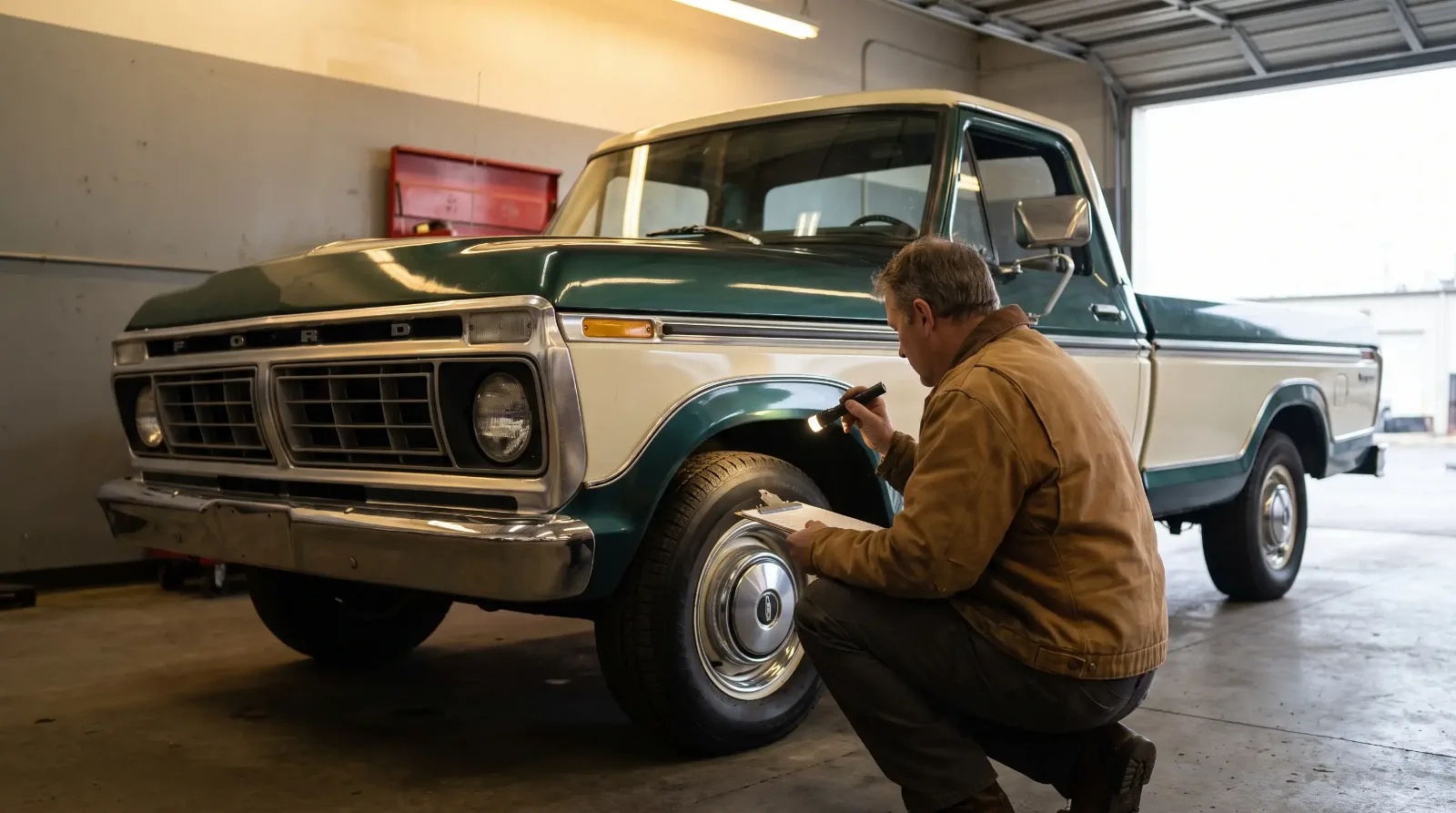
A dealer cash offer on a classic car is not a guess, even when it sounds like one. The man looks the truck over for ten minutes, kicks a tire, and says a number. Behind that number is a worksheet. Sometimes it is on paper and sometimes it lives in his head, but it runs the same way at nearly every shop: figure what the car will sell for, take out everything it costs to get it sold, then take out his pay. What is left over is your offer.
If you have read our guide on classic car buyers, you already know a dealer's check tends to land somewhere around 20 to 30 percent under what a good private sale would bring. That range is our own working estimate, not a published industry figure. This piece opens the worksheet itself, line by line, so you can see where the money goes and which lines you can actually move before you shake hands.
Where the retail number comes from
Every dealer offer starts at the exit. Before he thinks about what to pay you, he decides what the car will bring once it is cleaned up and sold, and he is careful about it because that is the one number that can sink him.
He builds it from sold cars, not asking prices. Asking prices are what sellers hope for. He wants what buyers actually paid: auction results, his own sales book, and what other dealers he trades with have moved lately. Then he checks the valuation guides, mostly to see where the car sits against its own model range.
The part sellers miss is the condition grade. You may call your truck a #2. He will call it a strong #3 until he has had it on a lift, because grading it high and being wrong costs him real money, while grading it low and being wrong costs him nothing. On a lot of popular models the gap between those two grades runs to several thousand dollars in the guides. That gap shows up in your offer before a single deduction is taken.
The deductions, line by line
Once he has a retail figure, he starts subtracting. Here is how that runs on a made-up example: a clean, running pickup he figures will retail at $35,000. The dollar amounts are illustrations to show the shape of the math, not quotes from any dealer.
| Line on the worksheet | What it covers | Illustrative cost on a $35,000 car |
|---|---|---|
| Reconditioning | Tires, brakes, fluids, a carburetor or tune-up, detailing, small trim and interior fixes | $2,000 to $4,000 |
| Surprise cushion | The rust, wiring or oil leak he expects to find once he looks closer | $500 to $1,500 |
| Transport | Hauling it to his shop, sometimes delivering it to the next buyer | $200 to $600 |
| Holding cost | Interest on the money, insurance, floor space, battery tender, for 60 to 120 days | $700 to $1,200 |
| Selling cost | Photos, ads, listing fees, a salesman's cut if he has one | $500 to $800 |
| Profit | What makes the deal worth doing at all | $3,000 to $3,500 |
| Total taken out | About $6,900 to $11,600 |
Subtract that from $35,000 and the offer comes out somewhere between about $23,400 and $28,100. That is roughly 20 to 33 percent under retail, which is where the rule of thumb comes from. Notice which lines are fat. Reconditioning and the surprise cushion are the two he controls most, and they are also the two your preparation can shrink.
The exit plan changes the whole offer
Here is the question nobody asks the dealer, and it matters more than any line in that table: what is he going to do with the car?
If he plans to retail it off his own lot, the worksheet above is about right. If he plans to wholesale it to another dealer who specializes in that kind of car, he is the middleman, and he only gets a thin slice, so your offer drops to leave the next man his margin too. And if he plans to run it through a live auction, he has to cover the auction's costs on top of everything else.
Those costs are not small. At a major house like Mecum, the entry fee runs $350 to $1,000 (halved for no-reserve cars), and the seller commission is 6 percent with no reserve or 10 percent with one. The entry fee is paid whether the car sells or not. On a $35,000 hammer price, that is $2,100 to $3,500 in commission before entry. A dealer buying a car to send to auction has to beat that, beat his own holding cost and still make a profit, all from a number he cannot control until the gavel drops. So when a dealer says he would "probably send it to auction," your offer just got smaller. You might do better sending it to that auction yourself.
What pushes the number up or down
Two dealers can look at the same truck on the same afternoon and be $5,000 apart. Usually it comes down to a handful of things.
- How fast he can turn it. A model that sells in three weeks costs him far less to hold than one that sits for six months. If he has a customer already asking for your exact car, his holding cost and risk nearly disappear, and a fair dealer will pay closer to retail.
- How many he already has. A dealer with three Mustangs on the floor does not want a fourth at any price that makes sense to you.
- The season. A convertible bought in November has to be carried through the winter. That is holding cost, and it comes off your number.
- Paperwork. Receipts, a build sheet, original title history and service records make a car easier to sell and easier to price. Missing paper widens his surprise cushion.
- Originality and rust. Non-original engines, mystery bodywork and rot in the cab corners or rockers push the grade down and the cushion up. Rust is the line item dealers fear most, because they never know where it stops.
"A dealer isn't paying for the truck you know. He's paying for the truck he's afraid it might be. Every question you answer before he asks it is money that stays on your side of the table."
— Robert Halloran
How to read an offer and move it
You cannot change his profit line much. Nobody works for free. But you can make the other lines smaller, and you can make sure you are not taking a wholesale number when a retail buyer is out there.
Start by asking him straight: what does he figure the car will retail for, and what does he see that needs doing? A dealer who is buying fair will usually tell you. If his retail number matches what similar cars actually sold for and his list of work is honest, the offer is probably fair for what it is. If his retail number is low, or the list of work is long and vague, push back with the sold results you found.
Then hand him everything that shrinks his risk. Put the receipts in a folder. Photograph the underside, the frame and the floors before he asks. Wash it, charge the battery, air the tires. Those things cost little and cut straight into the surprise cushion. What you should not do is pay for paint or a big mechanical job to chase a better offer. He can do that work cheaper than you can, and you will rarely get your money back.
Last, make sure his is not the only number. Get a second dealer to look at it, ask one of them what he would list it for on consignment, and see what the cash-offer outfits that show up when you search for classic car buyers near me come back with. Give them all the same information, bad spots included, so you are comparing offers and not guesses.
A dealer's cash offer is a fair trade when you need the car gone and you understand what you are paying for the convenience. Once you can read his worksheet, you can tell the difference between a man pricing in honest risk and a man pricing in your hurry.
Sources and notes
- CLASSIC.COM: auction fees and prices (Mecum, Barrett-Jackson, online auctions)
- Chevy Hardcore: Mecum entry fees and what happens when a car does not sell
- Street Muscle: reserve, no reserve and unsold cars at Mecum
- RM Sotheby's: buyer's premium and consignor terms (Arizona sale)
- J.D. Power: classic, collectible and muscle car value guide
- eBay Motors: vehicle selling fees
All dollar figures in the deduction table are illustrations, not quotes from any dealer. The 20 to 30 percent gap between a dealer offer and a private sale is our own working estimate. Fees were checked in October 2026 and can change.