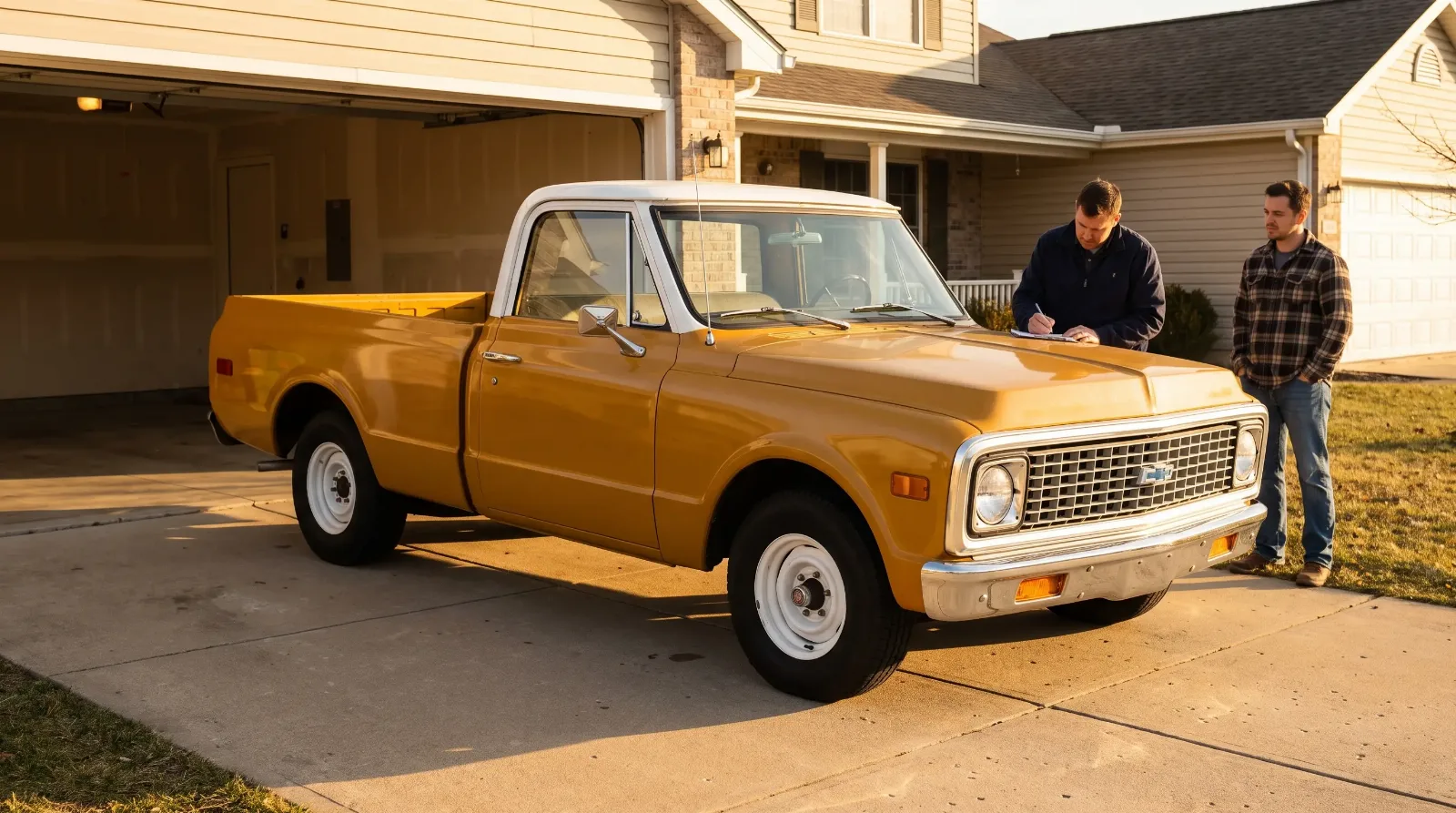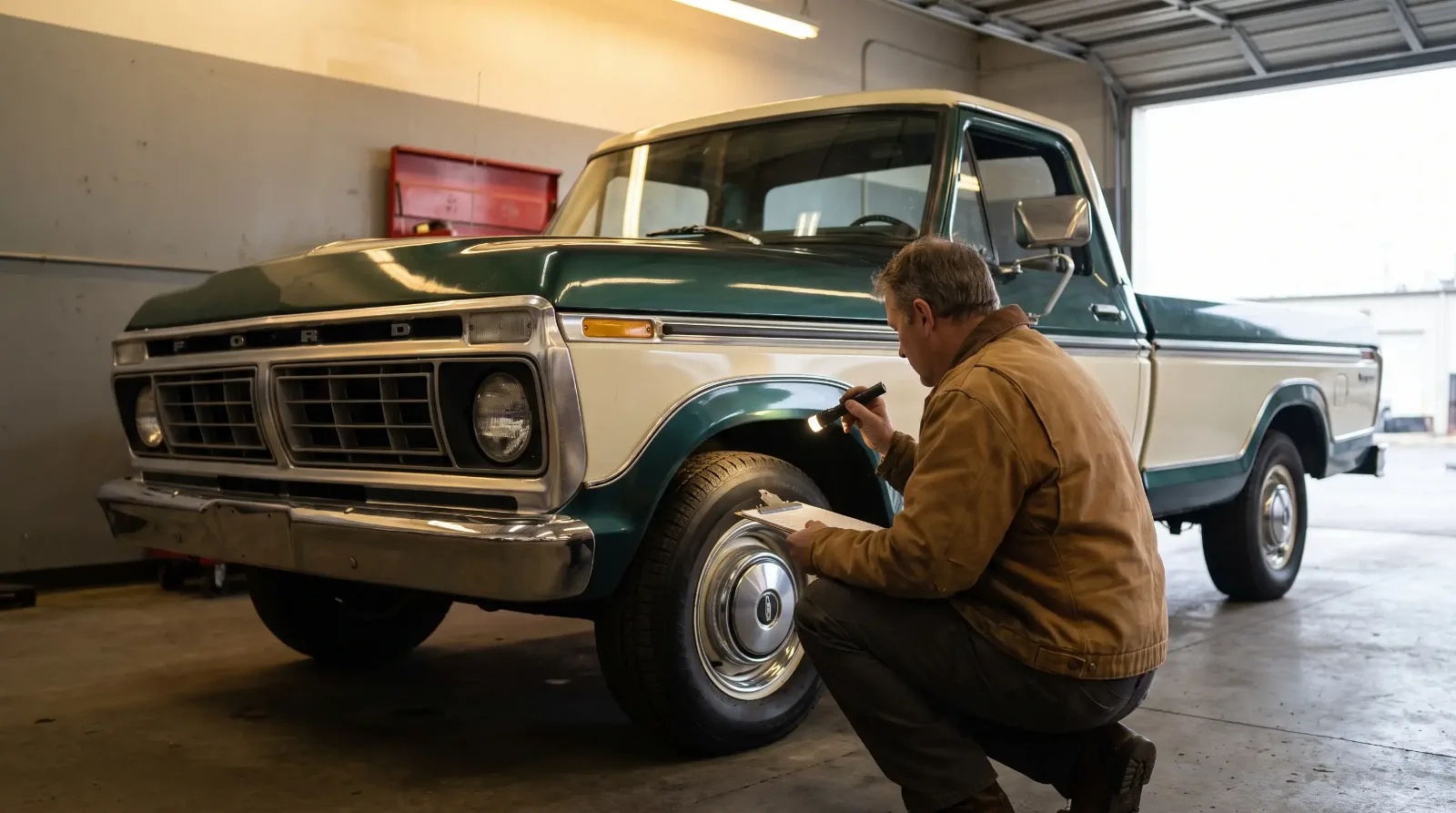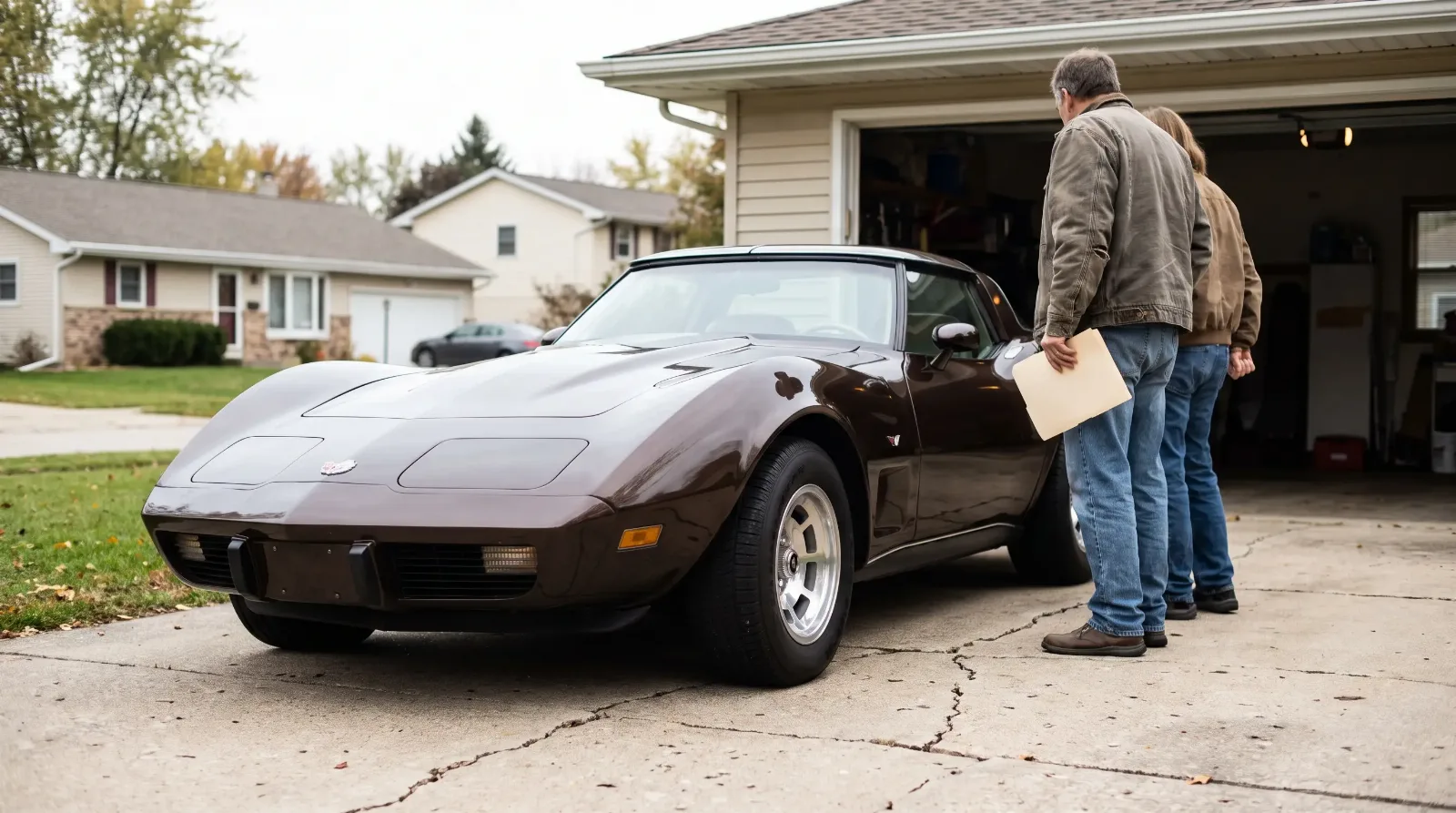
Type "classic car buyers near me" into a search bar and you get a wall of the same promise. We buy classic cars. Any condition. Cash offer in 24 hours. Free pickup. The ads look local. A lot of them are not. Some are national operations with a phone number in your area code. Some do not buy cars at all.
That does not make them bad. It makes them a business with a model, and the model decides your price. This piece takes the sign apart: who is actually behind it, how the offer gets built, where the number tends to drop, and how to check a company out before a truck backs into your driveway. For how these outfits stack up against dealers, consignment and private buyers, see the bigger picture.
Three business models behind the same ad
The ads read alike. The businesses behind them do not. Most fall into one of three types, and the type tells you who pays you, when, and how much room there is in the deal.
| Model | What they actually do | Who pays you | What to watch |
|---|---|---|---|
| Direct buyer | Buys with its own money, then retails, wholesales or auctions the car | The company, at pickup or soon after | Offer reduced at inspection |
| Lead broker | Collects your details and passes them to a network of dealers or buyers | Whichever buyer in the network bites | Your phone rings from numbers you never contacted |
| Auction or consignment feeder | Gives an "estimate," then sells the car through an auction or on consignment | The company, after the car sells | Fees, a long wait, and a final number below the estimate |
Only the first one is a real cash sale. The second is a middleman whose customer is the dealer, not you. The third is consignment wearing a cash-offer jacket. Ask on the first call which one you are dealing with. "Do you buy the car with your own money, and do you pay me before it leaves?" Two questions. A straight company answers both in one sentence.
How the offer is built
The number starts the same way any dealer number does: estimated resale value, minus reconditioning, transport, holding cost and profit. The difference is what they are looking at when they build it. Photos and your description. That is it.
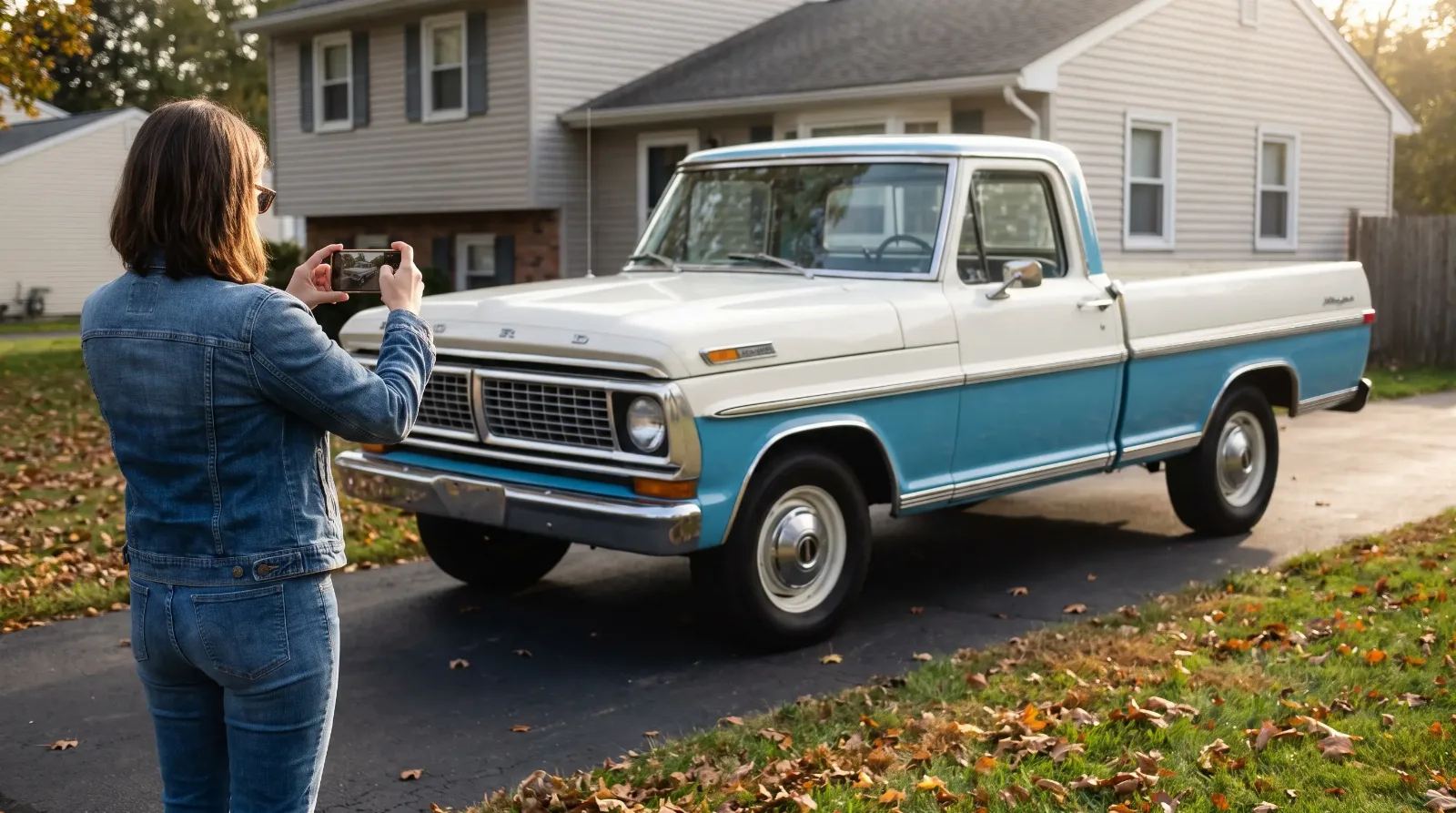
Photos hide things. Filler, a rebuilt-title history, a smoke-on-startup engine, a frame that has been patched. A company pricing from photos has two choices. Price low to cover what it cannot see, or price high to win the deal and fix the number later. The first loses deals. The second wins them. Guess which one gets more ads.
Transport is also on your bill whether you see it or not. "Free pickup" is free the way free shipping is free. Open-carrier transport coast to coast runs roughly $1,400 to $2,500 depending on route and season, enclosed costs about a third to a half more, and a non-runner that needs the winch often adds $100 to $250. A company hauling your car across three states has that money in the math before it says hello.
Here is how that can stack up on a made-up example, a car that might retail around $30,000. Transport $1,800, reconditioning $2,500, holding and selling costs $1,500, and a $3,500 margin come to $9,300, which leaves an offer near $20,700, roughly 30 percent under retail. Those numbers are illustrations to show the shape of the math, not quotes from any company. Add a second middleman who also needs a margin and the gap widens.
Then there is the exit. Most of these companies do not keep cars. They retail them, wholesale them to another dealer or run them through auction, and each step needs margin. The more hands the car passes through after yours, the less of the final sale price lands with you.
Where the number drops: the inspection
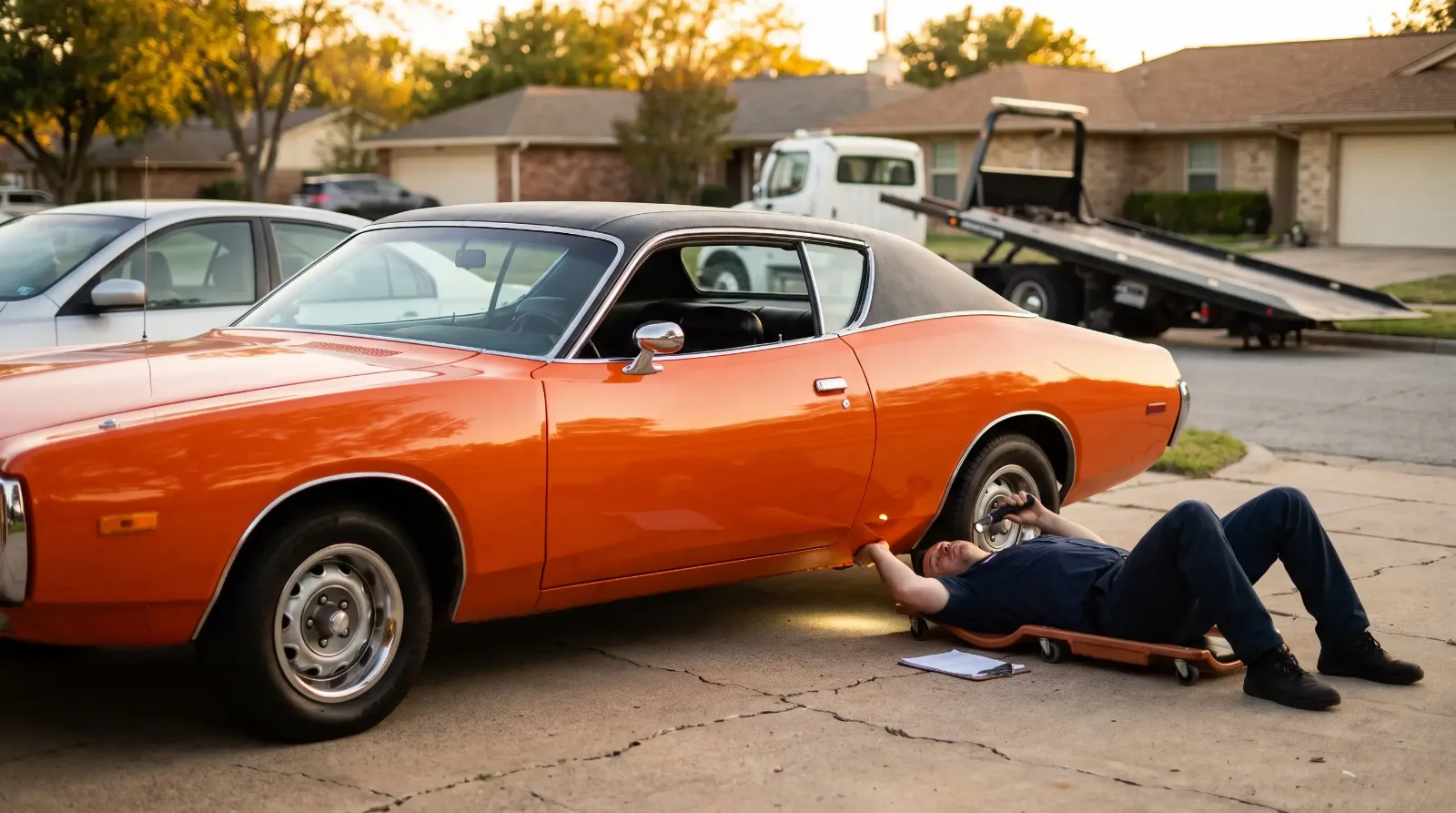
This is the part that generates the complaints. The offer comes in high. You stop shopping. A driver shows up with a trailer and a clipboard, walks the car and starts finding things. Paint thickness on the quarter. A seeping rear main. Wrong carb. The offer drops by a few thousand. The car is already half-loaded, it is getting dark, and you are tired.
It has a name in the trade: a retrade. Not every company does it, and plenty of reductions are honest, because sometimes the car really is worse than the photos. The problem is the setup. An offer "subject to inspection" with no written conditions lets the buyer move the number for any reason at all.
"The first number is marketing. The number that counts is the one on paper after somebody has had a light under the car. Plan around that one."
— Dan Reeves
You beat a retrade with paperwork, not argument. Shoot the bad spots yourself and send them with the request. Get the offer in writing with the specific findings that would lower it, and by roughly how much. If the inspector finds something already in your photos, the number should not move. If it does, you say no and close the gate. Before the truck is booked, ask whether there is any trip or cancellation fee if you walk away. The answer belongs in writing too.
Vetting a company before the truck shows up
Ten minutes of checking saves a bad afternoon. Run through this before you agree to anything.
One more on payment. PayPal and Venmo purchase protection exclude motor vehicles, and Zelle has no purchase protection at all. A legitimate vehicle buyer pays by wire or bank check. If the company wants to pay any other way, that is the end of the call.
When a cash-offer company is the right call
Some cars fit this model well. A non-runner sitting in a barn. A project that stalled ten years ago. An inherited car in another state that the family needs gone before the house closes. A car where the time you would spend selling it privately is worth more to you than the money you would leave behind. For those, a fast written offer and a truck that shows up on time is a fair trade.
Other cars do not fit. A clean, documented driver that a collector would want is exactly the car where a cash company's discount hurts most, because the private buyer for it exists and is willing to pay retail. Before you take any offer on a car like that, read our piece on selling a classic car for cash, which lines up the faster routes by time to cleared money and what each one costs.
The rule is simple. Get the cash company's number, and get at least one other number from a different kind of buyer to hold it against. If you have not settled where the car should be sold at all, start with the main overview and come back with a figure in mind. A cash offer is a tool. Know what it costs before you use it.
Sources and notes
- Texas Transportation Code 503.024: when a dealer license is not required
- FTC: how to spot, avoid and report fake check scams
- FreightWaves: what it costs to ship a car in 2026
- 12 CFR 229.10 (Regulation CC): availability of cashier's check deposits
- Currency transaction report: the $10,000 cash reporting rule
The offer example uses illustrative figures, not quotes from any company. Dealer licensing thresholds differ by state; check the licensing agency in the state where the buyer operates. Transport prices were checked in October 2026 and vary by route and season.