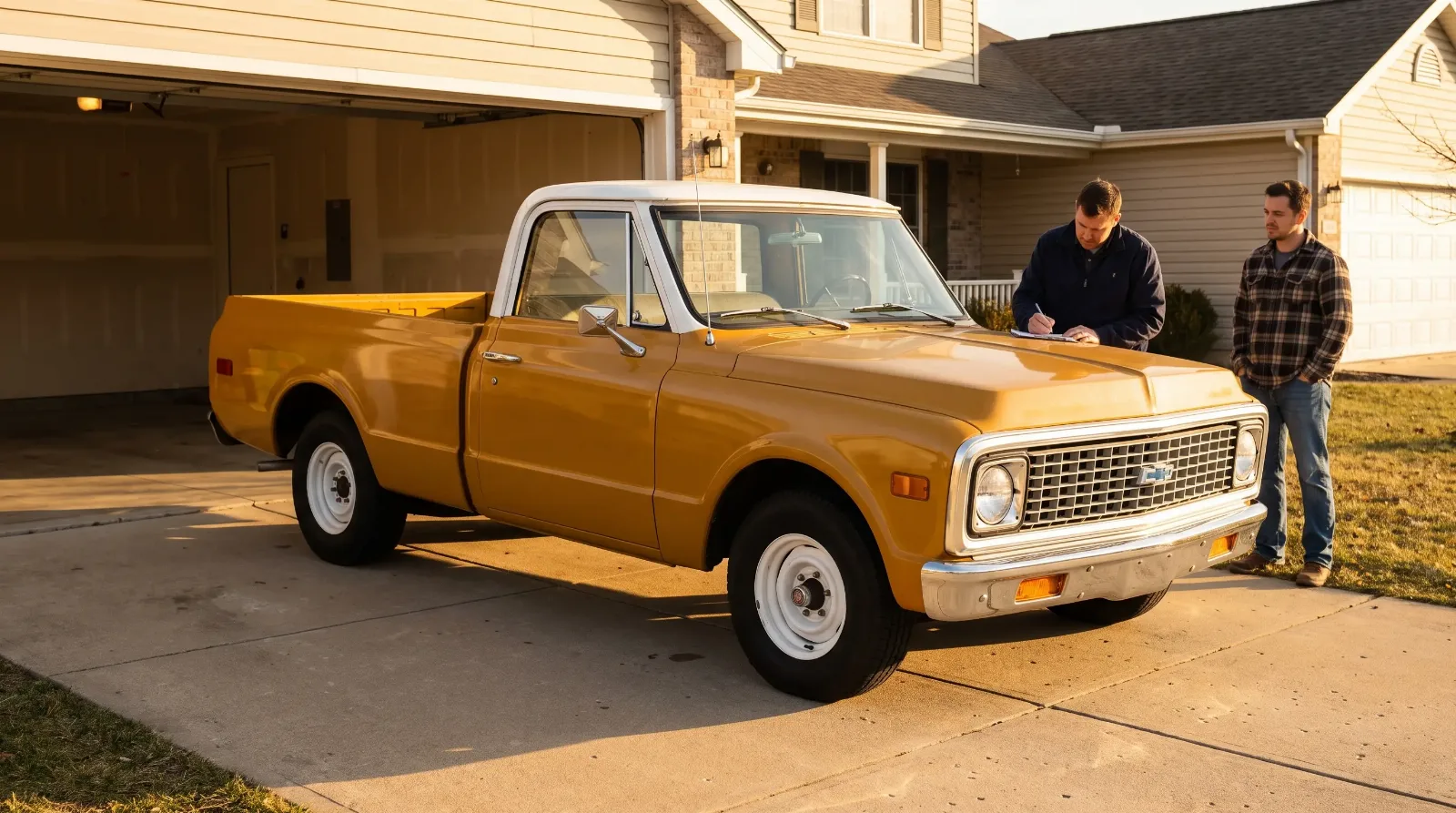
The first offer on an old car usually comes fast and comes low. Somebody sees the truck in the driveway, or you call the dealer who advertises on the radio, and inside ten minutes there is a number on the table. It might be a fair number. It might be half of what the car would bring from the right person. The difference depends almost entirely on which kind of buyer you are talking to, because classic car buyers are not one group. A dealer, a cash-offer company, a consignment shop and a private enthusiast all look at the same car and see four different things.
This piece is about those four buyers: how each one arrives at a price, why a dealer's check is nearly always smaller than a private sale, and what you trade away for speed. If you are still deciding on a venue, start with every option compared, then come back here once you know who you are likely to be dealing with.
Four kinds of classic car buyers, and what each one wants
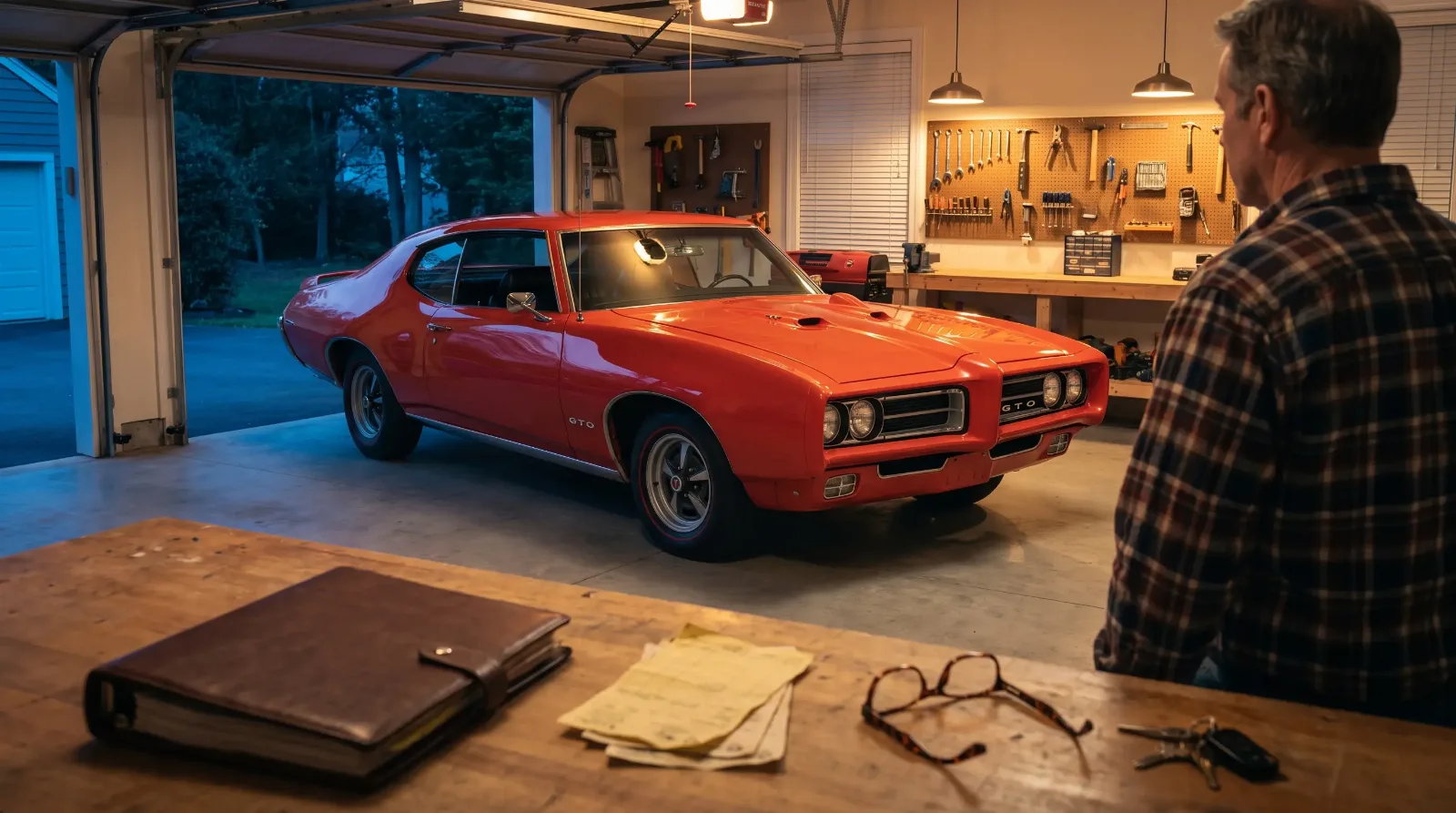
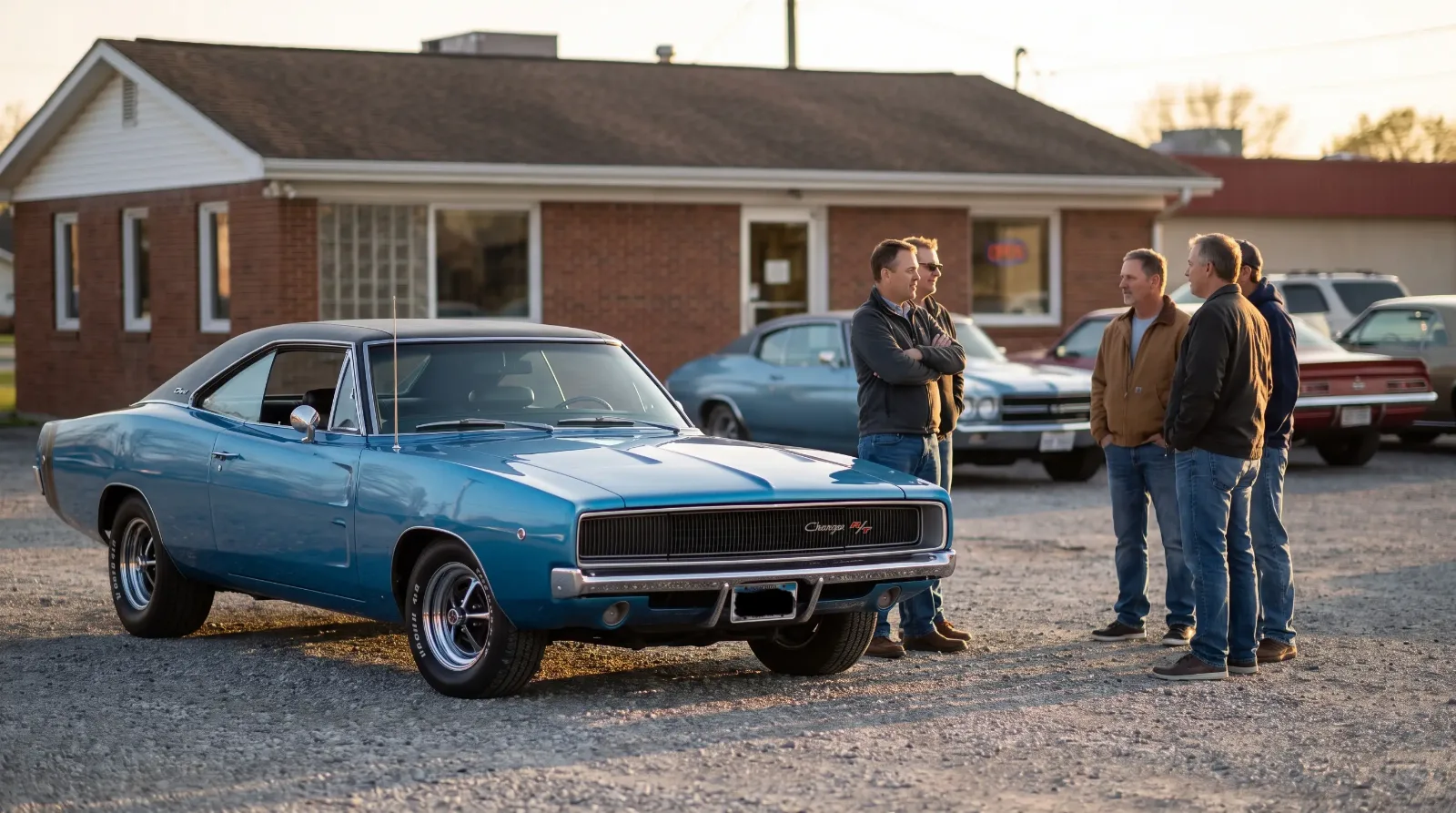
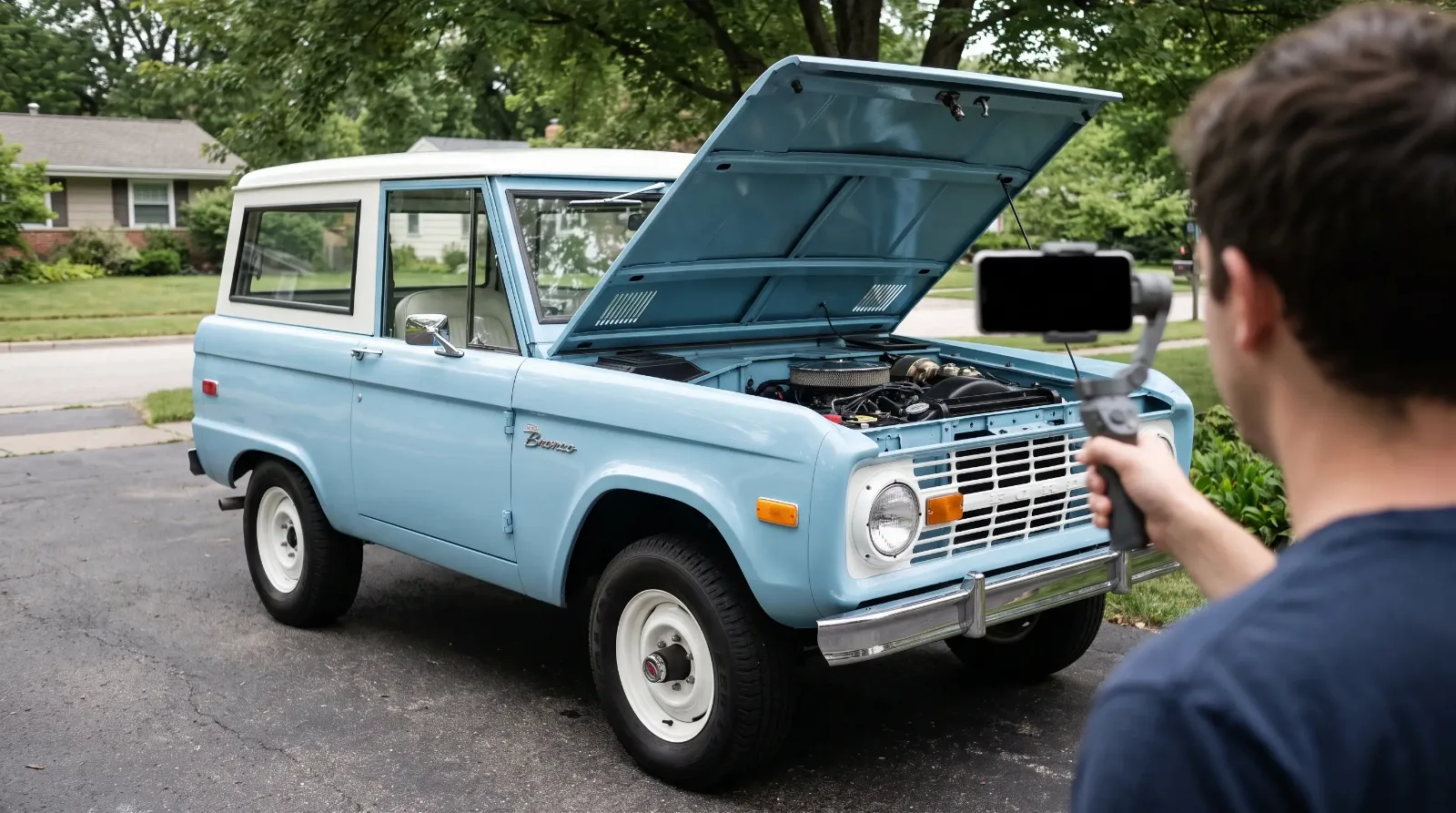
The dealer buying outright wants inventory he can resell at a profit. He is buying at wholesale and selling at retail, and the gap between the two pays his rent, his mechanic and his interest on the money tied up in the car.
The "we buy classic cars" company is a dealer with a different front door. They promise a quick cash offer and free pickup, then resell the car, send it to auction or flip it to another dealer.
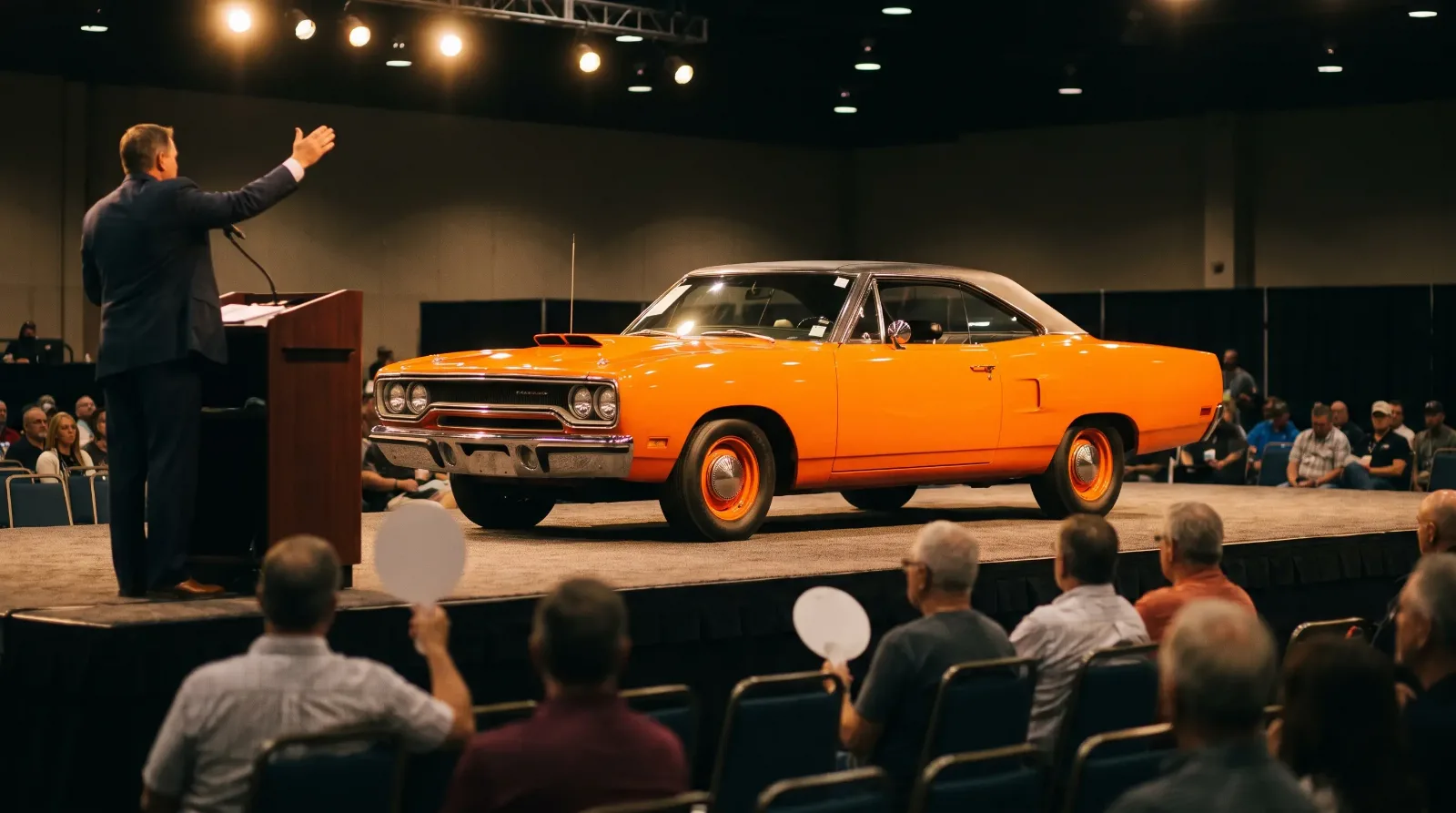
The consignment dealer does not buy your car at all. He sells it for you, on his lot or his website, and takes a fee or a percentage when it sells. You keep ownership until the deal closes.
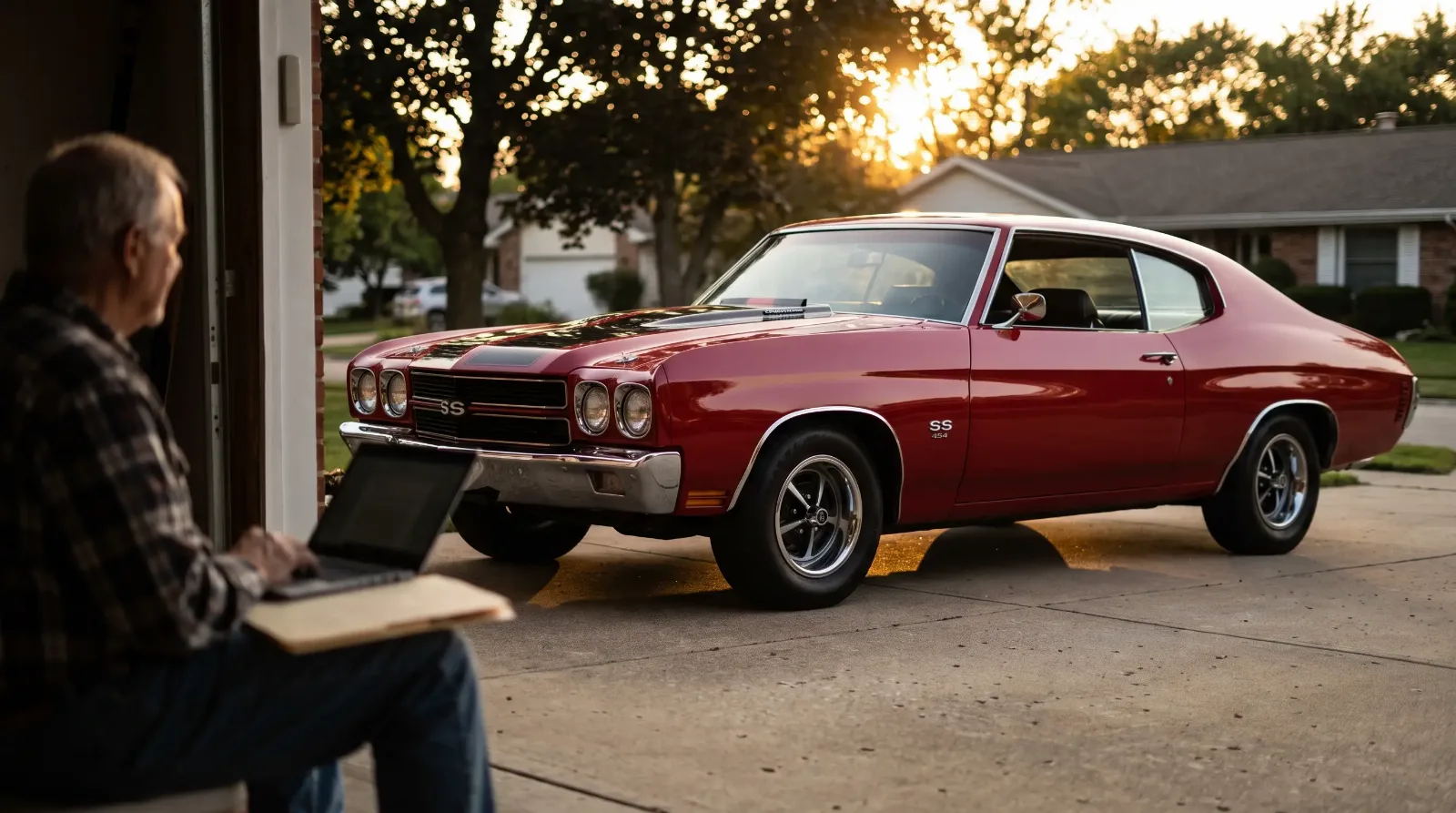
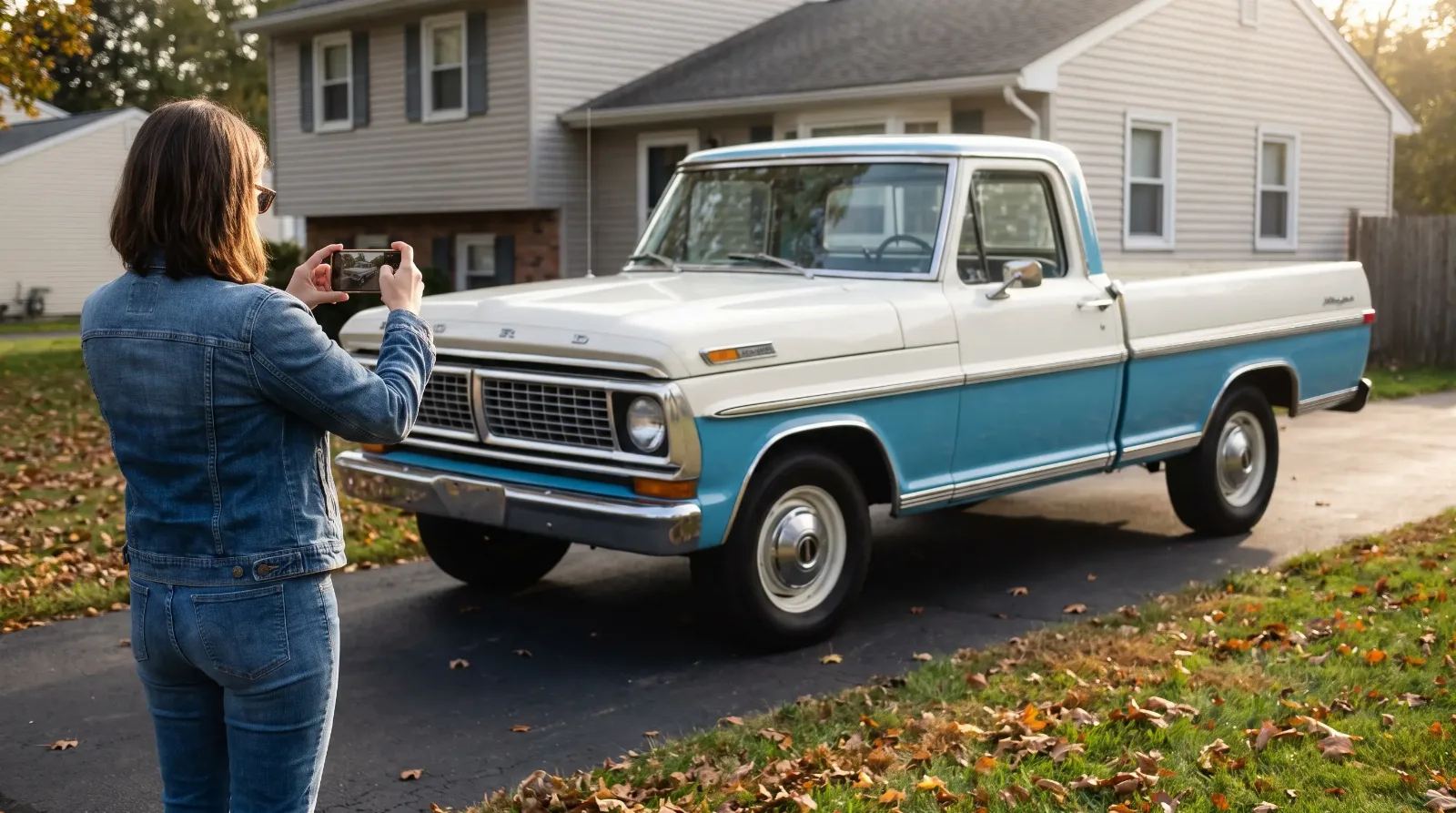
The private buyer is a collector or enthusiast who wants this particular car to drive, show or keep. He is paying retail because he is the end of the line. Nobody is marking it up after him.
Every buyer except the private one needs room to make money on your car after you hand over the keys. That room comes out of your price.
How a dealer prices your car
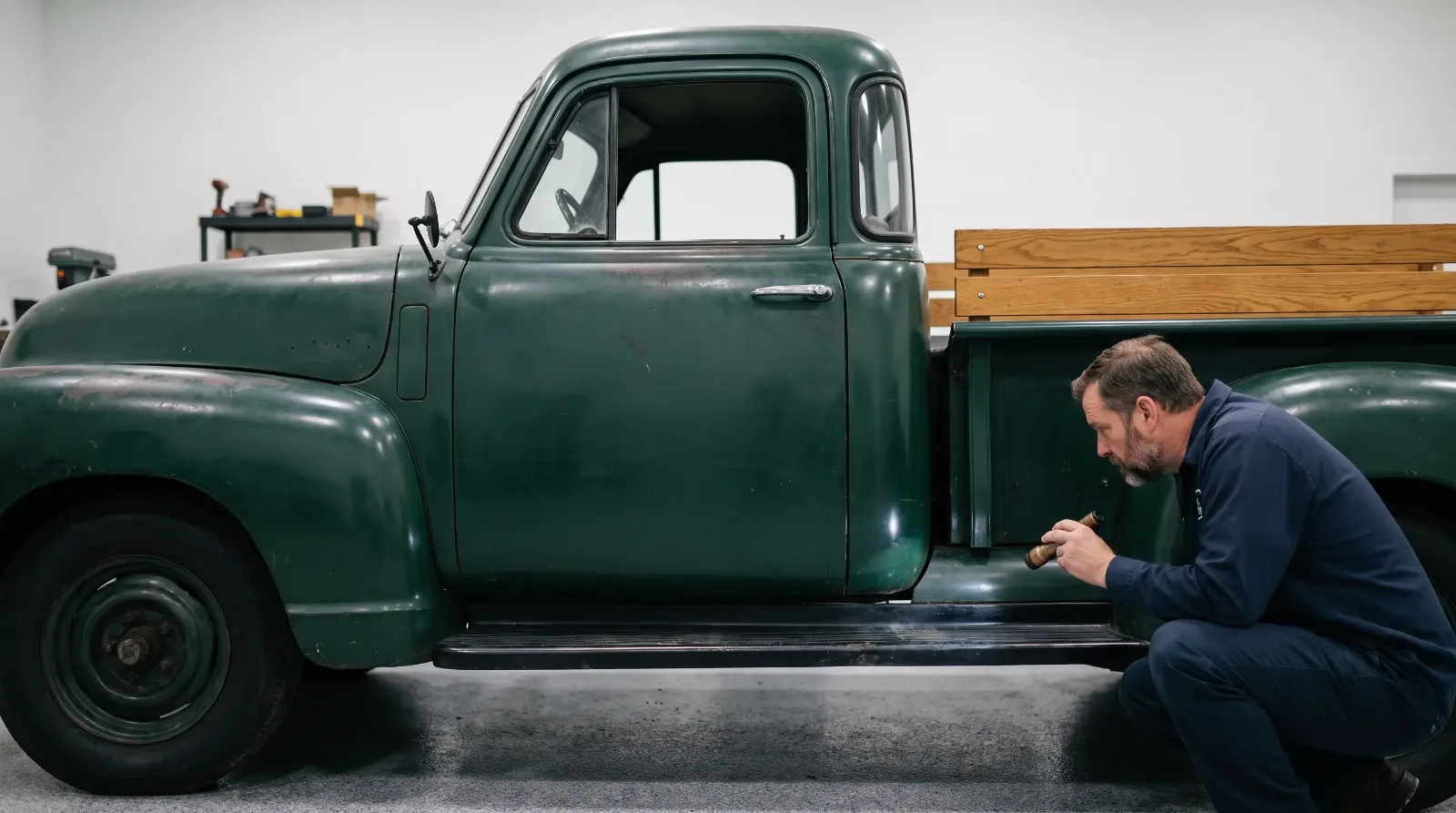
A dealer starts at the end and works backward. He asks what the car will retail for once it is cleaned up and sitting on his floor, and then he subtracts everything it will cost him to get there.
Here is roughly how that math runs. He pulls comparable sales: recent auction results, other dealers' asking prices, valuation guides that grade cars on a condition scale. Say he decides your car will retail at $40,000. Then he takes out reconditioning, which on an older car is rarely zero. Old tires, a carburetor rebuild, a seat recover, two days of detailing. Call it $2,500 to $5,000 on a decent driver, and more if he finds rust he did not expect.
Next comes holding cost. A classic does not sell in a week the way a three-year-old pickup does. If it sits for 90 days, he is paying interest on the money, paying for the floor space and paying someone to keep the battery up. Call that another $1,000. Then he needs profit, and he needs a cushion for the car that turns out worse than it looked, say $4,500 to $6,000 on a $40,000 car. Add it up and the deductions come to roughly $8,000 to $12,000, which is 20 to 30 percent of the retail number. Since a well-handled private sale should bring close to that retail figure, his offer lands roughly 20 to 30 percent below it. Treat that as a rough working estimate built from the costs above, not a published industry figure. It moves with the car.
It moves in both directions. A sought-after model in excellent condition, the kind a dealer already has a buyer waiting for, may draw an offer much closer to retail because he can turn it fast. A tired, rare-parts car that will take him six months to move might draw an offer 40 percent under, or no offer at all.
"We buy classic cars" companies and cash offers
If you search "sell my classic car for cash," these are the outfits you will find first. The pitch is simple: send photos, get an offer, they come pick it up and you get paid. For an estate that has to be settled or a car that does not run, that pitch is worth something real.
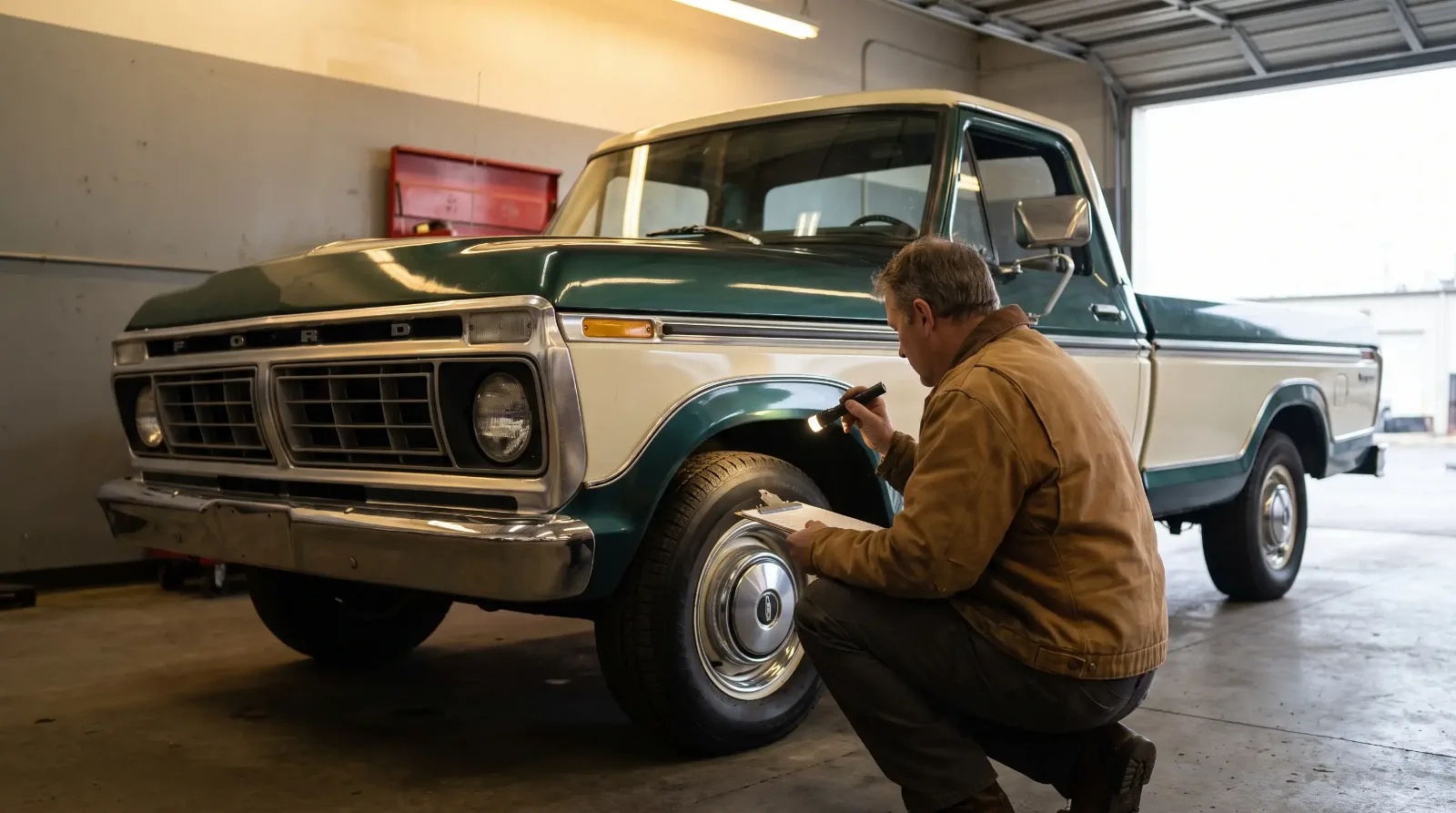
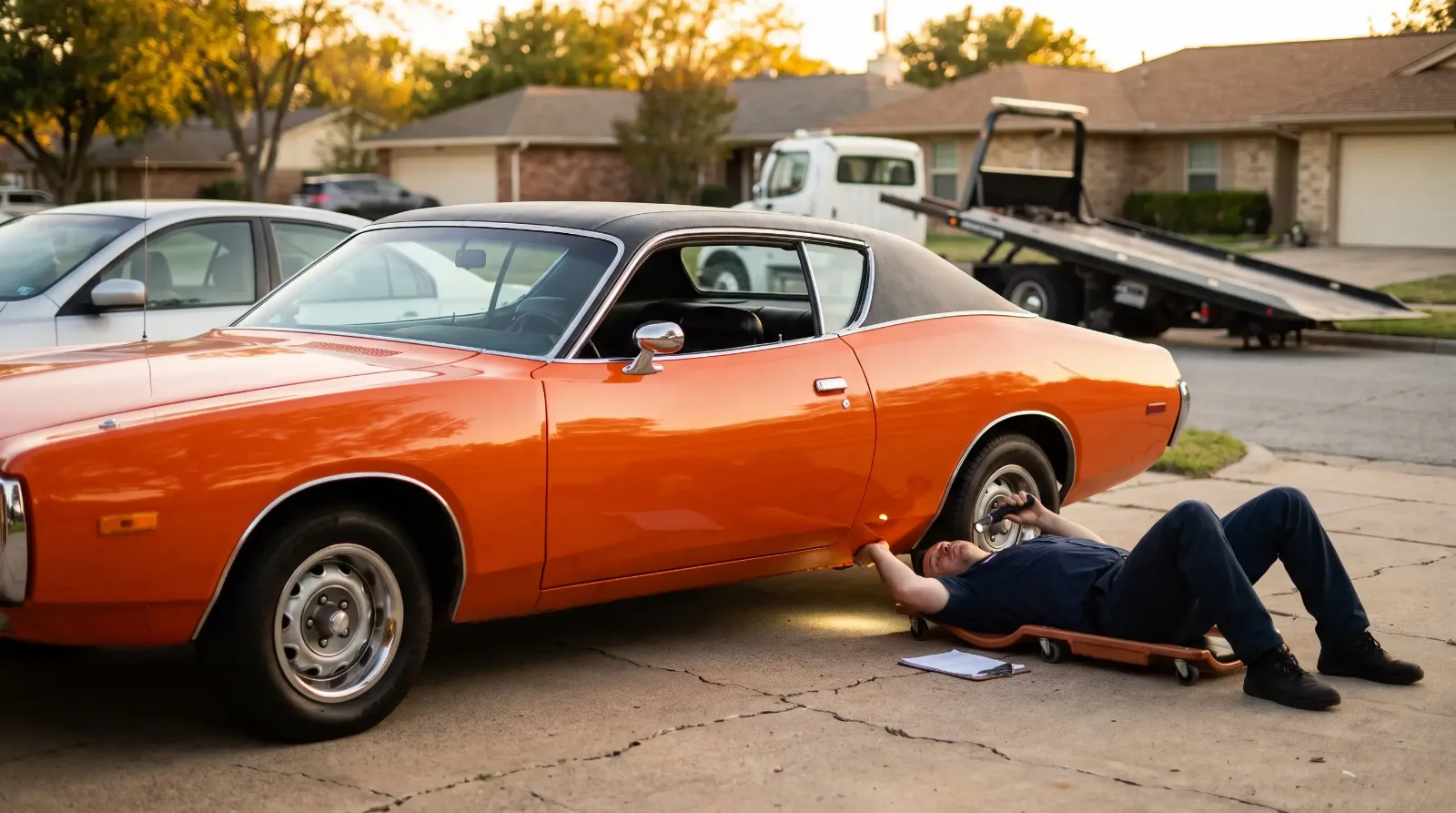
The thing to understand is how the offer is built. Most of these companies make a number from your photos and description, and the number is subject to inspection. That last phrase matters. The initial offer is often strong enough to get you to stop shopping, and then the inspector arrives with a truck and a trailer and starts finding things. The quarter panel has filler. The engine is not original. The offer drops, and now the car is half loaded and you are tired of the whole business. In the trade that is called a retrade, and it is the most common complaint people have about cash buyers.
Not every company does it. The honest ones give you a range up front, tell you exactly what would change it, and stick to it if the car matches your description. Ask them, before anyone drives out, what specific findings would lower the offer and by how much. A buyer who will not answer that question is telling you something.
Speed is the real product here. If that is what you need, read how to sell a classic car fast before you call anyone, because there are quicker routes that do not cost you a quarter of the car's value.
Consignment: the middle road
Consignment sits between selling to a dealer and selling it yourself. The dealer markets the car, handles the phone calls and the tire kickers, and you get paid when it sells. In exchange he takes a cut, commonly somewhere between 5 and 15 percent of the sale price, or a flat fee that often runs about $750 to $3,000. Some contracts add separate administrative, detailing or storage charges, so ask for every fee in writing.
Done well, consignment can net you more than an outright dealer sale because the car sells at retail to a private buyer. The dealer is simply taking his piece as a fee instead of as a markup. Done poorly, the car sits on a back row for eight months, the storage bill grows and you get a call suggesting the price come down.
Read the agreement line by line. Find out the length of the term, who insures the car on his lot, whether there is a fee if it does not sell, and whether you approve the final price. Get the asking price and a floor in writing, and ask how quickly the sale money reaches you.
Private collectors and enthusiasts
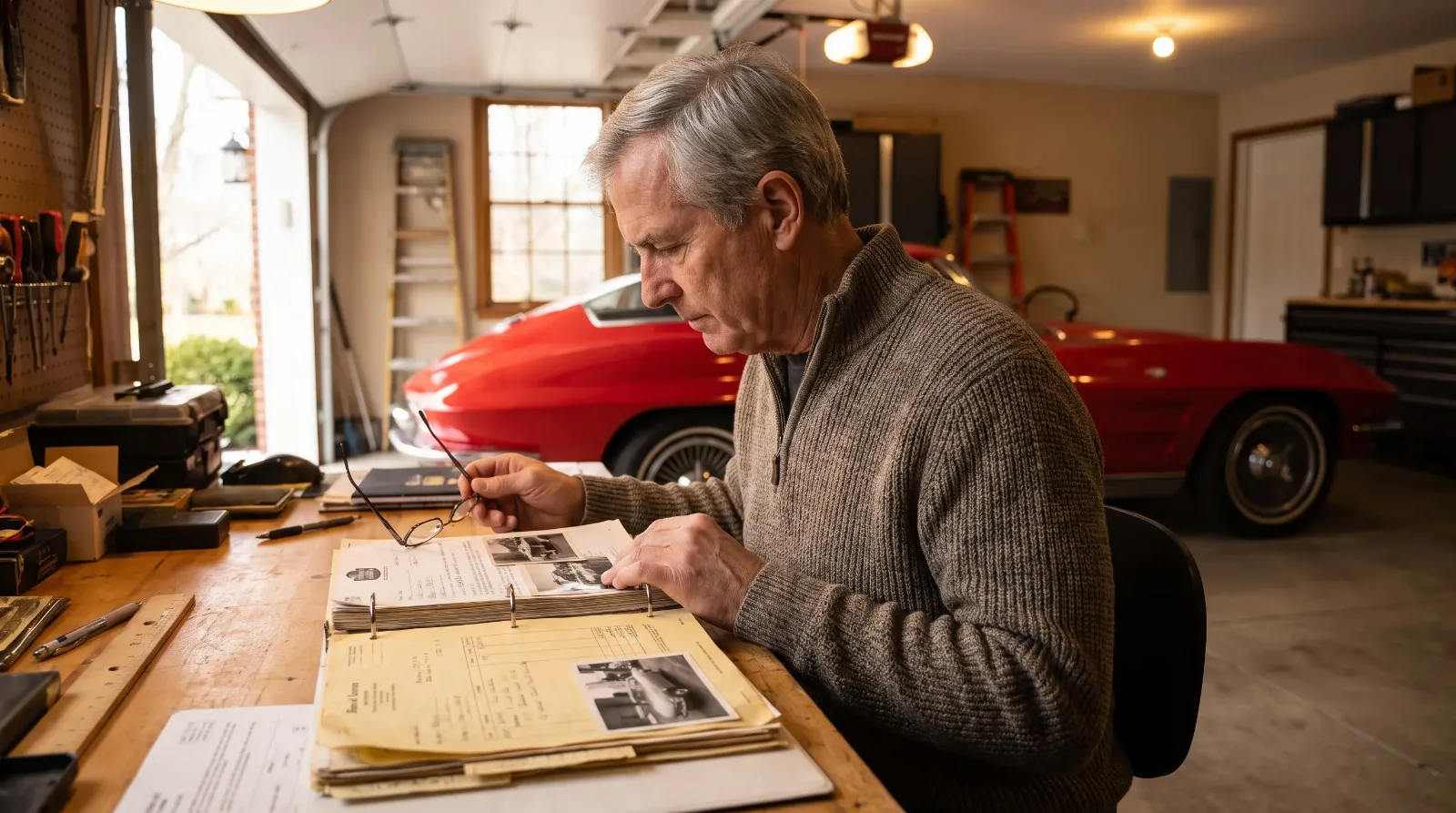
A private buyer pays the most because he is buying to own, not to resell. He is not budgeting for a markup, and he will often pay for things a dealer will not, like a documented history or the exact color he has wanted since he was sixteen.
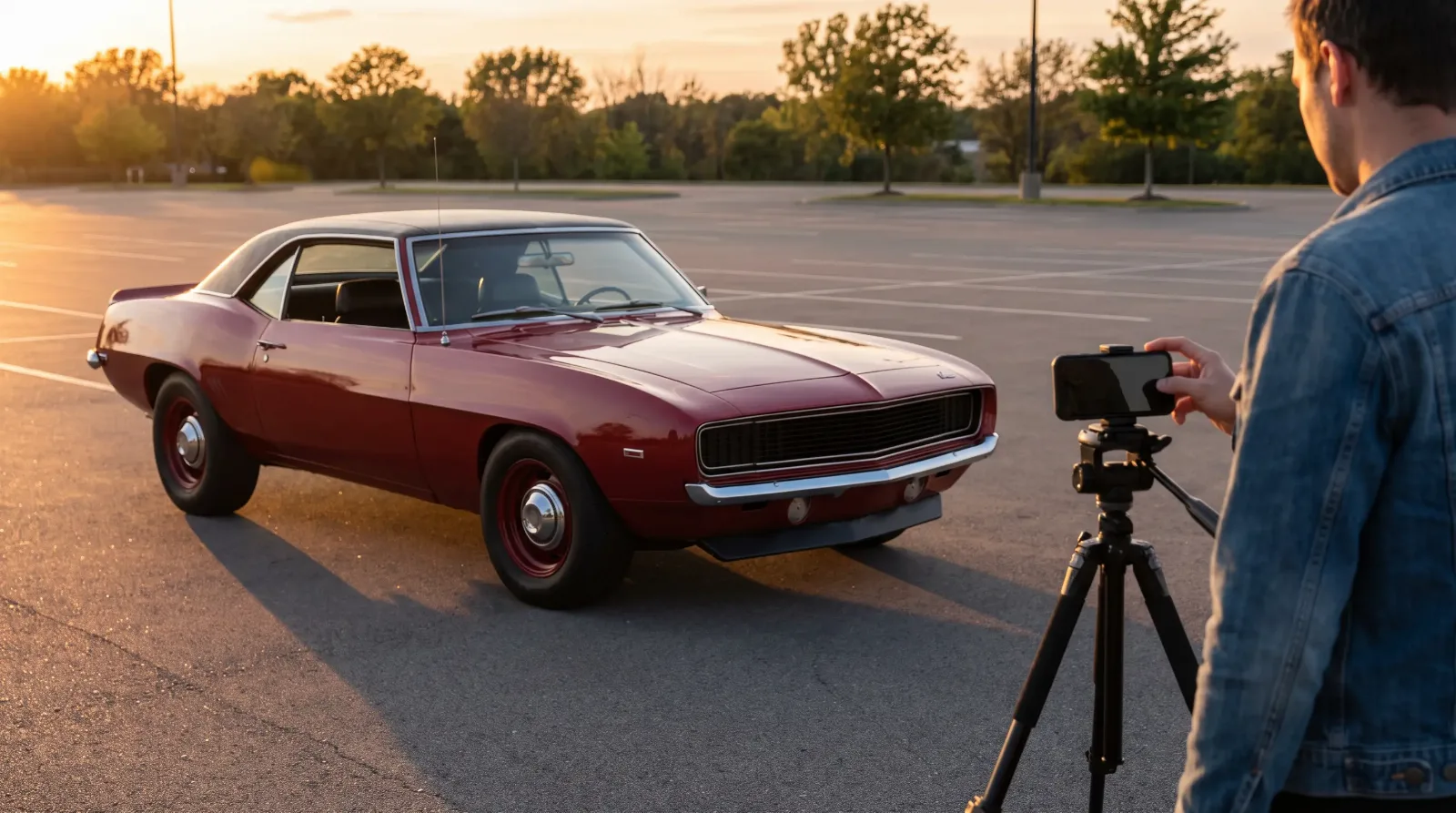
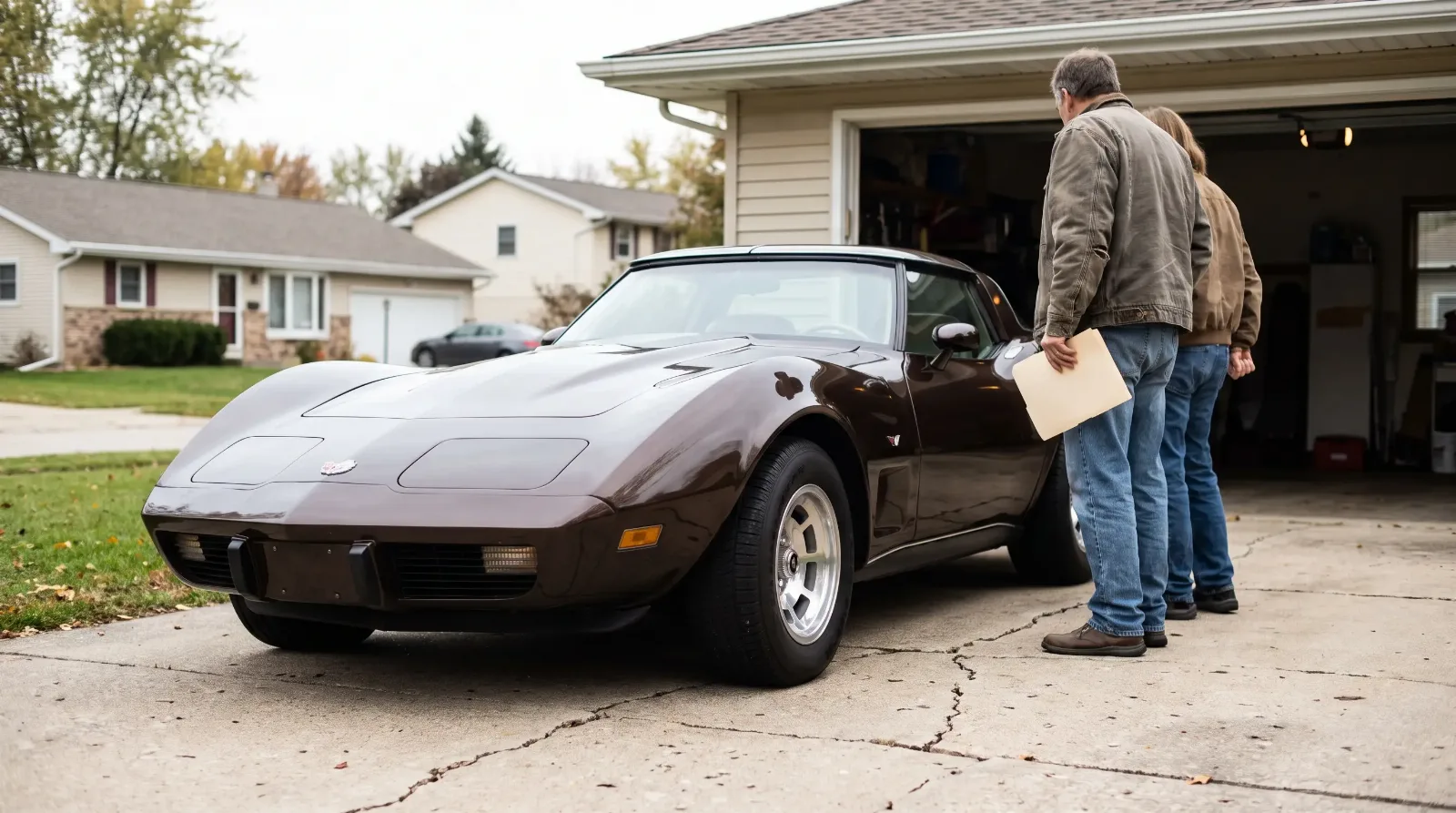
The catch is the work. You write the listing, take the photos, answer the questions, field the lowball messages, schedule the inspections and handle the paperwork and payment. You also have to find the right buyer, and for a classic that is a smaller pool than for an everyday car. The right buyer might be three states away.
That is the reason to list where collectors are already looking. On ClassicCarsArena you can put your classic in front of collectors for a flat one-time fee: $49 for Starter, $99 for Featured or $179 for Premium. There is no commission and no success fee, the listing stays up until the car sells, and the buyer pays you directly. Featured and Premium listings also go out in newsletter sends to more than 15,000 subscribers who signed up to hear about new listings. The general marketplaces and online auctions have their own strengths, including larger audiences in some cases, so compare the costs and pick what fits the car.
"A dealer is paying you for the car minus his trouble. A private buyer is paying you for the car. The difference is the trouble, and you are the one who decides whether you want to carry it."
— Robert Halloran
Speed, money and hassle side by side
None of these buyers is wrong. They just sit at different points on the same trade-off. The table below lays it out using a car that would bring about $30,000 in a clean private sale. The dollar figures are illustrations, not quotes: the dealer line uses the rough 20 to 30 percent discount worked out above, the cash-offer line allows for up to $2,000 more coming off at inspection, and the consignment line assumes the car sells for the full $30,000 less a 5 to 15 percent fee.
| Buyer | Typical time to cash | Illustrative net on a $30,000 car | Your effort | Main risk |
|---|---|---|---|---|
| Dealer, outright purchase | Same day to a week | About $21,000 to $24,000 (estimate) | Low | Leaving money on the table |
| Cash-offer company | A few days to two weeks | About $19,000 to $24,000, depending on inspection (estimate) | Very low | Offer reduced at pickup |
| Consignment dealer | One to six months | About $25,500 to $28,500 after fees (estimate) | Low to moderate | Long sit, storage charges, contract terms |
| Private buyer | Weeks to several months | Close to $30,000, minus listing costs | High | Scams, time, unqualified buyers |
Read the table as a range, not a promise. A convertible listed in April tends to move faster than the same car in December, and a running truck with a box of receipts draws stronger offers from every buyer type than one with a story and no paperwork.
How to get multiple offers, and the red flags to watch for
The single most useful thing you can do is make sure you never have only one number. People searching "classic car buyers near me" tend to call the closest dealer and take what he says. Do not stop there. Get at least three offers from at least two buyer types before you decide anything.
Start by knowing what your car is worth to a private buyer. Look at recent completed sales, not asking prices, for the same model in similar condition. Then get your quotes. Ask two or three local dealers what they would pay outright and what they would take on consignment. Submit honest photos, bad spots included, to one or two cash-offer companies. If you can, list the car privately at the same time. A private listing that draws real inquiries gives you a strong number to quote back to a dealer.
Give every buyer the same information. If you tell one dealer about the rust in the cab corners and forget to tell another, you are not comparing offers, you are comparing guesses.
Most buyers are straight. The ones who are not tend to use the same handful of moves.
- An overpayment with a refund request. A buyer sends a cashier's check or transfer for more than the price and asks you to wire back the difference, often to cover "shipping." The check later bounces. Never refund an overpayment.
- A buyer who will not see the car or talk on the phone. Out-of-state buyers are normal for classics. Buyers who only want to text, will not inspect and insist on their own shipping company are not.
- A strong offer that collapses at pickup. Covered above. If the number changes, you can still say no and close the gate.
- A request to sign the title over blank. An open title lets the car be resold without a proper transfer. That practice, called title jumping, is illegal in every state, and until a transfer is recorded, tickets, tolls or worse can be traced back to you as the last recorded owner. Fill in the buyer's name, the date and the price, and file your state's release of liability or notice of sale.
- Payment that has not actually cleared. The FTC warns that money showing in your account does not prove a check is good, and a fake can take weeks to surface. Ask your own bank to confirm the funds have truly cleared, or meet at the buyer's bank and watch the cashier's check get issued.
Which buyer you pick comes down to which of the three things you need most: speed, money or less hassle. If the car has to be gone by the end of the month, a fair dealer offer is not a defeat. If you can give it a season and a little effort, a private buyer will almost always pay more. Either way, know the private number first and get more than one offer in writing.
Sources and notes
- Hagerty: what does a car's condition really look like?
- AutoTrader.ca: figure out the true value of your trade-in
- Exotic Car Trader: is car consignment a good idea?
- KeySavvy: what is title jumping?
- LegalClarity: how many cars can you buy and sell in a year?
- FTC: how to spot, avoid and report fake check scams
Notes: the 20 to 30 percent dealer discount and every dollar figure in the comparison table are our own illustrative estimates, built from the costs described in this article, not quotes or published averages. Consignment fees and private-sale limits vary by business and by state, so confirm the terms that apply to you.