
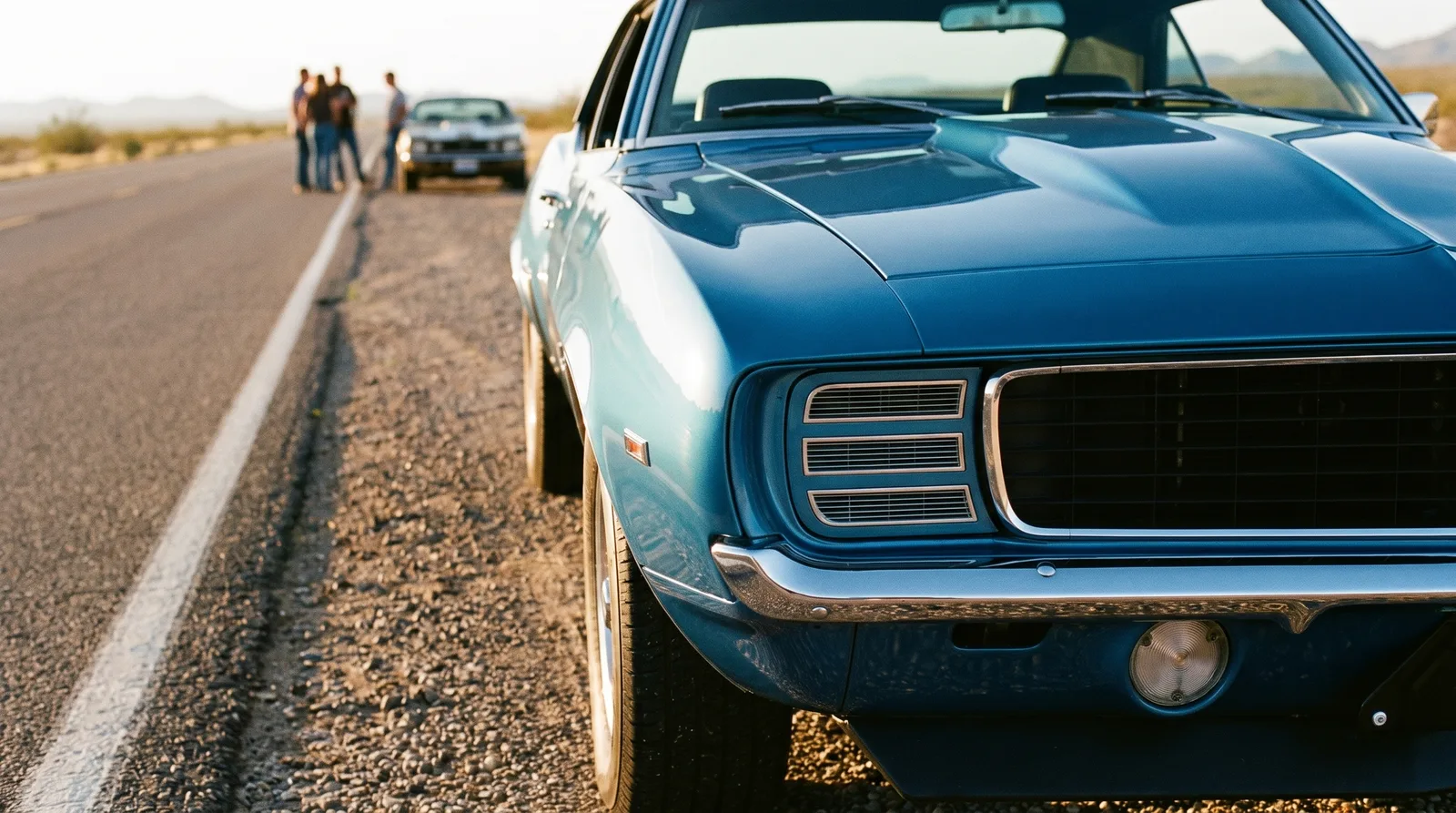
If you sell a classic car in Canada, you are working with a smaller buyer pool spread over a much larger map. A 1969 Camaro in Saskatoon may have three serious local buyers this year, and two of them already own one. The question is not which site has the most traffic. It is how far your ad has to travel before it reaches the one person who wants this exact car, and whether that person can realistically come and get it.
Market & Values
9 min read
Selling a Classic Car in Canada: Where to List
Where to sell a classic car in Canada: Kijiji, AutoTrader.ca, Facebook Marketplace, clubs, auctions and reaching US buyers.
This piece treats the Canadian version of the problem as its own system: Kijiji, AutoTrader.ca, Facebook Marketplace, clubs, auctions, and buyers south of the border. For that comparison, with fees, photo limits and listing terms side by side, read the full breakdown and come back here for the Canadian specifics.
Why selling in Canada needs a different plan
Three variables change when you cross the border, and they compound.
The first is density. Most Canadians live in a narrow band near the US border, with long gaps between metro areas. A buyer in Calgary looking at a car in Halifax faces a cross-country transport bill before the purchase price even comes up. Local buyers matter more here, and a national ad has to justify the distance.
The second is the season. In much of the country the classic market goes quiet once the roads are salted. Buyers can't test drive, and few want to trailer a car through a snowstorm. A listing that goes live in late winter, visible when spring arrives, usually beats one posted in November.
The third is paperwork, which is provincial. In Ontario, for example, a private seller must give the buyer a Used Vehicle Information Package, a signed bill of sale and the signed transfer section of the ownership, and the buyer generally needs a Safety Standards Certificate to register and plate the car. Other provinces set their own inspection and transfer rules. Check your own province's rules before you write the ad, because "certified" and "as is" mean something specific to local buyers.
Kijiji, AutoTrader.ca and Facebook Marketplace
These are the general platforms most Canadian private sellers start with. Each reaches a lot of people. None is built around old cars, so the job is to make your ad findable by the small slice of their audience that wants one.
Kijiji is the long-running Canadian classifieds site, and for many buyers still the default place to search for a used vehicle. A basic vehicle ad is free, and paid features such as Top Ad, Highlight and Bump Up lift an ad's visibility. Its strength is local reach in English and French Canada. Its weakness is that you will screen plenty of messages that were never going to become a sale.
AutoTrader.ca is a Canadian vehicle marketplace, run separately from the US Autotrader site. Listing a private vehicle is free, and paid packages promote the ad to more shoppers. It draws people actively shopping for a vehicle, which tends to mean more structured inquiries. Dealer inventory dominates the results, so a private classic sits next to late-model stock. Later classics from the 1980s and 1990s fit that audience. A pre-war sedan has a harder time.
Facebook Marketplace is free for a local vehicle sale and reaches a very large local audience quickly. It is fast for drivers and projects, and it has the noisiest inbox of the three. Province or make-specific classic car groups next to Marketplace are usually better targeted, though each sets its own posting rules.
| Channel | Cost to list | Typical buyer | Best fit | Main tradeoff |
|---|---|---|---|---|
| Kijiji | Basic ad free; paid features available | Local general shoppers, bilingual reach | Lower-value drivers and projects | High message volume, little filtering |
| AutoTrader.ca | Basic listing free; paid promotion packages | Active vehicle shoppers, dealer-heavy results | 1980s and 1990s classics | Classic ads compete with modern dealer stock |
| Facebook Marketplace | Free for a local sale | Very large local audience | Quick local sales, parts cars | Scams and low offers to screen out |
| Clubs and marque registries | Usually membership based | Experienced owners of the same model | Documented or uncommon cars | Small pool, slower pace |
| Classic-only listing sites | Flat fee or package | Collectors in Canada and the US | Cars that need buyers beyond the province | Cross-border buyers mean more paperwork |
Clubs, shows and auctions
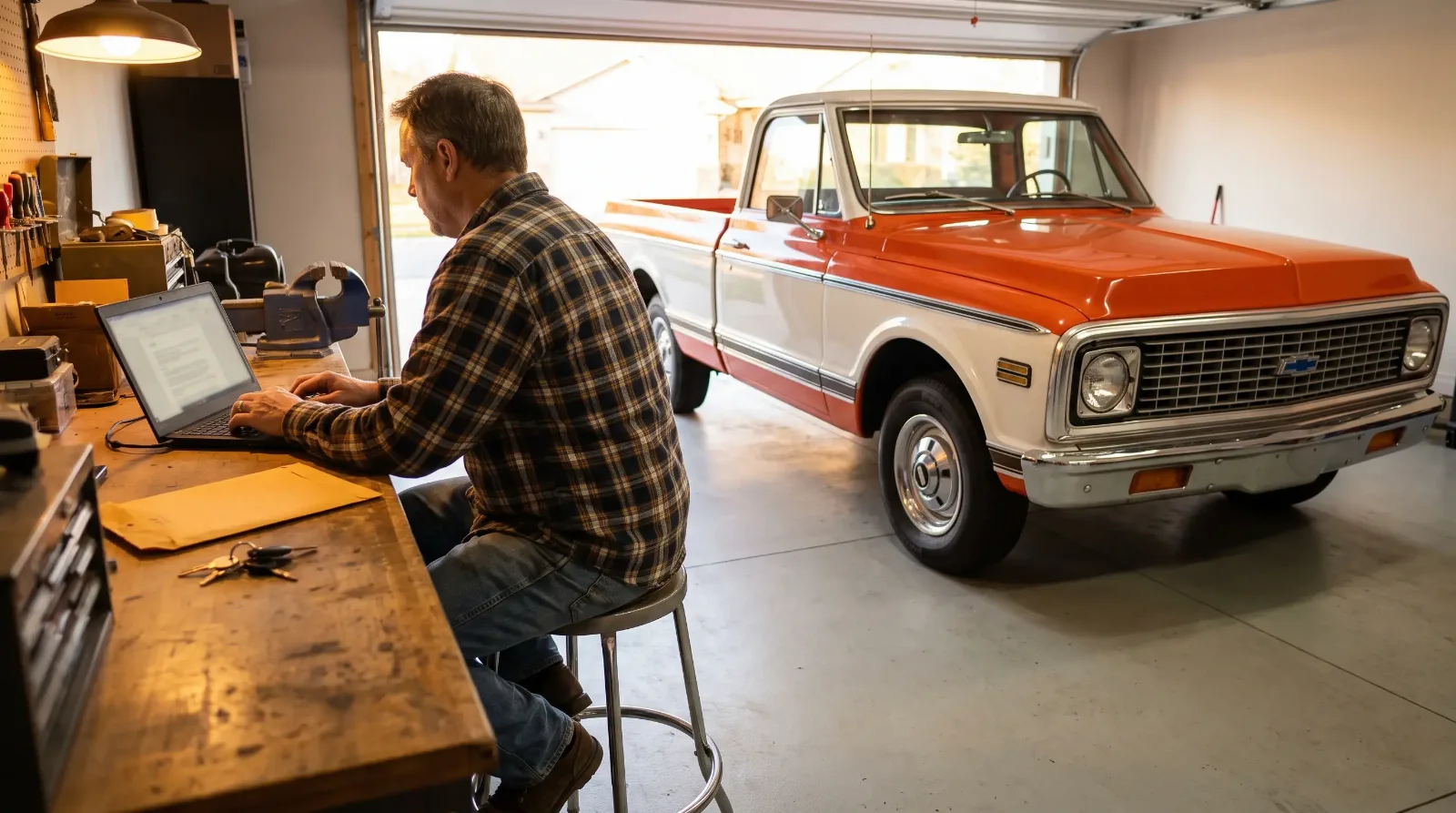
For an uncommon car, the most efficient channel is often the slowest-looking one. A provincial chapter of a marque club, or a national owners' registry, puts you in front of people who already know what a correct example looks like. If your car has a build sheet, an original window sticker or a long ownership record, this is the audience that pays for it. Pickups and work vehicles have their own buyer networks too; if you need to sell classic truck stock rather than a car, the channels shift in ways worth reading separately.
Summer shows extend the club route. A "for sale" sign on a car parked among its peers, with a spec sheet and your contact details, gets read by exactly the right crowd. Bring the paperwork binder.
Collector car auctions run in Canada too, with regular sales in Alberta and Ontario, and a Canadian car can also be consigned to one of the large US sales. An auction gives you a fixed date and competitive bidding, which suits a high-demand car with strong documentation. It also adds seller fees, buyer's premiums and transport, a no-sale is public, and a US venue means clearing the border first.
Reaching US buyers: cross-border basics
The US buyer pool is many times larger than Canada's, and for many models it is where the competitive offers come from. It also brings rules on both sides. Treat this as orientation, not legal or customs advice, and confirm each point with the agency or a licensed customs broker before you commit.
- Canadian export. For a vehicle exported permanently to the United States, the Canada Border Services Agency does not require an export declaration, but documents showing the vehicle identification number must be presented on request. A car headed overseas does need an export declaration that quotes the VIN. Keep the ownership papers with the car either way.
- US import age rules. A vehicle at least 25 years old, counted from its date of manufacture, can be imported without meeting US federal safety standards. For emissions, the EPA exempts or excludes vehicles at least 21 years old that are in original configuration. A younger car can be very hard to bring in.
- Duty. Don't assume a North American car crosses duty free. US Customs and Border Protection says vehicles built before 2020 are unlikely to qualify for duty-free treatment under CUSMA (USMCA in the US), so a classic usually pays the standard US rate: 2.5% for a car and 25% for a truck. The buyer usually handles US entry and a customs broker can confirm the current total, but it shapes what they will pay.
- Payment. A cross-border wire is normal. Wait until the funds have cleared in your account, not merely "showing," before releasing the car or the ownership.
Two more variables. The exchange rate moves the effective price, so agree in writing which currency the price is in. And the buyer's landed cost adds transport, brokerage and any duty, so a car that looks cheap in your ad may stop looking cheap once they total it. Price for the landed reality, not the headline.
"Treat a cross-border sale like a system with more failure points, not like a scary exception. Write down every handoff: money, ownership, export filing, transport. If you can name who owns each step, the sale is manageable. If you can't, you're not ready to accept a deposit."
Emily Chen
A listing plan for Canadian sellers
Here is the sequence I would use, from lowest effort to widest reach. Keep the same price and description everywhere.
This site covers both the US and Canada, which fits the "wider than the province" step. It charges a flat one-time fee, $49 for Starter, $99 for Featured and $179 for Premium, with no commission, no success fee and no buyer premium. The listing stays up until the car sells, and the buyer pays you directly. Featured and Premium listings also go to more than 15,000 newsletter subscribers who signed up for new listings. That audience is smaller than the big general platforms, and it does not replace a free local post. What it adds is classic-only buyers on both sides of the border.
If that matches your car, compare our seller packages with the local options above and pick the mix that fits the car's value and how far its likely buyer lives from you. The right channel closes the distance between your car and its buyer at the lowest total cost.
Sources and notes
Related Reading
#car clubs
#classic car listing sites
#Facebook Marketplace
#sell classic car canada
#Kijiji
#AutoTrader.ca
#cross-border sale

About the author
Emily Chen
Bay Area engineer with a deep focus on vintage Japanese and European performance cars. Approaches classic car research and restoration with an analytical eye.
More in Market & Values

Comments
Be the first to comment on this article.