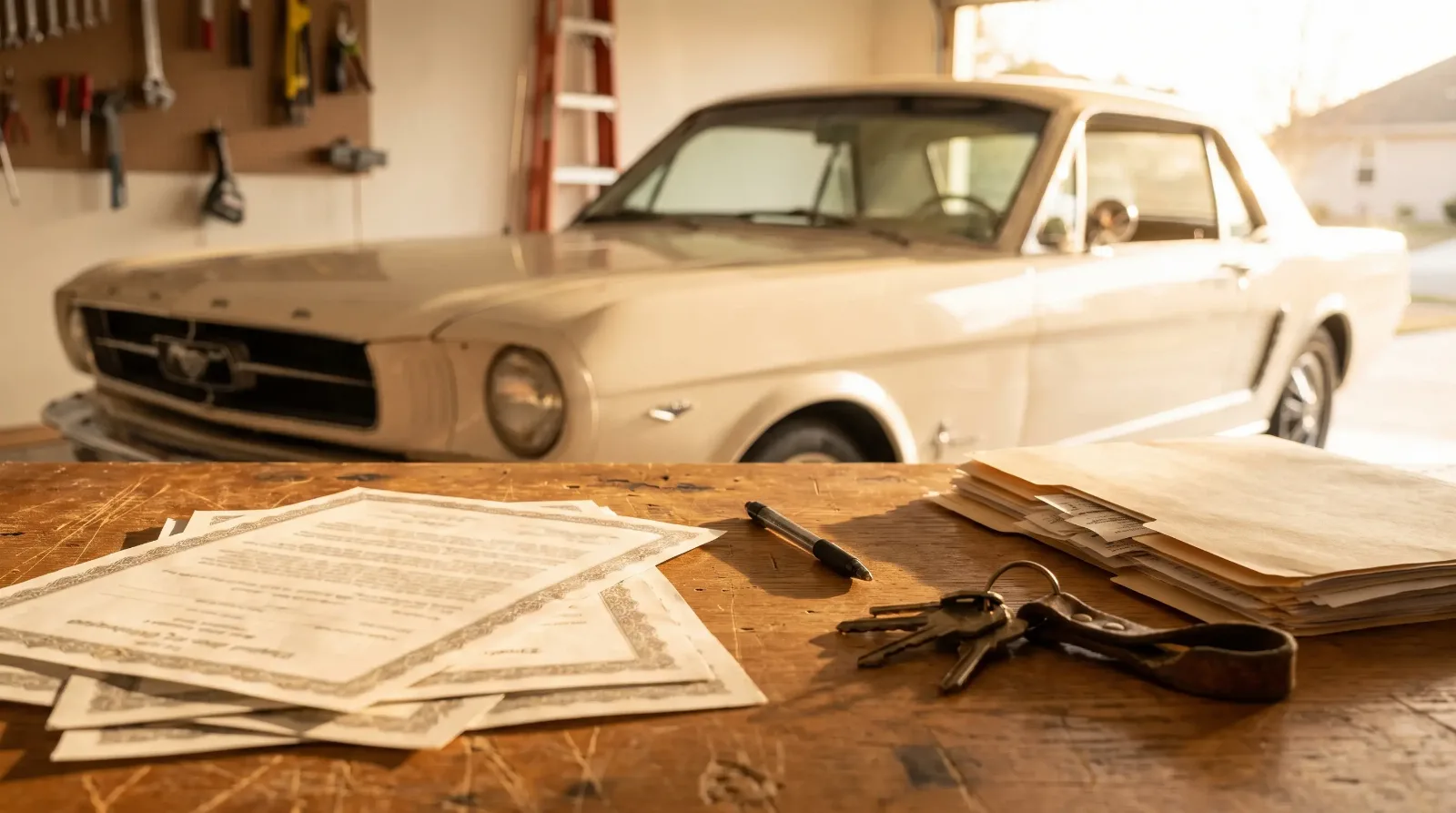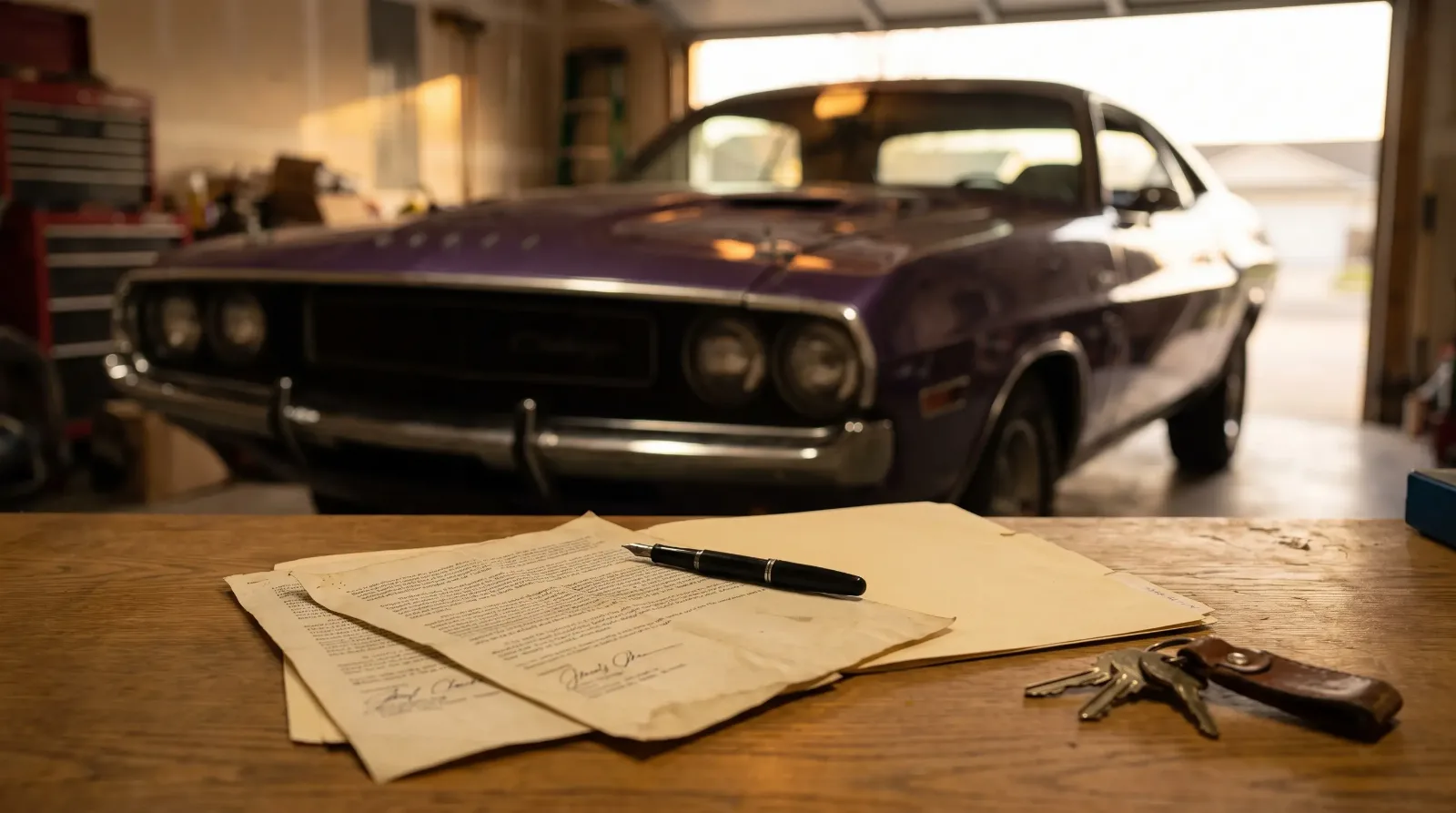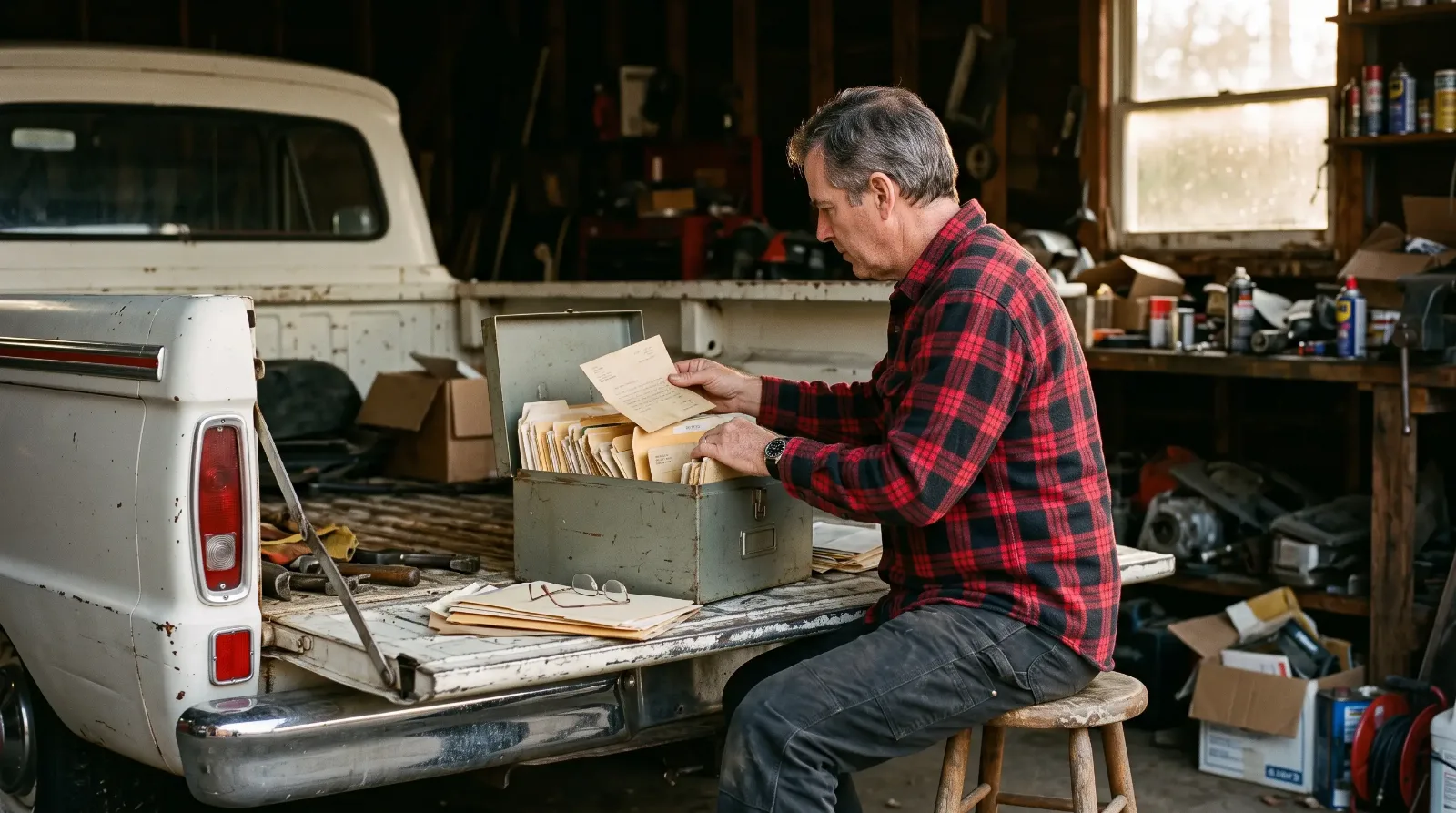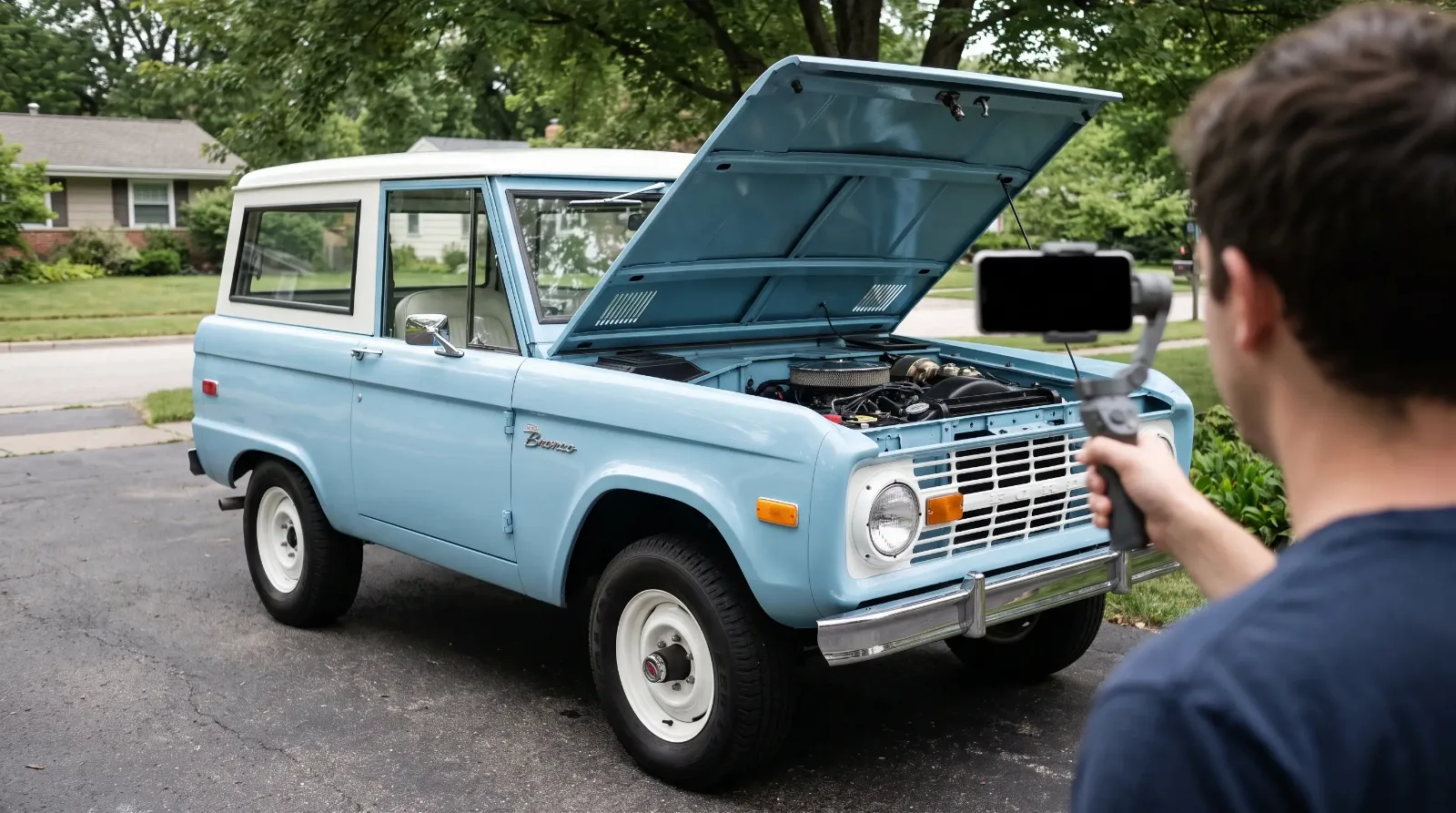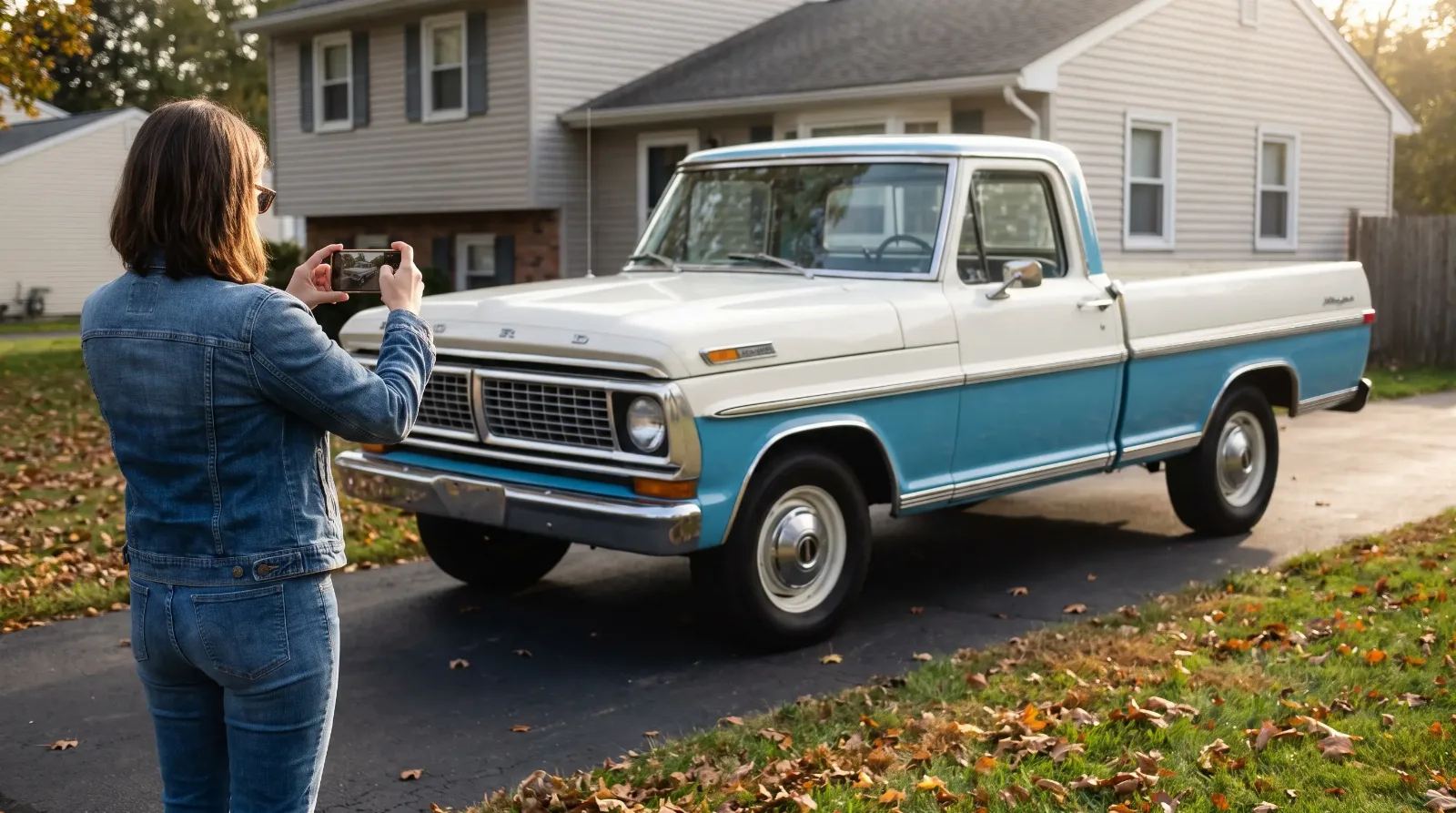
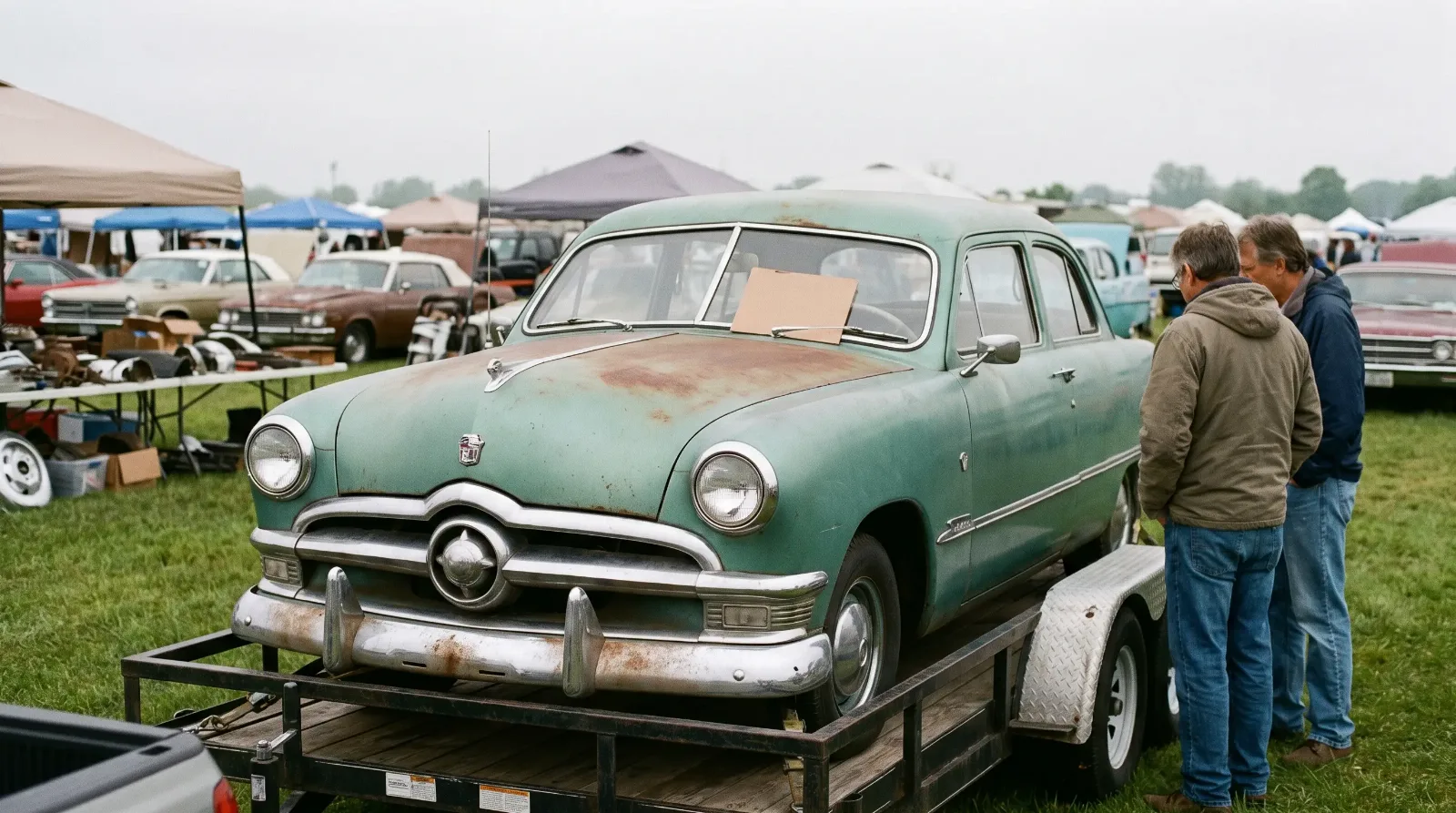
Every swap meet has one. A '50s sedan or a coupe body on a trailer, a fair price on the windshield, and a hand-lettered line at the bottom of the sign: "no title, bill of sale only." Some buyers walk right past. Others stop, squint at it, and start doing math in their heads about what that missing piece of paper is going to cost them. If you want to sell a classic car with no title, that math is your problem too, because whatever trouble the buyer expects comes straight off your price.
The good news is that "no title" covers a lot of different situations, and some of them are not problems at all. A car from a year your state never titled is perfectly legal to sell with the paperwork that state uses. A title that got lost in a move is usually a form and a fee away. The hard cases are the cars with a broken chain of ownership, and even those have a road out in most states. The trick is figuring out which situation you are actually in before you put the car up for sale. A quick note before the details: this is general information, not legal advice, and state rules change, so confirm with your DMV.
First question: did your state ever title it?
Plenty of old cars have no title because no title was ever issued, and that is by design. Some states stopped short of titling older model years, and they handle ownership through registration instead. New York is the best-known example: it does not issue titles for model year 1972 and older vehicles, so the ownership document for a 1969 sedan there is the transferable registration plus a bill of sale. Georgia does not require a title for model year 1962 and older.
If your car falls under one of those exemptions, you are not selling a car without paperwork. You are selling a car with the right paperwork for its age. What you owe the buyer is a clean registration in your name, a thorough bill of sale, and a straight answer about what their own DMV will want. A buyer from a state that titles everything will have to take your documents to their DMV and apply for a title there, and many states, California among them, require a VIN verification before they will title a car coming in from out of state. Ask the buyer to call their DMV before you shake hands. Five minutes on the phone beats a car stuck in someone's driveway because the clerk said no.
Lost is not the same as never had one
Now the other common case. Your state does title the car, it was titled to you, and the paper has gone missing. This is the easiest no-title problem to fix, because the state still has a record with your name on it. You apply for a duplicate, pay a fee, and wait for the mail. Do it before you list the car, not after a buyer is standing in your driveway with cash. If that is your situation, here's how that works, step by step.
The duplicate route only works if the title was in your name. If you bought the car years ago and the seller handed you a title signed over to nobody in particular, and you never registered it, the state record still shows the old owner. That is a jumped or open title, and many states do not allow them. Fixing it usually means tracking down the person whose name is on record, or moving to one of the heavier options below.
Bonded titles, court orders and the old shortcuts
When the chain of ownership is broken, the most common fix is a bonded title. You buy a surety bond, the state issues a title branded as bonded, and if no one with a better claim shows up during the bond period, the brand drops off. Texas sets the bond at one and a half times the vehicle's value and keeps the bonded brand for three years. Other states use different multiples and periods, and some, Pennsylvania among them, do not offer bonded titles at all.
Where bonded titles are not available, the usual route is a court order. In Pennsylvania, for example, the owner petitions the county court of common pleas for an order declaring them the owner and directing PennDOT to issue a title. It takes longer and usually involves a filing fee and some proof of how you came to own the car.
Then there are the shortcuts, and here is where I put my coffee down. For years, the standard forum answer to every no-title question was "run it through Vermont," because Vermont did not require a title for vehicles more than 15 years old and would register them for people who lived elsewhere. Vermont stopped registering vehicles for owners with no real connection to the state in 2023 and changed its title law in 2024. That advice is dead. So are most of the mail-order "title services" built around it, and anyone still selling that route in 2026 is selling you trouble.
A few state examples, side by side
Rules on untitled older vehicles vary state by state, and they change. The examples below show how differently states handle the same problem. Treat them as a starting point for a call to your own DMV, not a final answer.
| State | Rule for older or untitled vehicles | What a seller usually hands over |
|---|---|---|
| New York | No titles for model year 1972 and older | Transferable registration and a bill of sale |
| Georgia | No title required for model year 1962 and older | Registration records and a bill of sale |
| Texas | Bonded title available; bond is 1.5 times the value, bonded brand for 3 years | Bonded title, or a regular title once the brand period ends |
| Maine | Title required only for vehicles 25 model years old or newer (model year 2001 and newer in 2026) | A bill of sale and the prior registration for older vehicles |
| Vermont | Nonresident registration of untitled vehicles closed in 2023 and 2024 | No longer a workaround for out-of-state owners |
One wrinkle worth repeating: the rules that matter at the end of the deal are the buyer's, not yours. A car that is perfectly legal to sell without a title in one state may need a bonded title, an inspection or a court order before it can be registered in the buyer's state. Your paperwork gets the car out the door. Their DMV decides whether it gets plates. For the full picture on transferring a classic car title once you do have one, including signatures, notaries and liens, that guide picks up where this one stops.
Selling it anyway: disclosure and price
Sometimes the honest answer is that you are not going to fix the paperwork. The car is a parts donor, or a project you are tired of looking at, and spending months on a bonded title is not worth it. Fine. You can still sell it, as long as you are straight about it.
Put the title status in the first lines of the ad, not buried at the bottom. "No title. Sold with bill of sale and prior registration" tells buyers exactly what they are getting and saves you a lot of wasted calls. Write the same thing on the bill of sale. Never tell a buyer they will "easily" get a title in their state. You do not know that, and if they cannot, they will remember who said it.
Expect the price to reflect the risk. A buyer taking on a bonded title process, a court petition or a parts-only car is pricing in time, fees and the chance it does not work out. How much that costs you depends on the car and the buyer's state; there is no set percentage, and anyone who quotes you one is guessing. What helps is paperwork that shrinks the unknowns: old registrations, a chain of bills of sale, receipts in your name, photos of the VIN tag. Every document you can hand over makes the buyer's DMV visit shorter and your price higher.
"A missing title isn't a mystery to a buyer. It's a to-do list. The shorter you make that list before he shows up, with old registrations, receipts and a straight story, the less of it comes out of your price."
— Gary Nowak
Once you know which situation you are in and what paperwork goes with the car, get your car listed with the title status spelled out up front. With us that is a flat one-time fee starting at $49, with no commission, and the listing stays up until the car sells, which gives a no-title car the time it usually needs to find the right buyer.
Old cars outlive their paperwork all the time. That is not a scandal; it is just what happens over sixty years and a few owners. The sellers who do well with them are the ones who know which kind of "no title" they have before the first buyer asks.
Sources and notes
- New York DMV: Acceptable proofs of ownership for vehicles (model year 1972 and older)
- Maine BMV: Vehicle titles (model year 2001 and newer titled as of January 1, 2026)
- Maine Revised Statutes 29-A §652: Vehicles exempt from titling
- California DMV: Out-of-state title transfer checklist (VIN verification)
- Wyoming County, PA Court of Common Pleas: Petition for certificate of title to a motor vehicle