
I remember when selling an old car to somebody three states away meant he flew in with a toolbox and a cashier's check, slept on your couch, and drove it home on bald tires with a prayer and a quart of oil on the passenger seat. Some guys still do it that way, and I tip my hat to them. But these days most out-of-state buyers want the car delivered, and that leaves you, the seller, standing in the driveway with a truck driver you've never met. So here's how to ship classic car after sale without turning a good deal into a headache.
Market & Values
8 min read
Shipping a Sold Classic to an Out-of-State Buyer
How to ship a classic car after sale to an out-of-state buyer: payment first, open vs enclosed, the bill of lading, title handling and prep.
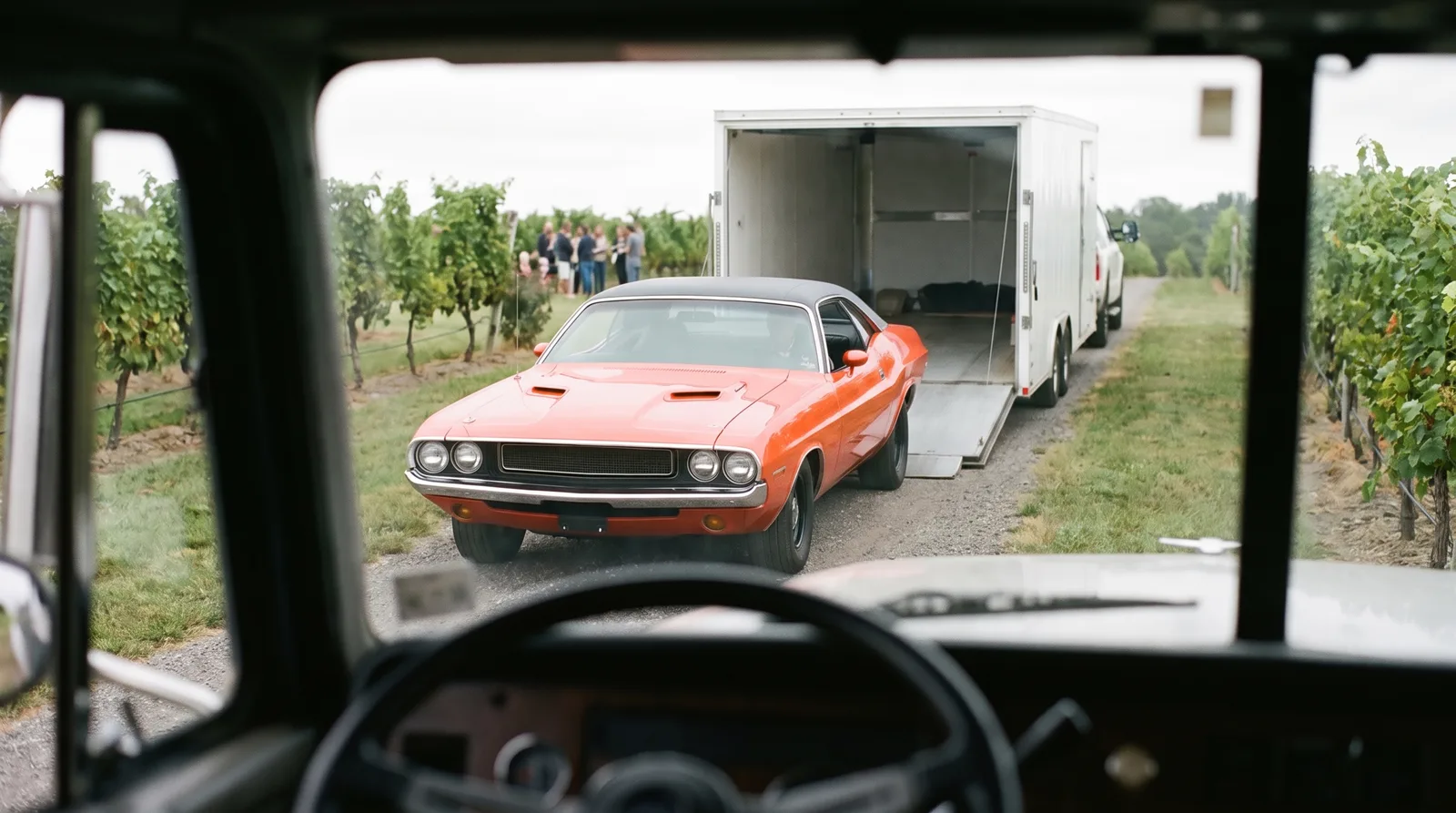
This one sticks to the shipping. Pricing, paperwork and the rest of the sale have their own article, and there's more on this in the main guide. What follows starts at the moment you and the buyer shake hands over the phone and ends when the taillights go around the corner.
Get paid first, then talk trucks
The order of operations is the whole game. Money lands, money clears, then the car gets loaded. Not the other way around, and not "the driver will hand you a check." I've heard that line more than once, and it's always attached to a buyer who was in a big hurry and very generous about the price. That's a scam, plain and simple. A real buyer pays you, confirms you've got it, and then books the truck.
Who books the truck is a fair question. The usual arrangement is that the buyer picks the transport company and pays for it, since it's his car now and his insurance interest. That suits you fine. You don't want to be on the hook if something goes sideways on I-80. If the buyer asks you to arrange it as a favor, you can, but put it in writing that he's paying the carrier directly and that the risk passes to him at pickup.
Agree on a pickup window too. Carriers don't keep appointments like a dentist. A "pickup date" usually means a window of one to five business days, and the driver typically calls a day or two ahead, then again a few hours before he arrives. Plan to be home, or have somebody reliable there with the keys.
Open or enclosed, broker or carrier
Two choices come up every time, and the buyer will probably ask your opinion on both.
Open transport is the same kind of double-deck trailer that hauls new cars to dealers. It's cheaper and there are more of them on the road, so it's quicker to book. The car rides out in the weather and road grit. For a solid driver with older paint, that's usually fine. Enclosed transport puts the car in a box trailer, out of the rain and away from the stones, and it costs noticeably more. For a fresh restoration, a concours car or anything low-slung that needs a liftgate instead of steep ramps, enclosed is worth the money.
| Factor | Open trailer | Enclosed trailer |
|---|---|---|
| Rough cost, coast to coast | Often roughly $1,400 to $2,500, by route and season | Commonly a third to a half more than open |
| Weather and road debris | Exposed | Protected |
| Booking speed | Usually faster, more trucks | Can take longer to schedule |
| Loading | Ramps, sometimes steep | Often liftgate or low-angle ramps |
| Best for | Drivers, solid #3 and #4 cars | Fresh restorations, high-value or low cars |
The other choice is broker or carrier. A carrier owns the trucks. A broker takes your order and posts it to a load board for carriers to pick up. Most of the companies you find online are brokers, and that's not a bad thing, they find trucks you'd never find yourself. Just know who's actually showing up. Ask for the carrier's name and USDOT number once the load is assigned, and look it up.
Now, if the car doesn't run, say so when you book. A non-runner has to be winched on, not every driver has a winch, and most companies charge extra for it, often $100 to $250 over the price for a running car. A buyer who's taking on a project usually knows this already, but it's worth reading more on selling a non-running classic car deals before you quote anybody a delivery date. Telling the dispatcher it runs when it doesn't is a good way to have the truck leave without it.
Paperwork that rides with the car
When the truck shows up, the driver will do a walkaround and mark every chip, ding and scratch on a form called the bill of lading. That's the condition report, and it matters. If something shows up damaged on the other end, that piece of paper is what decides who pays. Walk around with the driver. Don't just sign where he points. If he marks something that isn't there, say so before you sign. If he misses something that is, add it.
Take your own photos too, right there at pickup, with a time stamp. All four sides, the roof, the wheels, the interior and the odometer. Send a copy to the buyer the same day. It costs you ten minutes, and it can settle an argument before it starts.
Title handling is where folks get a little nervous, and they should pay attention. Some sellers hand the signed title to the driver in an envelope. I'd rather not. Send the signed title and the bill of sale directly to the buyer by tracked mail once the funds have cleared, and keep copies of both. The car can travel without the title in it, and the driver isn't your notary. File your state's release of liability or notice of sale once the car is gone, and pull your plates if your state keeps them with the seller.
"I've loaded a lot of old cars onto a lot of trailers, and the only ones that ever turned into trouble were the ones where somebody skipped the walkaround. Five minutes with a flashlight and a pen saves you five months of phone calls."
Gary Nowak
Getting the car ready for the truck
Don't overthink this part, but don't skip it either. Leave about a quarter tank of fuel, or less. Carriers don't want a full tank on the trailer, and the extra weight doesn't help anybody. Take out everything that isn't bolted down: the floor jack in the trunk, the registration in the glovebox, the garage door opener on the visor, the old show plaques. Personal items generally aren't covered by the carrier's cargo insurance, which covers the car itself, and they walk off.
Check the battery and make sure the car starts and steers on its own so the driver can get it up the ramps. If the parking brake is weak, tell him. If there's a trick to the ignition or the choke, write it on a card and tape it to the dash. Fold the mirrors in and take off any loose antenna. Note any fluid seeps on the bill of lading, because a few drops on the car below on a double-decker can turn into a damage claim you don't want.
Pickup day and the last handshake
When the truck pulls in, have the keys, the photo set and your copy of the payment confirmation ready. Walk the car with the driver, sign the bill of lading with your notes on it, and get a copy before the truck leaves. Then text the buyer that it's on its way, with the driver's name and phone number if he gave it to you.
After that, it's out of your hands, and that's the point. The money cleared, the title is in the mail, the condition report is on file, and the car is the new owner's problem in the best possible way. A week later you'll get a picture of it sitting in somebody else's garage. I still like getting those.
Sources and notes
- uShip: Understanding car shipping deadlines (pickup windows of one to five business days)
- Ship A Car, Inc.: How much does it cost to ship a car? (cross-country open rates and enclosed premium, updated September 2026)
- Web Auto Transport: Shipping an inoperable vehicle (non-runner surcharge)
- Web Auto Transport: Are my personal items insured during car shipping?
- 49 CFR 387.307: Property broker surety bond or trust fund ($75,000)
Transport prices move with fuel, season and route. Treat the figures above as a starting range and get two or three current quotes.
Related Reading
#sell classic car
#ship classic car after sale
#classic car transport
#enclosed car shipping
#bill of lading
#out of state sale

About the author
Gary Nowak
Lifelong Midwest rodder who has been building and driving traditional pre-war hot rods since the 1970s.
More in Market & Values

Comments
Be the first to comment on this article.