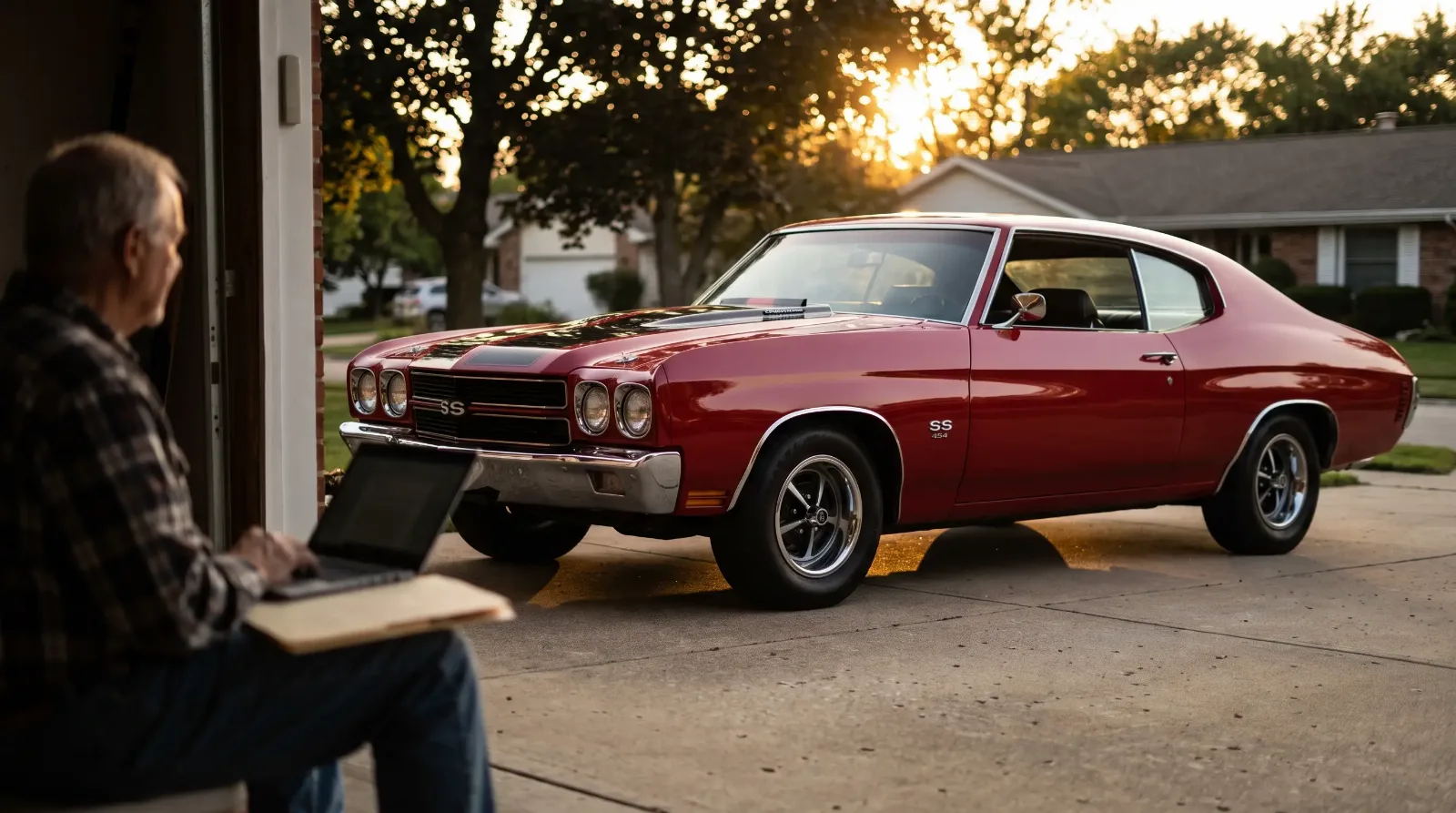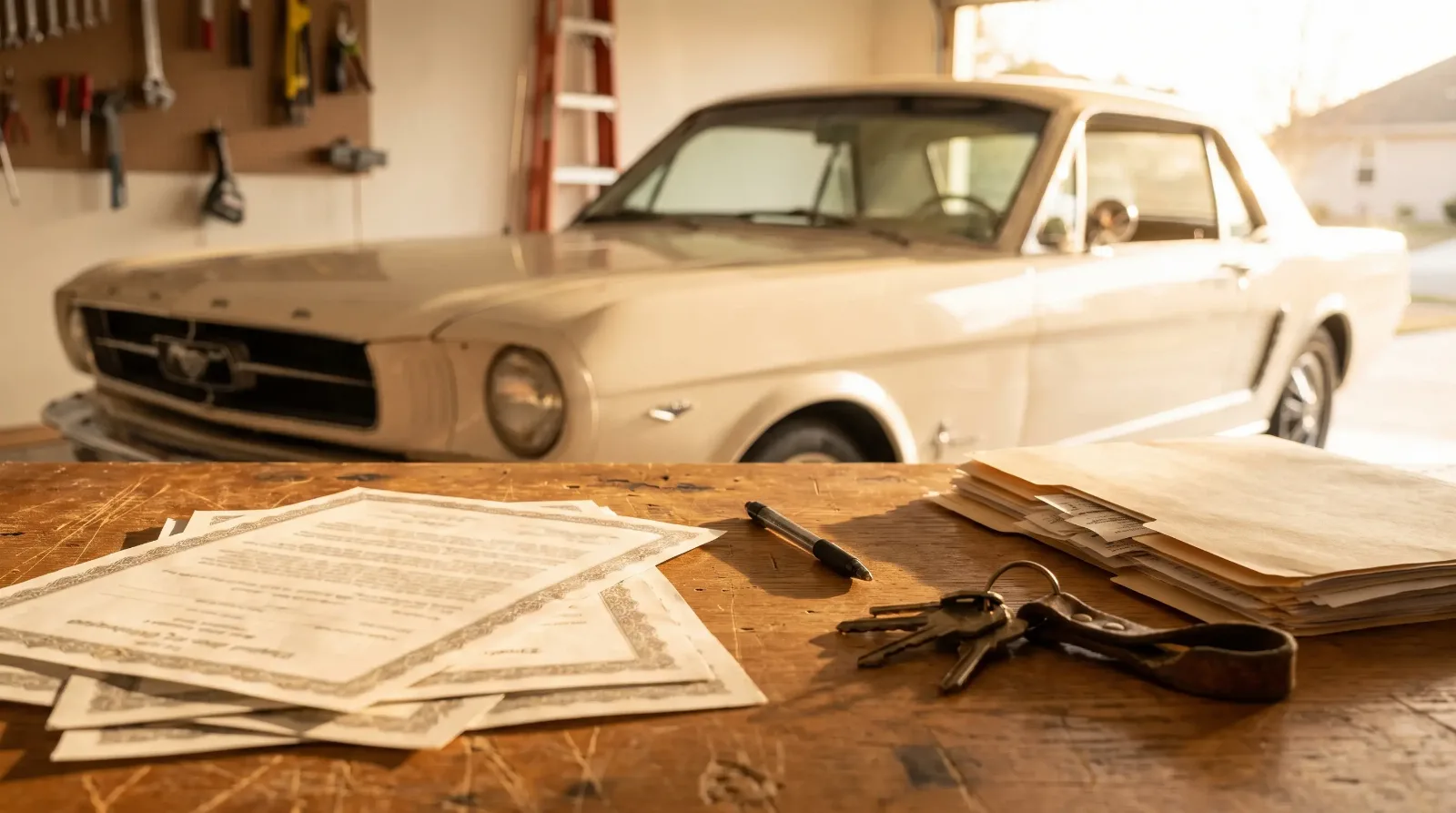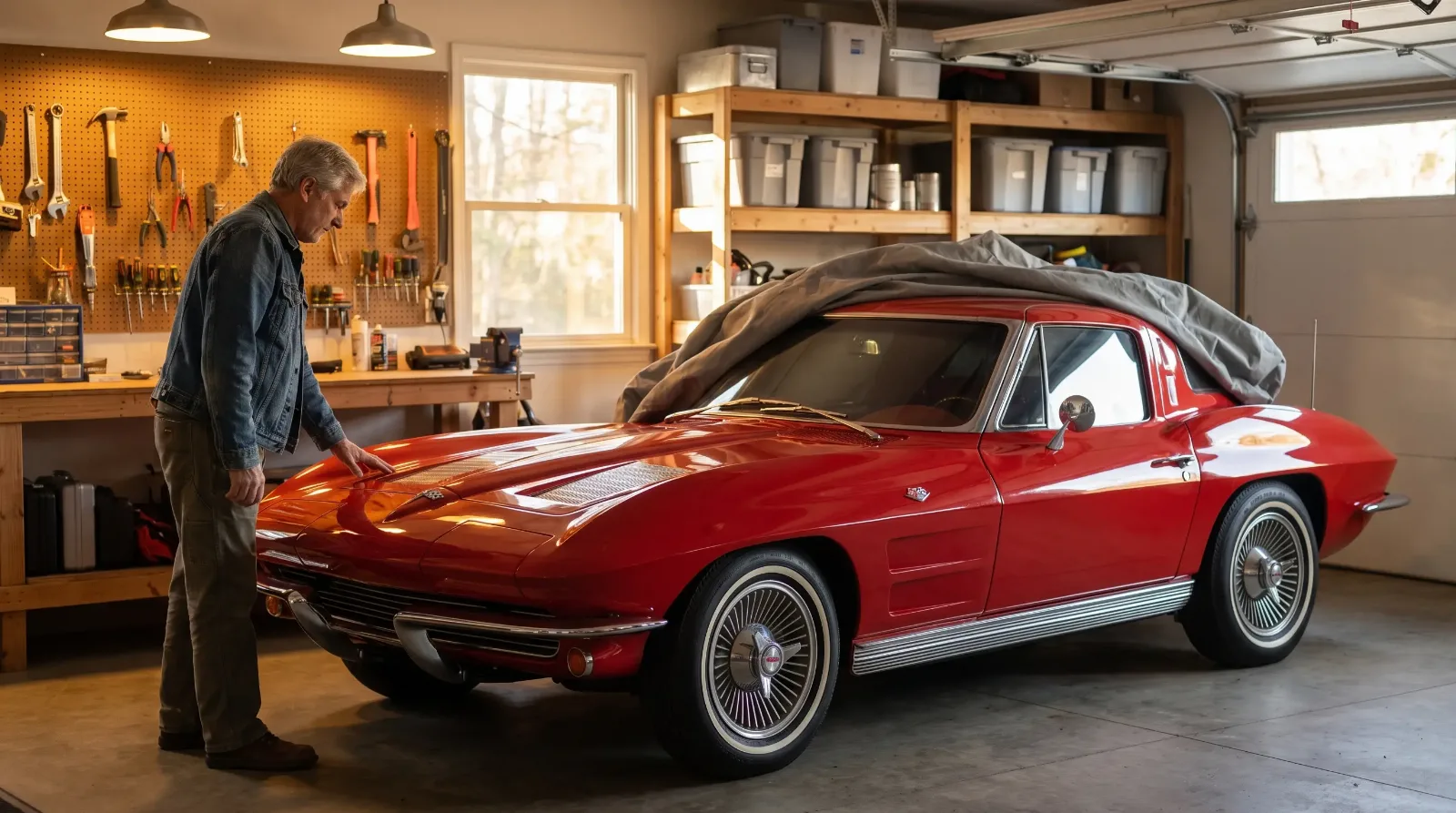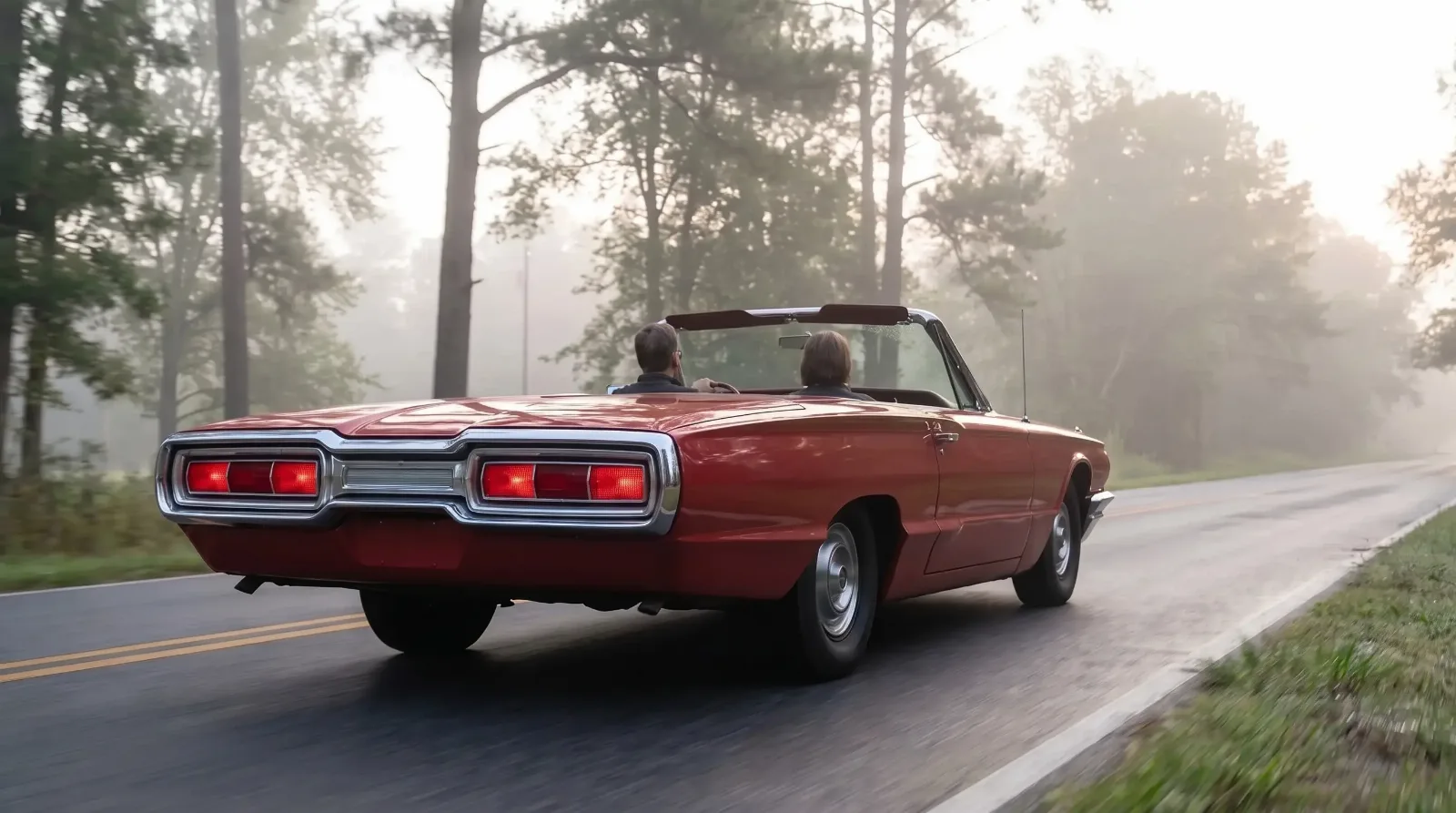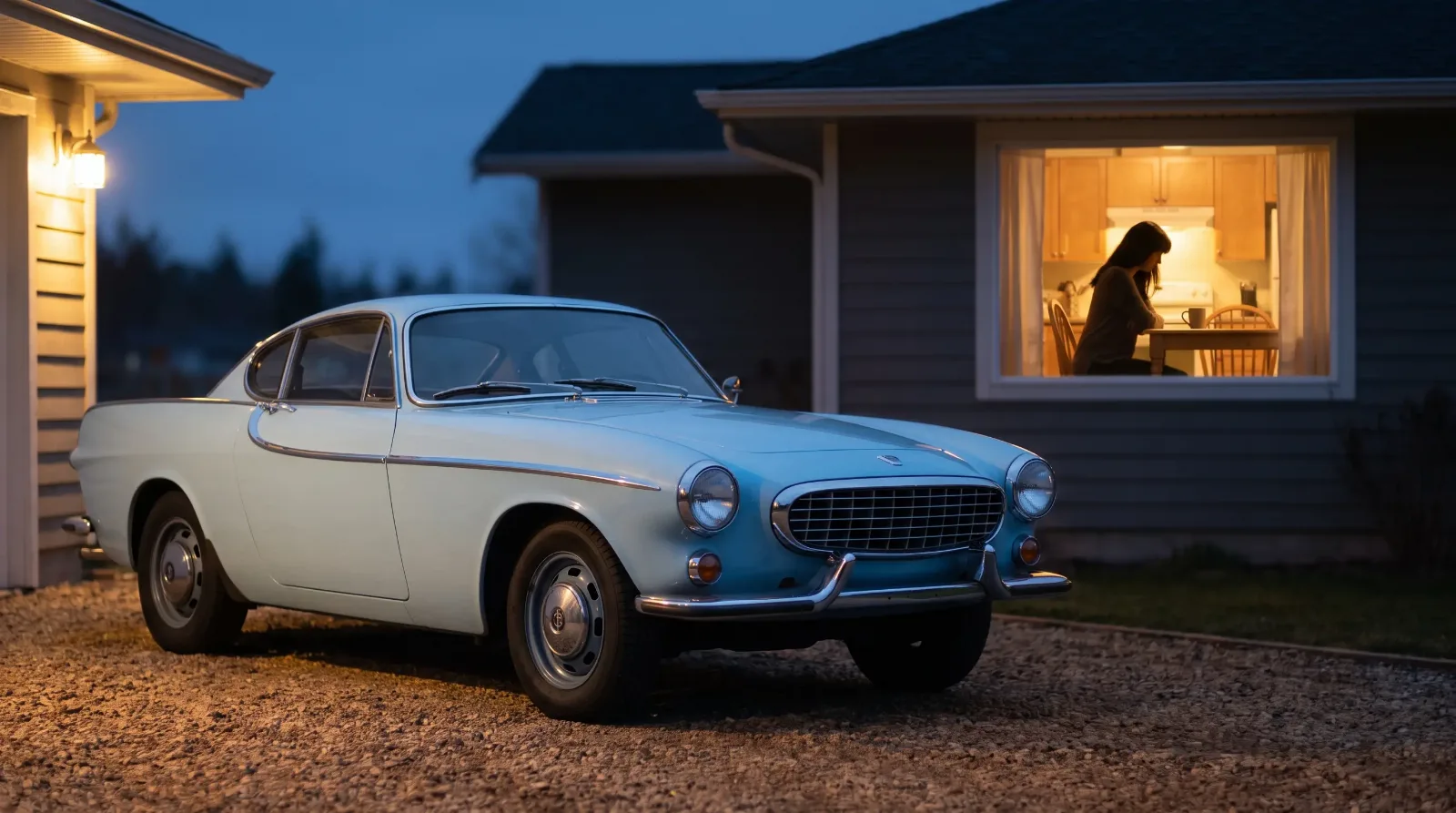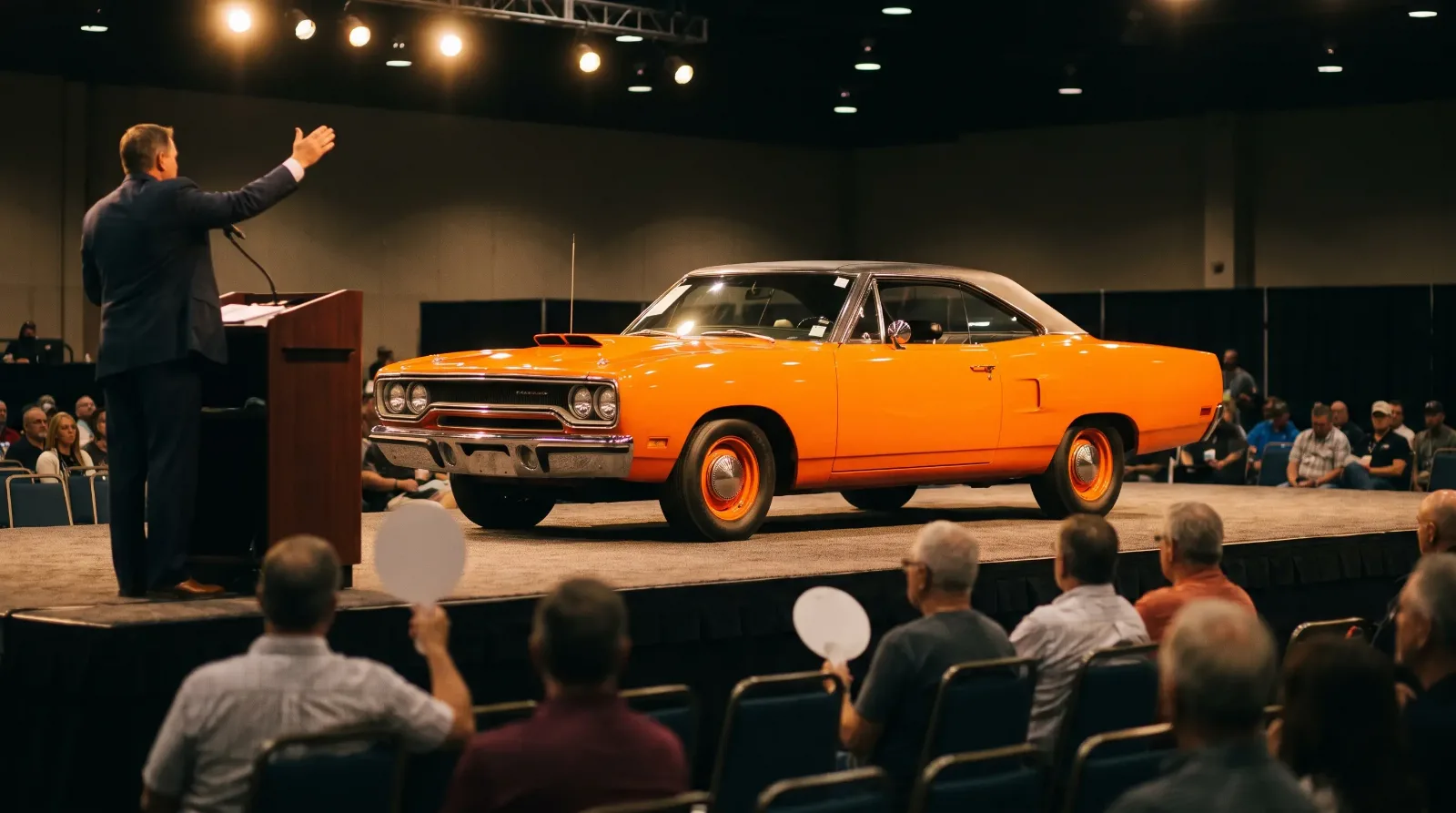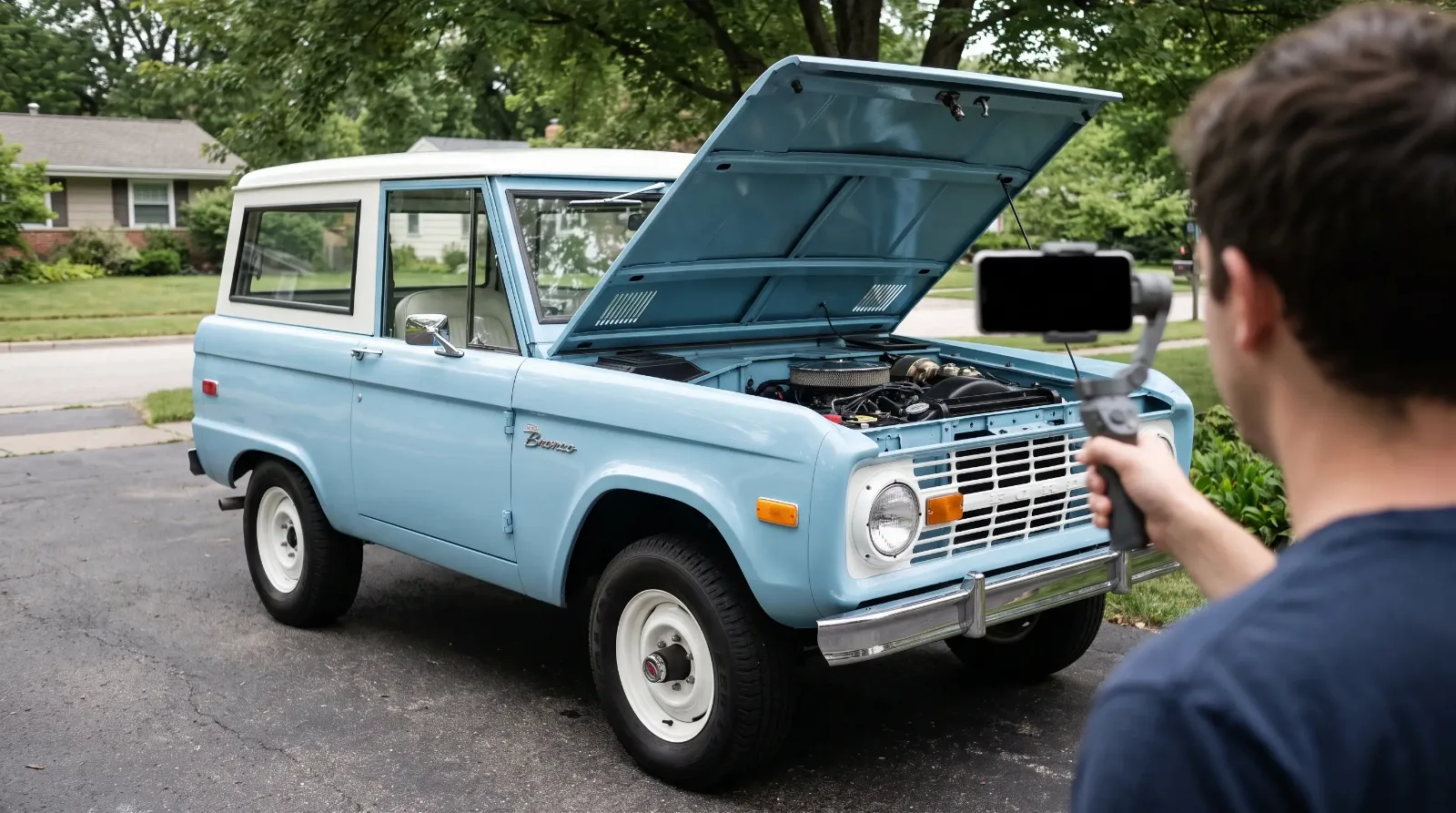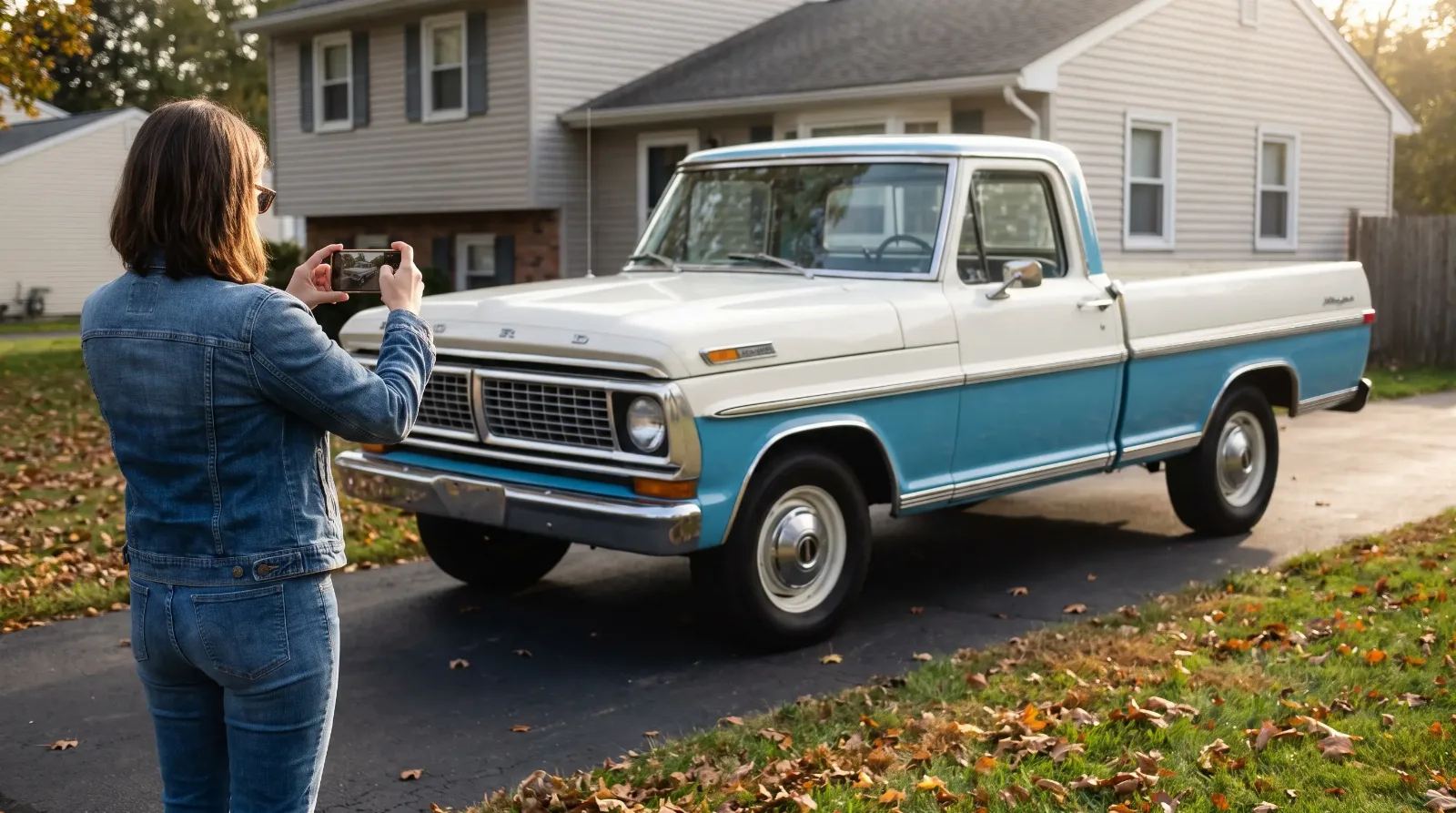
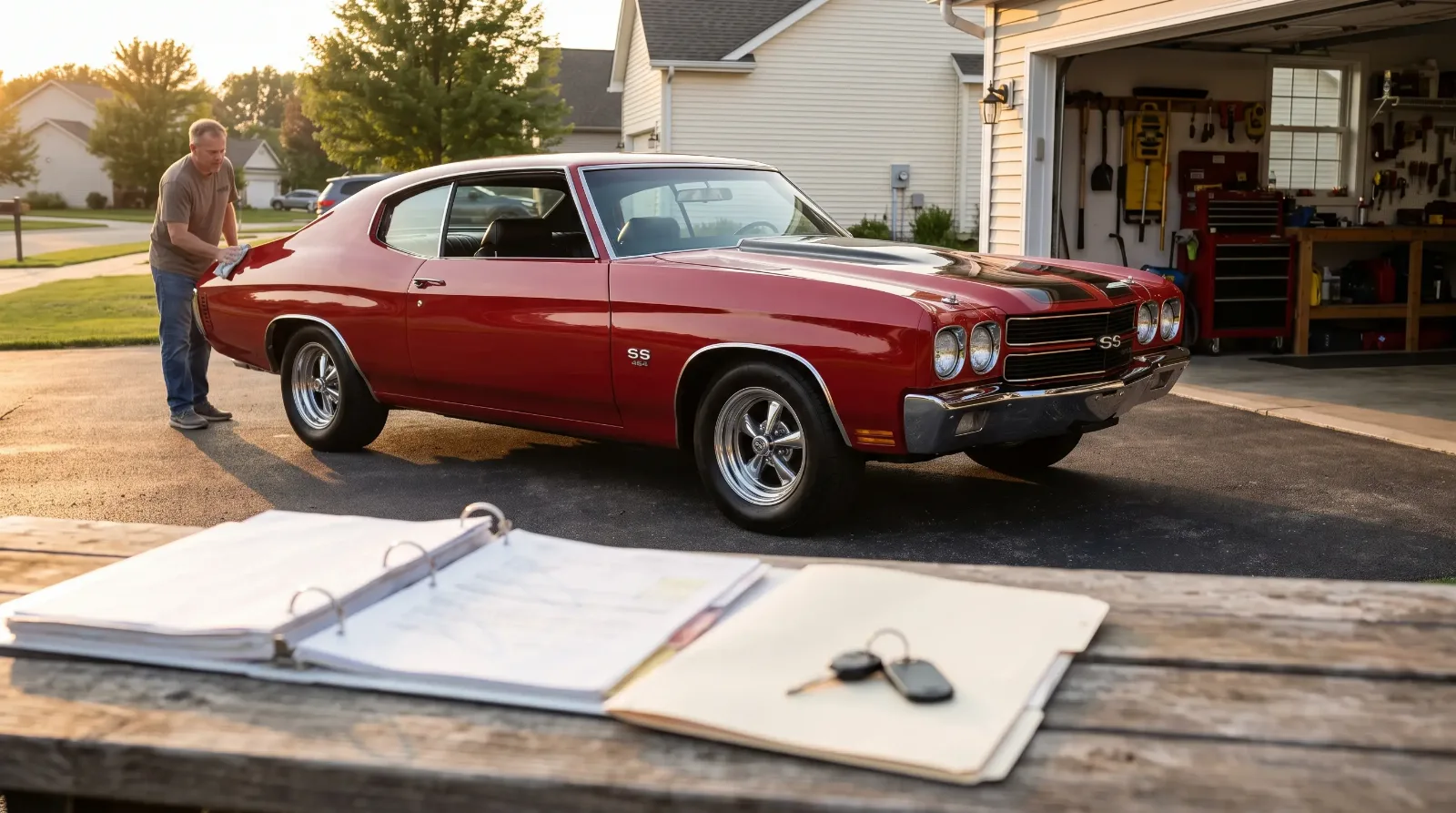
Most advice on how to sell classic car iron starts at the listing. That's backwards. By the time you're typing a description, most of the money has already been won or lost: in how you prepped the car, what paper you can hand over, and whether your price came from real sales or from a number you heard at a cruise night. The selling part is a process, and it has an order to it.
The question I hear most is some version of "how do I sell my classic car without getting taken?" The answer is the same whether you've got a vintage car from the fifties or a clean 1990s survivor. Do the steps in order, keep your paperwork tight, and don't let anybody rush you at the end, which is exactly where people get hurt. Here's the whole run, from the day you decide to sell to the day the car rolls off your driveway.
Decide why you're selling and what the sale has to do
Before you wash anything, answer two questions. How fast do you need the money, and how much work are you willing to do to get it? A seller who needs cash in three weeks and a seller who can wait six months should not be selling the same way. The fast seller trades some price for speed. The patient seller can hold out for the right buyer, but has to keep answering the phone the whole time.
Those two answers decide your channel. A private sale usually puts the most money in your pocket because nobody takes a cut, but you do all the work. An auction gives you a date and a crowd, and charges for it. A consignment dealer handles the tire-kickers and keeps a slice. If you haven't weighed those yet, read up on all your options for selling a classic before you go further, because everything below shifts a little depending on which road you pick.
Also decide your floor now, while you're calm. Write down the number you won't go under. You'll thank yourself later when a buyer is standing in your garage waving cash and talking fast.
Prep the car before anybody sees it
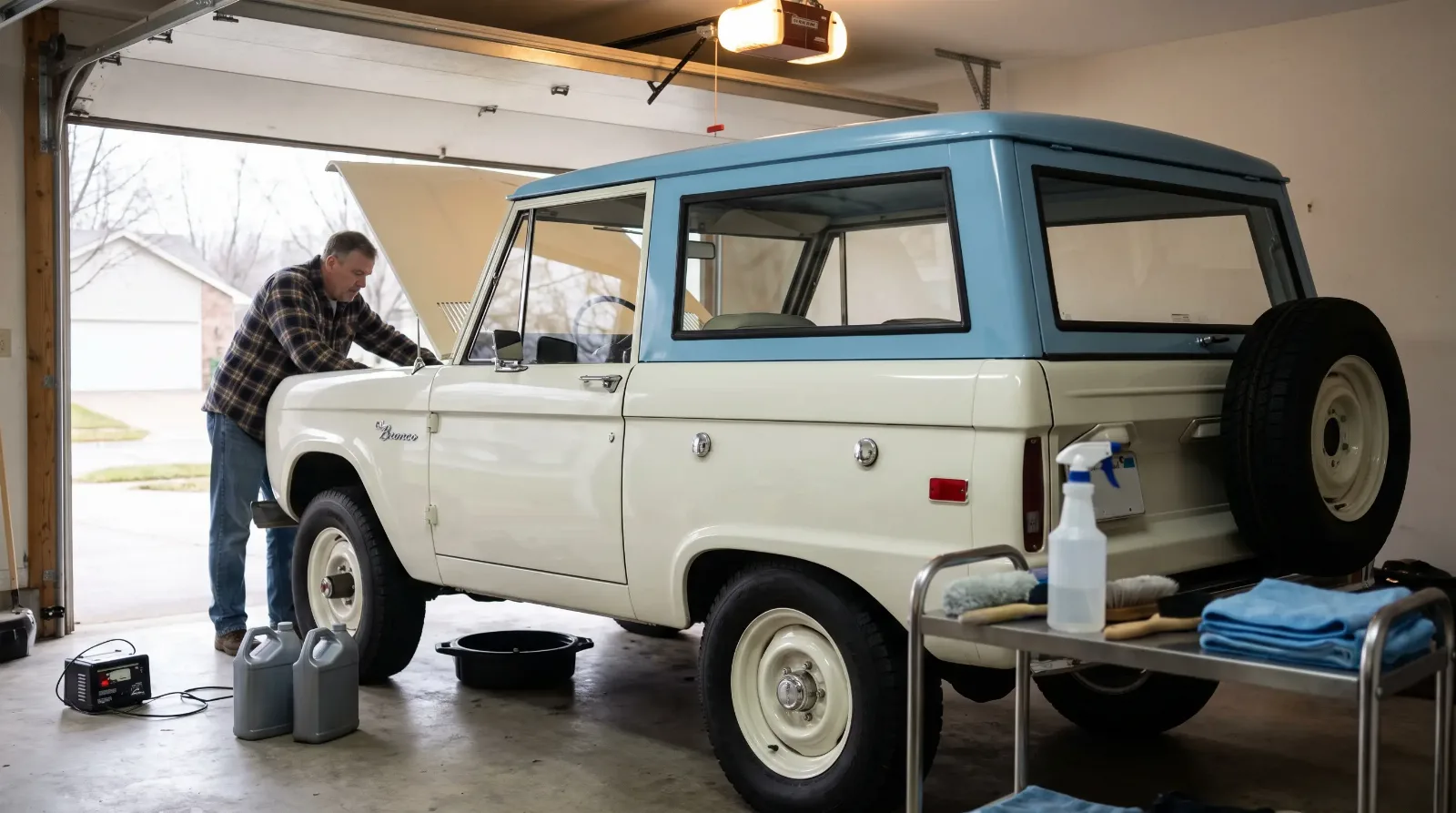
Buyers form an opinion in the first thirty seconds, and it's mostly about whether the car looks cared for. That doesn't mean a fresh paint job. It means a car that's clean, starts on the first try, and doesn't hand a stranger an easy reason to knock money off.
Start with a real detail: engine bay, door jambs, trunk, under the mats. A professional full detail usually runs somewhere around $150 to $500, depending on the size of the car, its condition and where you live, and it's the cheapest money you'll spend in this whole process. Then fix the small stuff that makes a car feel neglected. A dead dome light, a sticky door handle, a cracked lens, a wiper that chatters. None of it is expensive. All of it gets noticed.
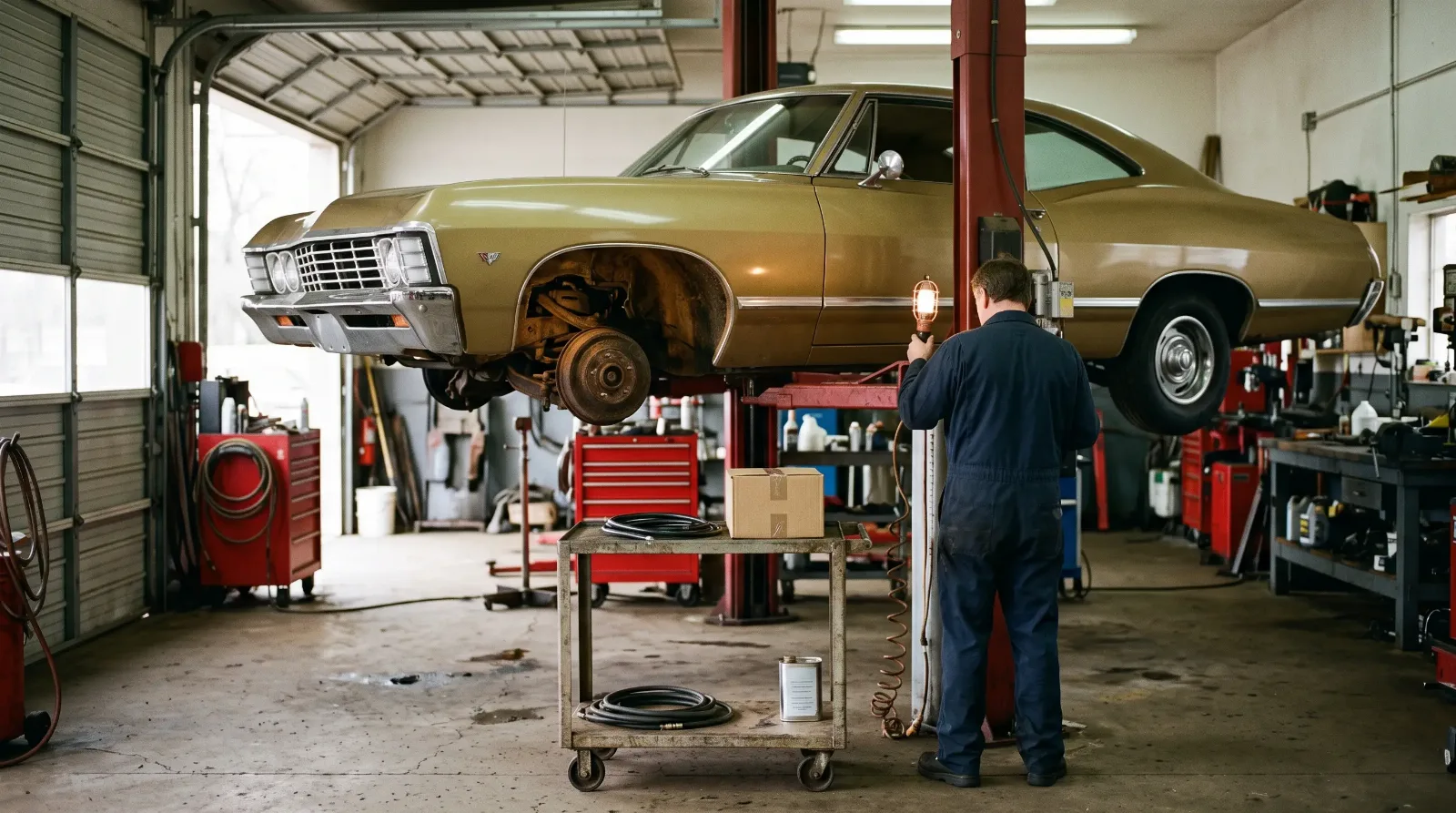
What you should not do is start a big job right before selling. Don't repaint it, don't rebuild the motor, don't swap the interior. You rarely get that money back, and a fresh repaint on a car you're dumping makes a careful buyer wonder what you were covering.
🔧 Inspection Priorities
- Fluid leaks. A puddle under the car during a showing costs you more at the table than the gasket costs to replace. Fix it, or clean it and disclose it.
- Starting and idling. A car that needs three tries and a pump of the pedal looks tired. Tune it, with fresh plugs and a battery if it needs one.
- Brakes and tires. Buyers will drive it. Old, cracked tires or a soft pedal end a test drive early and kill trust. Check the tire date codes.
- Electrical gremlins. Gauges, lights, horn, wipers, blower. Each dead item becomes a negotiating point the buyer will price at three times its real cost.
- Cosmetic small stuff. Weatherstrip, trim clips, a loose mirror. Cheap fixes that change how the whole car reads.
Pull the paperwork together
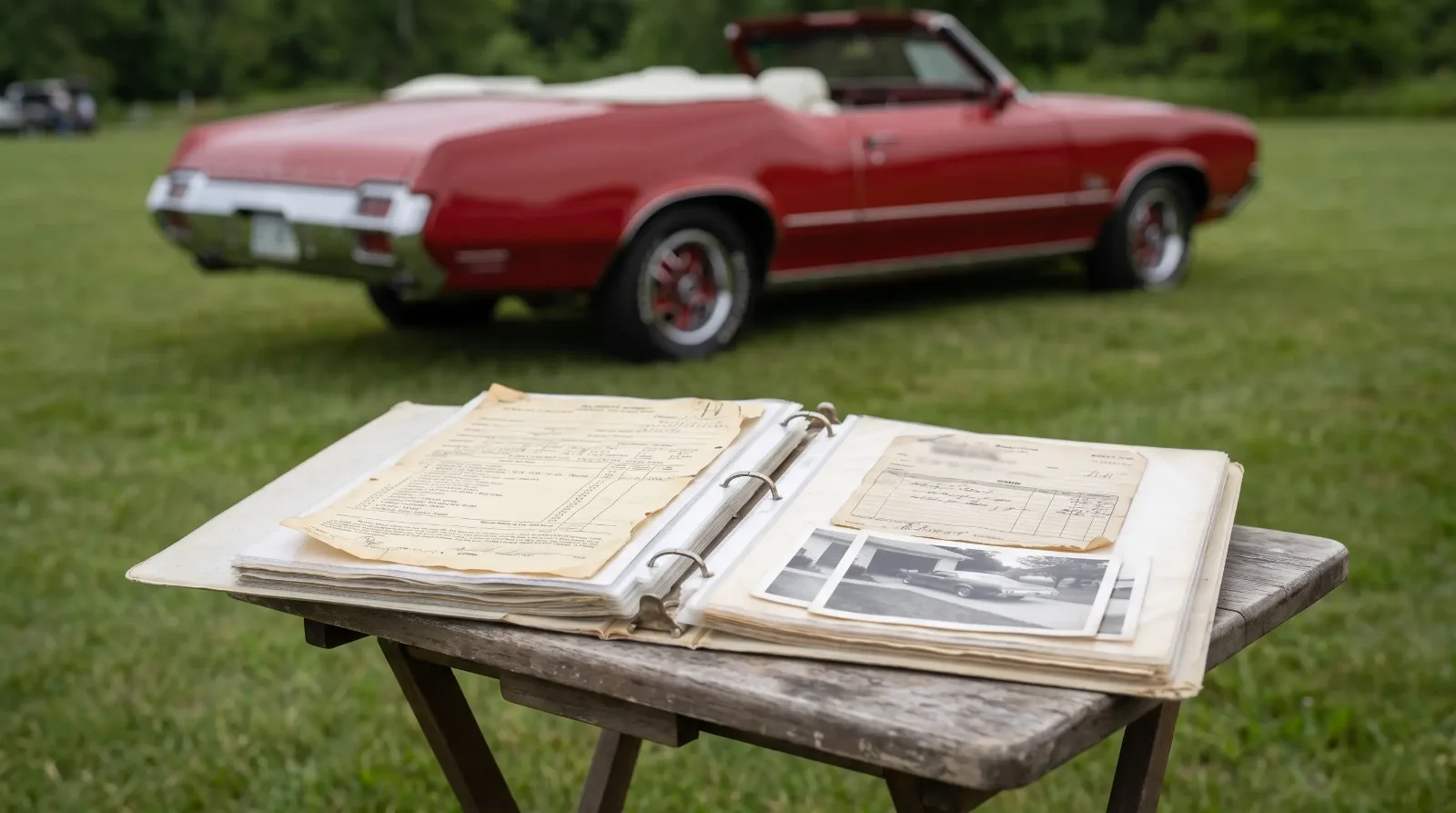
Paper sells cars. A buyer who can see where the money went pays more and argues less, and a clean title is the one thing you absolutely need before you list. Find it now, not when a buyer is on his way. If the title is lost, in a dead relative's name, or still shows a lienholder from a loan you paid off in 1994, sort that out with your state's DMV first. A duplicate title or a lien release isn't always quick, so start now.
| Document | Why it matters | If you don't have it |
|---|---|---|
| Title in your name | You can't legally transfer the car without it | Apply for a duplicate or clear the lien before listing |
| Service and restoration receipts | Proves what was done and roughly what it cost | Write a dated summary of the work you remember, clearly labeled as a summary |
| Build sheet, window sticker or factory records | Supports originality and option claims | Some makes offer factory or registry documentation for a fee, such as Marti Reports for 1967 and later Fords |
| Photos of restoration work | Shows the metal under the paint | Skip it, and never imply work you can't show |
| Owner history | A short, traceable chain adds buyer confidence | State what you know and stop there |
| Recent inspection report | Answers condition questions before they're asked | Optional; some sellers commission one on higher-dollar cars |
Put it all in one binder, in date order. Make copies, because the originals stay with you until the money clears. Then run your own VIN through a history service so nothing in it surprises you in the middle of a negotiation.
Price it on evidence, not on hope
This is where most sellers go wrong, and they go wrong upward. The car you've owned for twenty years has your memories in it. The buyer doesn't care. He's comparing your car to every other one he's seen this month.
Price from completed sales, not from asking prices. An asking price is a wish. A sold price is a fact. Look at auction results for your model, private sales you can actually confirm, and price guides that rate cars by condition tier. Then be honest about where your car sits. Most "excellent" cars are good drivers with a nice coat of wax. If you're torn between methods, our private sale, auction or consignment guide walks through how each channel changes what you'll actually net after fees.
Leave yourself some room. Set the asking price a few percent above where you'd be happy, so a buyer can win something in the negotiation without you giving up your floor. Price too high, though, and the car sits. A listing that's been up for four months tells every buyer you'll take less.
"Every overpriced car I've watched sit for a year had the same kind of owner behind it. He priced the work he did, not the car he had. Buyers don't pay for your receipts. They pay for what's in front of them."
— Mike Sullivan
Write the listing and shoot the photos
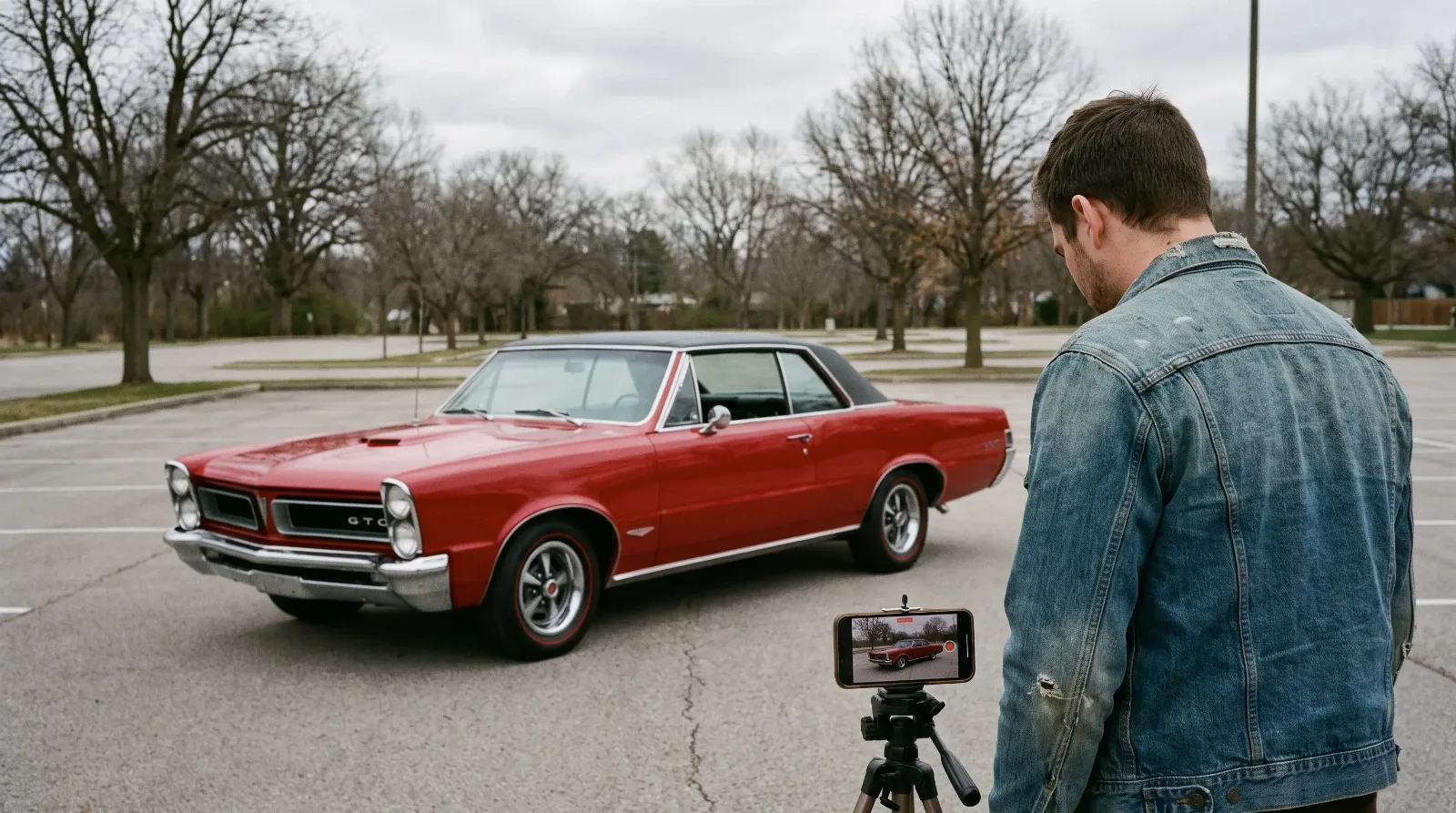
Your photos do the selling before you ever talk to anyone. Shoot in open shade or overcast light, not harsh noon sun and not in a dark garage. Clear the background: no trash cans, no other cars, no lawn mower parked behind the bumper. Then take more pictures than you think you need. I aim for at least forty on a classic, because buyers who can't see the car in person want to see all of it.
For the write-up, lead with the facts: year, make, model, engine, transmission, mileage, color, and how long you've owned it. Then the history, what's been done and when. Then the honest part, what isn't right. Skip the adjectives. "Runs and drives, no smoke, recent brakes" beats "head-turner, must see" every time, because buyers have learned that the second one usually means trouble.
Handle buyers, inspections and test drives
Once the listing is up, you'll hear from real buyers, dreamers, and scammers. Real buyers ask specific questions about the car. Dreamers ask "what's your lowest price?" before they've asked anything else. Scammers want to buy sight unseen, pay more than you asked, and send a "shipper" with a check. Ignore that last group completely.
Talk on the phone before anybody visits. Five minutes tells you a lot. When they come, meet in daylight, have someone else around, and keep the title locked away. It doesn't come out until the money is settled.
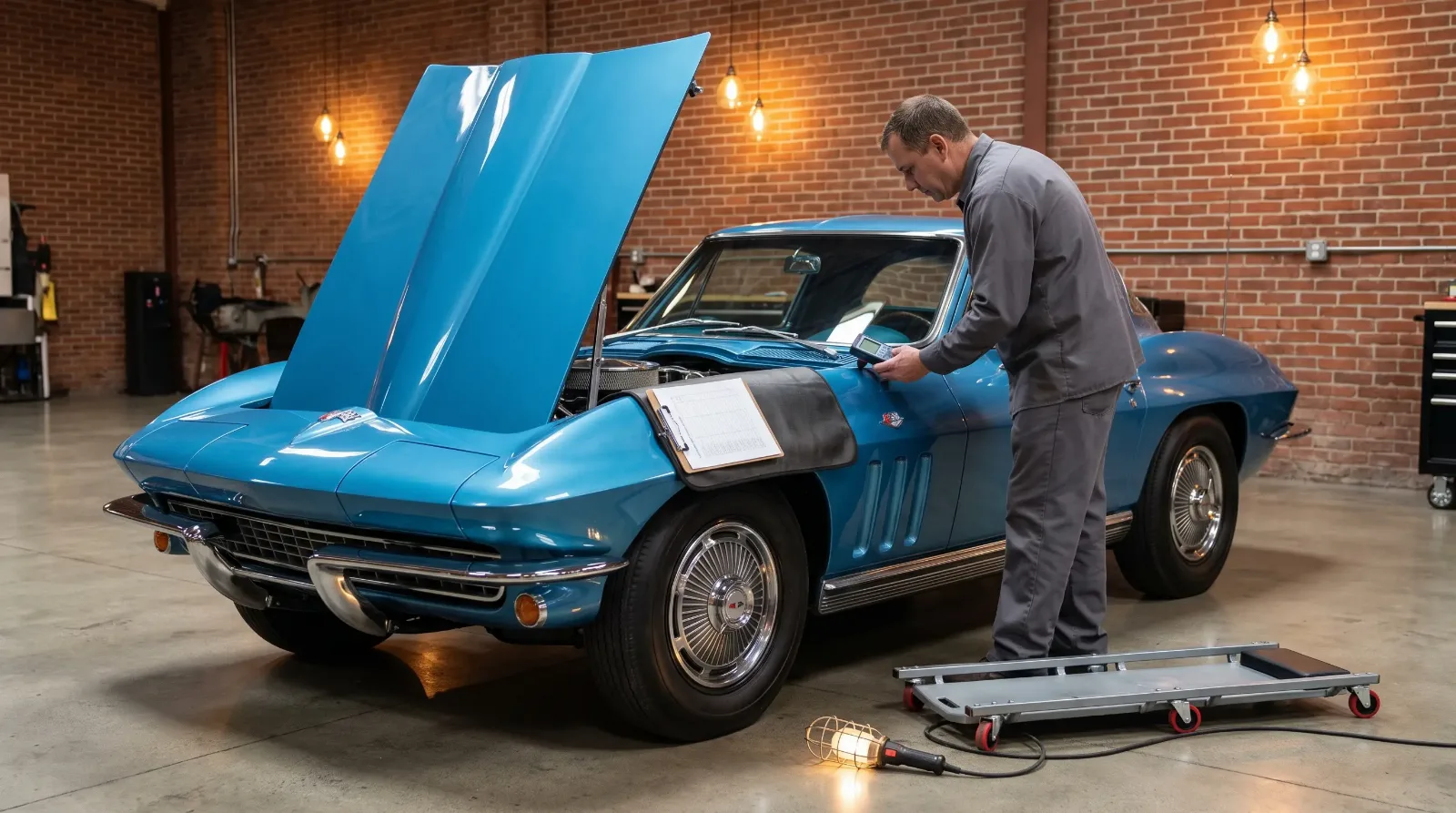
On test drives, check the driver's license and take a photo of it. Confirm they're insured, and call your own insurer before the first showing. In most cases coverage follows the car, but some policies cut the limits when someone else is driving. You ride along, every time. And if a serious buyer wants a pre-purchase inspection, say yes. Let them pick the shop and pay for it. A general shop usually charges a few hundred dollars or less, and a marque specialist can charge more. A seller who refuses an inspection loses the good buyers, the ones who were ready to pay.
If a buyer is out of state and won't travel, that's normal for classics now. Offer extra video, a live video call walking around the car, and access for a local inspector of their choosing.
Negotiate, get paid safely and hand it over
Expect an offer under asking. Don't take it personally and don't answer right away. Counter once with a real number, and if they bring up a flaw, ask what they think it costs to fix. Often they don't know, and the discount shrinks. If they come in under your floor, thank them and let them walk. Some come back.
Getting paid is the step where sellers lose cars. The safe options are a bank wire you confirm has landed in your own account, a cashier's check you verify by calling the issuing bank at a number you looked up yourself (not the one printed on the check), or cash counted at your bank. Escrow services exist for bigger long-distance deals. They charge a percentage of the price, and the buyer and seller can agree who pays it or split it. Personal checks, payment apps for large sums, and overpayment "refunds" are how cars disappear. No title, no keys, and no car leaves until the funds are cleared, not just "pending."
Then the paperwork. Write a bill of sale with both names and addresses, the date, the VIN, the price, the mileage, and the words "sold as is, where is." Both of you sign it, and each keeps a copy. Some states require a notarized title signature; Ohio, for one, wants the seller's signature on the title notarized. Sign the title over exactly as your state requires, then file a notice of sale or release of liability with your DMV within your state's deadline (California gives you five calendar days), so you're not on the hook for the new owner's parking tickets. In some states the plates stay with you; New York, for example, makes you transfer or surrender them before you cancel the insurance. Cancel your insurance only after the car is gone, not before.
If you'd rather run a private sale and keep the full price, you can sell your classic car on ClassicCarsArena for a flat one-time fee: Starter $49, Featured $99, or Premium $179. There's no commission, no success fee, and no buyer premium. The listing stays up until the car sells, the buyer pays you directly, and Featured and Premium listings go out in newsletter sends to more than 15,000 subscribers who signed up to see new listings, across the US and Canada. Bigger marketplaces put your car in front of more eyeballs, and auctions give you a hard date, so pick the one that fits the answers you wrote down at the start.
Do the steps in order and none of this is hard. Clean car, full binder, honest price, good photos, careful buyers, cleared money, signed paper. That's the job. The car goes to somebody who wants it, and you get paid what it's worth.
Sources and notes
- 49 CFR 580.17, federal odometer disclosure exemptions (Cornell LII)
- Marti Auto Works, Ford production records and Marti Reports
- Escrow.com, how vehicle escrow works
- California DMV, Notice of Transfer and Release of Liability
- Franklin County (Ohio) Clerk of Courts, title transfer checklist
- New York DMV, how to surrender your plates