
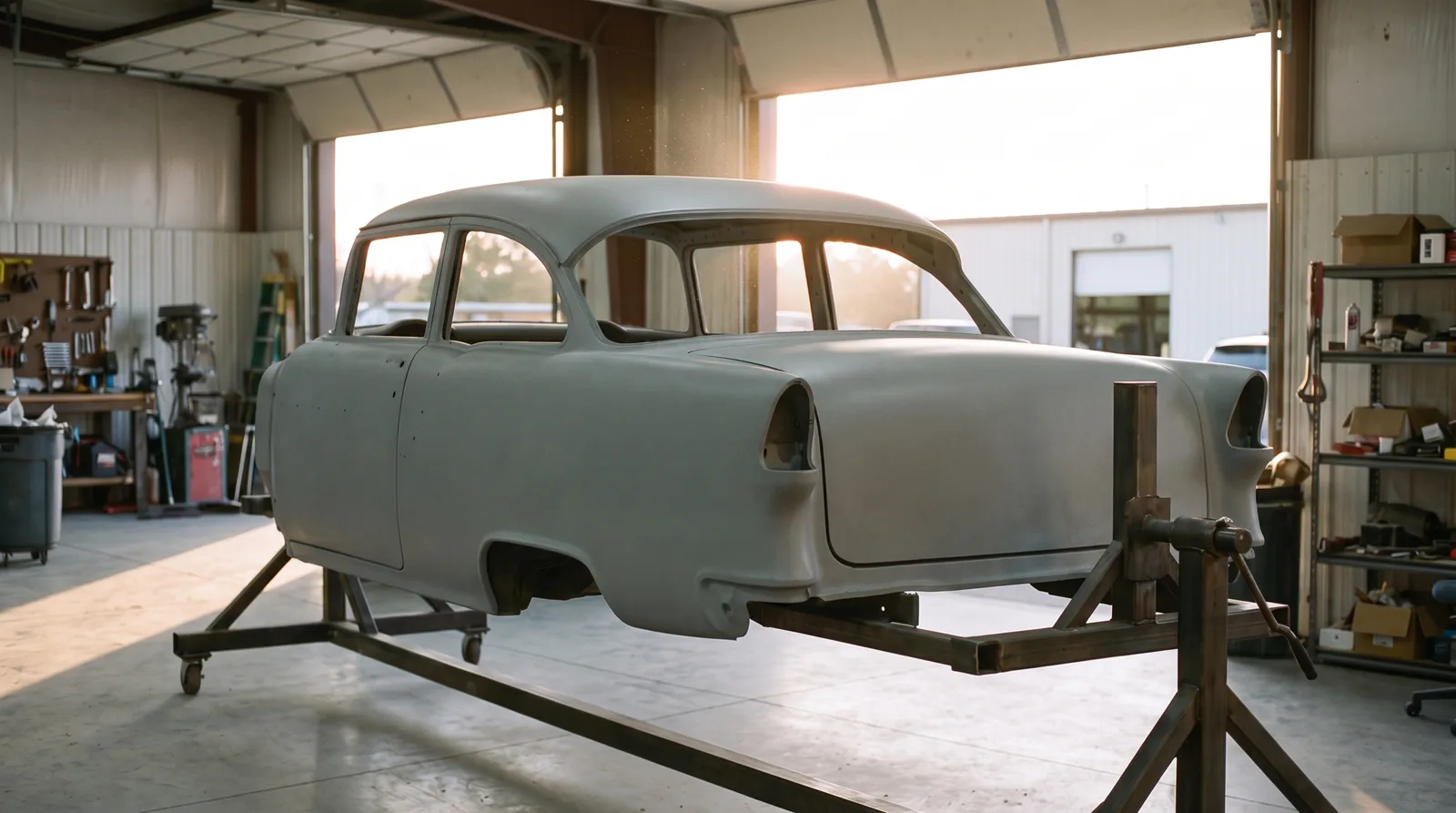
Ask ten builders what a fat-fender car is and you will get ten answers that all circle the same shape, usually somewhere between a diner coffee and a swap-meet handshake. These are the American cars built roughly from 1935 through 1948, back when the front and rear fenders swelled out into full, rounded arches instead of the flat, cycle-style guards on a Model A or a Deuce. The fenders got fat. The name stuck. And for anyone who wants a pre-1949 car that actually rides like something you can drive to dinner, this era is where the sweet spot lives.
Restoration & Tech
6 min read
Fat-Fender Street Rods of the 1940s
Why the full-fendered American cars of 1935 to 1948 ride, cruise, and hold value better than you would expect from a pre-war street rod.
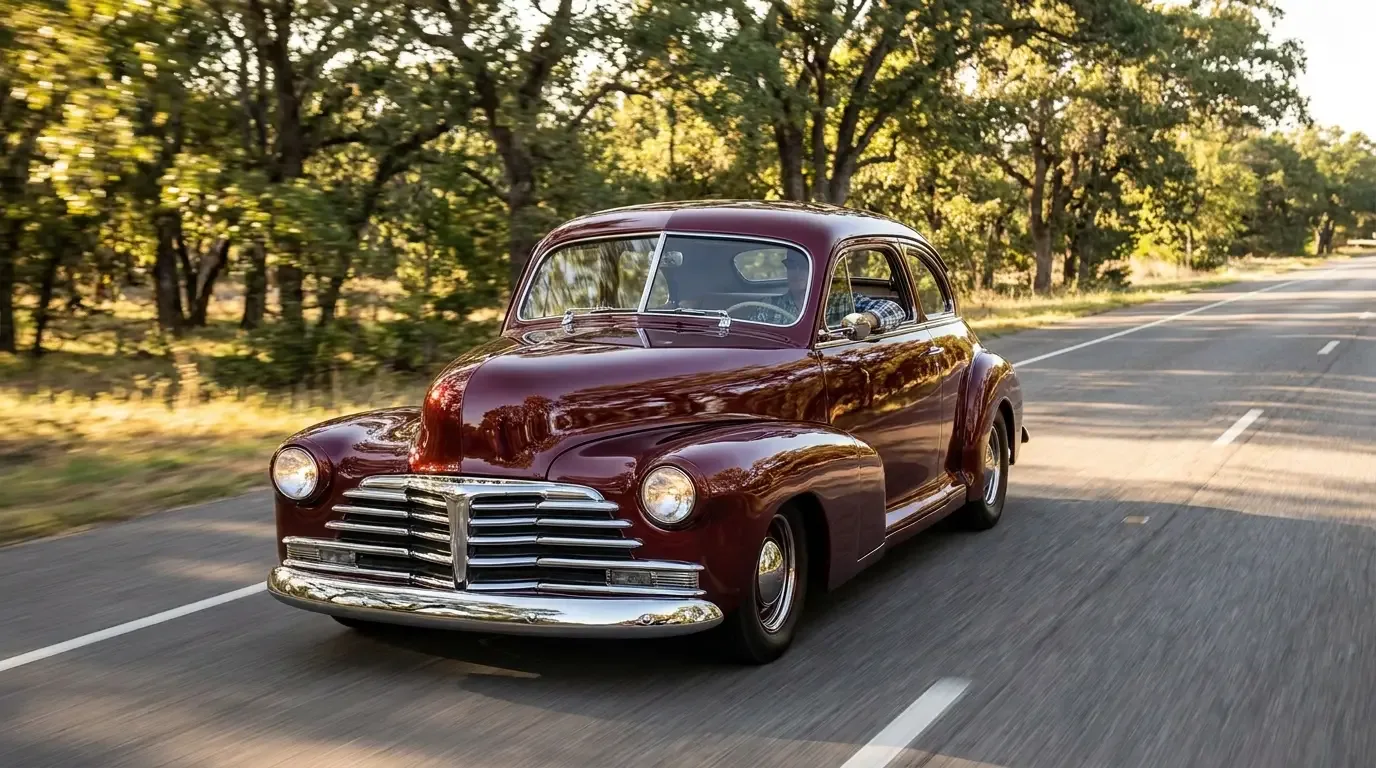
I have built cars from both sides of that 1948 line, out of a Milwaukee garage that has seen more January engine swaps than I care to count, and the fat-fender years are the ones I keep coming back to. They have the room, the weight, and the presence that the lighter early-thirties bodies just do not carry. If you are new to these street rod cars, start here before you chase the skinnier stuff. The learning curve is gentler and the payoff on the road is bigger.
What "fat fender" actually means
The term is about bodywork, not a specific brand. Around 1935 the styling houses moved away from separate, bolt-on fenders that looked like afterthoughts and started blending the fenders into the overall body with deep, teardrop arches. By the late thirties the running boards were shrinking, the headlights were moving into the fenders, and the whole car looked heavier and more integrated. That look ran until the industry stopped for the war and then picked back up on the same pre-war tooling through 1948.
That end date is not arbitrary. The National Street Rod Association drew its line at 1948-and-earlier bodies, so a fat-fender car sits comfortably inside the street rod definition. Modernize a 1946 Ford coupe with a crate small block, independent front suspension, disc brakes, and air conditioning and you have a textbook street rod. Do the same thing to a 1950 body and you are in restomod territory, which is a different club and a different conversation.
The bodies people actually build
Certain shapes dominate the fat-fender world for good reason. They photograph well, they have interior room, and enough of them were built that you can still find a solid starting point. The most common by a wide margin are the Ford products, because Ford outsold nearly everyone and because the aftermarket has spent decades tooling parts for them.
- 1940 and 1941 Ford coupe and sedan. The 1940 is arguably the most copied fat-fender shape in the hobby. The dash alone gets reproduced and dropped into other cars.
- 1946 to 1948 Ford. Coupes, sedans, and the wood-bodied and steel woodie wagons. Slightly heavier front-end styling than the 1940, and plentiful.
- 1937 to 1939 Chevrolet and Ford. The transitional years where the fenders got fat but the cars still felt lean.
- Business coupes. The long-deck, single-bench coupes were cheap when new and make superb rods because of the trunk room for fuel, batteries, and a modern rear suspension.
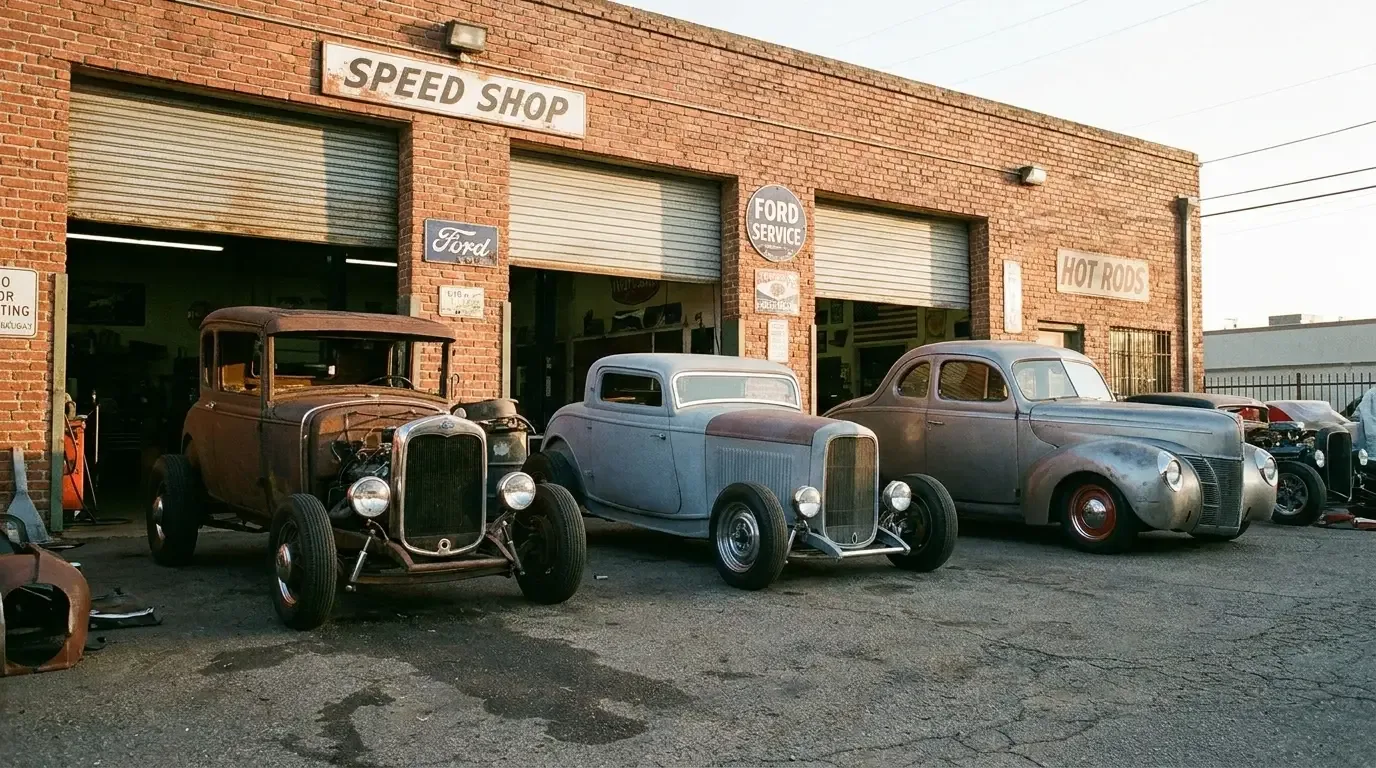
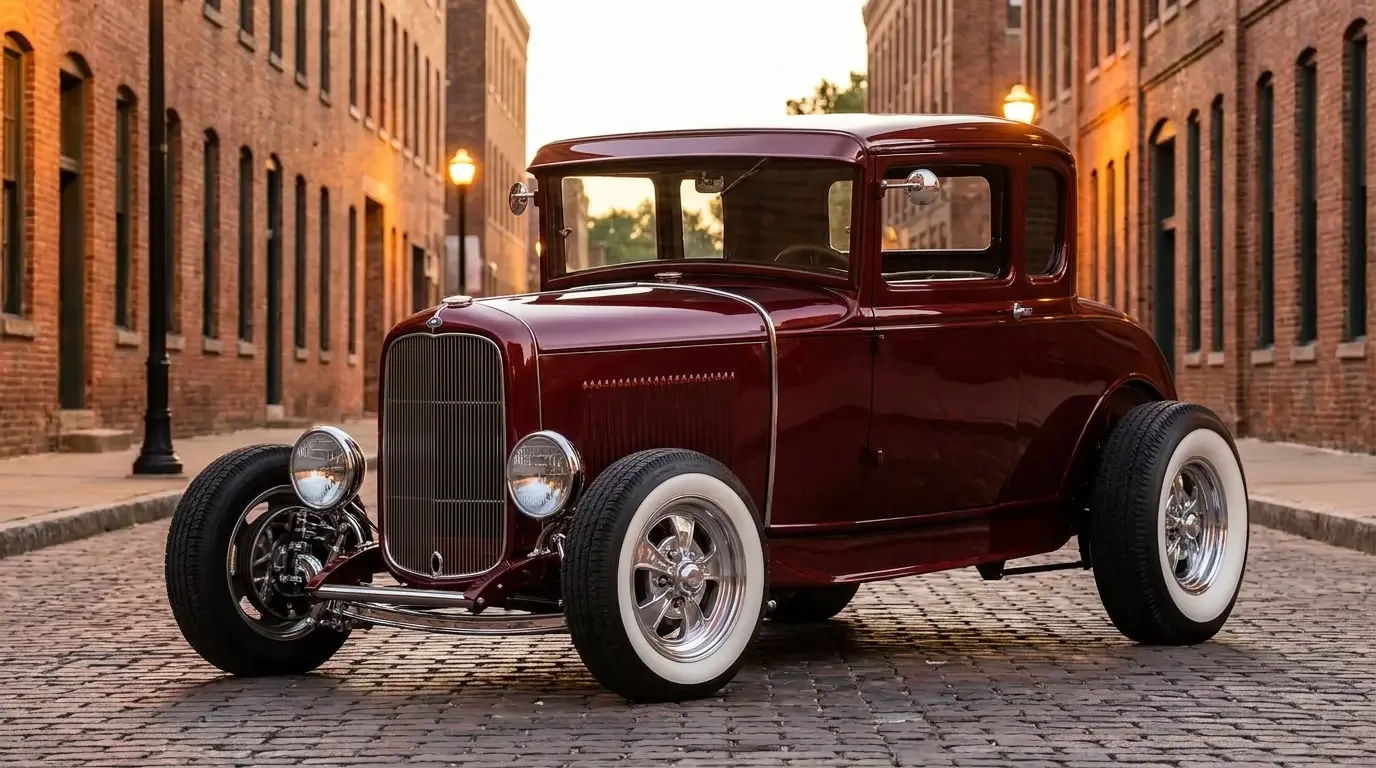
If you want the friendliest entry point of all, look one notch earlier. The Model A as a Street Rod is the classic first build, and understanding how those cars go together makes the fat-fender jump much easier because the fabrication logic carries straight over.
Why they ride and cruise so well
This is the part that surprises people. A fat-fender car, done right, is one of the most comfortable pre-war platforms you can put on a highway. Three things make that true.
First, the weight. These cars are heavier than the early-thirties bodies, and mass is your friend at speed. A heavier car settles into the road, tracks straighter, and shrugs off crosswinds and pavement seams that would toss a light roadster around. Second, the wheelbase. Most of these sedans and coupes ride on a wheelbase in the neighborhood of 112 to 118 inches, long enough to smooth out the ride without making the car feel like a limousine. Third, the interior volume. There is real headroom, real legroom, and a wide bench that a taller driver can actually live with on a four-hour drive.
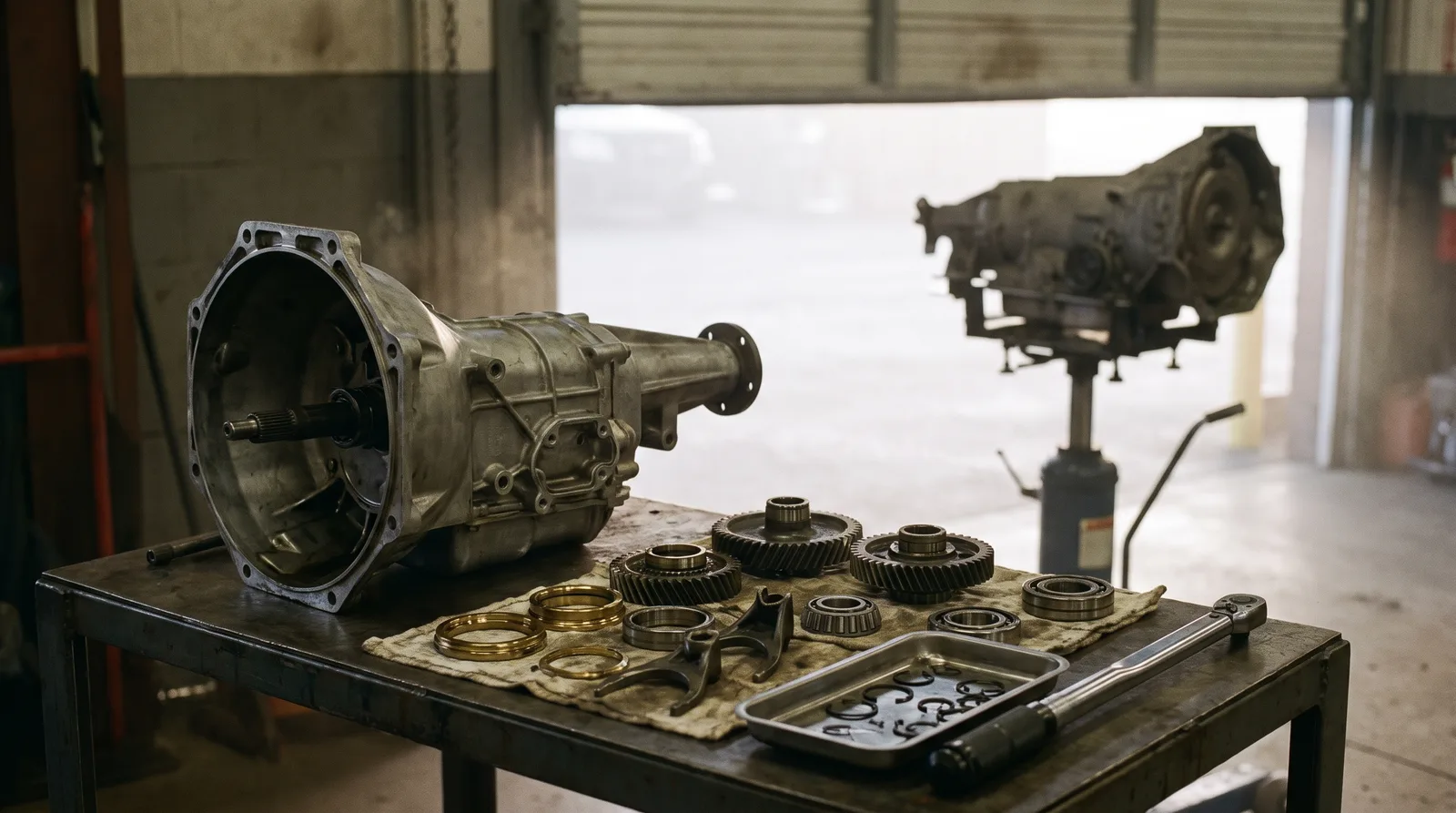
Add the modern running gear that defines a street rod and the car transforms. An overdrive automatic or five-speed drops the cruising rpm, an independent front end kills the old solid-axle wander, and disc brakes give you the stopping power the original drums never had. The result is a 1946 body that will hold 70 mph all day with the air conditioning on.
"Folks think a pre-war car has to beat you up. A fat-fender sedan with a good IFS and an overdrive is the opposite. It is the closest thing in the old-car world to a modern car that happens to look eighty years old, and that is exactly why I steer first-time buyers toward one every time."
Gary Nowak
The value angle
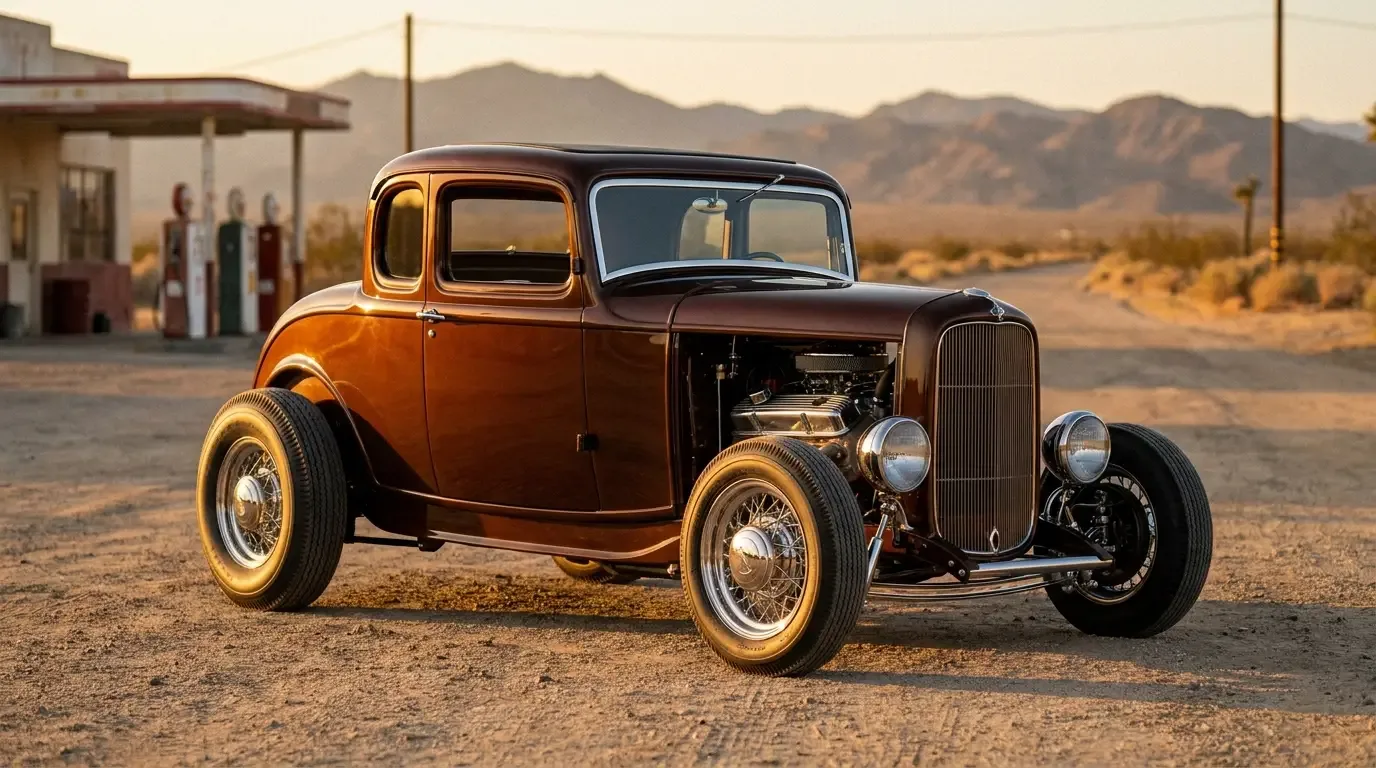
Here is where the fat-fender cars quietly make sense. The most desirable early hot rod shapes, the 1932 Fords especially, have gotten expensive to the point that a clean steel Deuce is a serious investment. Fat-fender cars have not run up the same way. You get more steel, more comfort, and a car that is arguably easier to drive, often for less money than the trophy early stuff.
They also tend to hold value steadily rather than spiking and crashing. A well-built 1940 Ford coupe or a 1947 sedan appeals to a broad group of buyers because it works as a cruiser, a show car, and a road-trip car all at once. That broad appeal is what keeps a floor under the values.
| Trait | Fat-fender street rod (1935 to 1948) |
|---|---|
| Era of body | Roughly 1935 to 1948, full rounded fenders |
| Common bodies | Ford and Chevy coupes, sedans, business coupes, woodies |
| Typical wheelbase | Around 112 to 118 inches |
| Ride character | Heavy, planted, smooth at highway speed |
| Typical drivetrain | Crate V8, IFS, disc brakes, overdrive, AC |
| Value vs early rods | Generally more car for the money than a 1932 Ford |
Sources and notes
- Period automotive press and manufacturer literature from the 1935 to 1948 model years
- National Street Rod Association event and eligibility guidelines
- Marque and body reference guides for Ford and Chevrolet passenger cars of the era
- Builder interviews and shop experience on chassis, suspension, and drivetrain choices
- Collector-car auction and club records for comparative valuation context
Related Reading
Have a
Classic Car
for Sale?
Reach thousands of serious classic car collectors across the US.
Sell It Here →
Are You a Classic Car Dealer?
List your full inventory and connect with targeted classic car buyers.
Join as a Dealer →

About the author
Gary Nowak
Lifelong Midwest rodder who has been building and driving traditional pre-war hot rods since the 1970s.
More in Restoration & Tech
Comments
Be the first to comment on this article.