
Ask a room full of builders what the first hot rod was and you will get an argument. Ask them what the most sensible street rod platform is and a lot of them quietly point at the Ford Model A. Ford built more than four and a half million of them between 1928 and 1931, so the supply is deep, the parts are everywhere, and the body is simple enough that a first-timer can actually finish a car instead of stalling out on a garage queen. The Deuce gets the magazine covers, but the Model A is what a working guy builds when he wants to drive.
Restoration & Tech
7 min read
The Model A as a Street Rod
The Ford Model A is the people's street rod: cheap, plentiful, and endlessly supported. A look at body styles, why it's affordable, and the upgrades.
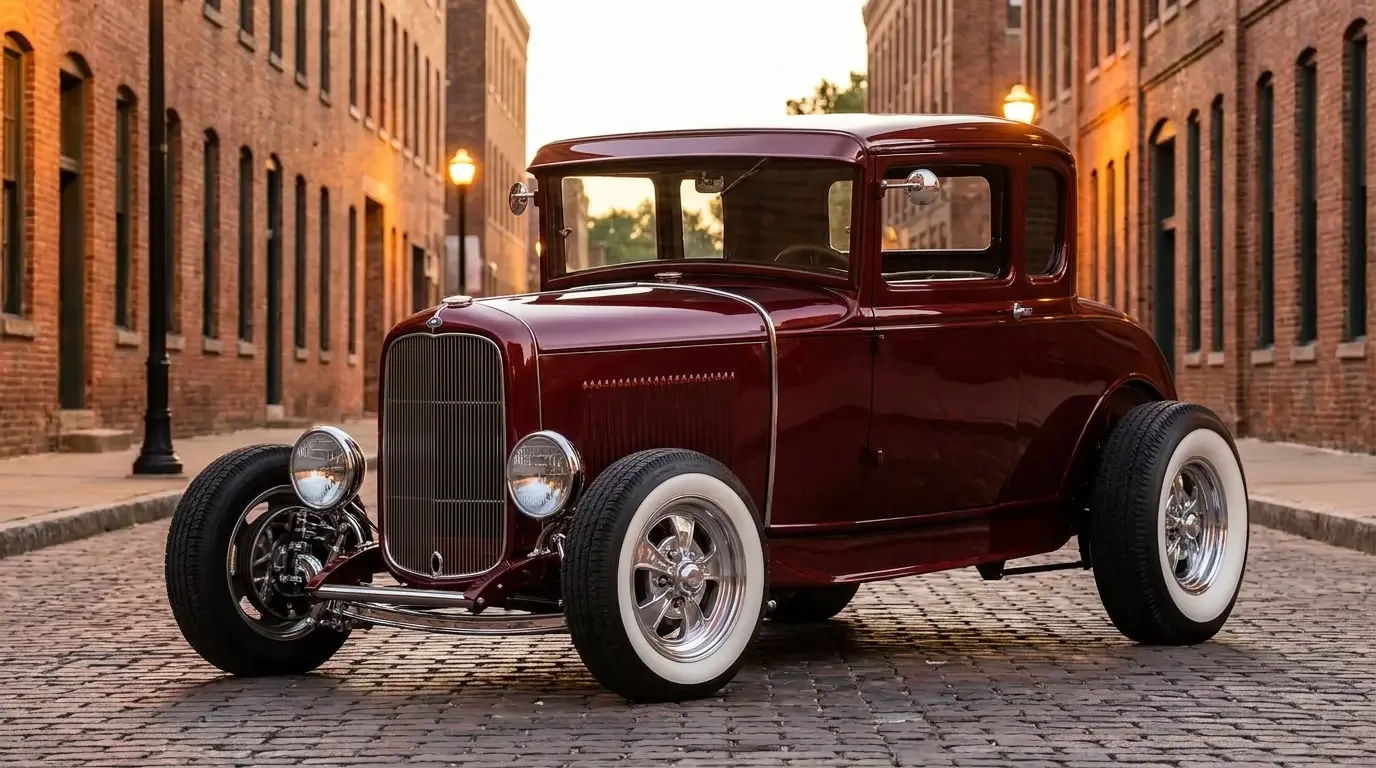
The Model A came right after the Model T and shared almost nothing with it mechanically. It brought a real 3-speed gearbox, four-wheel mechanical brakes, and a 40 horsepower L-head four that was smooth for its day. None of that matters much to a rodder, because most of it gets replaced. What matters is the body: steel, upright, honest, and available in enough variations that you can build almost any style you want without hunting for a unicorn.
The body styles and what each one wants to be
Ford offered the Model A in a wide spread of body styles, and each one pulls a build in a different direction. Knowing which shell you are starting with tells you most of what the finished car will look like before you cut a single bracket.
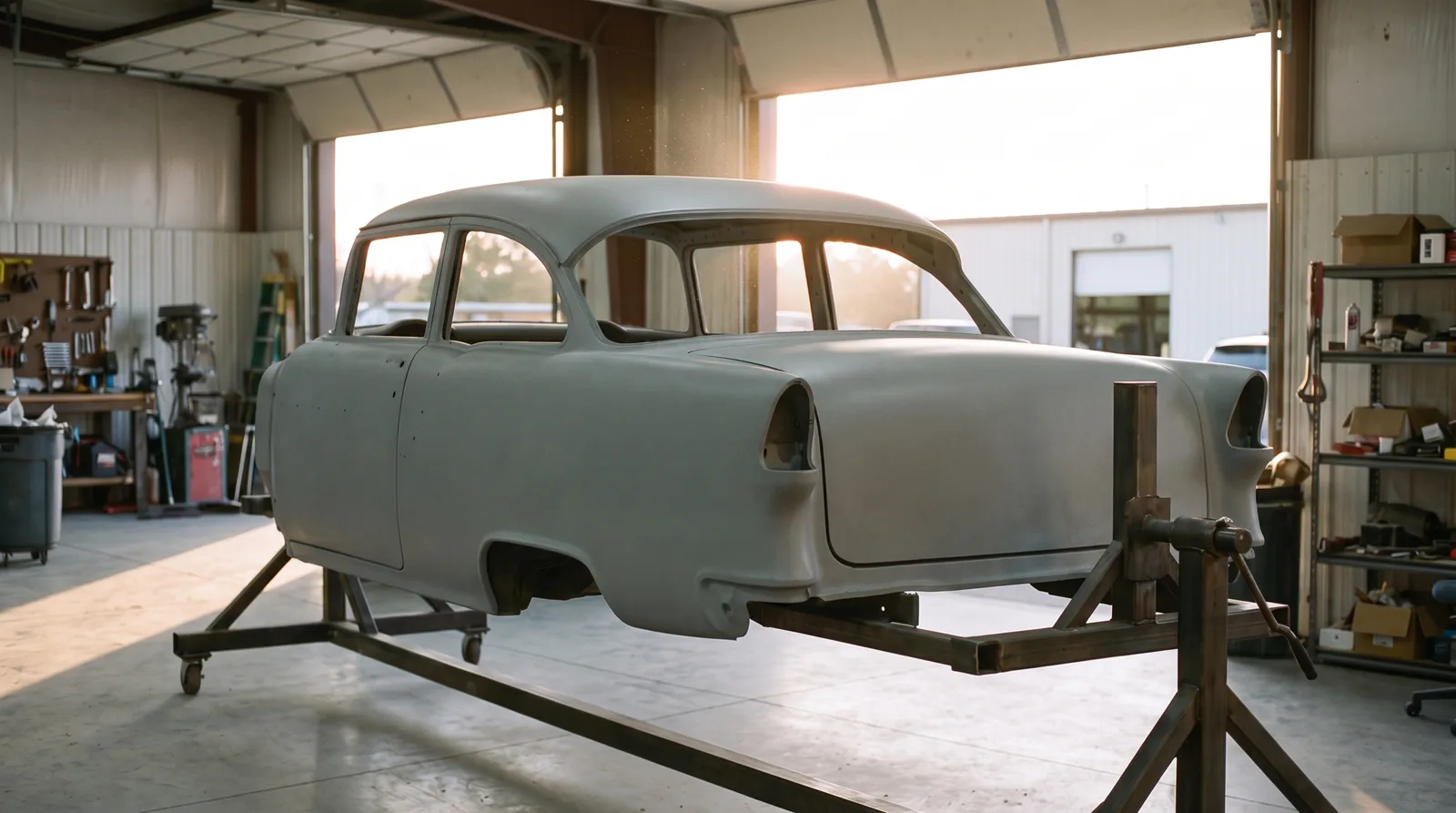
- Coupe. The five-window and the rarer three-window are the bread and butter of the hobby. Chop the top a couple of inches, drop it on a dropped axle, and you have the classic street rod silhouette. Steel coupes command the highest prices for a reason.
- Roadster. Open, light, and the purest expression of the form. An original steel roadster is expensive and getting scarce, which is why fiberglass reproduction bodies exist for exactly this shape.
- Tudor and Fordor sedan. The four-door and two-door sedans are the value play. They are plentiful, cheaper than coupes, and a chopped sedan on the right stance looks tough. This is where a lot of budget builds start.
- Pickup and closed cab. The Model A pickup gives you a bed for hauling and a genuinely useful street rod. Cab corners rust, so inspect them, but the payoff is a truck you can drive to the hardware store.
- Phaeton and cabriolet. Less common, more expensive, and a different look entirely. The cabriolet with its roll-up windows splits the difference between a coupe and a roadster.
Whatever shell you land on, the Model A sits inside a bigger family of pre-1949 builds. If you are still deciding which direction to go, it helps to read up on the broader menu of street rod cars before you commit money to one body.
Why it is affordable and plentiful
Economics is the whole story here. Ford was the volume manufacturer of the era, and the Model A was the car that put working America on the road. That production number, north of four million cars in four model years, means survivors are still turning up in barns, fields, and estate sales almost a century later.
Plentiful supply keeps entry prices honest. A rough but complete steel sedan or a solid project can still be found for a few thousand dollars, and the aftermarket does the rest. Because so many people build these cars, nearly every part you need is reproduced new. Frames, floors, running boards, glass, wiring, gauges, and complete fiberglass bodies are all sitting on a shelf somewhere, ready to ship.
"I tell every new builder the same thing. Start with a Model A sedan, not a roadster. You will spend half the money, you will actually finish it, and nobody at the show is going to look down on a clean chopped Tudor. Snobbery is for people who never got their hands dirty."
Jim Vasquez
Common upgrades that make it a real street rod
A street rod is a pre-war body modernized to drive comfortably and reliably. The Model A responds to the standard playbook, and the parts to do it are all off-the-shelf. The point is not to preserve the 1930 mechanicals. The point is to keep the steel body and put a drivetrain under it that you can trust on the freeway.
| System | Stock Model A | Typical street rod upgrade |
|---|---|---|
| Engine | 40 hp L-head four | Small-block V8 or crate engine |
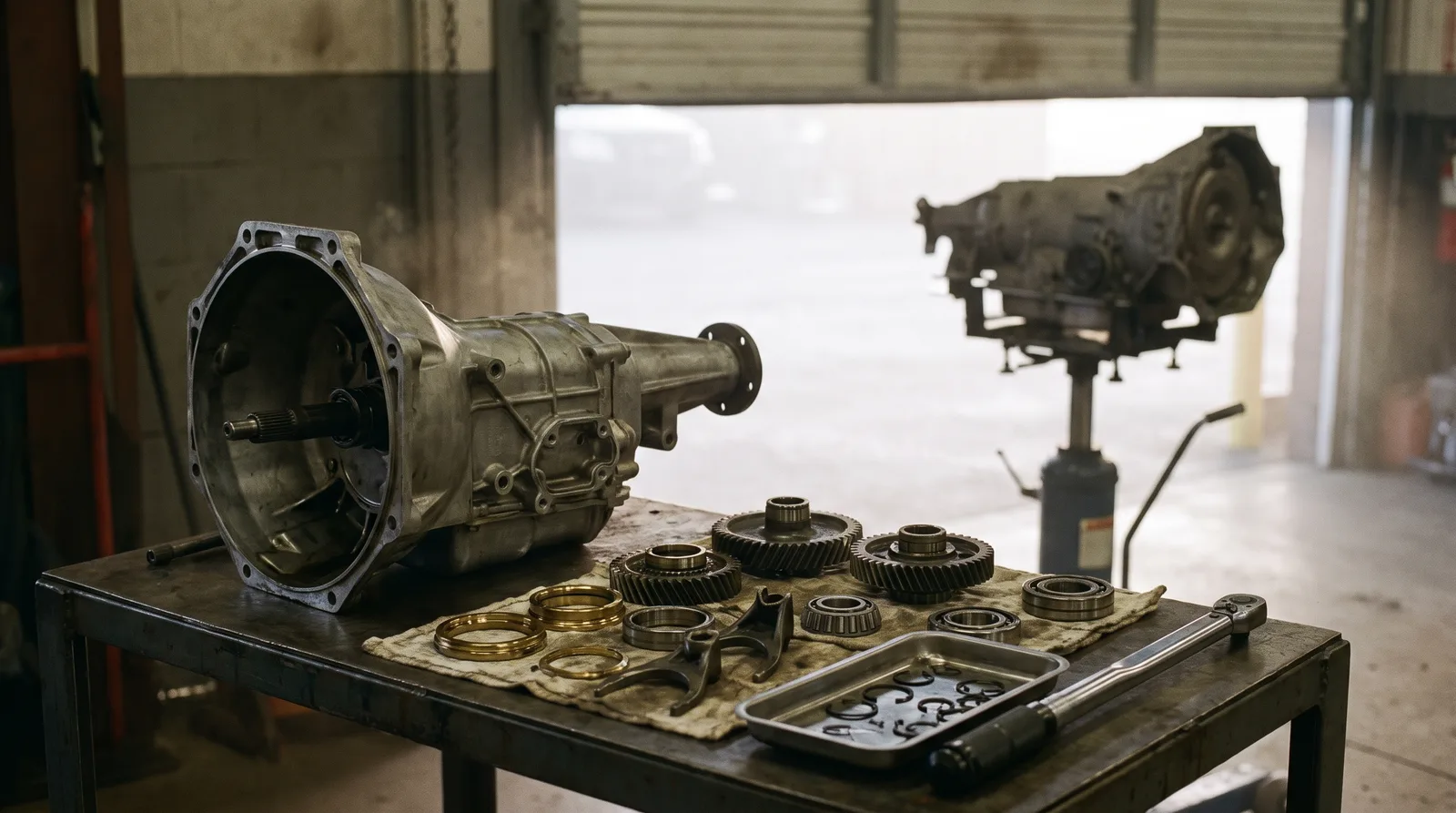
| Transmission | 3-speed manual | Automatic overdrive or 5-speed manual |
| Front suspension | Solid beam axle | Dropped axle or independent front (IFS) |
| Brakes | 4-wheel mechanical drum | Front disc brakes, dual master cylinder |
| Rear axle | Torque-tube banjo | Modern rear end with better gearing |
| Comfort | None | Heater, AC, updated wiring, sound deadening |
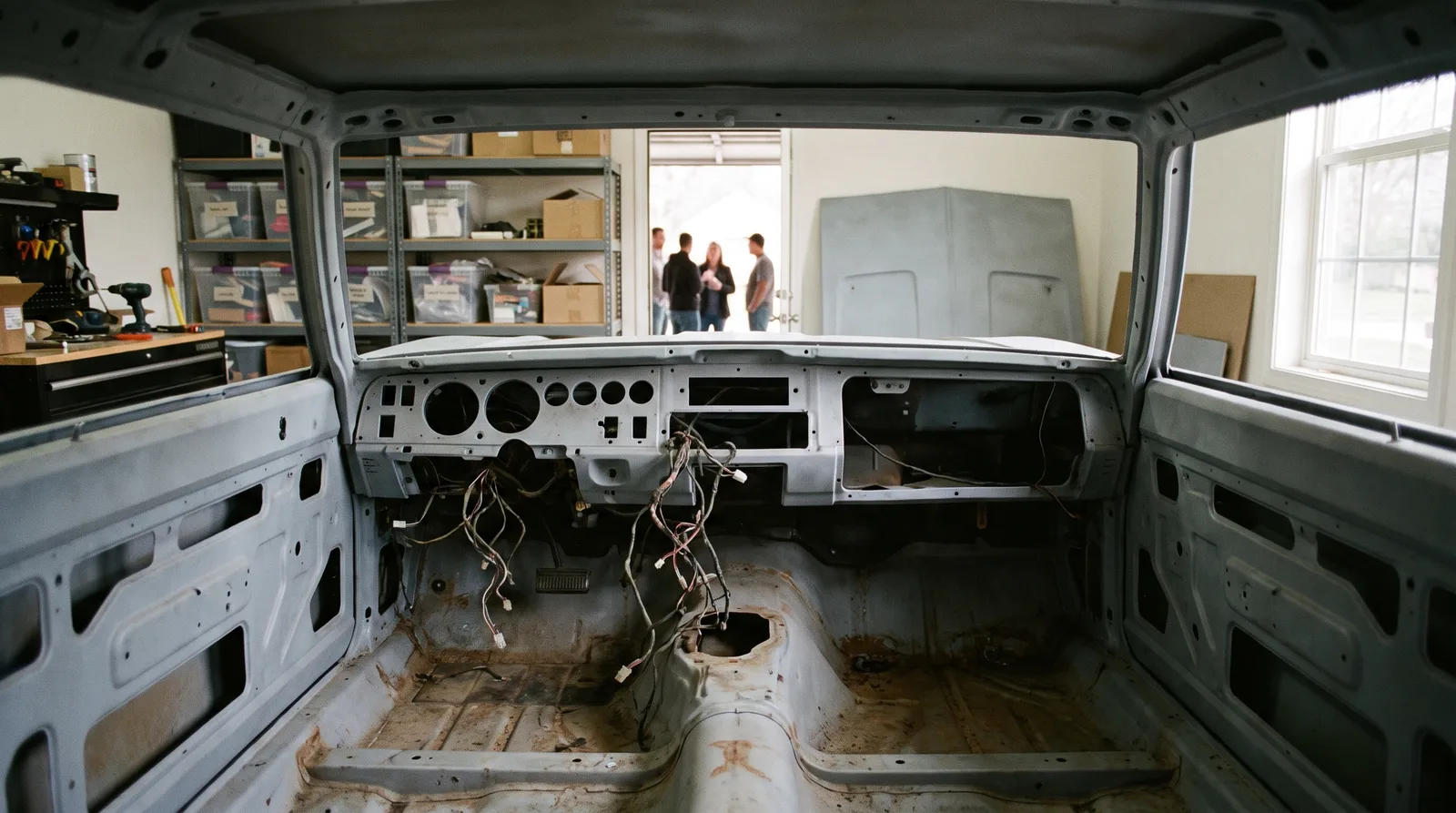
The frame is the first decision. Original Model A rails are light, so many builders either box the stock frame for strength or drop the body onto a reproduction chassis built to accept a modern drivetrain and suspension. Once the frame and running gear are sorted, the rest is bodywork, wiring, and taste. If you want to see how far this idea can be pushed on a slightly newer chassis, the The 1932 Ford Street Rod takes the same recipe up a notch with a factory frame that was born ready for a V8.
Where the Model A sits in the hobby
The Model A is the people's street rod. It is the car that lets a first-time builder learn to weld, wire, and set a stance without betting a year's salary on a rare shell. It is also a car with genuine history, and understanding that history changes how you build one. The whole movement grew out of guys taking cheap, plentiful Fords and making them faster and better, which is the short version of the story of the street rod and exactly why the Model A still matters.
Build a coupe if you want the classic look and can pay for it. Build a sedan if you want to drive sooner and spend less. Build a pickup if you want a rod that earns its keep. In every case you are starting with the most reproduced, most supported, most forgiving steel body in the hobby. That is not a compromise. That is the smart move.
Sources and notes
- Period Ford sales literature and production records for the 1928 to 1931 Model A.
- Marque references and registry data on Model A body styles and survival rates.
- Street rod builder interviews and shop practice for typical drivetrain and suspension upgrades.
- NSRA guidance on the pre-1949 street rod definition and club standards.
- Aftermarket catalog listings for reproduction bodies, frames, and running gear.
Related Reading
Have a
Classic Car
for Sale?
Reach thousands of serious classic car collectors across the US.
Sell It Here →
Are You a Classic Car Dealer?
List your full inventory and connect with targeted classic car buyers.
Join as a Dealer →

About the author
Jim Vasquez
Southern California hot rod and custom car builder with roots in the traditional kustom kulture scene.
More in Restoration & Tech
Comments
Be the first to comment on this article.