
Stock front sway bars on a C10 were sized for a work truck riding on tall sidewalls and skinny bias-ply-era tires, not a lowered truck on wide radials with real grip. Drive a stock-bar truck hard into a corner and you'll feel exactly what I mean: the body rolls first, the front end catches up late, and the whole truck feels like it's thinking about the corner instead of just taking it.
Restoration & Tech
6 min read
Front Sway Bar Upgrades for Better C10 Cornering
Why a lowered C10 needs a bigger front sway bar than stock, how bar diameter changes handling, and the installation details that get overlooked.
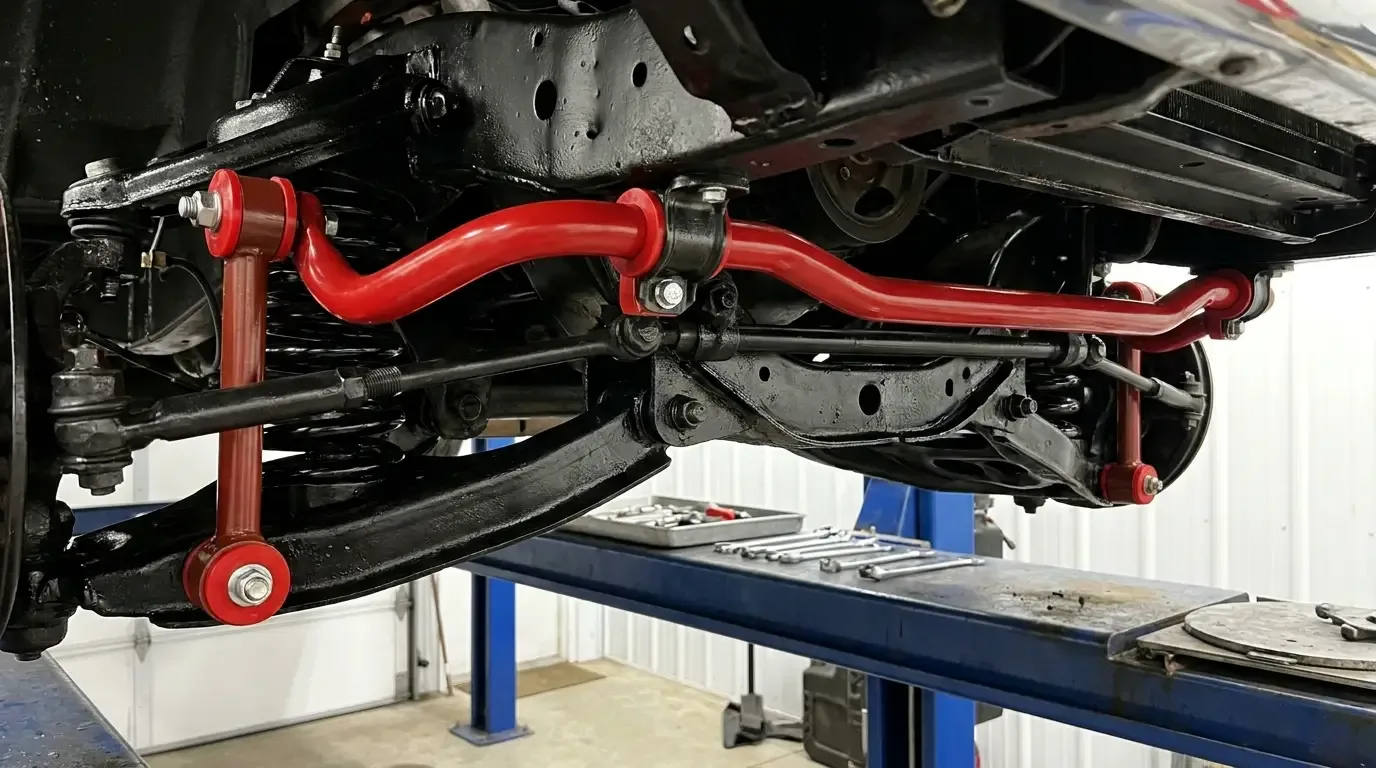
What a sway bar actually does
A front sway bar connects the left and right sides of the suspension through a torsion bar that resists body roll. When the truck corners and the outside suspension compresses while the inside extends, the sway bar twists and pushes back, keeping the chassis flatter and keeping more of the tire's contact patch working instead of loading up unevenly on one edge of the tread.
Bigger diameter or stiffer bar means more resistance to that twist, which means less body roll, quicker transitions, and a front end that responds when you turn the wheel instead of a beat later. The tradeoff is ride harshness on rough pavement, since a stiffer bar transfers more of an uneven road surface between the two front wheels instead of letting each side handle a bump independently.
Why lowered trucks need this more than stock-height trucks
A lowered C10 already has less suspension travel to work with, and often has a stiffer spring rate up front to support the drop without bottoming out. That stiffer spring changes the balance between spring rate and sway bar rate that GM engineered for a stock-height truck. The factory sway bar, sized for the factory spring, is now working against a spring it wasn't matched to, and the truck can feel disconnected in a corner even though everything else about the suspension is in good shape.
If you've already gone through lowering guide to drop the front end, treat the sway bar as the next logical step, not an optional add-on. The drop changes the geometry enough that the stock bar is rarely the right size anymore for how the truck actually sits and handles now.
| Bar diameter | Feel | Best for |
|---|---|---|
| Stock (about 1 in / 26.9 mm) | Soft, noticeable body roll | Unmodified ride height, work-truck use |
| Mild upgrade (1.125-1.25 in) | Noticeably flatter, still comfortable | Lowered daily driver, mixed use |
| Performance upgrade (1.375 in and up) | Minimal roll, firmer ride | Autocross, aggressive handling builds |
Adjustable aftermarket bars usually come with multiple mounting holes on the end links, letting you tune stiffness within the same bar by moving the end link to a different hole. That's worth paying for if you're not sure exactly how stiff you want to go on the first try, because dialing it in with an adjustable bar beats buying a second bar because the first one felt wrong.
Installation details that get overlooked
End link condition matters as much as bar diameter. A worn or wrong-length end link introduces play into the system regardless of how stiff the bar itself is, and I've seen guys spend money on a bigger bar while running tired factory end links that were already loose before the upgrade went on. Replace them while you're in there. It's cheap compared to the bar itself and it's the difference between a crisp installation and one that still has a little slop in it.
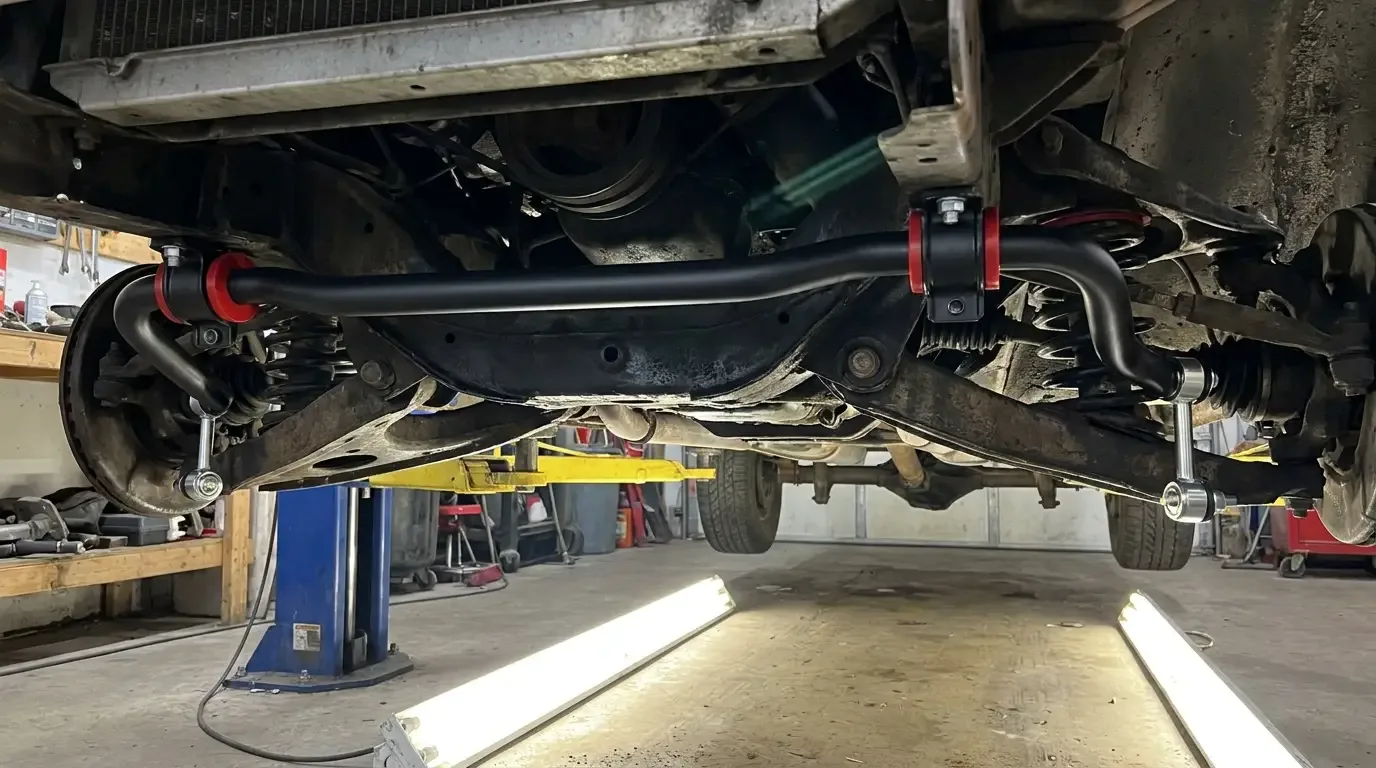
Bushing material is the other detail. Polyurethane bushings grip the bar tighter than the factory rubber and transmit more of the bar's resistance directly into the chassis, which is usually the point, but they also transmit more noise. A little bit of bushing grease at install keeps that noise down without giving up the stiffness you paid for.
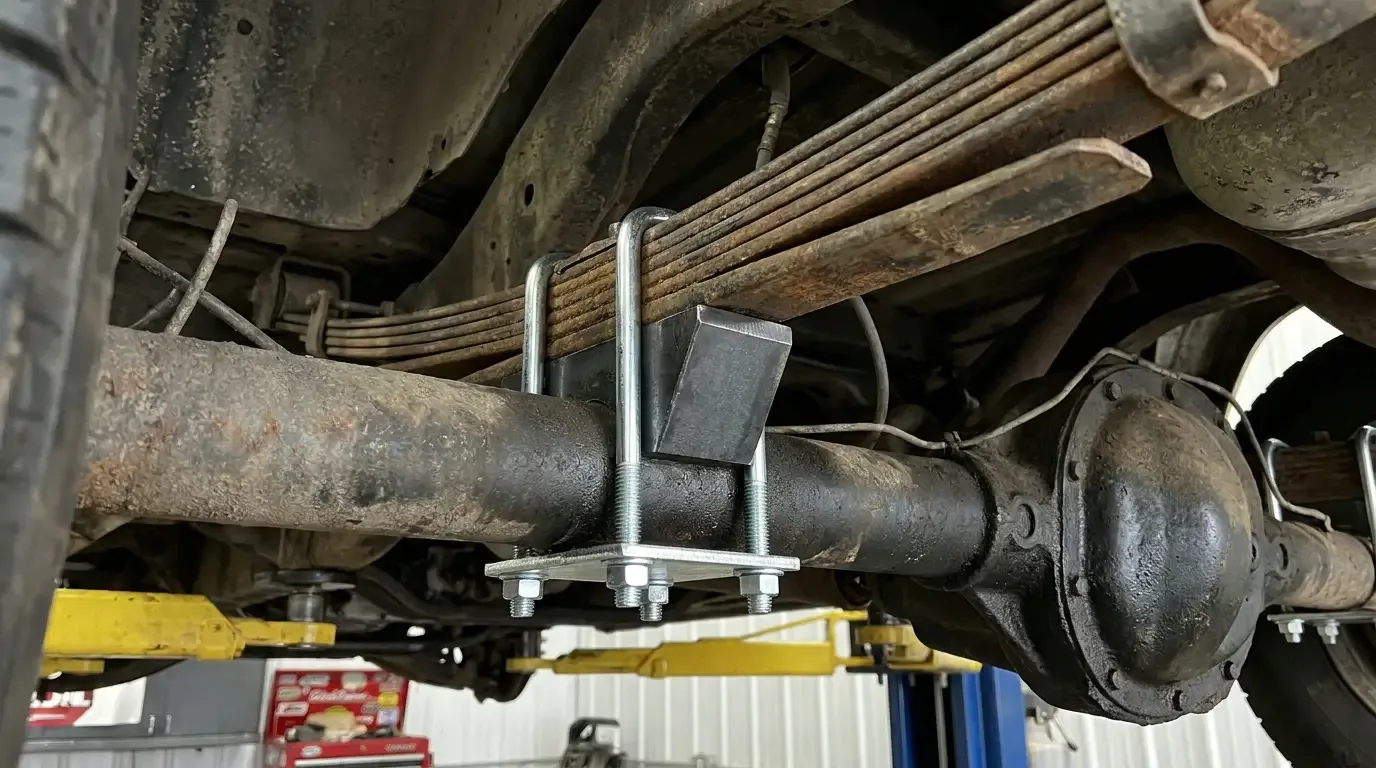
If your truck kept its leaf springs in back rather than going to a four-link or coil conversion, the rear geometry interacts with front sway bar changes differently than a coil-sprung rear does. It's worth understanding how lowering blocks work if you kept leaf springs before you assume a front-only sway bar upgrade will fully solve a body roll complaint, since the rear half of the equation still matters.
"A bigger sway bar with worn end links is like putting good tires on bad wheels. You're not getting what you paid for, you're just moving the slop somewhere else in the chain."
Mike Sullivan
What to expect for cost and results
A quality aftermarket front sway bar with new end links and polyurethane bushings typically runs somewhere in the $150-350 range for parts, with installation being straightforward enough for a home garage with the truck on stands and a decent set of hand tools. It's one of the better dollar-for-dollar handling upgrades available on these trucks, because the stock bar really was undersized for anything other than stock ride height and stock tires.
Go one step stiffer than you think you need if the truck will see any spirited driving, and back off a hole on the end links if the ride ends up harsher than you want. That's the advantage of buying an adjustable bar in the first place, and it's worth the small premium over a fixed-rate bar that only does one thing.
A sway bar upgrade is one of those changes that's easy to underrate on paper and hard to miss once it's installed. The truck turns in the same instant you turn the wheel instead of a half second later, and that difference shows up on every drive, not just the ones where you're pushing the truck hard. For the price of a bar, a set of end links, and an afternoon in the garage, it's one of the more honest upgrades you can make to a lowered C10.
Sources and notes
Related Reading
Have a
Chevrolet C10
for Sale?
Reach thousands of serious classic car collectors across the US.
Sell It Here →
Are You a Classic Car Dealer?
List your full inventory and connect with targeted classic car buyers.
Join as a Dealer →

About the author
Mike Sullivan
Detroit-area muscle car enthusiast and restoration specialist with three decades of hands-on experience working on American iron.
Related Listings - Chevrolet C10
More in Restoration & Tech
Comments
Be the first to comment on this article.