Why wheel choice matters beyond appearance
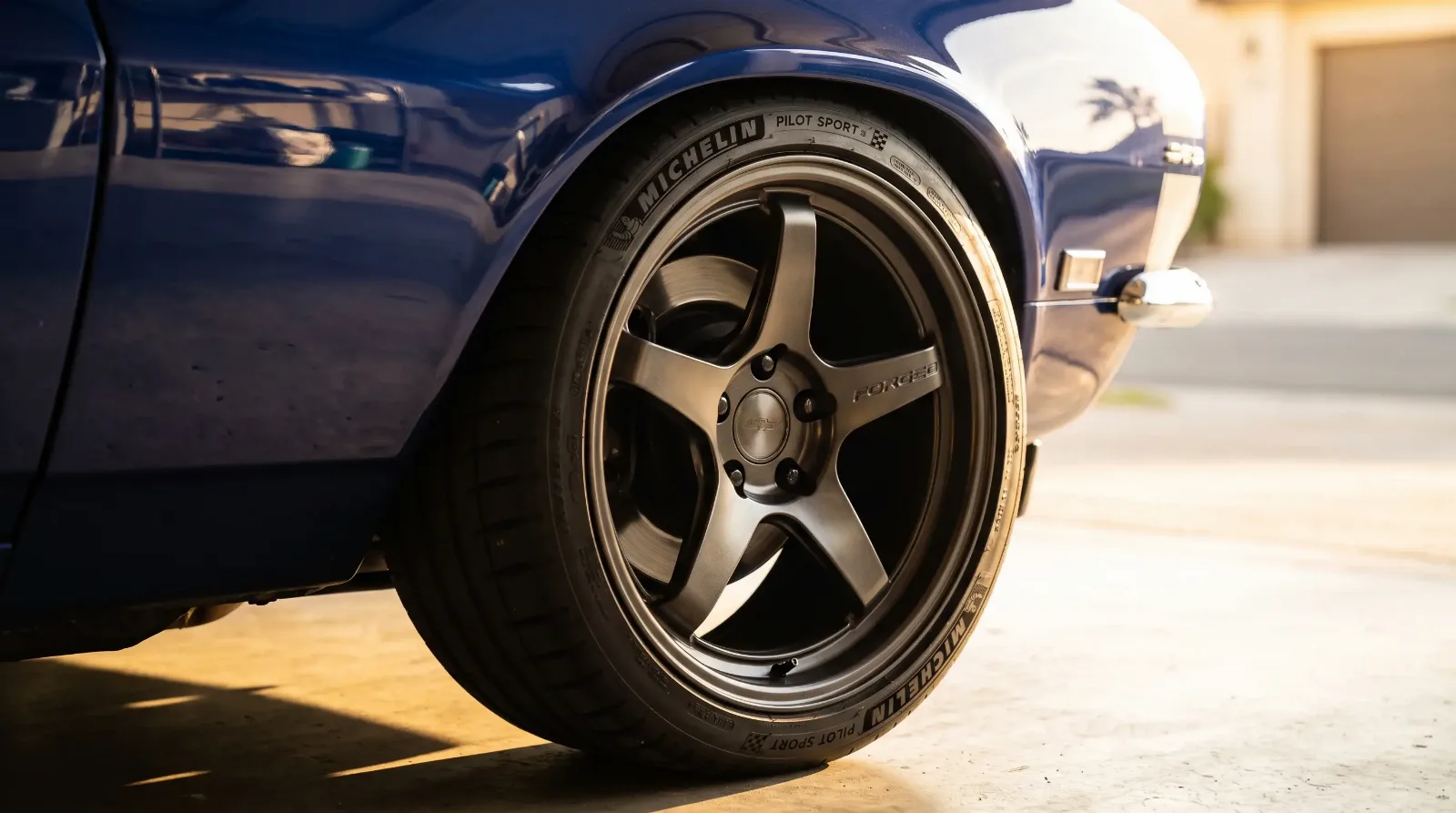
Most restomod builders choose wheels based on what looks right in photos. That is understandable, but wheel choice controls more than aesthetics on a pro-touring build. Offset and backspace determine brake caliper clearance and fender clearance simultaneously. Width determines maximum tire size, which sets ultimate grip. Weight affects rotational inertia and unsprung mass, which the suspension has to manage. A wheel that looks perfect in a catalog can create caliper contact, rub the inner fender, or require negative camber that chews through tires in 5,000 miles.
The platform for wheel fitment on a first-gen Camaro is a 5x4.75-inch bolt pattern (also written as 5x120.65 mm). This is the standard GM bolt pattern used through most of the muscle car era. Virtually every major wheel brand offers wheels in this pattern with a range of offsets and widths suitable for the first-gen platform.
Before selecting wheels, confirm your brake caliper dimensions since larger calipers from a Wilwood or Baer setup require more inside clearance. See our restomod build overview for the sequence that puts brakes and suspension before wheel selection. Also revisit the disc brake conversion guide to understand caliper dimensions.
Sizing for street and autocross use
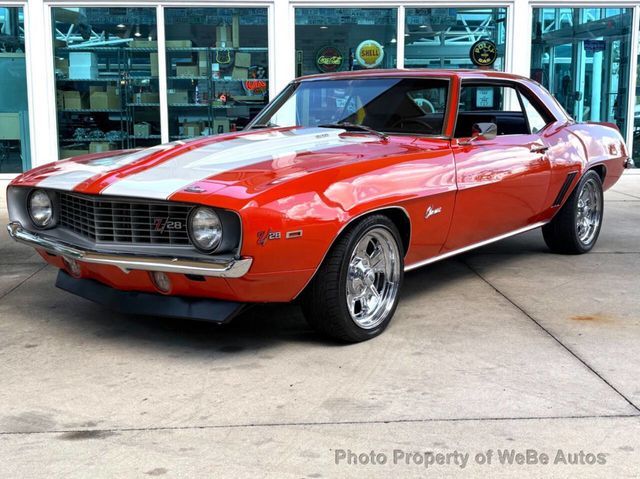
A popular sizing formula for a street-driven first-gen Camaro running coilovers and a four-link rear is a 17x9 front and 17x10 rear. This fitment clears a Wilwood six-piston front caliper with a 4.5-inch backspace front wheel. The 10-inch rear accepts a 275/40ZR17 tire which gives you a legitimate contact patch for hard acceleration. If your car still has leaf springs, width at the rear is limited by the factory wheelwell opening to around 8 or 9 inches without flaring.
For autocross competitors stepping up to 18-inch wheels, an 18x10 front and 18x11 rear fitment allows 285/35ZR18 and 305/35ZR18 tires, which is a common Hoosier A7 or BFGoodrich Rival S sizing for autocross competition. Wider tires require more negative camber to keep the contact patch flat under load, typically around -2.5 to -3.0 degrees front.
- Street build: 17x9 front / 17x10 rear, 4.5-4.75 in backspace
- Autocross: 18x10 front / 18x11 rear, 5.0-5.5 in backspace
- 275/40ZR17 rear: popular street tire size
- 305/35ZR18: standard rear autocross fitment
Wheel brands and weight considerations
For the pro-touring market, Forgeline, Weld Racing, and Billet Specialties are the most common wheel brands. Forgeline's GA3 in a 17x9 weighs around 18-20 lbs and is a forged monoblock unit that machines to very close tolerances. Weld Racing's S71 and RT-S series are popular for their aggressive spoke design and lighter weight on the Drag Radial side. Billet Specialties offers a wider range of styles at a lower price point than Forgeline.
For budget builds, American Racing and Weld Draglite wheels provide a period-correct look at a couple hundred dollars per wheel. Forgeline and Weld RT-S units run several hundred dollars per wheel. Fully custom bespoke wheels from shops like Schott or Wheel Vintiques can exceed a thousand dollars per wheel. The weight difference between budget and premium units is typically 3-6 lbs per wheel, which translates to about 12-24 lbs of unsprung mass reduction for a set.
"I tell every builder to weigh their wheels before they order tires. The spec sheet says one thing, the actual wheel you receive sometimes says another. A 3-pound discrepancy per corner adds up, and it matters when you are trying to tune for balance on an autocross course."
-- Jim Vasquez
Tire selection for street versus track
Tire choice splits into three categories for a pro-touring Camaro: performance street tires, summer ultra-high-performance tires, and competition autocross tires. For a car driven year-round, the Michelin Pilot Sport 4S or Continental ExtremeContact Sport in a 275/40ZR17 rear size is the best balance of dry grip, wet traction, and longevity. Expect somewhere in the range of fifteen to twenty-five thousand miles from these in street use.
For summer-only use and autocross, the BFGoodrich Rival S 1.5 and Falken RT660 are the most competitive street-legal tires available. They last roughly ten thousand miles in street use but provide grip levels that genuinely change what the car can do on an autocross course. For competition with no street use, Hoosier A7 in a 275 front and 305 rear is the standard setup for NASA Pro Solo and SCCA Street Modified.
Fitting wide tires: fender and wheelhouse clearance
Running a 275 or wider rear tire on a first-gen Camaro without modification requires careful measurement. The factory rear wheelhouse opening limits tire width to about 245 without rubbing at full suspension compression. Wider tires require rolling the inner fender lip with a fender roller tool, or cutting and flaring the outer edge. A professional fender rolling job runs a few hundred dollars. Mini-tubs, which relocate the inner wheelhouse inward, allow tire widths up to 325 or wider and run anywhere from high hundreds to a couple thousand dollars depending on fabrication quality. After getting the wheel and tire combination right, move on to our guide on crate engine selection for a Camaro to match powerplant to the chassis package you have built.
| Fitment | Front Size | Rear Size | Tire Width | Use |
|---|---|---|---|---|
| Street 17-inch | 17x9 | 17x10 | 245F/275R | Daily driver |
| Street 18-inch | 18x9.5 | 18x10.5 | 255F/285R | Summer street |
| Autocross 18-inch | 18x10 | 18x11 | 285F/305R | Competition |
| Race (mini-tub) | 18x10 | 18x12 | 285F/325R | SCCA/NASA |
Sources and notes
Production figures, engine specifications, codes, and dates in this article are cross-referenced from established Camaro references, period documentation, and owner registries. Where sources differ, the most commonly cited value is used. Cost figures are indicative and vary by supplier, region, and condition.