
1922 Classic Cars for Sale
Ford buys Lincoln, the closed car crosses 30 percent of new sales, and Chrysler prepares to remake the middle market
Recovery arrived in 1922, and it came fast. US automobile production climbed back above 2.2 million units, a new all-time record. The industry had shed its weak players in the 1921 contraction and the survivors were growing confidently. Ford absorbed Lincoln in February 1922, rescuing Henry Leland's company from receivership and instantly acquiring the most refined chassis in America at the time.
The closed car transition accelerated beyond what most observers had predicted. Enclosed bodies, sedans and coupes combined, reached an estimated 30 percent of new car sales in 1922. Fisher Body, which General Motors controlled, was the direct beneficiary, and Sloan's segmentation strategy began to show its logic. Each GM brand could now offer a proper enclosed car without the body coachwork looking the same.
Walter Chrysler, having left General Motors after a dispute with Pierre du Pont, was working through the Willys-Overland reorganization in 1922 and preparing the engineering that would become the first Chrysler car in 1924. His influence was not yet visible on showroom floors, but the engineering talent he was assembling, Zeder, Skelton, and Breer, was already at work. 1922 sits at the edge of a major competitive realignment.
- Ford Motor Company completed the acquisition of Lincoln Motor Company in February 1922 for approximately $8 million, taking control of the 357-cubic-inch V8 that Henry Leland had designed.
- Enclosed body styles reached an estimated 30 percent of US new car sales in 1922, triple the 1920 figure and a pace that surprised most industry forecasters.
- US total automobile production hit a new record of approximately 2.27 million units in 1922, surpassing all previous annual totals as the postwar recession fully cleared.
Showing 5 listings
 Dealer
 United States
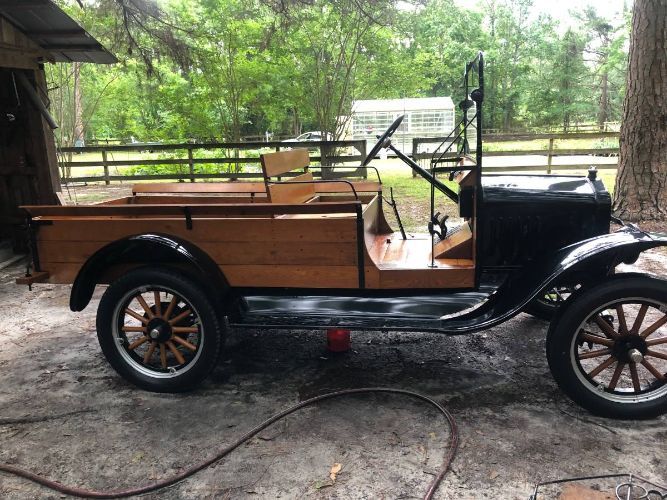
1922 Ford Model T
 Dealer
United States
Dealer
United States
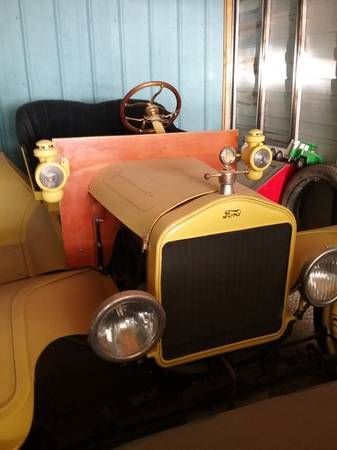
1922 Ford Model T
 Dealer
United States
Dealer
United States
1922 Dodge 1 Ton
 Dealer
United States
Dealer
United States
1922 Dodge 1 Ton
Market: The 1922 Lincoln Model L, particularly first-year post-acquisition examples with Leland-era engineering and early Ford stewardship, trades at $60,000 to $110,000 for correct, running cars. Ford Model T Tudor Sedans from 1922 are among the most collectible T body styles, bringing $15,000 to $35,000. Essex Six Coaches, the first genuinely affordable mass-market closed car, are undervalued at $10,000 to $18,000 and represent serious early social history.
Buyer's note: On 1922 Lincolns, establish whether the car predates or postdates Ford's production changes to the Leland body and trim specifications, since the earliest Ford-era cars retain Leland-sourced hardware that later examples replaced with Ford-sourced equivalents.