
Everybody wants to talk about the Duesenbergs and the Pierce-Arrows when the subject is 1920s cars, and I get it, they're gorgeous machines. But those cars weren't what put America on wheels. That job belonged to the cheap cars, the ones nobody bragged about at the country club, and I think they deserve their own chapter in our deep dive on cheap cars 1920s.
Car Features
6 min read
The Affordable Cars That Motorized America
Forget the Duesenbergs for a minute. The Model T and its cheap-car rivals are the cars that actually put America on the road.
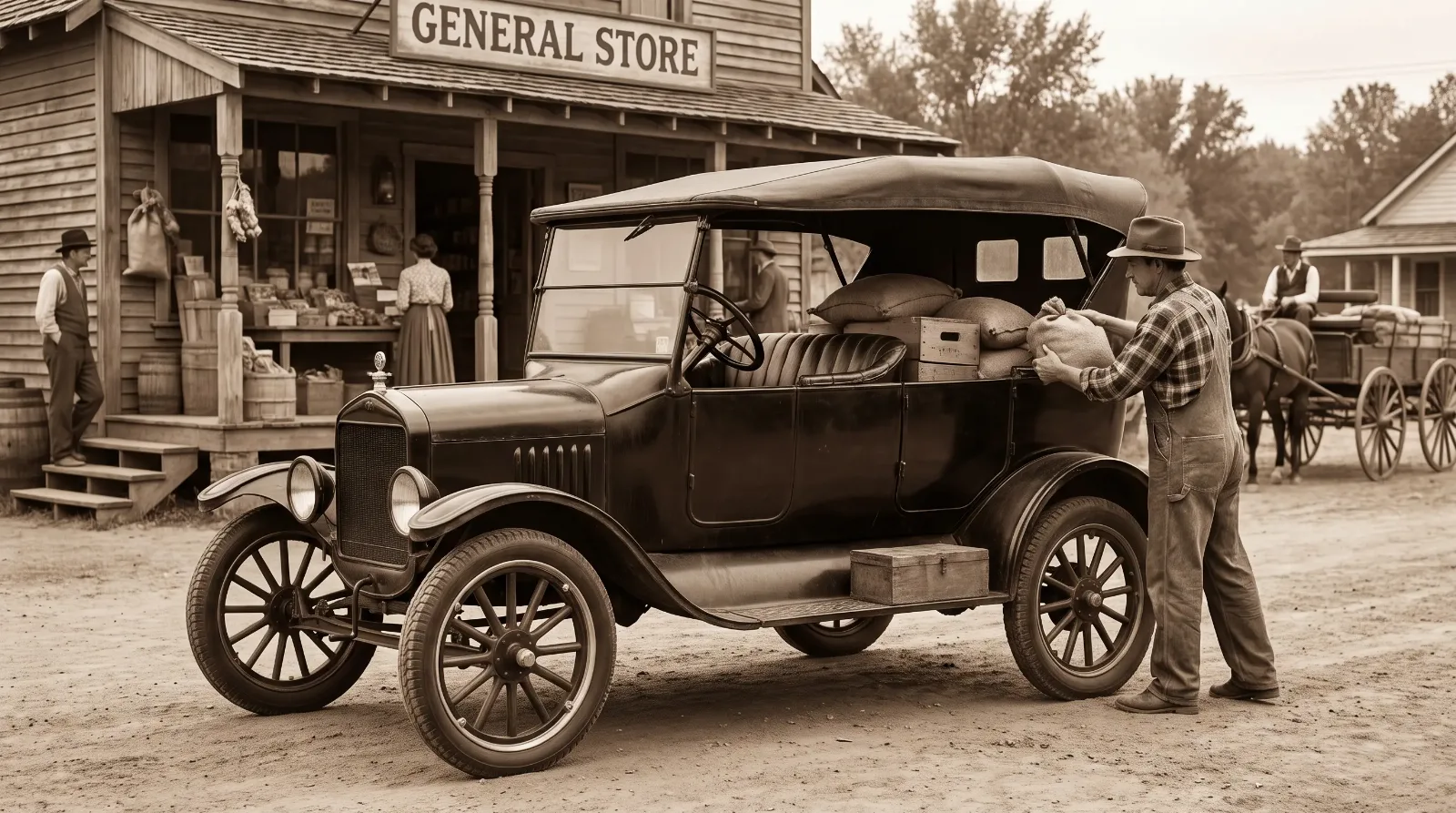
The Model T did the heavy lifting first
Say what you want about the Model T's lack of frills, but it's the car that made the whole affordable-car story possible. Ford had the price down around 300 dollars by the mid-1920s, and he kept driving it lower through sheer manufacturing scale. That price wasn't an accident or a loss leader, it was the whole point of the moving assembly line. Ford figured out that if you build the same car the same way, over and over, without changing a thing, you can sell it cheap enough that a factory worker can afford one on his own wages.
My grandfather used to say the T wasn't really a car, it was a promise. The promise that if you worked hard, you'd own something with an engine in it someday. That promise mattered more than any spec sheet, and it's why so many families' first car story starts with a black Model T sitting in a barn or a driveway.
Then Chevrolet showed up and made it a real fight
Ford had the cheap-car market pretty much to himself for a while, but General Motors wasn't going to let that stand. Chevrolet came at the Model T with something the T didn't have: annual styling changes and a little more engine for not much more money. By 1927, Chevrolet actually outsold Ford for the first time, right around when the T was finally retired for the Model A.
That competition is the best thing that ever happened to the low end of the market. Every year Chevrolet and Ford traded blows, prices stayed low, and the features that used to be luxury items, electric starters, closed bodies, four-wheel brakes, worked their way down into cars that ordinary families could actually buy. A car that cost a rich man's ransom in 1915 was standard equipment on a cheap car by 1928.
| Car | Approximate new price, mid-1920s |
|---|---|
| Ford Model T Touring | Around 290 to 380 dollars |
| Chevrolet Superior | Around 495 to 645 dollars |
| Star (Durant) | Around 440 to 525 dollars |
| Overland Whippet | Around 500 to 625 dollars |
What "cheap" actually got you
Now, I want to be honest here because folks romanticize these cars sometimes. Cheap meant cheap. Thin sheet metal, simple mechanicals, and not much in the way of comfort. The Model T's planetary transmission took some learning, the ride was hard, and by the end of its life the styling hadn't changed in years while the competition kept moving. But cheap also meant reliable in the ways that mattered to a working family, because a simple car is a car your neighbor's kid can fix with a wrench he already owns.
That's the part people miss. These weren't disposable cars. A well-kept Model T or a Star could run for years with nothing but basic maintenance, because there wasn't much on them to break in the first place. Simplicity was the feature, not the compromise, even if the marketing department never put it that way.
"I had an uncle who ran a Star sedan for over a decade on a farm outside Racine, and that car saw more mud and more winters than half the fancy cars from the same year ever did. Nobody wrote songs about the Star. But it worked, every single time he needed it to, and that's worth something a spec sheet doesn't capture."
Gary Nowak
The dealer network mattered as much as the car
Here's something folks forget when they talk price alone. Ford didn't just build a cheap car, he built a dealer network that reached into towns most manufacturers never bothered with. By the mid-1920s there was practically a Ford dealer within reach of every farm town in the country, which meant parts and repairs weren't some faraway hassle, they were down the road. Chevrolet followed the same playbook once GM got serious about competing at that price point, and that combination, cheap car plus a repair shop nearby, is really what won the cheap-car war, not the sticker price by itself.
That network is also why so many of these cars survived long enough for us to argue about them today. A car that broke down near a Ford dealer got fixed and kept working. A rarer car from a smaller maker that broke down forty miles from the nearest dealer often just got parked in a barn and forgotten, and that's a big part of why the survivor population skews so heavily toward Ford and Chevrolet from this decade.
Where these cars stand today
Here's the funny thing about collecting now. The affordable cars of the 1920s are, ironically, some of the most affordable classics you can buy today too, because they were built in huge numbers and plenty survived in barns and back lots across the Midwest. A decent driver-quality Model T or Chevrolet from this era can still be had for reasonable money, especially compared to what a luxury make from the same decade will cost you.
Parts are the other advantage. Because these cars sold in the hundreds of thousands, the reproduction parts industry around the Model T especially is enormous, probably the deepest parts support of any car from the era. You can build one from a rusty hulk if you're patient, which is not something you can say about a rare custom-bodied Packard.
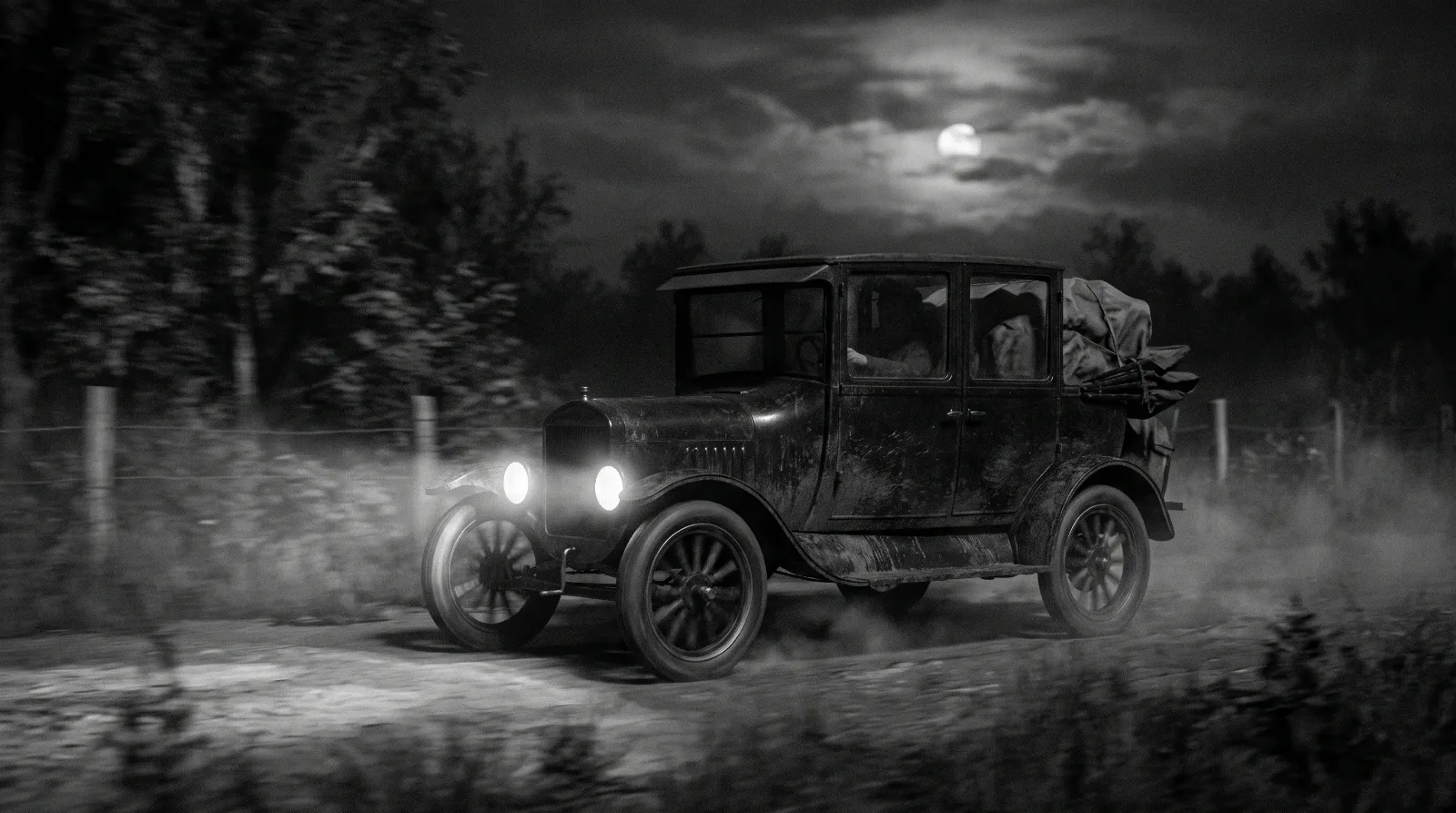
These were never the glamour cars, and they weren't meant to be. They were meant to get a family to church on Sunday and a farmer to town on market day, and they did that job for millions of people who never owned a car before. If the wilder side of the decade interests you more, the story didn't stay quiet for long, and keep reading to see what happened when these same cheap cars got mixed up with rum-runners and roadblocks.
Sources and notes
Related Reading
Have a
Classic Car
for Sale?
Reach thousands of serious classic car collectors across the US.
Sell It Here →
Are You a Classic Car Dealer?
List your full inventory and connect with targeted classic car buyers.
Join as a Dealer →

About the author
Gary Nowak
Lifelong Midwest rodder who has been building and driving traditional pre-war hot rods since the 1970s.




Comments
Be the first to comment on this article.