
Classic Mustang 0-60 times are some of the most repeated numbers in the hobby, and some of the least checked. Every Hi-Po owner has heard a figure in the fives. Every Cobra Jet story ends with the Mustang running away from something with more horsepower. Then you dig up the period road tests and the picture changes. Some legends hold up. A few turn out to be the same number wandering from one car to another.
Car Features
8 min read
How Fast Were Classic Mustangs Really? Period 0–60 Tests vs Legend
Hi-Po, GT350, Cobra Jet and Cobra R: what period magazine road tests actually recorded, and where the popular 0-60 legends lose their paper trail.
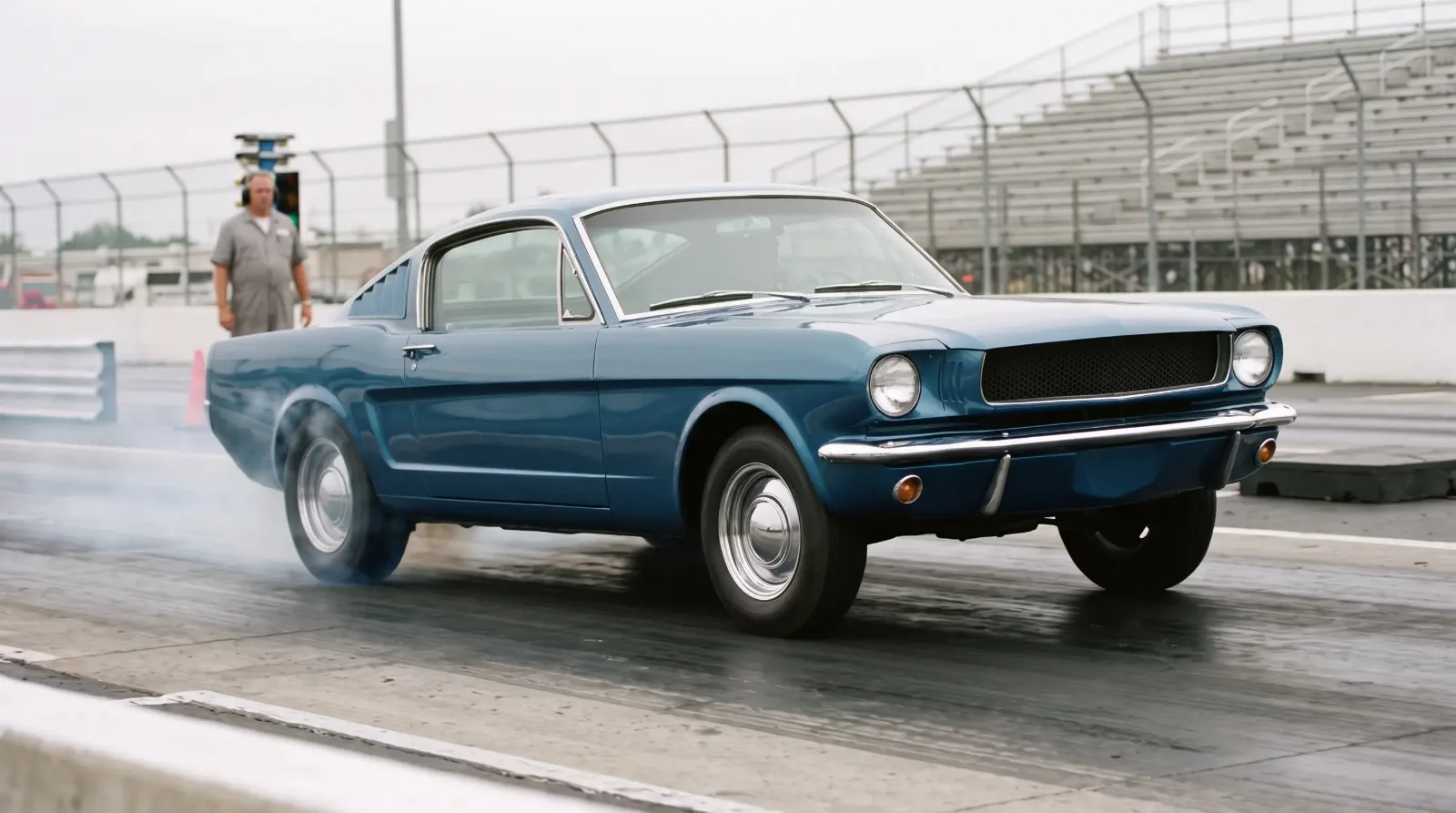
This is part of a longer look at classic Mustang myths, and it sticks to one question: what did these cars actually do when somebody timed them?
Classic Mustang 0-60 times and where the numbers come from
Three things make old acceleration figures slippery. The first is horsepower. Through 1971 Ford quoted SAE gross ratings, taken with the engine on a test stand rather than dressed the way it sat in a car. From 1972 the ratings are SAE net, and the two are not comparable. The 428 Cobra Jet was rated at 335 hp gross, and road-test data suggest something closer to 275 hp net. Same engine, very different number on paper.
The second is the car. A magazine tested whatever it was handed, and a car loaned for a road test was not necessarily a random car off a dealer's lot. Axle ratio, transmission, tires and tune all moved the result, sometimes by more than a second. The third is the source. A lot of the times that circulate today come from compilations, fan sites and auction descriptions that quote a magazine without naming the issue. Where I can name the magazine and month, I do.
The 289 years: the Hi-Po and the first Shelbys
Start with the K-code 289 Hi-Po, rated at 271 hp gross. The figure everyone quotes is 5.2 seconds to 60 and a 14.0 second quarter mile at 100 mph, and it does have a paper trail. It comes from Car and Driver's 1965 test of a 271 hp fastback, run alongside a Barracuda and a Corvair. The data panel also shows what usually gets left off: a four-speed, the special sport suspension and a 4.11 rear axle, with 0-60 runs that varied between 5.0 and 5.4 seconds over four tries.
Other magazines saw something very different. Autocar in Britain, testing a 271 bhp convertible in October 1964, recorded 8.2 seconds to 60 and a 16.0 second quarter at 87 mph. Car Life, in its 1965 special Mustang edition, ran a K-code to 60 in 8.3 seconds and through the quarter in 15.9 seconds at 85 mph.
Three seconds is a big gap for one engine. Some of it is gearing, some of it is body and weight, and some of it is whoever was working the clutch. The 5.2 is a real magazine number, but it is the best case, a strip-geared fastback, not what a typical Hi-Po did.
The Shelby GT350, with a 306 hp version of the same 289, put its power down better. Motor Trend's May 1965 test got it to 60 in about seven seconds and noted that it cornered hard enough to make the oil-pressure light flicker. The quicker GT350 times that circulate, in the low sixes, trace back to a Shelby fan FAQ, and I could not find the magazine pages behind them, so they stay out.
Big blocks and the Cobra Jet years
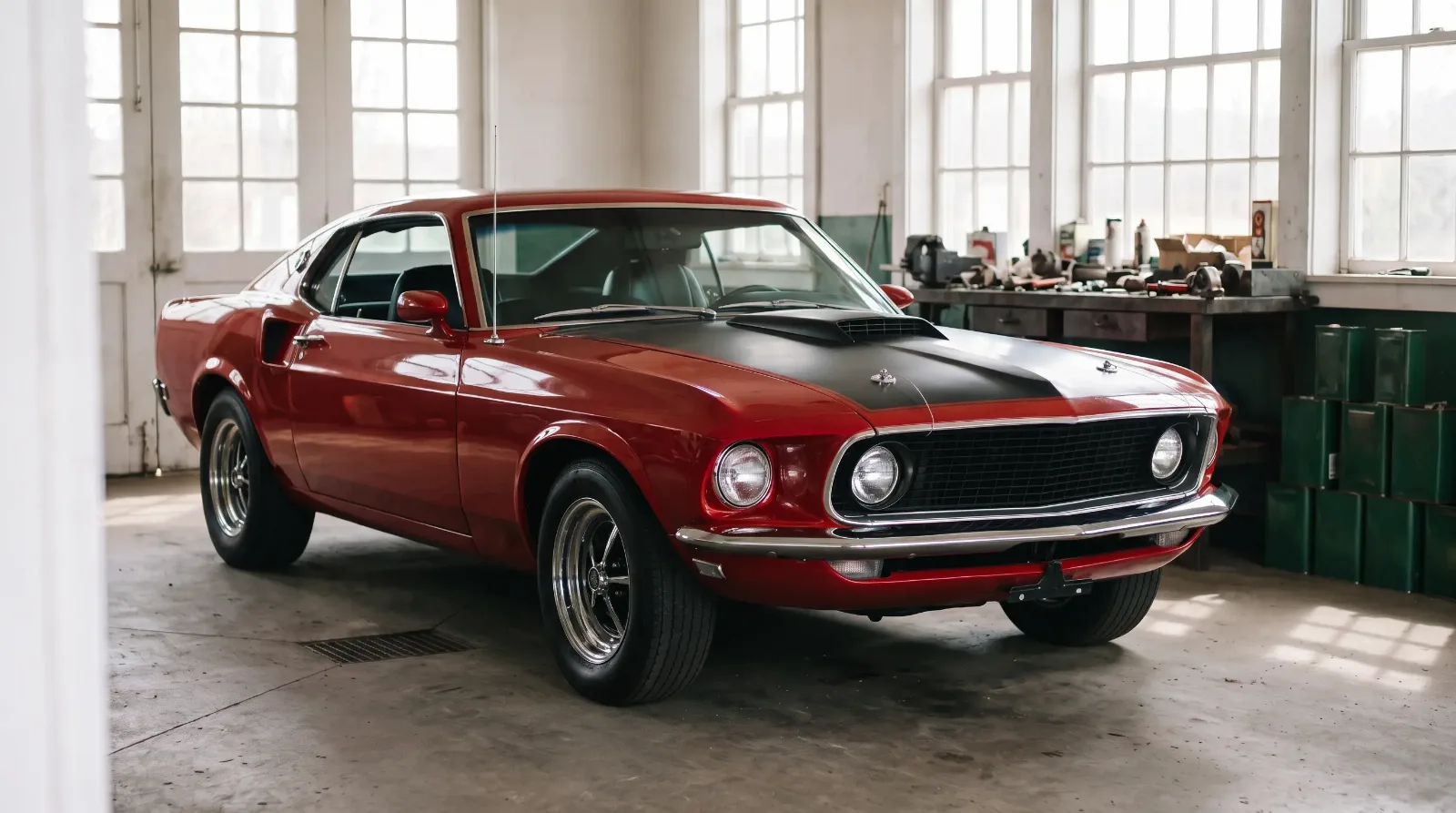
The 1967 Shelby GT500 put a 355 hp 428 Police Interceptor with two 600-cfm Holleys into the car. The times quoted for it are quick, but none I found comes with a magazine and issue attached, so I leave them out. A heavy car on skinny bias-ply tires spends a lot of its first second making smoke anyway.
The 1968 GT500KR brought the 428 Cobra Jet. Car Life's story on it is remembered mostly for its headline, "Was it Worth Stealing?", because the first car lined up for the test was stolen and came back from the LAPD in no shape to be timed. Car Life did get a KR in the end, and its later Mach 1 test refers back to it, but the KR figures that circulate under Car Life's name come from the same fan FAQ, and I could not match them to the page.
The best documented big-block number belongs to a 1969 Mach 1 with the 428 Cobra Jet and a C6 automatic. Car Life tested one for its March 1969 issue and recorded 5.5 seconds to 60 and a 13.90 second quarter at 103.32 mph, quick enough to displace a Hemi Plymouth as the quickest four-seat production car the magazine had tested. Look at the trap speed rather than the 0-60. Over 103 mph through the lights says the Cobra Jet was stronger than its 335 hp gross rating let on, which is where its reputation for being under-rated comes from.
Here is the wrinkle: a Shelby fan FAQ lists the identical figures, same magazine and same month, for a 1969 GT500. The road test itself is about the Mach 1, so the FAQ has it wrong. Both cars used the 428 Cobra Jet, which is how a mix-up like that happens.
The Boss 429 has a named test too. Car Life's July 1969 issue got 7.1 seconds to 60 and 14.09 seconds at 102.85 mph from a four-speed car on a 3.91 axle. A slow 0-60 next to a trap speed over 100 mph is the tire story again. The rest of the Boss and Mach 1 story is covered here, but I have not found a Boss 302 test with a named issue. Same for the 390 GT: the Bullitt chase made it famous, and how much of that chase did McQueen drive himself has its own answer, but a sourced stopwatch figure is still missing.
"A stopwatch in 1966 didn't care what the brochure said. It cared about the axle, the tires and whoever was working the clutch that day. Read the trap speed first. That is where the horsepower shows up."
Mike Sullivan
The slow years and the comeback, 1972 to 2000
Once the ratings went net in 1972 and the big blocks were gone, the numbers dropped hard. The 1974 Mustang II had no V8 at all, and the 302 only returned for 1975. The times quoted for the 1970s cars name a magazine at best, never an issue, so I leave them out here.
The comeback is easier to pin down. Popular Mechanics, in its January 1984 issue, ran the turbocharged SVO through the quarter in 15.8 seconds at 90.1 mph. The quicker SVO figure that circulates, 7.5 seconds to 60 and 15.5 seconds at 90 mph, comes from a Mustang history book rather than a road test, which is exactly the kind of drift this piece is about. By the mid-1990s Ford itself was claiming 5.4 seconds to 60 for the 300 hp 1995 Cobra R, a race-oriented car built in small numbers.
So a factory claim in the low fives arrived thirty years after Car and Driver's 4.11-geared fastback, and it took a race-oriented Cobra R to make it.
How to read a period road test today
Here are the tests I could tie to a named magazine and an issue or test date. If a car is missing from this table, I could not find one.
| Car | Source | 0-60 mph | Quarter mile |
|---|---|---|---|
| 1965 289 Hi-Po fastback, 4.11 axle | Car and Driver, 1965 comparison test | 5.2 s | 14.0 s @ 100 mph |
| 1964 289 Hi-Po convertible | Autocar, tested October 1964 | 8.2 s | 16.0 s @ 87 mph |
| 1965 289 Hi-Po (K-code) | Car Life, 1965 Mustang special edition | 8.3 s | 15.9 s @ 85 mph |
| 1965 Shelby GT350 | Motor Trend, May 1965 | About 7 s | Not given |
| 1969 Mach 1 428 CJ, automatic | Car Life, March 1969 | 5.5 s | 13.90 s @ 103.32 mph |
| 1969 Boss 429, four-speed | Car Life, July 1969 | 7.1 s | 14.09 s @ 102.85 mph |
| Mustang SVO | Popular Mechanics, January 1984 | Not given | 15.8 s @ 90.1 mph |
Acceleration figures are not the only Mustang numbers that grew in the retelling; the day-one sales figure gets the same treatment in this piece. The honest summary is that the good classic Mustangs were quick for their day, the Cobra Jet cars were genuinely fast, and the legend version of a car is usually its best run on its best day, or a number that has lost its paper altogether. The gap to a typical period test can be tenths or whole seconds. For context, start with the whole Mustang timeline.
Sources and notes
- Curbside Classic: Car and Driver's 1965 test of the 271 hp Mustang fastback, with the data panel
- Autocar archive: the 1964 Mustang V8 convertible road test
- SlashGear: the 1965 Car Life K-code road test
- Curbside Classic: Car Life's March 1969 road test of the 428 Mach 1
- Curbside Classic: Car Life's 1969 supercar figures, including the Boss 429
- Wikipedia: Ford Mustang SVO (Popular Mechanics, January 1984)
Related Reading
#Ford Mustang
#428 Cobra Jet
#Shelby GT350
#289 hi-po
#mustang myths
#road tests
#Mustang performance

About the author
Mike Sullivan
Detroit-area muscle car enthusiast and restoration specialist with three decades of hands-on experience working on American iron.
Related Listings - Ford Mustang
Comments
Be the first to comment on this article.