
Somewhere south of the border, in a stretch of Baja California desert that ate trucks for breakfast, a Ford Bronco was proving something the sales brochures could only claim in print. The ford bronco 1969 baja racing story is not a footnote. It is the moment the truck's off-road reputation stopped being marketing language and started being something you could clock with a stopwatch.
Car Features
7 min read
The Bronco Goes Racing in the Late Sixties
The ford bronco 1969 baja racing story turned the truck's off-road claims into proven fact, as showroom-derived hardware survived one of the toughest desert races in the world.
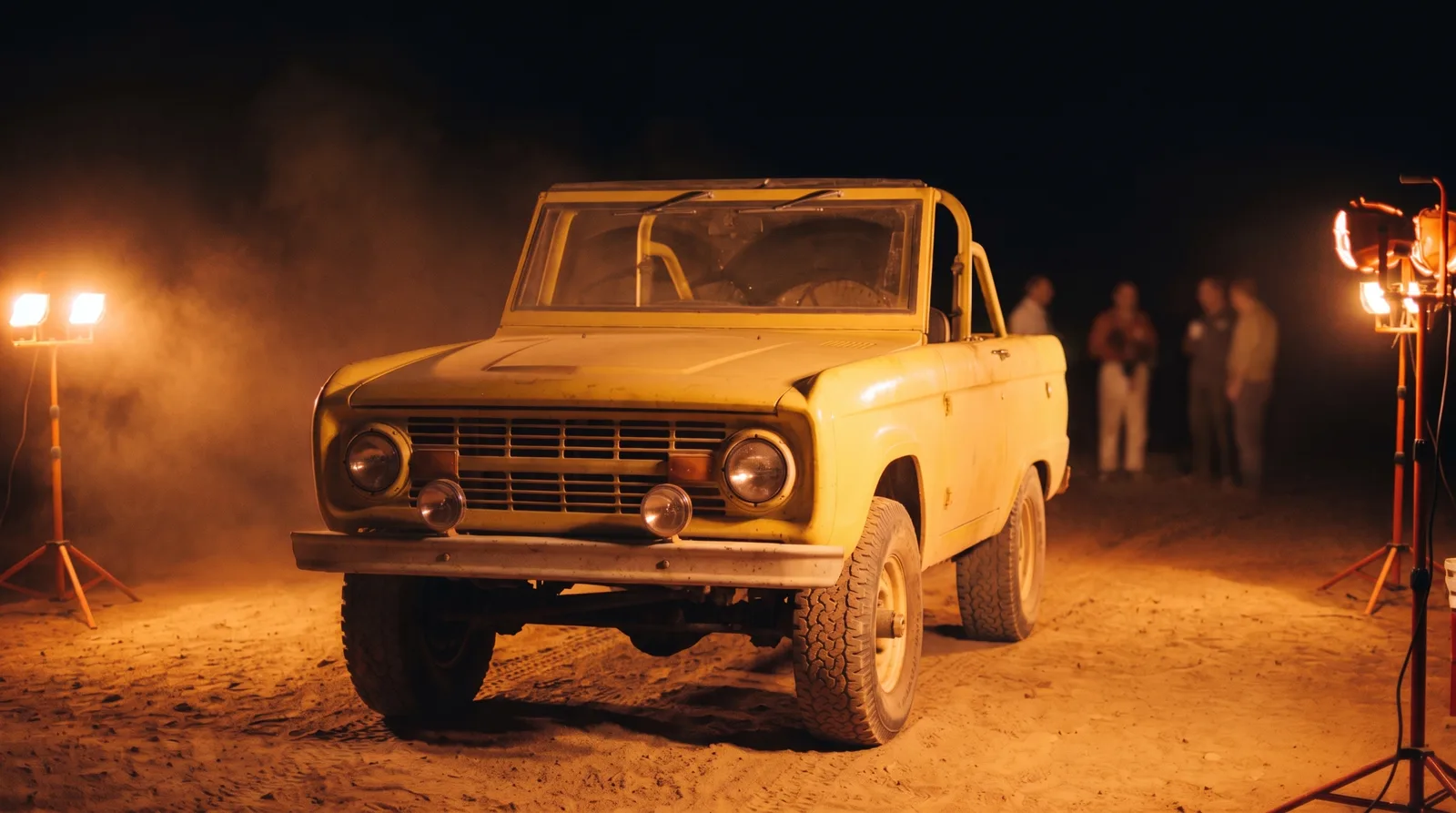
How a suburban-friendly truck ended up racing the desert
Ford had built the Bronco to be genuinely capable, not just capable-looking, and by the late 1960s the company understood that nothing proves a truck's worth like putting it through the worst terrain in North America in front of witnesses. The Baja peninsula's grueling off-road races had already become the proving ground where manufacturers settled arguments that advertising copy could not. A Bronco that survived Baja said more about the truck than any dealership pamphlet ever could.
This was not a factory publicity stunt dreamed up in a boardroom. It grew out of the same off-road culture that had shaped the Bronco's engineering from the start, the same world of desert racers and trail enthusiasts who had been buying and modifying these trucks since 1966. Racing the Bronco in Baja was a natural extension of what the truck was already being used for, just at a more extreme and more public level. Builder Bill Stroppe was already campaigning Broncos in Baja competition by the late 1960s, work that set the stage for the truck's most famous desert result, Parnelli Jones driving the Stroppe-built "Big Oly" to back-to-back Baja 1000 wins in 1971 and 1972.
What the desert actually demanded from the truck
Baja racing does not forgive weak engineering. Whoop sections, silt beds, rock gardens, and hundreds of miles of unforgiving terrain expose every compromise a manufacturer made in the name of cost or convenience. A truck with a marginal axle, poor suspension geometry, or an underbuilt chassis simply does not finish, let alone compete. The Bronco's dedicated chassis and Dana front axle setup, the same hardware underpinning the street trucks Ford sold to ranchers and weekend adventurers, turned out to translate directly into racing durability.
That connection between showroom hardware and race-proven durability is the real story here. Ford was not building a special, unobtainable race truck disconnected from what customers could actually buy. The same basic architecture that got groceries home on a Saturday was, with modification and the right driver, capable of surviving one of the harshest off-road environments in the world.
The people behind the wheel
Desert racing in this era ran on a mix of factory-backed drivers, privateers, and enthusiasts who simply loved the challenge more than the paycheck. Whoever was behind the wheel of a Bronco crossing the finish line in Baja, they were writing a chapter of the truck's legend that no ad campaign could fabricate. Word traveled fast in the off-road community, and a Bronco finishing strong in the desert did more for the truck's reputation among serious enthusiasts than any dealership showroom display could manage.
That grassroots credibility fed directly back into how the Bronco was perceived by the exact buyers Ford most wanted to reach: people who actually used their trucks hard, not just people who liked how a rugged-looking vehicle photographed in a driveway.
How racing history connects to the rest of the Bronco story
The Baja chapter did not happen in isolation. It sits alongside the truck's broader 1969 story, the same year that saw quiet drivetrain and trim refinements across the lineup, and it connects naturally to how the truck was marketed to ranch and outdoor buyers during the same period. For the full picture of that model year, our 1969 ford bronco retrospective lays out everything else that was happening at the same time this racing legacy was being built. Readers interested in how the truck served a different kind of demanding buyer, closer to home than the Mexican desert, will also want to see a related story covering that side of the Bronco's working life.
"You do not need a press release to prove a truck is tough. You need it to cross a finish line in Baja after everything else has already broken down around it. The Bronco did that, and everybody in the desert racing world noticed."
- Patrick Walsh
What this legacy means for the trucks still on the road
Every surviving Bronco from this era carries a little of that desert-proven reputation, whether or not it ever saw a race course itself. The engineering that got trucks across Baja is the same engineering underneath any well-preserved example on the market today, and that connection is part of what continues to drive collector interest in the platform decades after the last checkered flag fell on a period-correct Bronco race entry.
Verifying a claimed racing history before you pay for it
Racing provenance is one of the easiest things to claim and one of the hardest things to prove, so any Bronco advertised with Baja history deserves careful scrutiny before that history factors into the asking price. Period photographs, race entry records, and documented chassis numbers are the gold standard, and a seller with a genuine racing truck usually has at least some of that paperwork already assembled, because owners who care about this kind of history tend to preserve it deliberately rather than let it get lost.
A truck with vague claims and no documentation should be priced as a standard example, regardless of what the seller says about its past. That is not an insult to the seller. It is simply how provenance works in any collector market. The burden of proof sits with whoever is asking for a premium, and a buyer who accepts an undocumented story at face value has nobody to blame but themselves when questions come up later at resale.
If that history appeals to you, there is no substitute for finding a truck with documented provenance and getting to know its story firsthand. Browsing current Broncos for sale now is still the best way to connect with a piece of that legacy, whether you are chasing a race-proven pedigree or simply want the same hardware that made the legend possible.
There is also something worth saying about the culture that grew up around this racing history, separate from any individual truck's paperwork. Desert racing built a community of mechanics, drivers, and fabricators who understood the Bronco at a level most showroom customers never approached. Their knowledge fed back into how the truck was maintained, modified, and eventually collected, creating an informal expertise network that still shapes how serious enthusiasts approach these vehicles today. A lot of what current owners know about pushing an early Bronco's chassis and suspension to their limits traces back, directly or indirectly, to lessons first learned the hard way on a Baja course decades ago.
That is the quieter half of this racing legacy, the part that does not show up in a finishing order or a trophy case. It lives on in how people work on these trucks, in the specific fixes and reinforcements that became common knowledge among serious builders, and in the respect the platform still commands among people who understand exactly what it takes to survive a few hundred miles of unforgiving desert terrain.
Sources and notes
Related Reading


About the author
Patrick Walsh
Automotive journalist covering classic car shows, events, and the enthusiast community across North America.
Related Listings - Ford Bronco
Comments
Be the first to comment on this article.