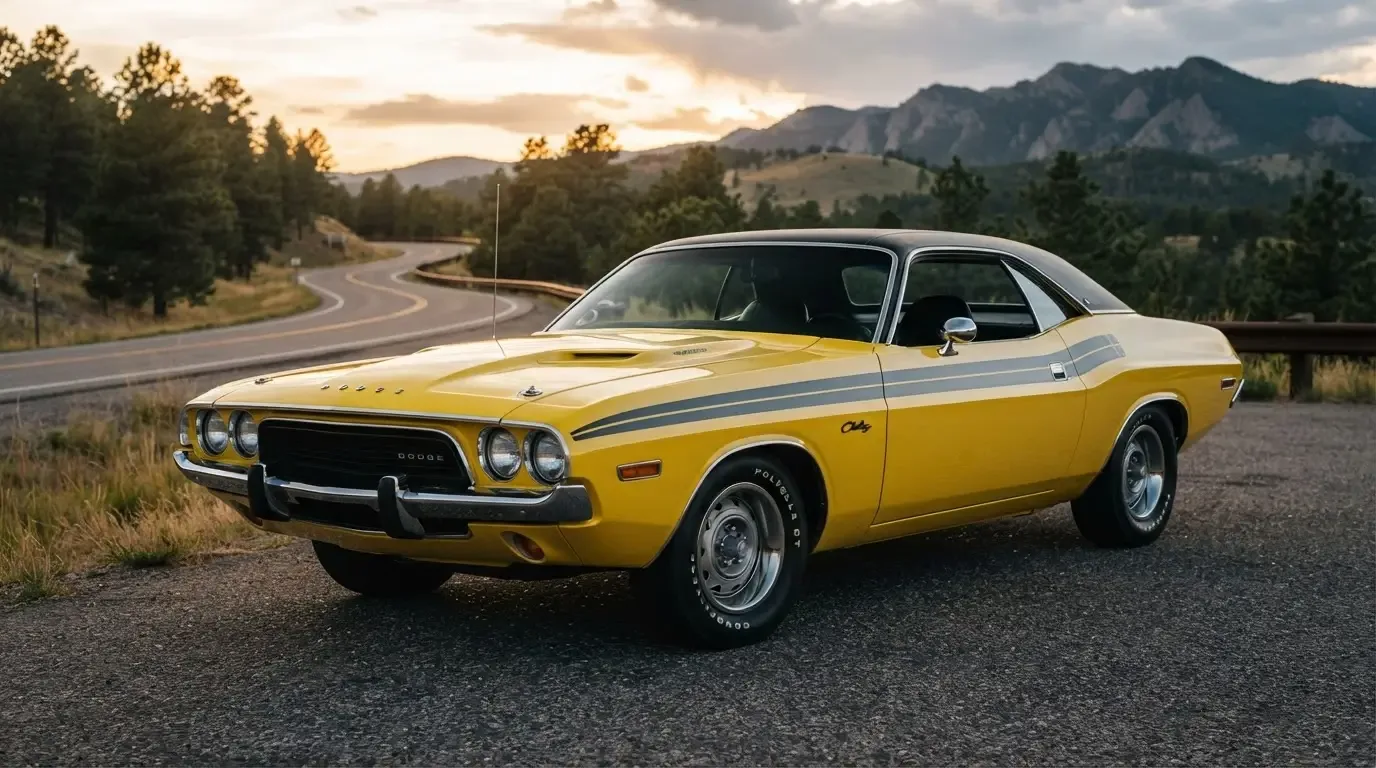
Ask ten appraisers what a late-model E-body is worth and you will get ten different numbers, but the underlying framework should not change from car to car. 1973 challenger value comes down to four factors, condition, documentation, liquidity, and downside risk, and the late Challengers score differently on each of these than their more celebrated early-production siblings. Whether that makes them a bargain or a trap depends entirely on what a specific buyer is optimizing for.
Condition: the baseline that still gets skipped
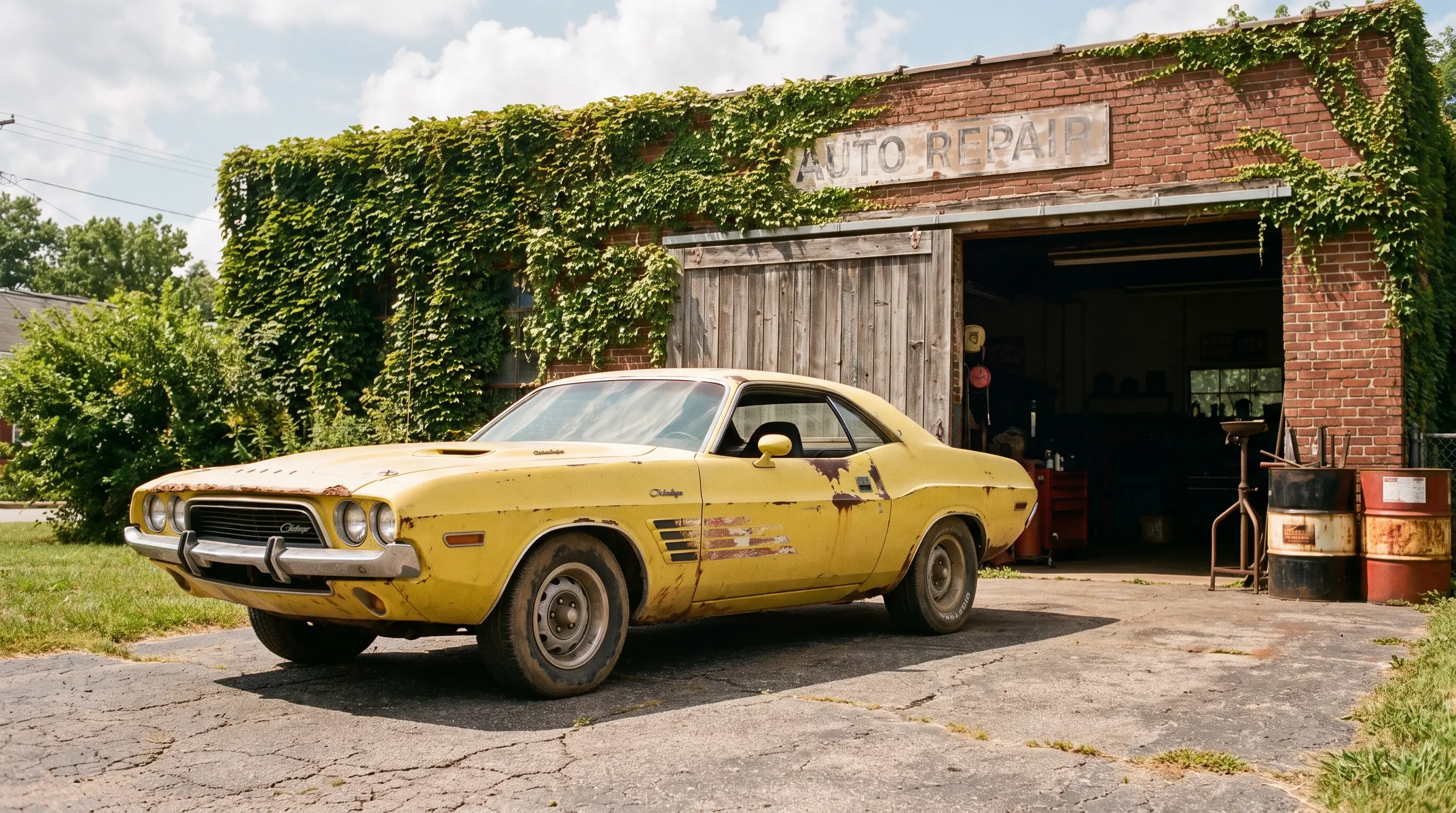
Late Challengers were not treated as future collectibles when new. They were driven, discounted, and in plenty of cases modified or neglected through the 1970s and 1980s before anyone thought to preserve them. That means the condition spread across surviving 1973 and 1974 cars is wider than for a 1970, where more examples were pampered from an earlier point in their life due to higher initial enthusiasm. A rough 1973 Challenger and a genuinely well-preserved one can differ in price by a factor that would surprise someone shopping purely by model year and engine code. Condition assessment on these cars needs to be more rigorous, not less, precisely because the population is less consistently cared for.
| Value factor | Late Challenger (1973-1974) |
|---|---|
| Condition spread across survivors | Wide, inconsistent preservation history |
| Documentation availability | Thinner than earlier years, improving with registries |
| Liquidity at auction | Lower than 1970 Hemi or 440 cars, steady niche demand |
| Downside risk | Moderate, final-year scarcity offsets lower engine output |
Documentation: thinner, but improving
Fewer late Challengers were documented meticulously at the time of sale, and broadcast sheets and original window stickers survive less consistently for these years than for the more collected 1970 cars. That gap is closing as marque registries and dedicated E-body clubs backfill records from dealer archives and factory microfilm, but a buyer today should expect to do more legwork verifying a 1973 or 1974 car's original specification than they would for an earlier, more thoroughly cataloged model year. Incomplete documentation is not automatically disqualifying, but it should factor directly into the price a buyer is willing to pay, since undocumented claims about original engine, trim, or rarity carry real appraisal risk.
Liquidity: a real but narrower market
Auction results consistently show that late Challengers sell for less than their early counterparts and, more relevant to a liquidity discussion, sell to a smaller pool of interested bidders. That does not mean these cars are illiquid. It means the buyer pool skews toward collectors specifically interested in final-year significance or the 360 engine's characteristics, rather than the broader pool chasing any big block Mopar regardless of year. A seller needs to expect a longer marketing window and potentially a more targeted sales approach, whether through a specialist dealer or a registry-connected buyer network, rather than assuming a general classic car auction will move the car as quickly as a more universally desired 1970 example would.
"I tell clients the same thing every time. A late Challenger is not a worse investment than an early one. It is a different risk profile that rewards patience and documentation work over quick resale."
- Marcus Feld
Downside risk: where the bargain argument actually holds up
Here is where 1973 challenger value gets genuinely interesting from a risk perspective. Entry price for a solid late Challenger sits meaningfully below an equivalent-condition 1970 example, and that gap has not closed nearly as fast as the broader muscle car market has appreciated over the past two decades. Final-year scarcity for the 1974 cars specifically provides a floor under values that a purely output-based comparison would not predict, since collectors do assign a premium to closing chapters of a production run regardless of horsepower figures. The downside case, a buyer who pays fairly and holds for the medium term, looks less risky than the upside case, a buyer expecting rapid appreciation matching the early cars, which is unlikely to materialize on the same timeline.
Readers wanting the fuller narrative behind why these later years ended up in this position, styling changes, engine substitutions, and the fuel crisis all compounding together, should read the full story covering the entire 1971 through 1974 generation. Understanding that background context makes the value case for these years easier to evaluate on its own terms rather than by unfair comparison to 1970.
Comparing engine choice within the late years
Not every late Challenger carries the same risk profile, and engine choice within this window matters more than casual shoppers assume. A 1973 car with the 340, in the rare instance one carries over as a leftover build, occupies a slightly different value tier than a 360-equipped car from the same year, since the 340 has a stronger enthusiast following tied to its earlier association with higher-output E-bodies. Appraisers weighing a 1973 challenger value estimate should ask specifically which engine is under the hood before applying any general late-year pricing assumption, because the difference between these two options can move an appraisal by a meaningful percentage even within the same model year and trim level.
Base six-cylinder cars sit at the bottom of this hierarchy regardless of year, and buyers should not expect strong appreciation from a slant six Challenger no matter how well preserved it is. That is simply a market reality tied to enthusiast demand for a genuine V8 driving experience, and it holds true across every year of E-body production, not just the later ones under discussion here. An appraiser who treats all 1973 or 1974 Challengers as a single undifferentiated category is doing incomplete work, and a buyer relying on that kind of flattened analysis risks overpaying for a base configuration or underpaying a seller for a genuinely stronger example.
The practical appraisal takeaway
A late Challenger bought with clear eyes about condition variability, thinner but improving documentation, a narrower but real buyer pool, and a genuinely favorable downside risk profile is not a compromise purchase. It is a specific, defensible collector strategy for a buyer who understands what they are optimizing for and is not simply chasing the same numbers a 1970 Hemi car commands. Buyers ready to apply this framework to an actual purchase can review a classic Challenger for sale and run each candidate through the same four-factor test before committing capital.
My closing view, offered the way I would give it to a paying client, is that late Challengers are undervalued relative to their genuine scarcity and underlying character, but only for buyers willing to do the documentation legwork that a thinner records trail demands. Anyone unwilling to put in that work should stick to a more thoroughly documented early car and pay the premium that documentation commands. There is no wrong answer here, only a mismatch between buyer effort and asset choice that a competent appraisal should flag before the sale, not after it.