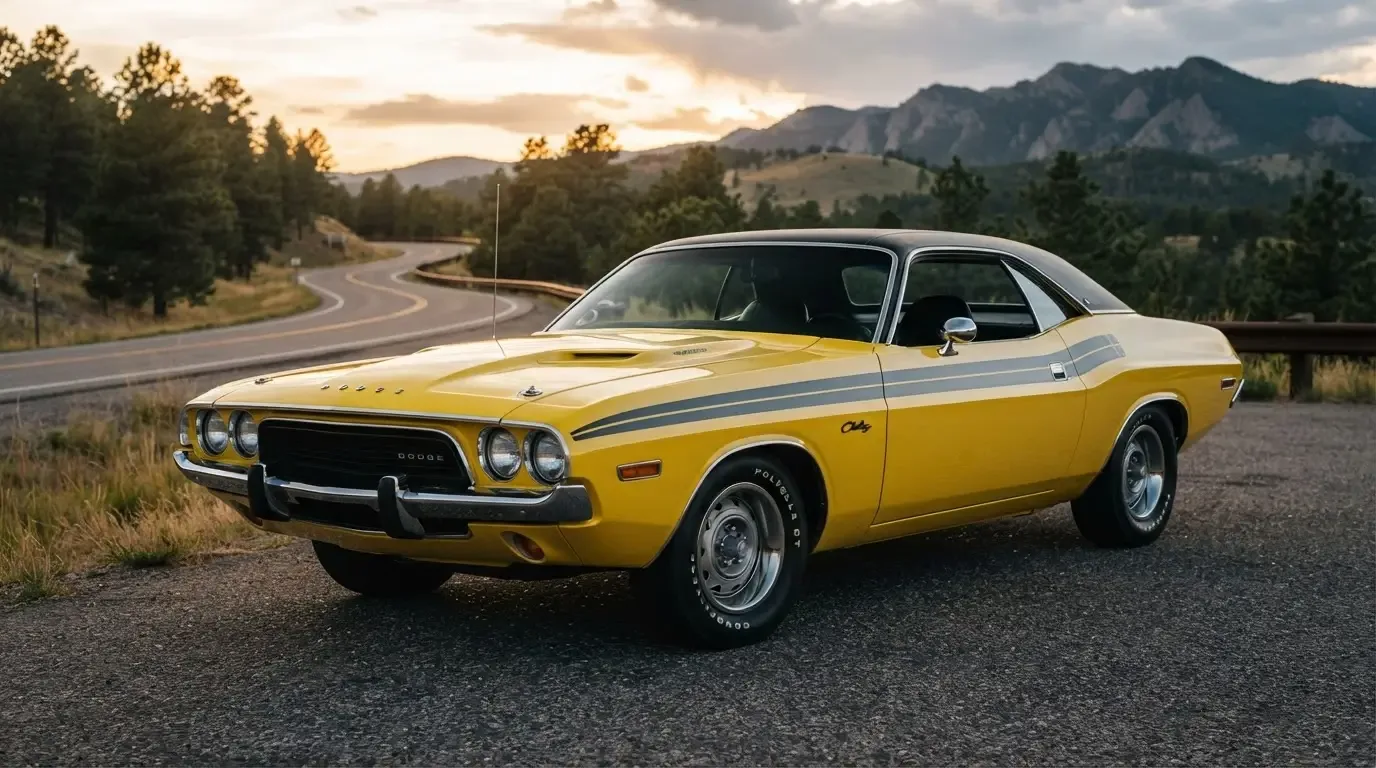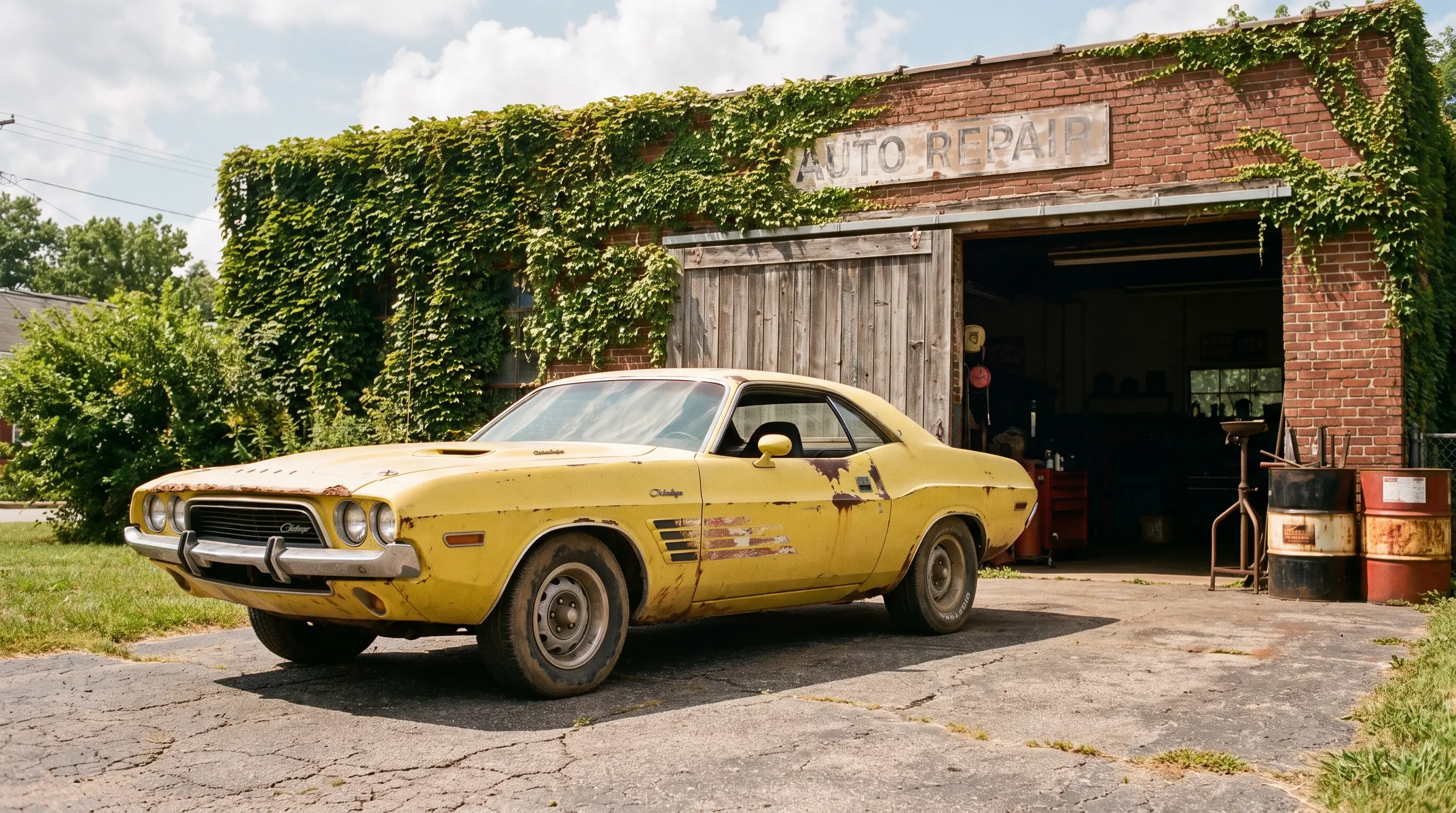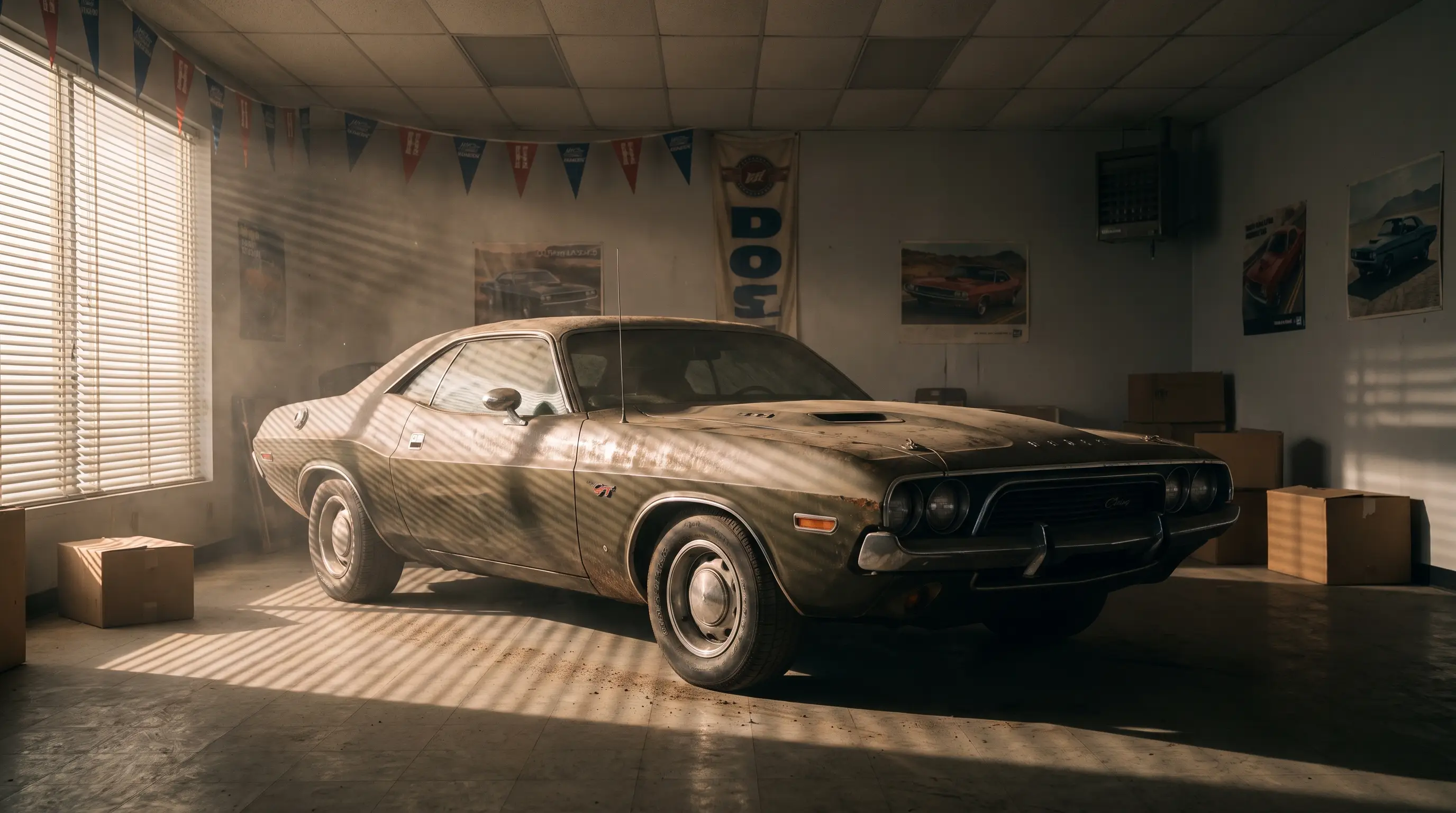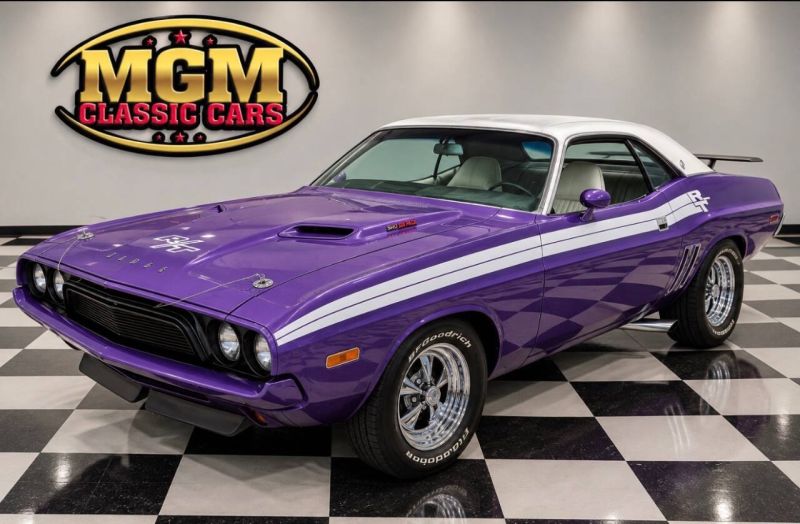
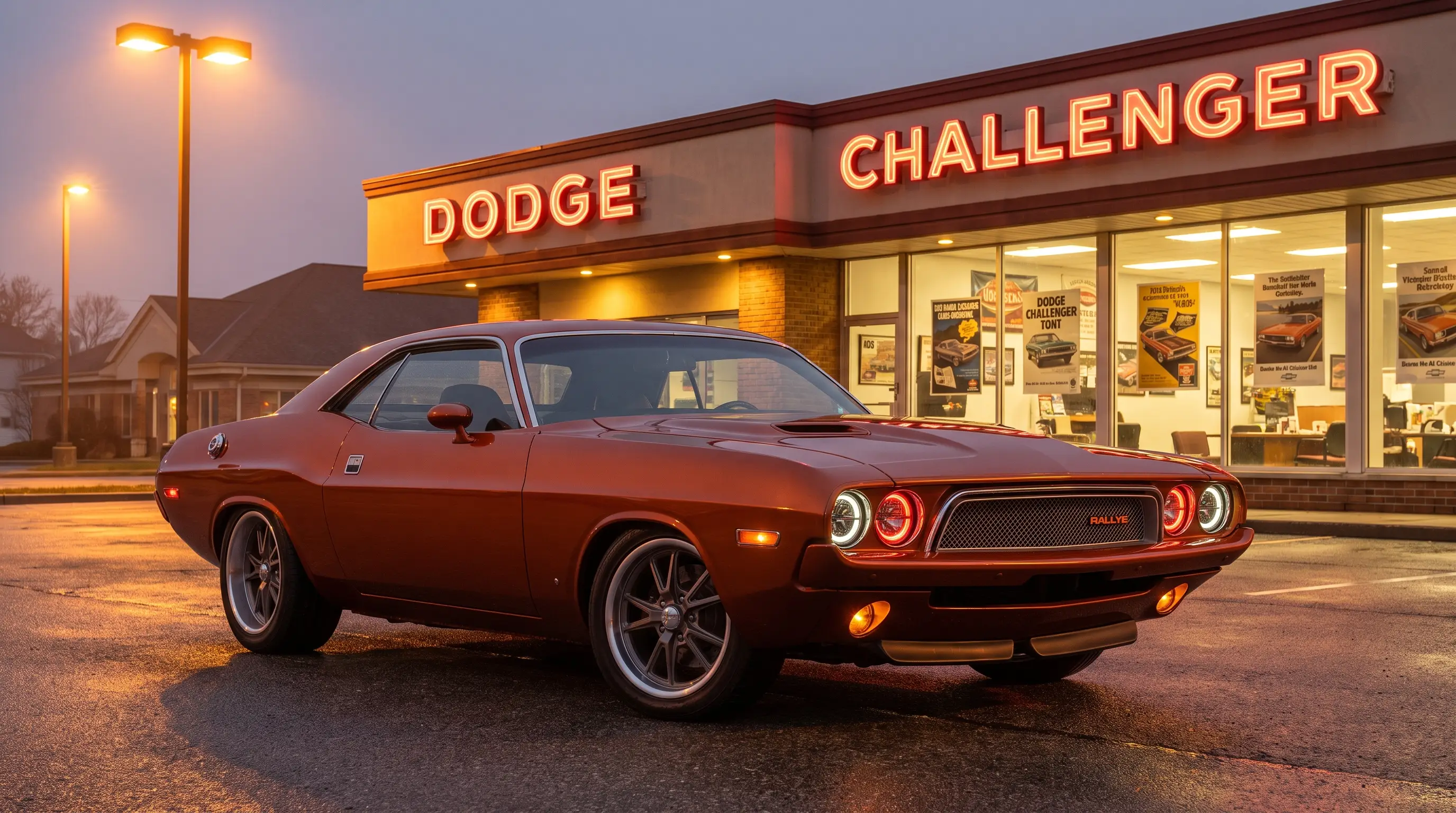
Documenting 1972 challenger styling as a single unchanging design ignores three years of genuine, deliberate revisions that period dealer literature tracked closely at the time. Between 1972 and 1974 the Challenger's grille, taillight treatment, and Rallye trim graphics each went through at least one meaningful update, changes that read as minor from a distance but that concours judges and restoration researchers treat as precise, dateable evidence when authenticating a specific car.
1972: a new grille inherits the split face
The 1972 model carried forward the twin-segment grille concept introduced the previous year but revised the insert pattern and surround detailing, a change subtle enough that casual observers often assume the 1971 and 1972 grilles are identical when they are not. Parking lamp housings received minor revisions as well, coordinated with the year's broader trim update. This was also the year net horsepower ratings arrived alongside the styling changes, meaning 1972 marks a genuine inflection point in both the car's appearance and its engineering presentation to the public, two changes that happened to land in the same model year rather than being directly connected.
| Model year | Key styling change |
|---|---|
| 1971 | Split twin-segment grille introduced |
| 1972 | Revised grille insert and parking lamp detailing |
| 1973 | Updated taillight treatment, first-phase front bumper standard |
| 1974 | Heavier front and rear bumpers, final Rallye graphics revision before cancellation |
1973: taillights and the first federal bumper requirements
Federal bumper impact standards phased in starting with the 1973 model year, requiring cars to withstand a 5 mph front impact and a 2.5 mph rear impact without damage to safety equipment, and the Challenger's front end absorbed the bulk of that first-phase requirement while carrying an updated taillight lens design at the rear. These changes were driven by regulation rather than pure styling preference, but Dodge's design team still managed to keep the fascia visually coherent with the front-end language established in 1971 and refined in 1972. Researchers dating a car to 1973 specifically often start with the taillight and front bumper details, since these are harder to swap convincingly than smaller trim pieces and tend to remain original even on cars that have seen other modifications over the decades.
1974: the final Rallye graphics package
By 1974, styling changes were less about the body itself and more about the Rallye trim graphics that had become the car's primary way of signaling performance intent in a lineup that had lost its biggest engines. The stripe pattern and spoiler detailing received their final revision this year, a last styling refresh before the entire platform was cancelled that spring. Documenting this final graphics package accurately matters for restoration work today, since aftermarket stripe kits sold for decades afterward do not always match the exact width, color, and placement Dodge used in this specific final year.
"People assume styling stopped mattering once the big engines left. Dodge's designers clearly did not agree. Every one of these three years got a real, documented update, not a rerun of the year before."
- Sarah Whitfield
Color and interior trim shifts across the same window
Exterior color availability also shifted noticeably across these three years, with several bolder high-impact colors from the early 1970s phased out by 1973 and 1974 in favor of a more conservative palette that matched the broader industry retreat from loud paint options. Interior trim followed a similar pattern, with certain vinyl and cloth combinations discontinued and replaced by options that better suited the comfort-oriented marketing direction Dodge had shifted toward as the performance angle faded. A correctly restored 1972 example should not carry a color or interior combination that only became available in 1974, a mismatch that is more common than it should be among cars restored without careful reference to the original build sheet.
These color and trim shifts, while less visually dramatic than the grille or taillight changes, are just as useful for dating a car when other evidence is ambiguous. A combination of exterior color, interior trim, and Rallye graphics detail that does not match any single documented model year combination is a strong indicator that a car has received parts from more than one production year during a prior restoration, information a buyer deserves to know before agreeing on a price.
Why year-specific styling details matter for restoration accuracy
Restoration shops working from incomplete reference photography sometimes default to whichever trim detail is most commonly reproduced by aftermarket suppliers, rather than the detail specifically correct for a given model year. This is how incorrect grille inserts, mismatched taillight lenses, and off-pattern Rallye stripes end up on cars presented as restored to original specification. A careful researcher cross-references dealer brochures, parts catalogs, and surviving unrestored examples from each specific year before signing off on a restoration as period-correct, and that cross-referencing work is exactly what separates a documented restoration from one that merely looks plausible to an untrained eye.
For readers wanting the complete arc connecting these three years of styling changes to the engineering and market pressures happening simultaneously, our complete history of the 1971 through 1974 generation covers the full context these details sit within. Understanding why each change happened, not just what changed, makes the styling progression far easier to place correctly when evaluating a specific car's authenticity.
Applying this to a current purchase
Buyers evaluating a 1972, 1973, or 1974 Challenger today should treat year-specific styling accuracy as seriously as engine and drivetrain originality, since trim details are frequently the first thing to be replaced incorrectly during an amateur restoration decades after the fact. A car with correct, documented styling details for its specific model year carries a real premium over an otherwise comparable example with mismatched trim, and that premium reflects genuine research effort rather than mere cosmetic preference. Those ready to compare available examples against this year-by-year styling reference can browse classic Challenger listings and check each candidate's grille, taillights, and Rallye graphics against the correct specification for its actual model year.
None of these details are dramatic on their own, but together they form a reliable dating fingerprint that holds up better than relying on a seller's word or a casual glance at the badge. Treat 1972 challenger styling, and the years immediately around it, as a documented progression rather than a single frozen look, and the research process for authenticating any specific car becomes considerably more precise. That precision is exactly what separates a genuinely researched restoration from one that simply photographs well, and it is the standard this publication holds every restoration claim to before repeating it in print.