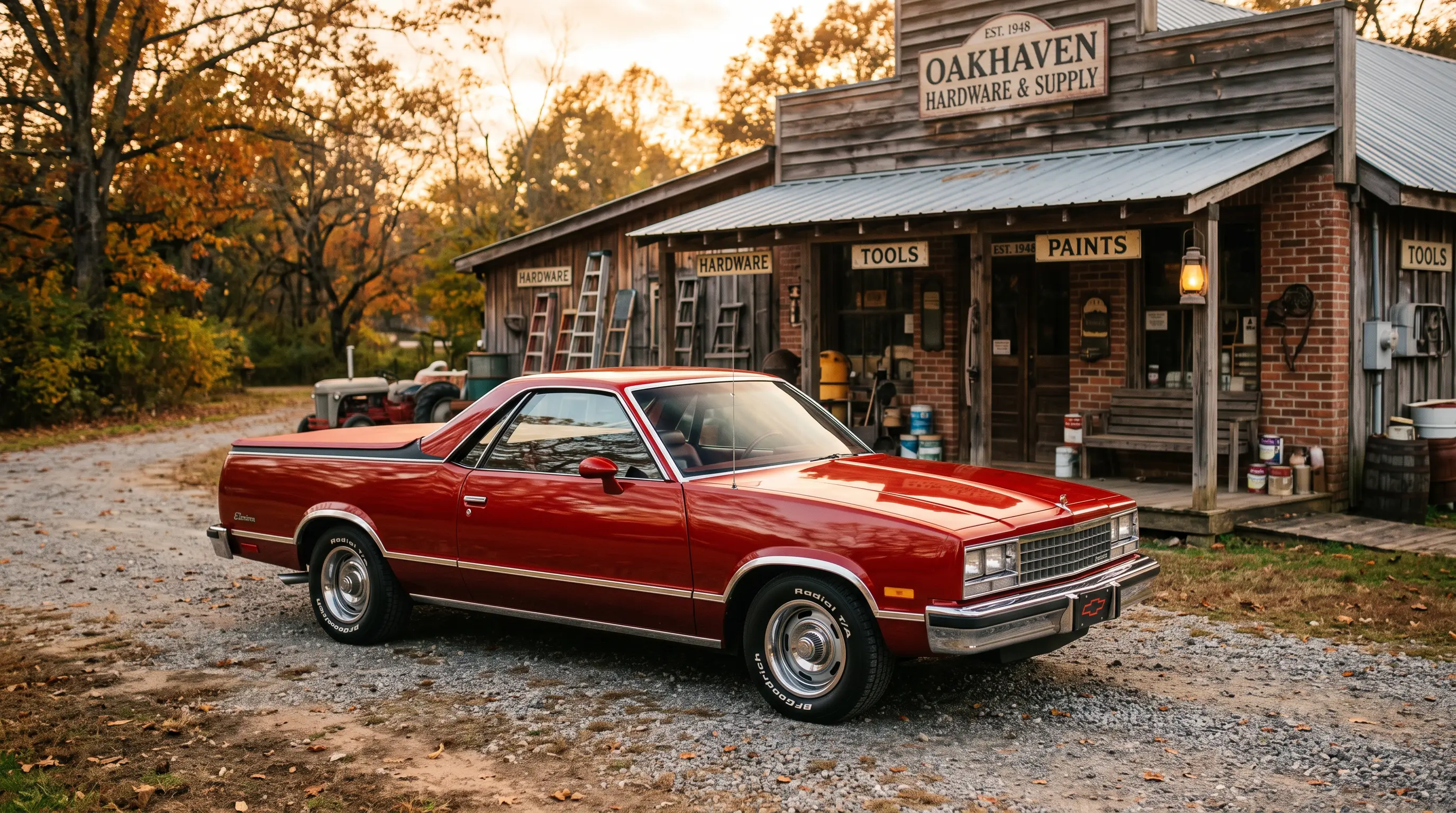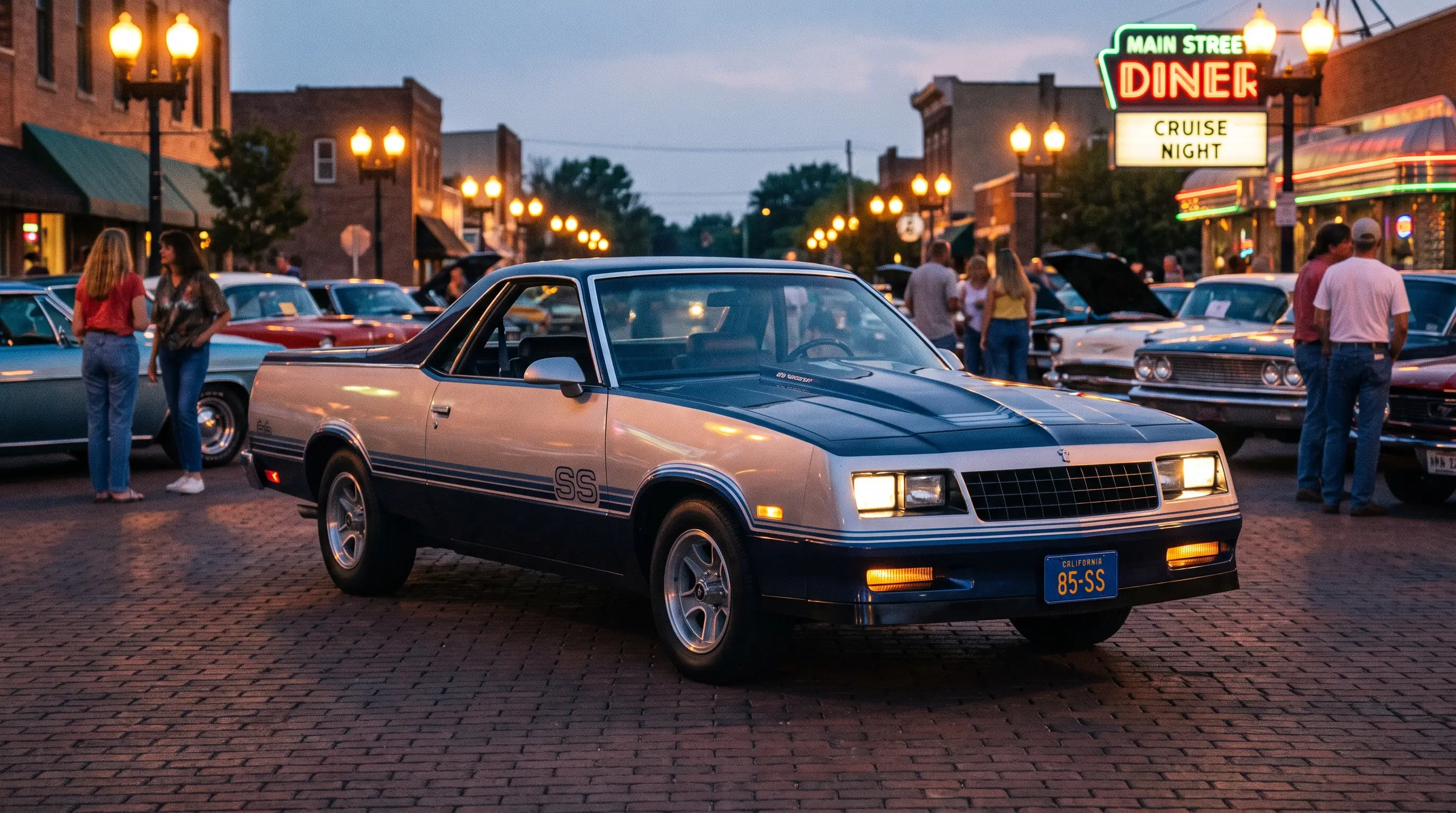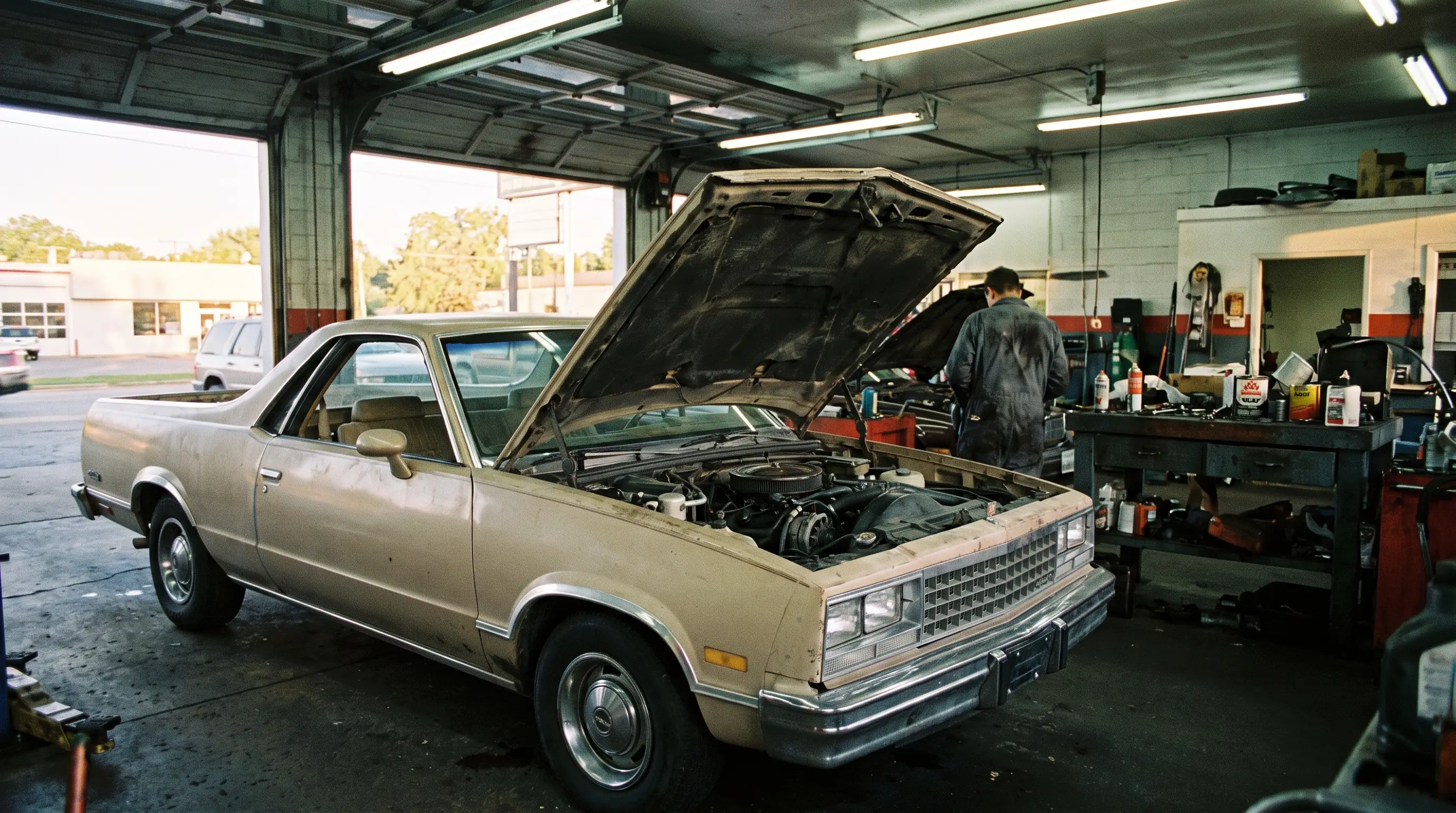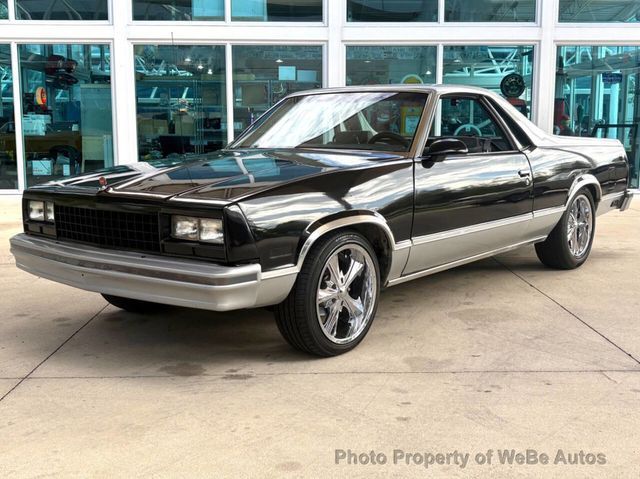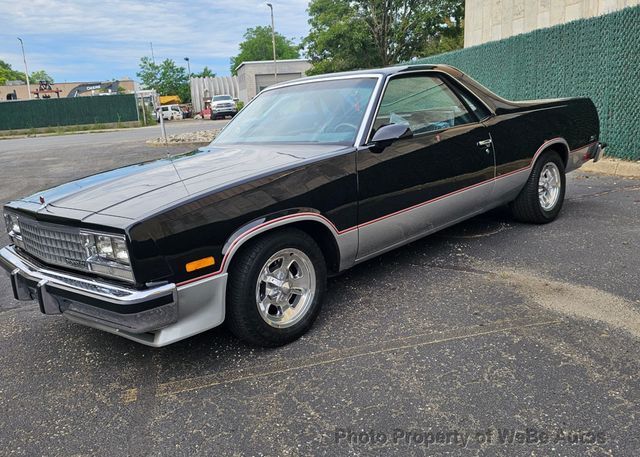

The 1985 Chevrolet El Camino shared its frame, its firewall, its dashboard architecture, and much of its identity with a car most buyers never thought to connect it to: the Malibu sedan. That relationship was not incidental. It was the entire engineering strategy behind the G-body El Camino, and understanding the Malibu connection explains a great deal about why the car looked, drove, and aged the way it did through the 1980s.
One platform, several bodies
When General Motors developed the G-body platform for the 1978 model year, the strategy was explicitly about shared architecture across multiple divisions and body styles. The Malibu sedan and coupe, the Monte Carlo, the Buick Regal, the Oldsmobile Cutlass Supreme, and the El Camino all rode on variations of the same basic underpinnings, a frame and chassis design engineered once and adapted across the corporate lineup. For the El Camino specifically, that meant taking the Malibu's front clip, cabin structure, and much of its running gear, then grafting on the open bed that defined the nameplate since its debut.
This shared-platform approach was standard practice across Detroit by the late 1970s, driven by the economics of developing fewer distinct architectures while still offering buyers a range of body styles and brand identities. GM had used similar strategies before, but the G-body program represented one of the more successful executions of the idea, keeping the various divisions and body styles in production together for the better part of a decade.
What the Malibu relationship meant mechanically
Because the El Camino shared its front structure and drivetrain options with the Malibu, engine choices tracked closely between the two vehicles. The 305 cubic inch V8 that powered SS El Caminos in the mid-1980s was the same basic engine found under the hood of contemporary Malibu sedans, and the V6 base engine option followed the same pattern. Suspension tuning differed somewhat to account for the El Camino's cargo-carrying mission, with reinforced rear leaf springs handling load duty that a sedan never needed to consider, but the fundamental chassis geometry traced directly back to the Malibu.
The dashboard, gauge cluster, and much of the interior trim also carried over with only minor differences, which is why a Malibu owner from this period would find the El Camino's cabin instantly familiar. This shared tooling kept production costs manageable for Chevrolet even as sales volumes for both vehicles declined through the 1980s compared to the muscle car heyday of the SS 396 and SS 454. the full story of the 1985 model covers how this platform sharing fit into the broader arc of the G-body years.
Why this mattered for how the car was perceived
Critics of the downsized El Camino sometimes framed the car as little more than a Malibu with a bed bolted on, and there was real truth buried in that criticism even if it understated the engineering work involved in adapting a sedan platform to carry cargo reliably. The relationship also meant that whatever fortunes befell the Malibu nameplate, in terms of sales, reputation, or parts support, rippled directly into the El Camino's own trajectory, since the two vehicles were never truly independent of each other mechanically.
That interdependence cuts both ways for collectors today. Parts commonality with the Malibu, and by extension with other G-body siblings like the Monte Carlo and Cutlass Supreme, has made certain mechanical components easier to source for El Camino owners than they would be for a more unique, standalone platform. Trim-specific and body-specific parts, the pieces that actually made the car an El Camino rather than a sedan, remain the harder items to track down.
The platform's legacy in the nameplate's story
The G-body years, built on this Malibu-derived architecture, ultimately kept the El Camino alive for nearly a decade after the muscle car market collapsed, carrying the nameplate through 1987 before Chevrolet finally ended production. Whatever purists think of the shared platform strategy, it worked as a survival mechanism, giving the El Camino a long final chapter it might not have gotten on a standalone architecture that GM would have had less incentive to keep funding through a difficult decade for American performance cars.
"Every El Camino from 1978 onward is, structurally speaking, a Malibu wearing a different coat. That is not an insult. It is precisely why the nameplate survived as long as it did."
- Sarah Whitfield
The other G-body siblings worth knowing
Understanding the El Camino's Malibu connection only tells half the story, since the same platform underpinned several other nameplates that shared components, if not exact styling, with Chevrolet's car-truck hybrid. The Monte Carlo carried the platform into personal luxury coupe territory, the Buick Regal offered its own take with different brand positioning, and the Oldsmobile Cutlass Supreme became one of the best-selling cars in America during parts of this run while riding on essentially the same bones as the El Camino.
For El Camino owners today, this wider family matters practically. Certain suspension components, electrical parts, and even some interior hardware cross reference not just to the Malibu but to these other G-body siblings as well, widening the pool of donor vehicles and parts sources beyond what a standalone platform would ever allow. A mechanic unfamiliar with the El Camino specifically can often still diagnose and source parts for common failures simply by recognizing the shared G-body underpinnings.
Documentation quirks worth knowing
Because so much sheet metal and hardware crossed between these nameplates, verifying an El Camino's originality sometimes requires checking that a given part is actually correct for the El Camino rather than a visually similar piece borrowed from a Malibu or Monte Carlo parts bin during a previous repair. Casual observers rarely notice the difference, but judges at concours-style events and serious buyers doing due diligence pay close attention to these details, since incorrect but plausible-looking parts can hide in plain sight on an otherwise well-preserved car.
Why the shared platform strategy eventually ended
GM's G-body sharing strategy could not last forever, and by the late 1980s the entire architecture was winding down across every division that had used it. The Monte Carlo and Regal moved to newer platforms, the Cutlass Supreme was eventually redesigned, and the El Camino simply ended production altogether in 1987 rather than transitioning to a successor. The shared platform that had kept costs down and production volumes viable through most of the 1980s eventually reached the natural end of its usefulness as GM shifted resources toward front-wheel-drive architectures across its mainstream lineup.
That ending gives the Malibu-El Camino relationship a defined arc, a beginning in 1978 and a clean conclusion less than a decade later, which makes the platform's full history unusually easy to study compared to nameplates that evolved continuously across many more distinct chassis generations.
Anyone researching a G-body El Camino should understand this platform relationship before evaluating a specific car, since parts availability and mechanical documentation often trace back through the Malibu and its G-body siblings. When you are ready to look at real examples, browse classic El Camino listings and compare drivetrain configurations across the years this platform was in production.