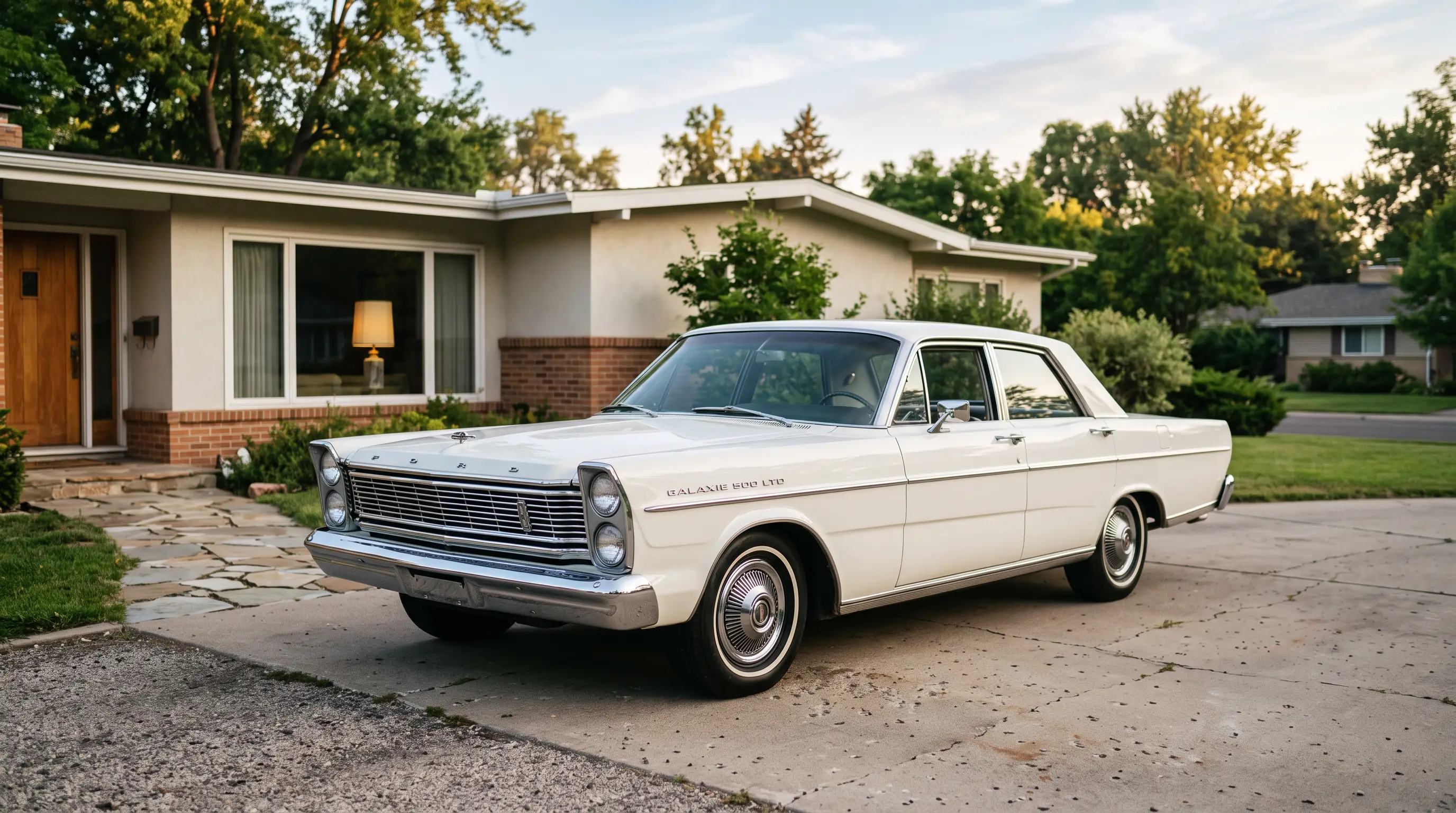
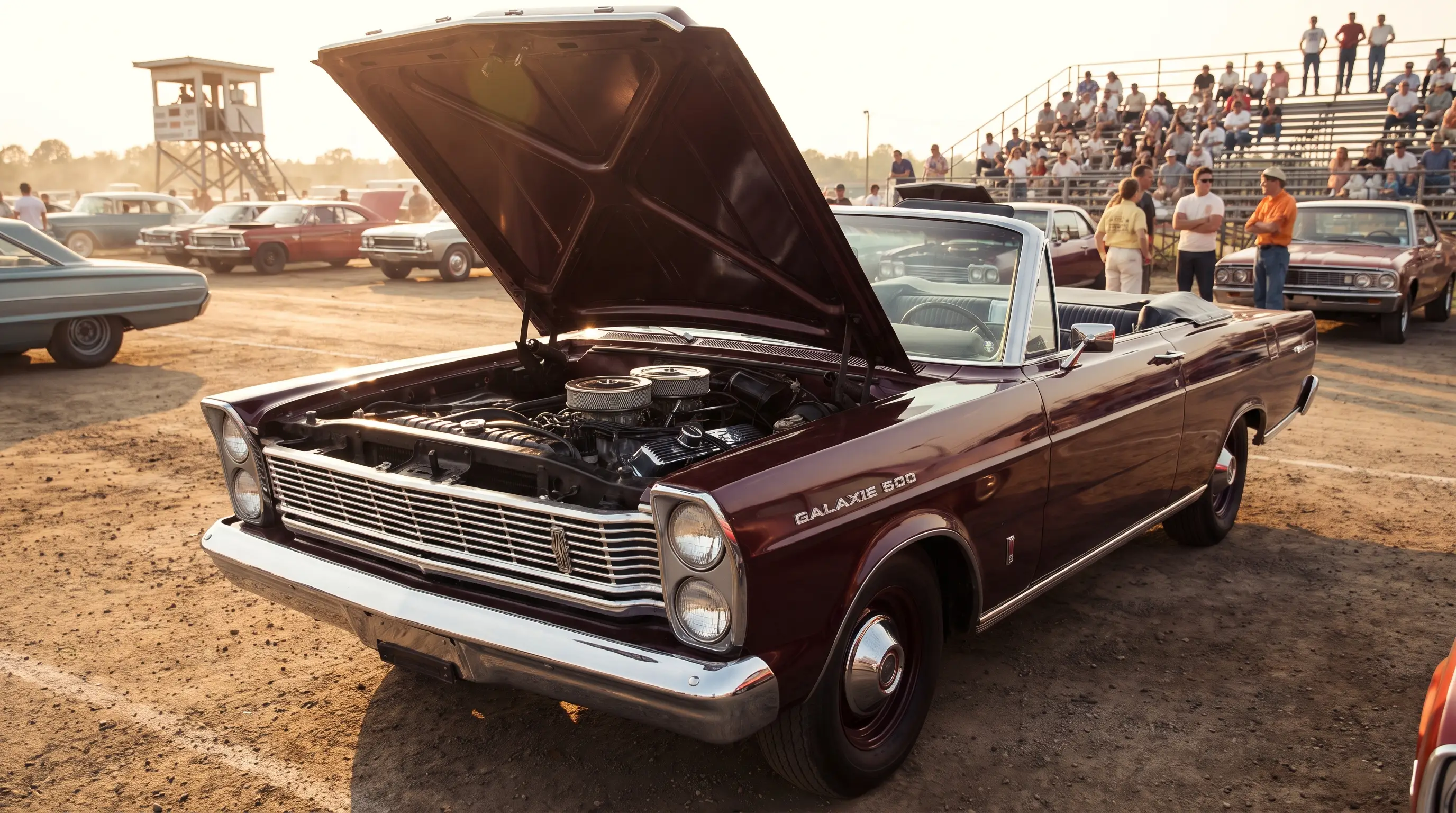
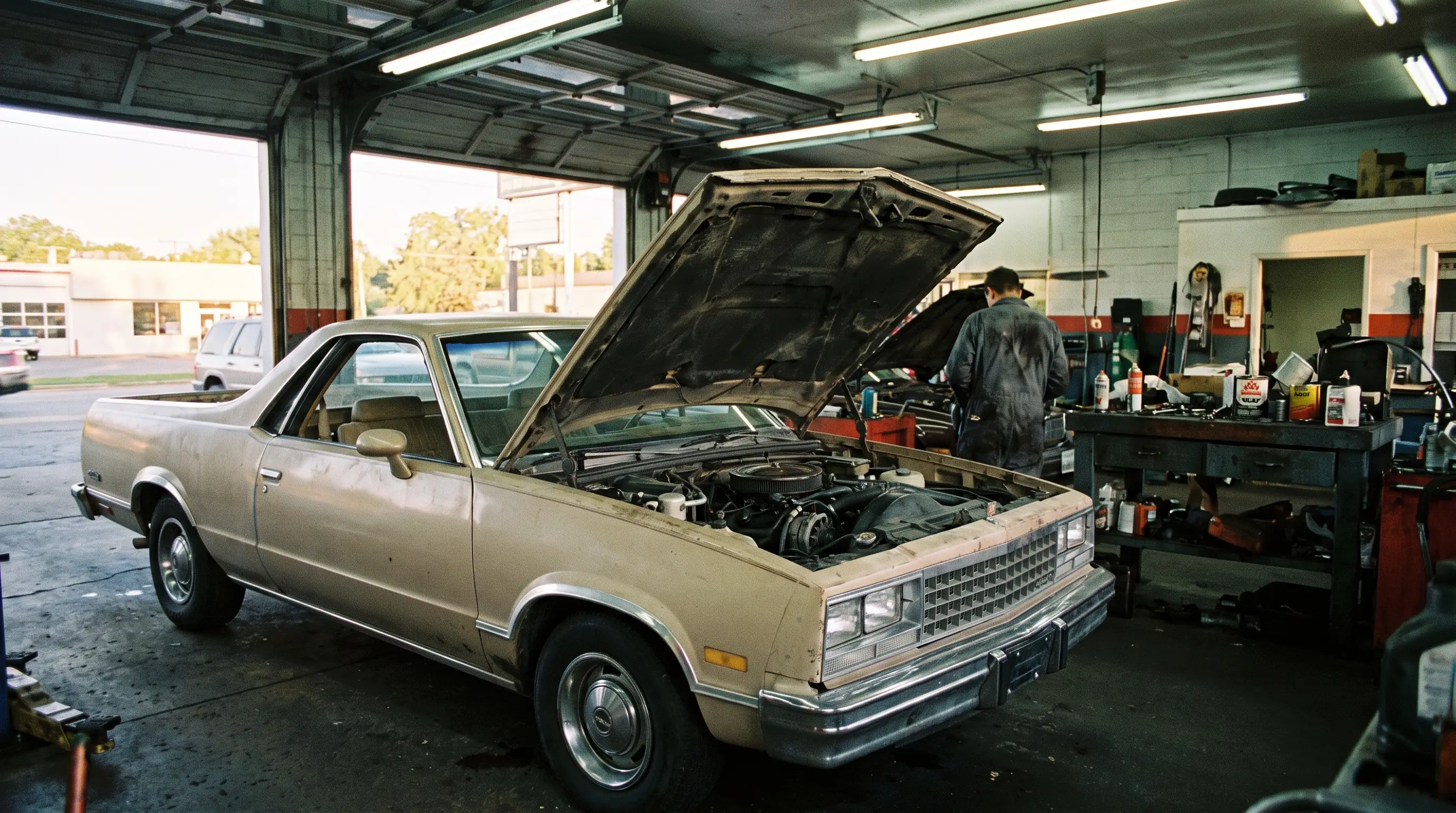
Ford's full-size line rode on leaf springs at the rear for generations, a proven and inexpensive arrangement that nonetheless left a lot of ride quality on the table compared to what a coil-sprung rear axle could deliver. In 1965, Ford finally made the change on the Galaxie and its full-size stablemates, moving to coil springs at all four corners for the first time on this platform, and the result reshaped how the car rode more than almost any other single engineering decision that model year.
Why leaf springs had lasted so long
Leaf springs are simple, durable, and cheap to manufacture at scale, which is exactly why they had persisted on Ford's full-size rear axles for as long as they had. A leaf pack does double duty, providing spring rate and location for the axle in a single component, which keeps parts count and assembly complexity down. The tradeoff is ride quality. Leaf springs transmit more harshness over small, sharp bumps than a well-tuned coil setup, and they are harder to isolate from the body through rubber bushings in the way a coil spring and separate locating arms allow. By the early 1960s, with General Motors already running coil springs on many of its own full-size cars, Ford's continued use of leaf springs at the rear had become a competitive disadvantage that showed up clearly in side-by-side road tests.
The engineering case for switching was not new in 1965. Ford's engineers had understood the tradeoffs for years. What changed was the willingness to invest in the redesign needed to make the switch, since moving to coil springs at the rear required a different axle location strategy entirely, typically some combination of trailing arms and a track bar or similar lateral locating device to do the job the leaf spring's own geometry used to handle for free. That is a real engineering project, not a simple parts swap, and it arrived in 1965 bundled together with the new perimeter frame and all-new body that defined the model year.
Bundling the suspension redesign with the frame and body changes was the practical path rather than the only option. Ford could, in theory, have kept the leaf-sprung rear axle on the new frame and saved considerable engineering time and tooling cost. That the company chose not to, and instead tackled the harder, more expensive coil-spring conversion in the same model year as everything else, suggests how seriously Ford's engineers viewed the ride quality gap against their competitors by the early 1960s.
What changed underneath the 1965 Galaxie
With the new frame in place, Ford's engineers fitted coil springs at each corner of the 1965 full-size line, replacing the leaf-sprung rear axle setup used on the previous generation. Up front, coil springs had already been standard practice on Ford's full-size cars for some time, so the real news was at the back, where the switch to coils required a properly located rear axle using separate trailing arms and a track bar arrangement to control lateral movement, since coil springs alone provide no positioning function the way a leaf pack does.
The immediate, measurable effect was a noticeably softer, quieter ride over small surface imperfections, the kind of low-frequency harshness that leaf springs had always struggled to filter out. Period road tests from 1965 consistently praised the change, often specifically calling out how much quieter and more composed the car felt on rough pavement compared to the outgoing model, language that showed up again and again across multiple publications testing the new Ford that year.
Correcting a common misconception
A misconception worth clearing up here: some enthusiasts assume the coil-spring switch on the 1965 Galaxie was purely a comfort play with no performance benefit, essentially a softening of the car for a more luxury-minded buyer. That undersells what the change actually did. A properly located coil-sprung rear axle, with the right geometry, can control body motions and maintain tire contact over uneven pavement better than a leaf-sprung setup, which is a handling benefit as much as a comfort one. The 1965 change was not simply Ford making the car plusher at the expense of control. It was Ford building a rear suspension that could do both jobs better than the leaf-sprung arrangement it replaced, a genuine engineering upgrade rather than a one-directional tradeoff.
That nuance tends to get lost because comfort was what Ford emphasized in its own advertising, since "quieter and smoother" sold better to the average full-size car buyer in 1965 than a discussion of axle location geometry ever would. But the engineering record, and the surviving factory documentation on the suspension redesign, supports a more complete picture than the marketing copy alone suggests.
It also helps to compare the outcome against what a poorly executed coil-spring conversion looks like, since not every manufacturer that made a similar switch around the same period got the geometry right on the first attempt. A rear axle that is well located can deliver both comfort and control. One that is not can wallow under hard cornering even while riding smoothly in a straight line. Ford's execution on the 1965 full-size cars held up well against contemporary reviews specifically because the engineering team got the locating geometry right rather than treating the coil springs as a drop-in replacement for the old leaf pack.
"Ford's own engineers knew the leaf spring rear end was a compromise for years before they finally fixed it. The 1965 change wasn't a soft option, it was Ford catching up to its own honest assessment of the car."
- Tom Ramirez
How the change shaped the Galaxie's reputation
The 1965 ride quality improvement became a talking point that outlasted the model year itself, part of why the 1965 to 1968 Galaxies developed a reputation among period buyers as the smoothest-riding full-size Fords yet built. That reputation mattered commercially, since ride quality was one of the few attributes a customer could evaluate firsthand on a test drive without needing to understand anything about engines or trim levels. A buyer who felt the difference over a rough patch of road did not need convincing about anything else.
The suspension change is one piece of a larger redesign story for the 1965 model year, and readers who want the fuller picture of everything Ford reworked that year, from the frame up through the body and the new LTD trim, can find where this started covered in more depth. For collectors evaluating cars today, the coil-spring rear suspension is also a practical consideration, since replacement bushings, trailing arms, and springs for this specific setup are well supported by the restoration parts market given how many full-size Fords used a version of this same layout through the following years. Anyone hunting for a classic Galaxie for sale from this model year is, whether they know the engineering history or not, shopping for a car that rides meaningfully better than the Galaxies that came before it, and that difference is still noticeable from the driver's seat more than half a century later.