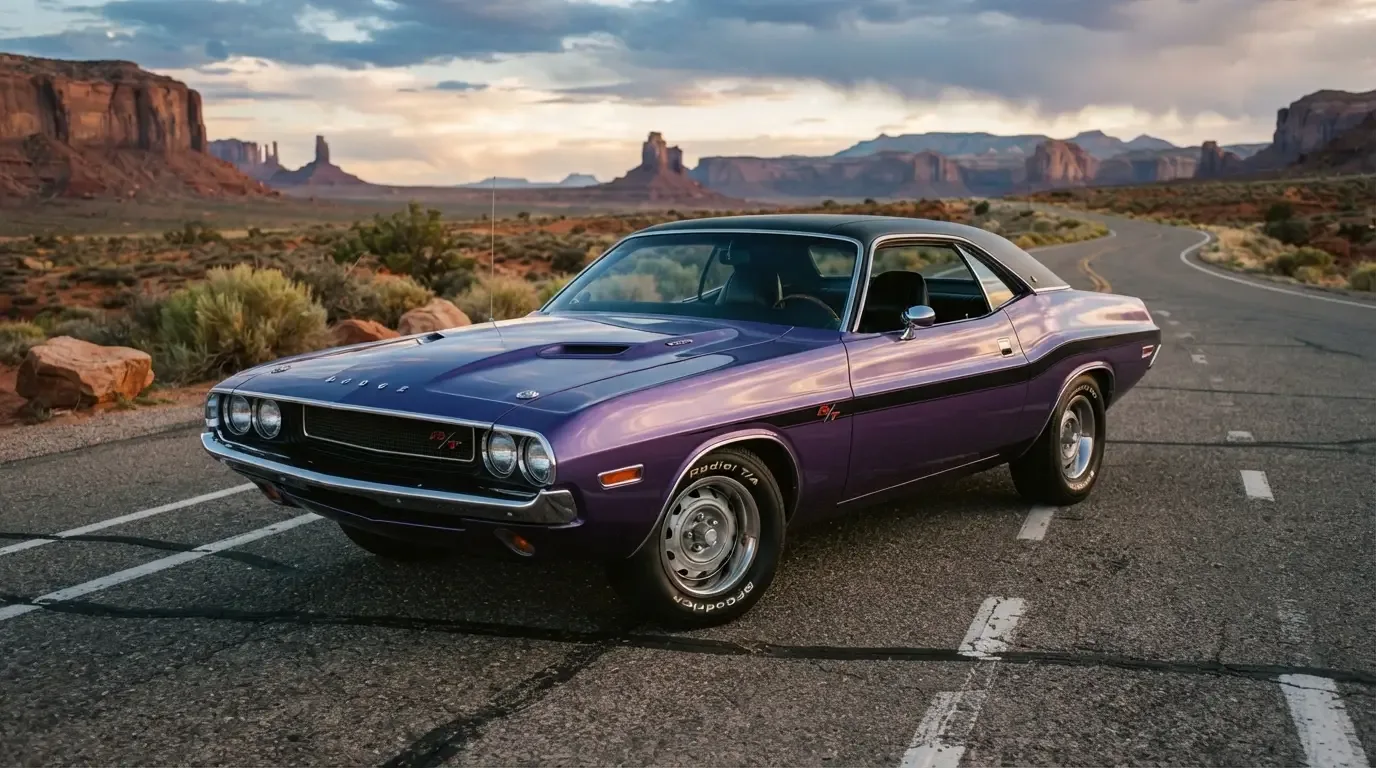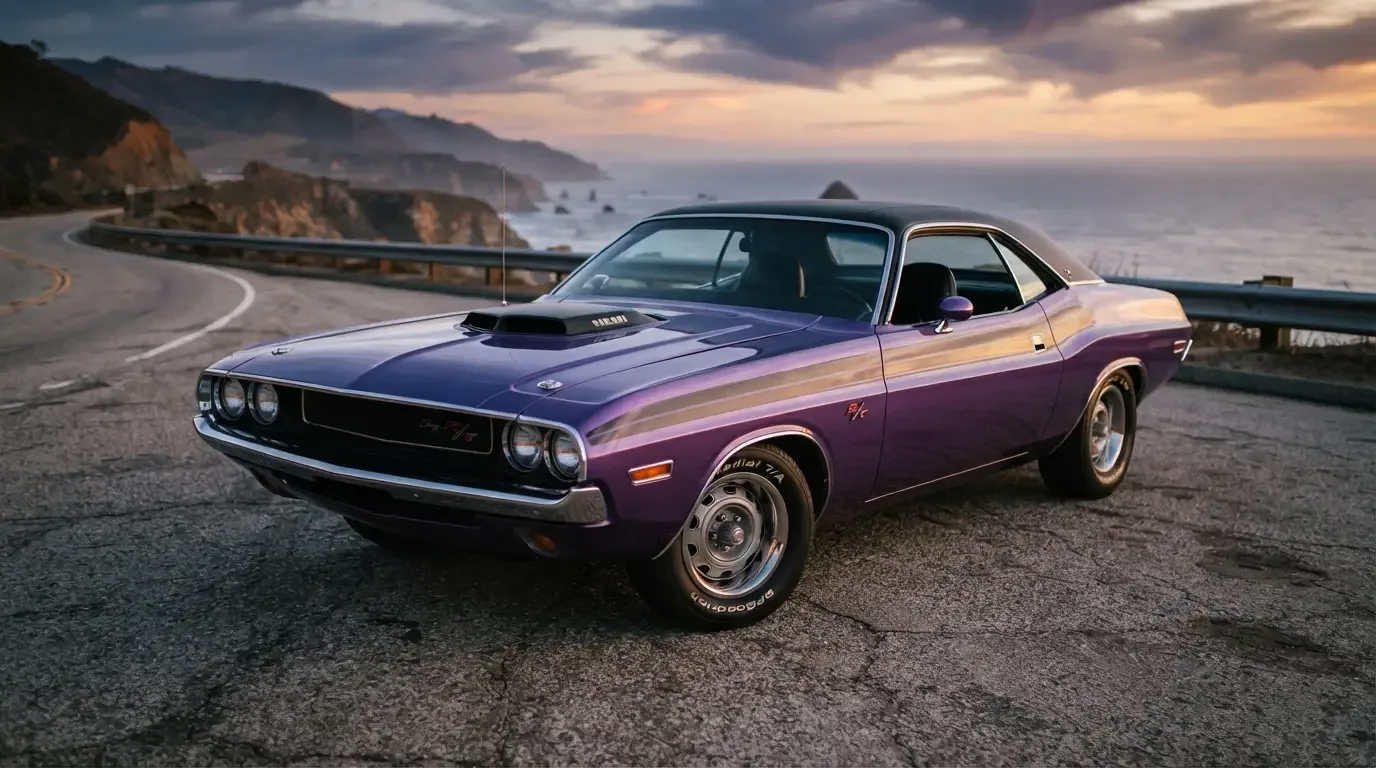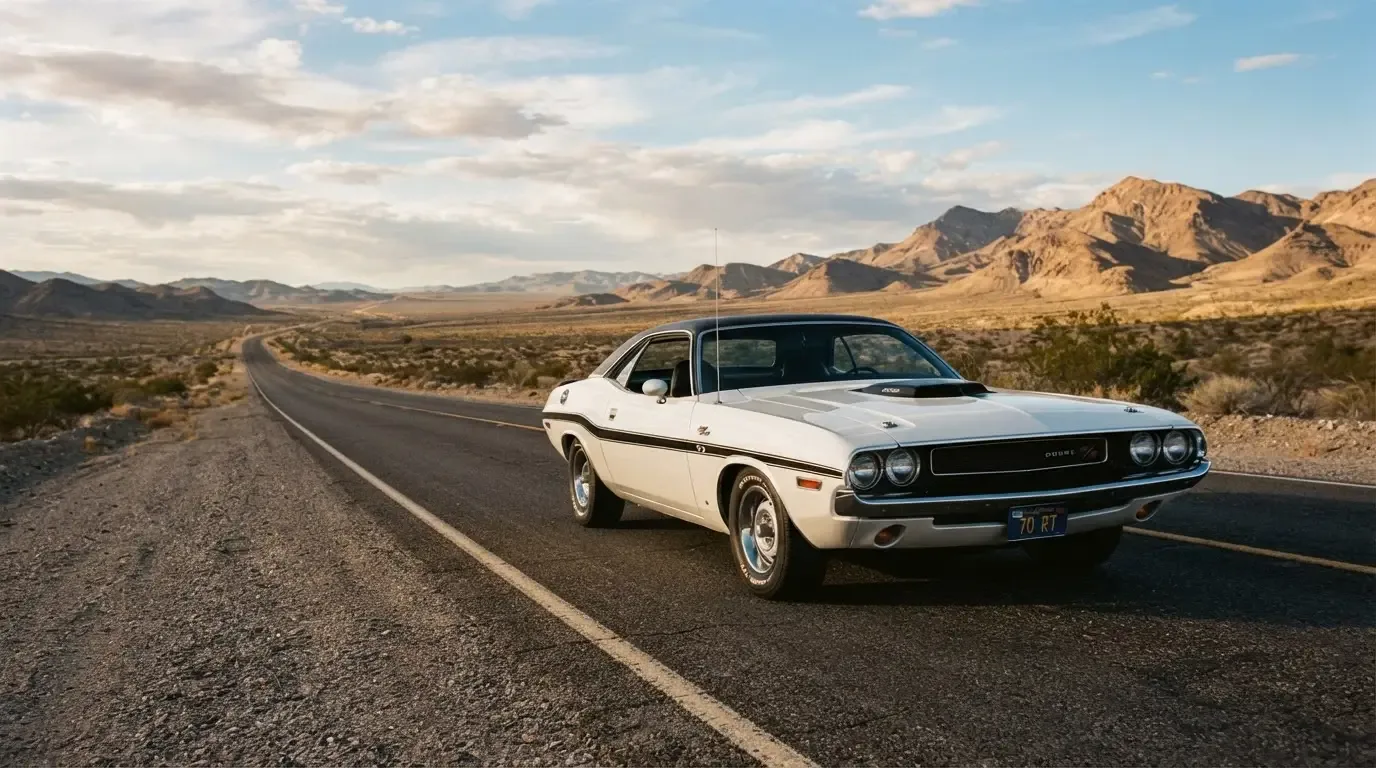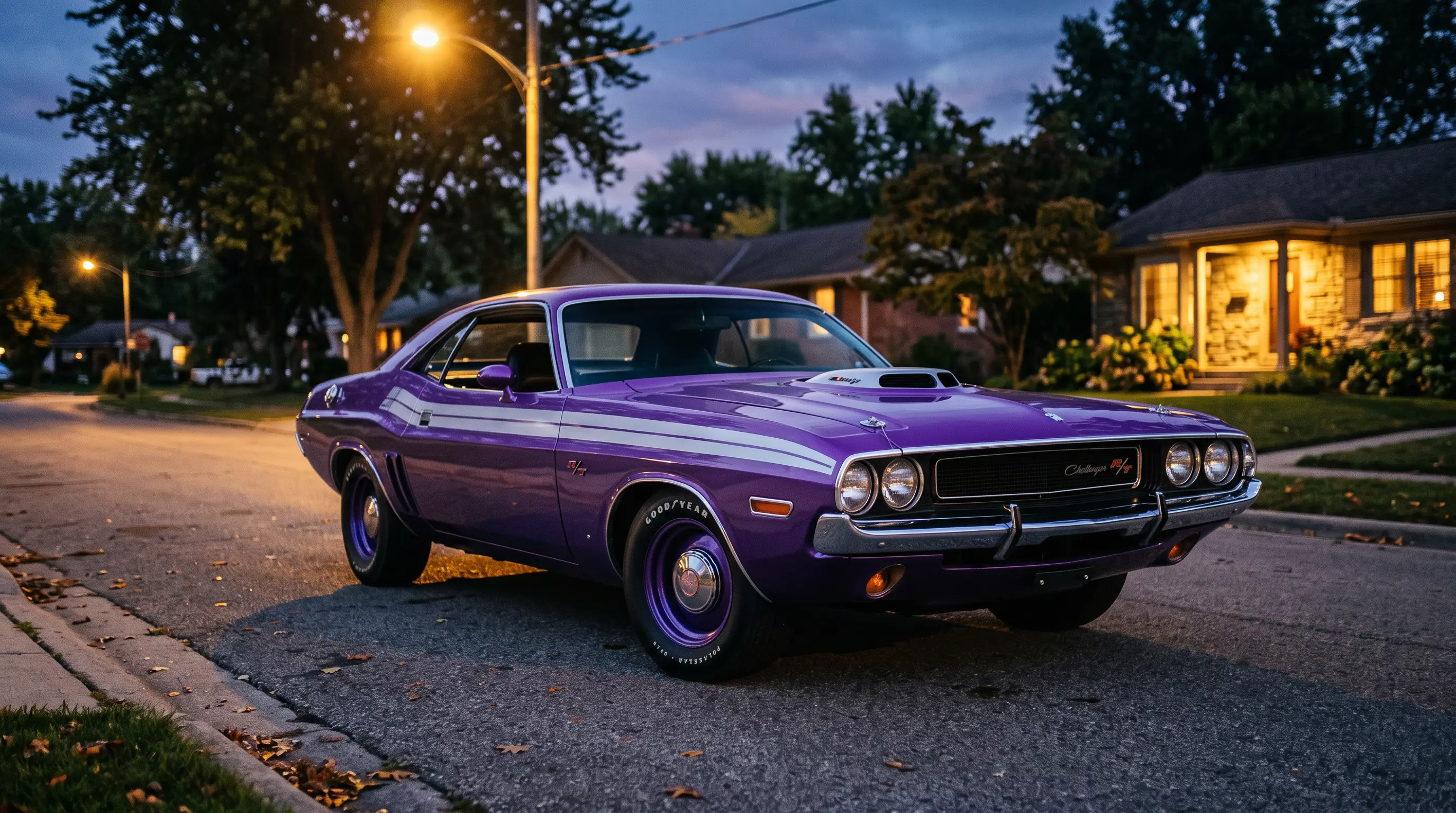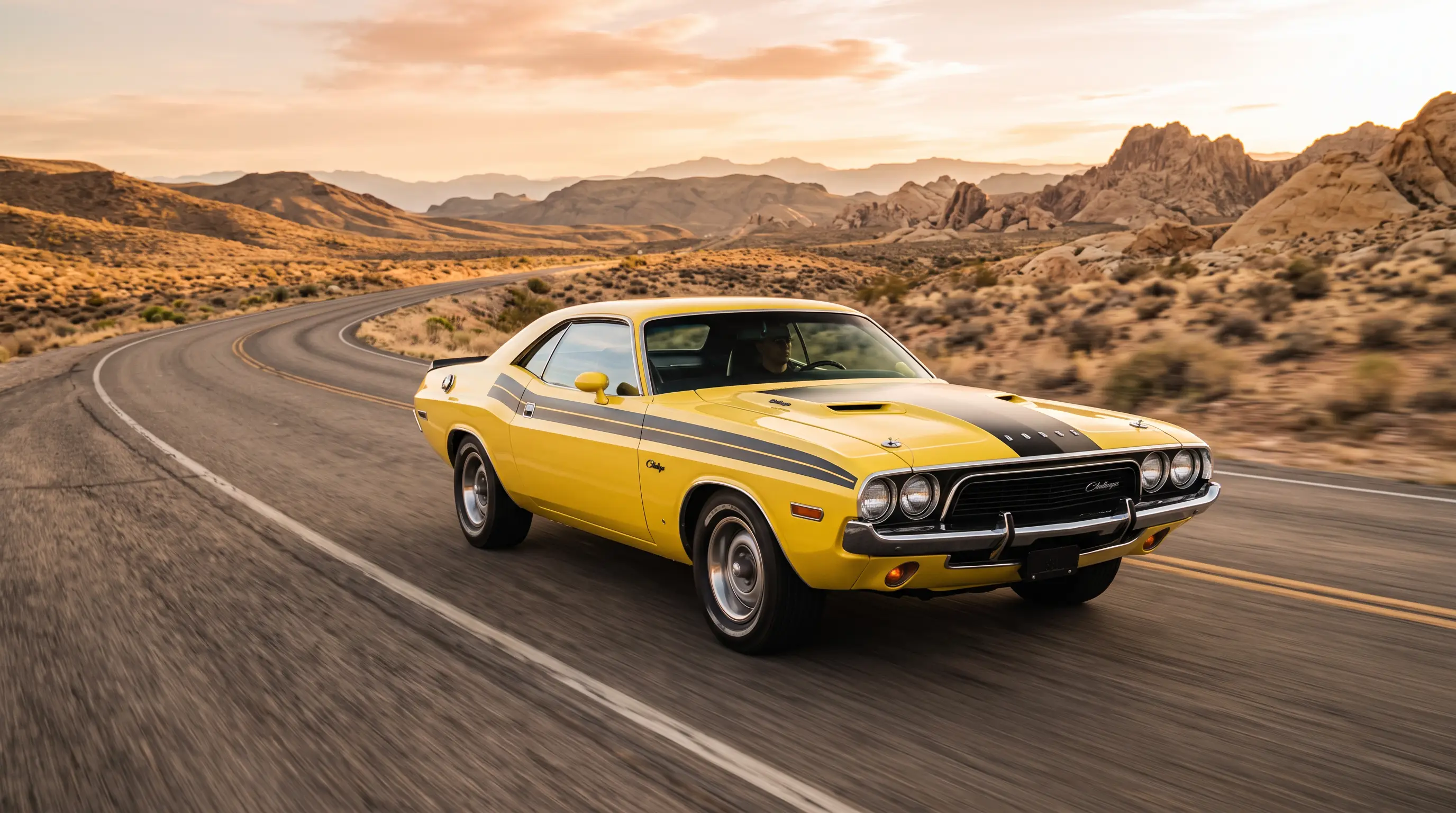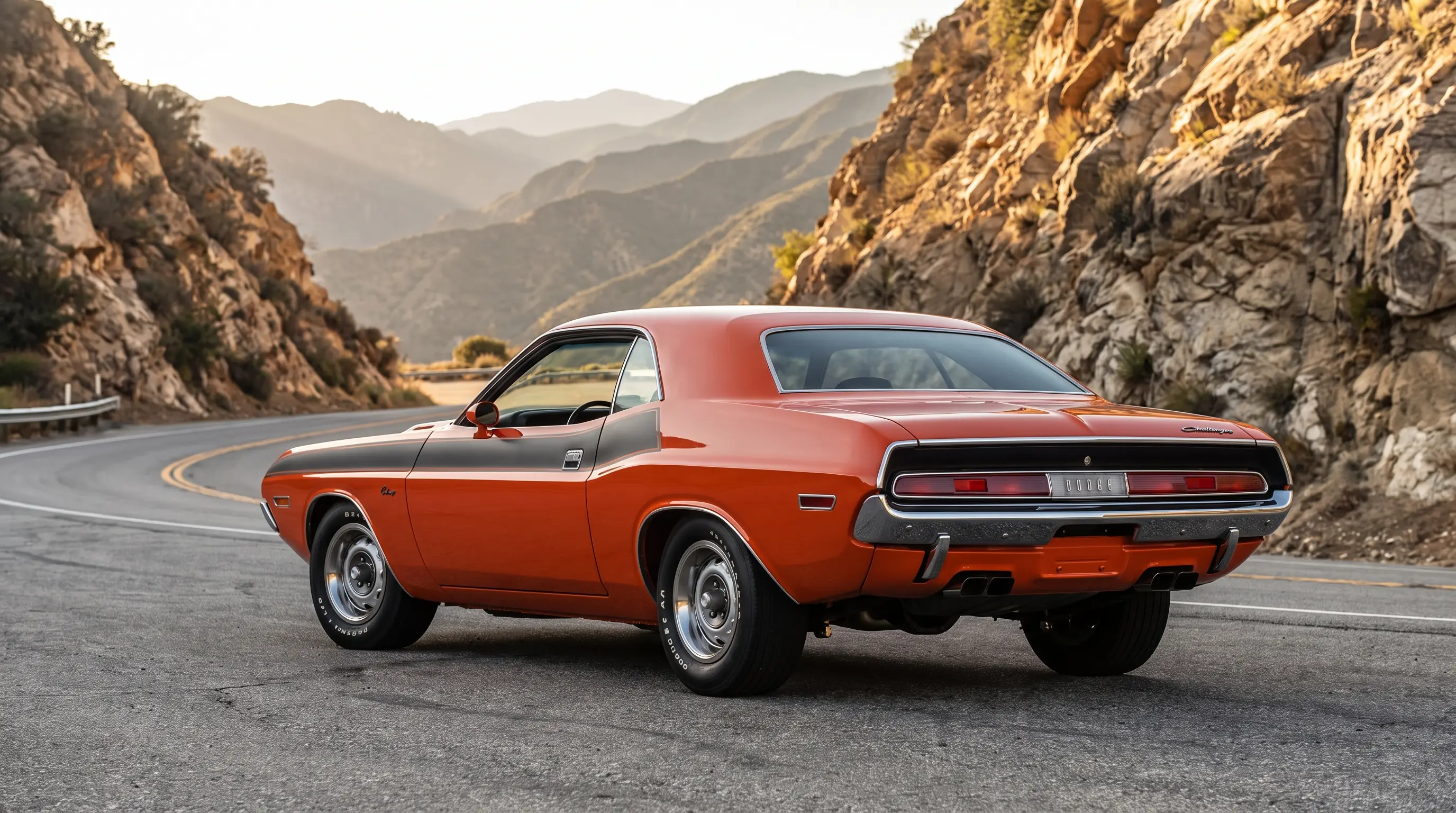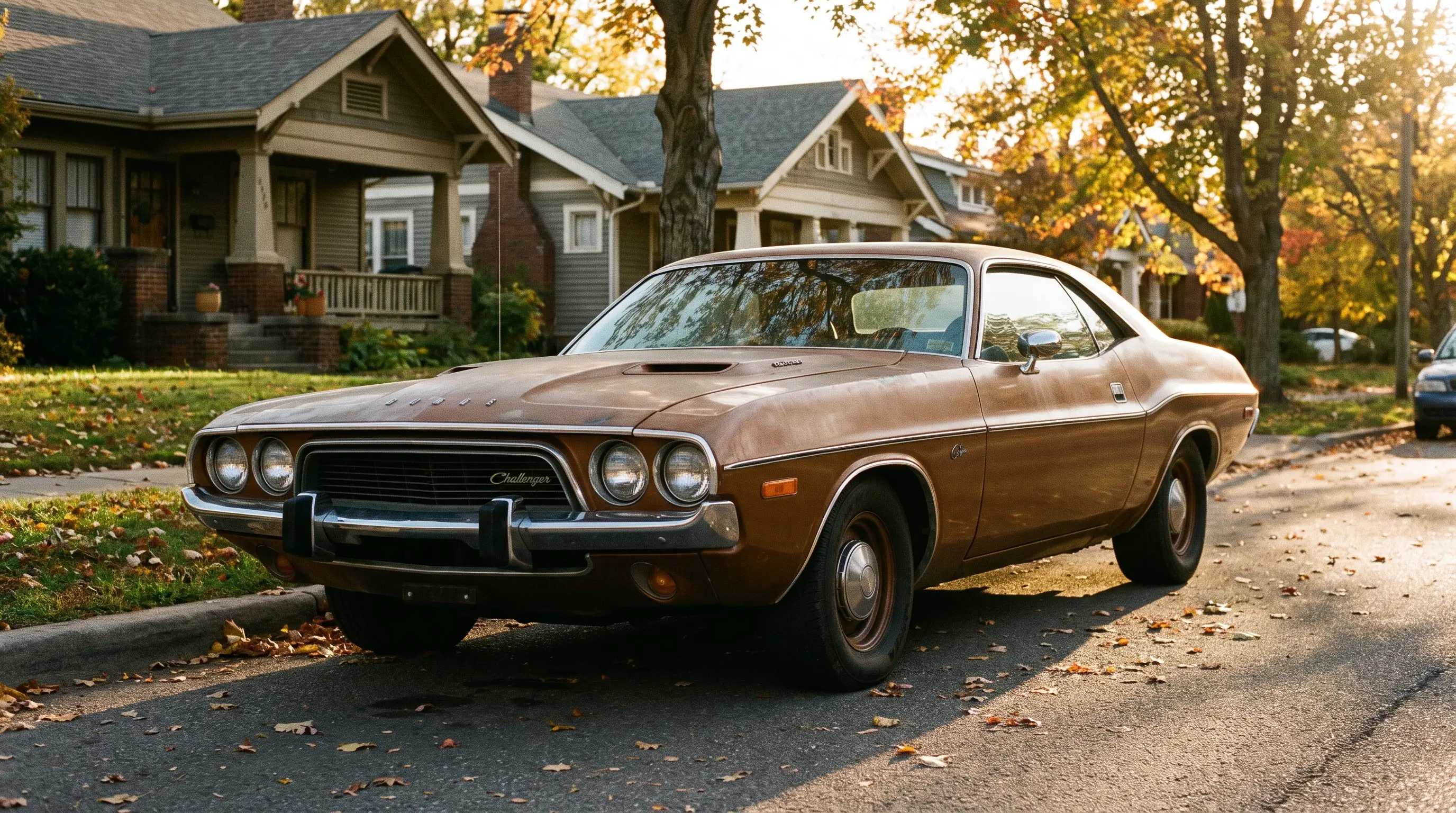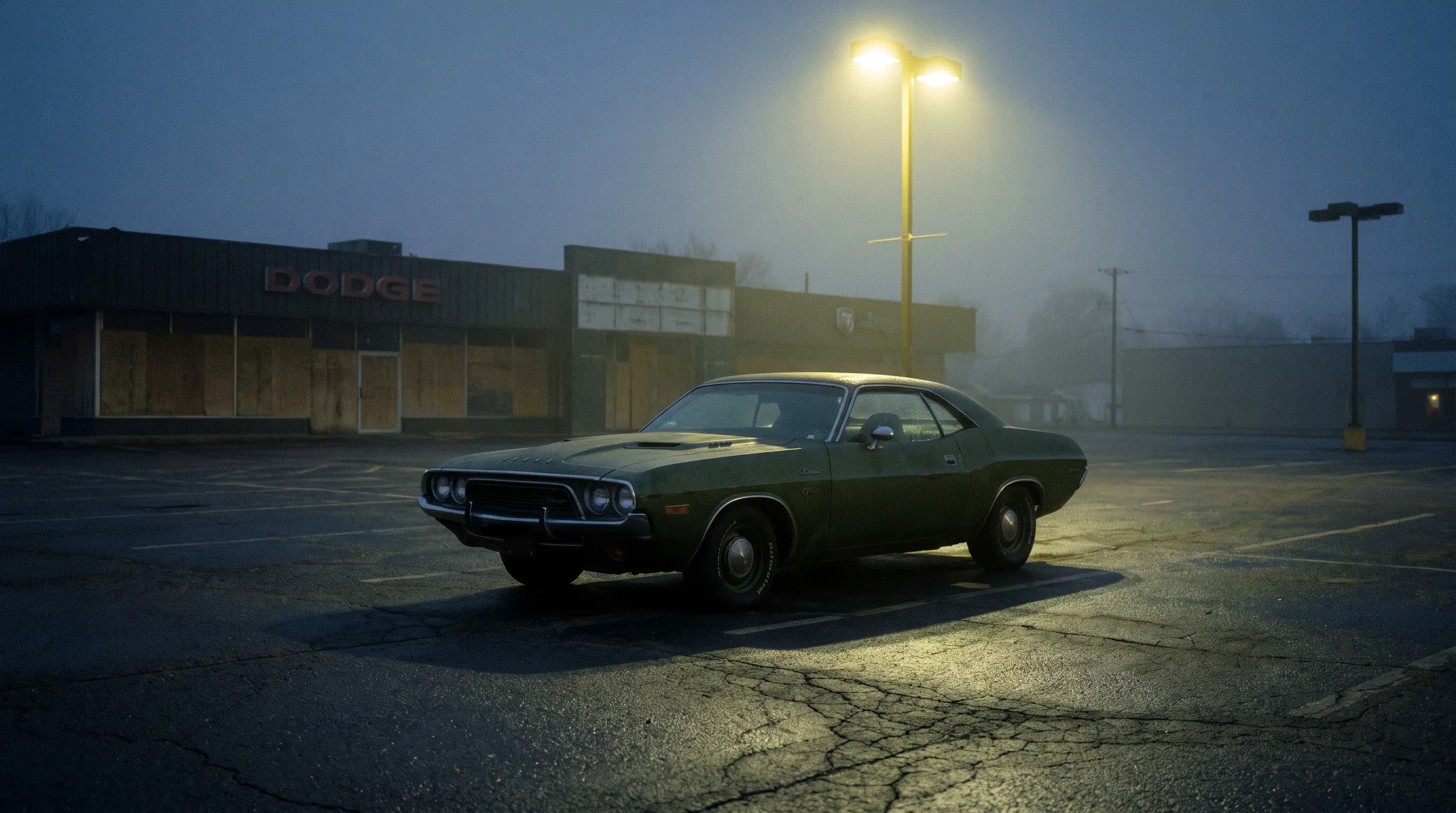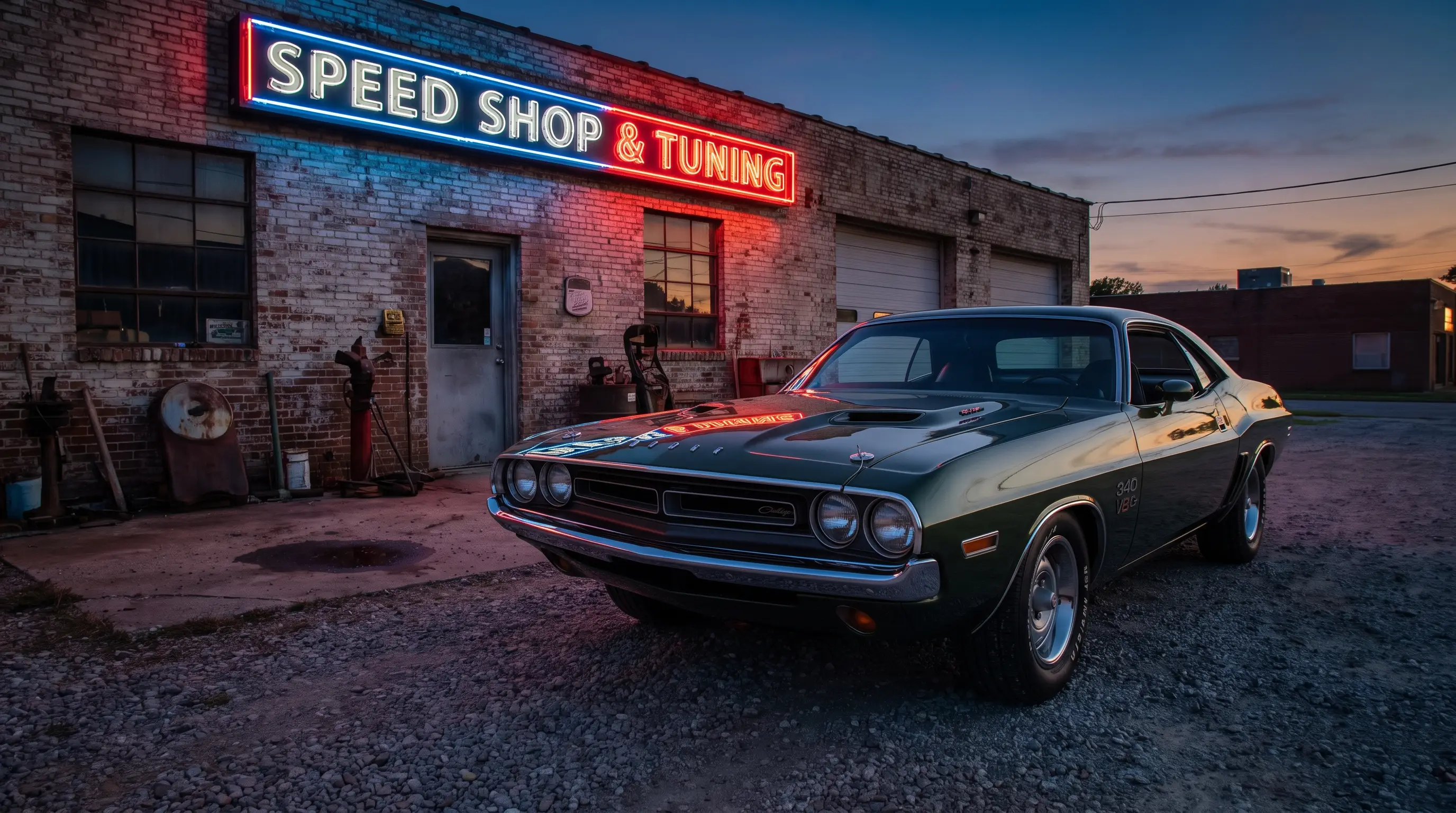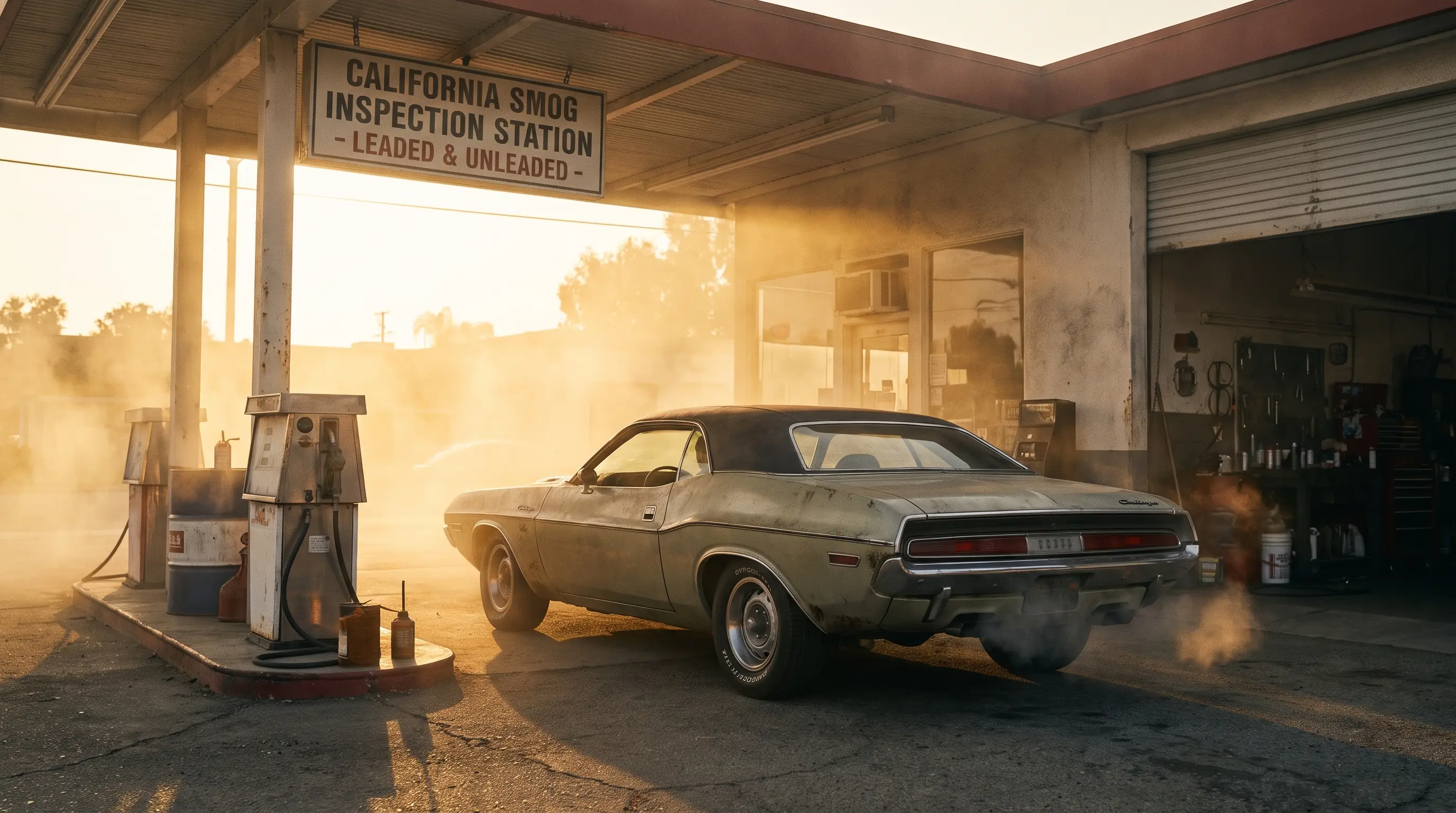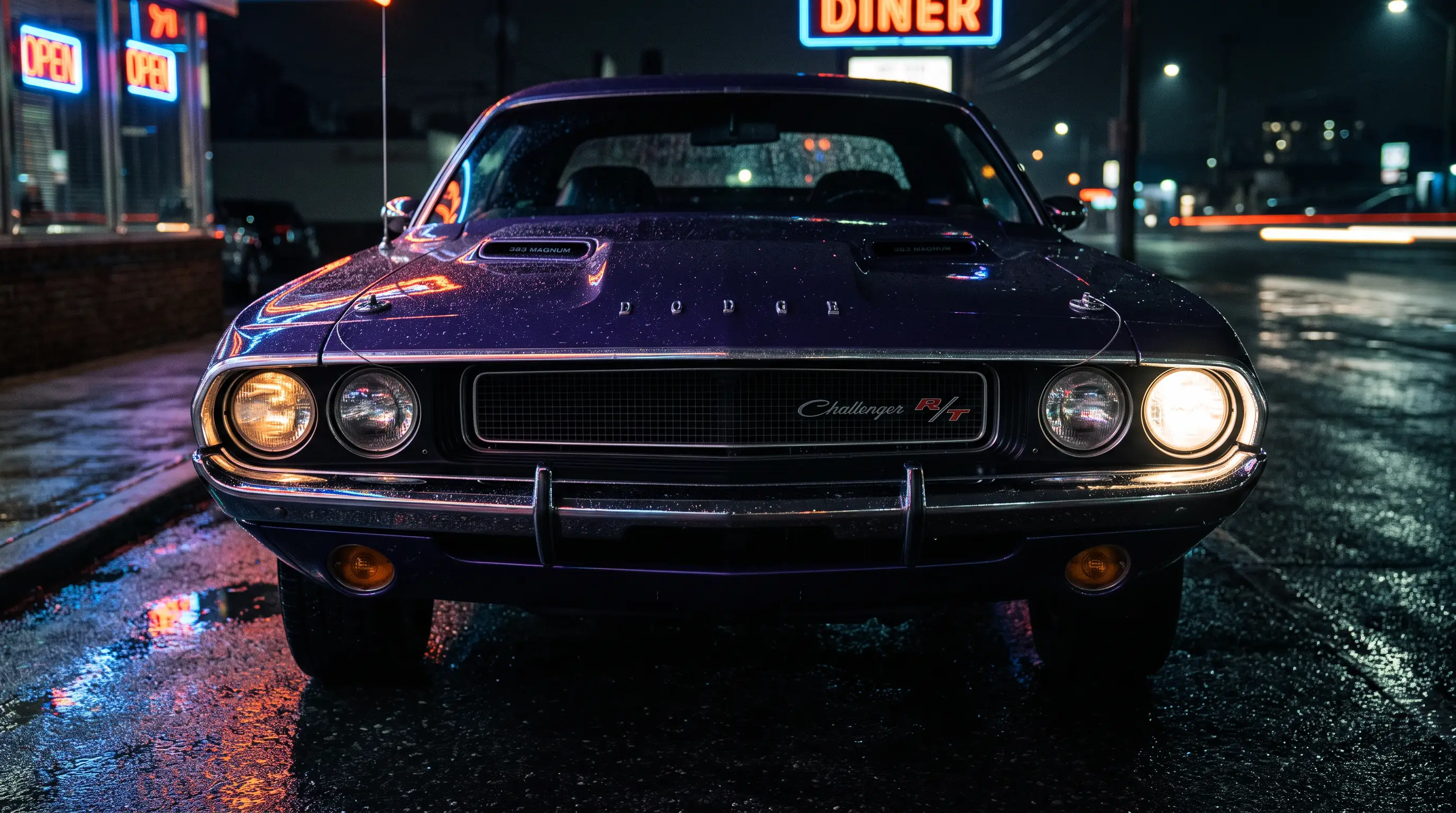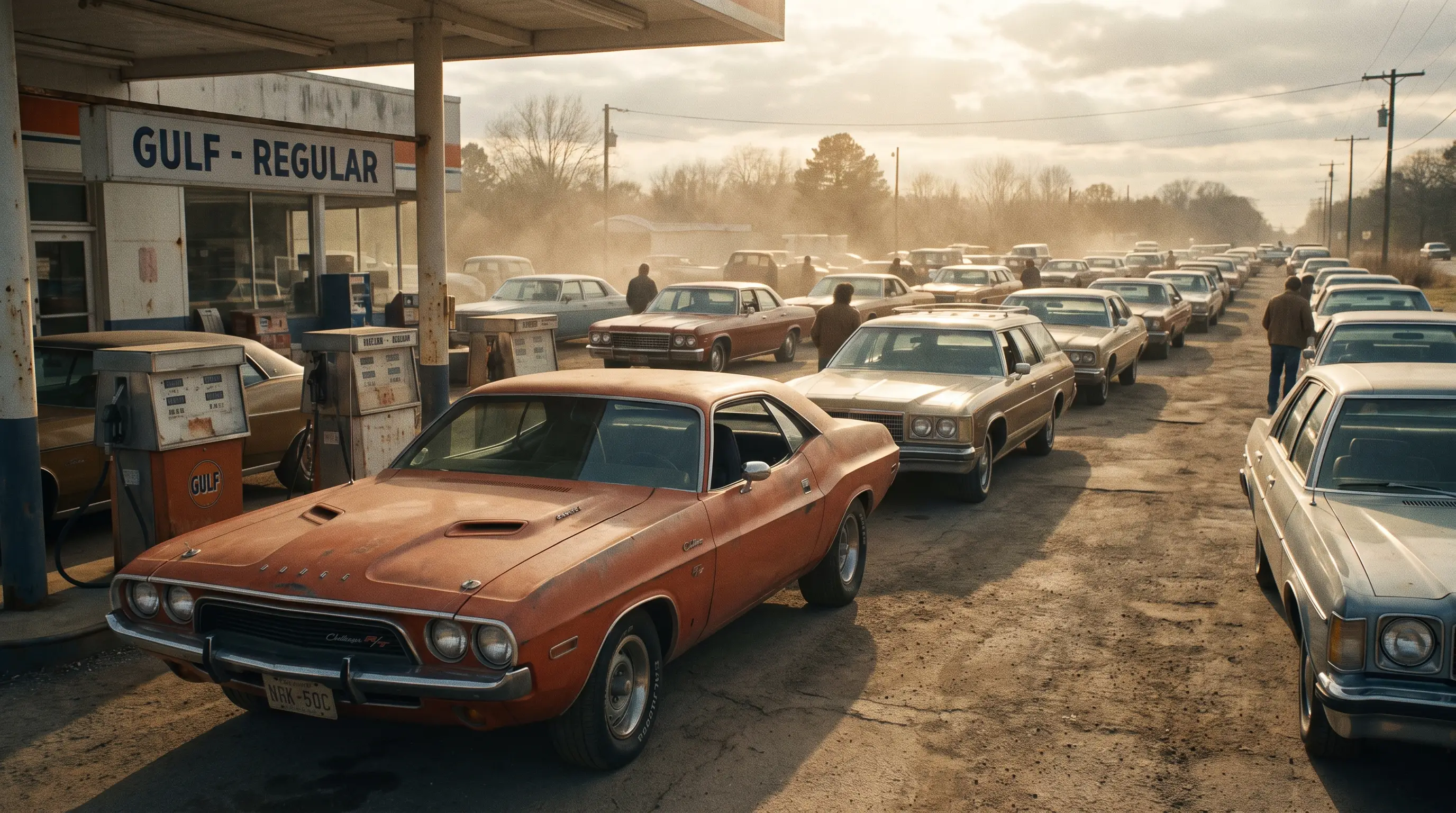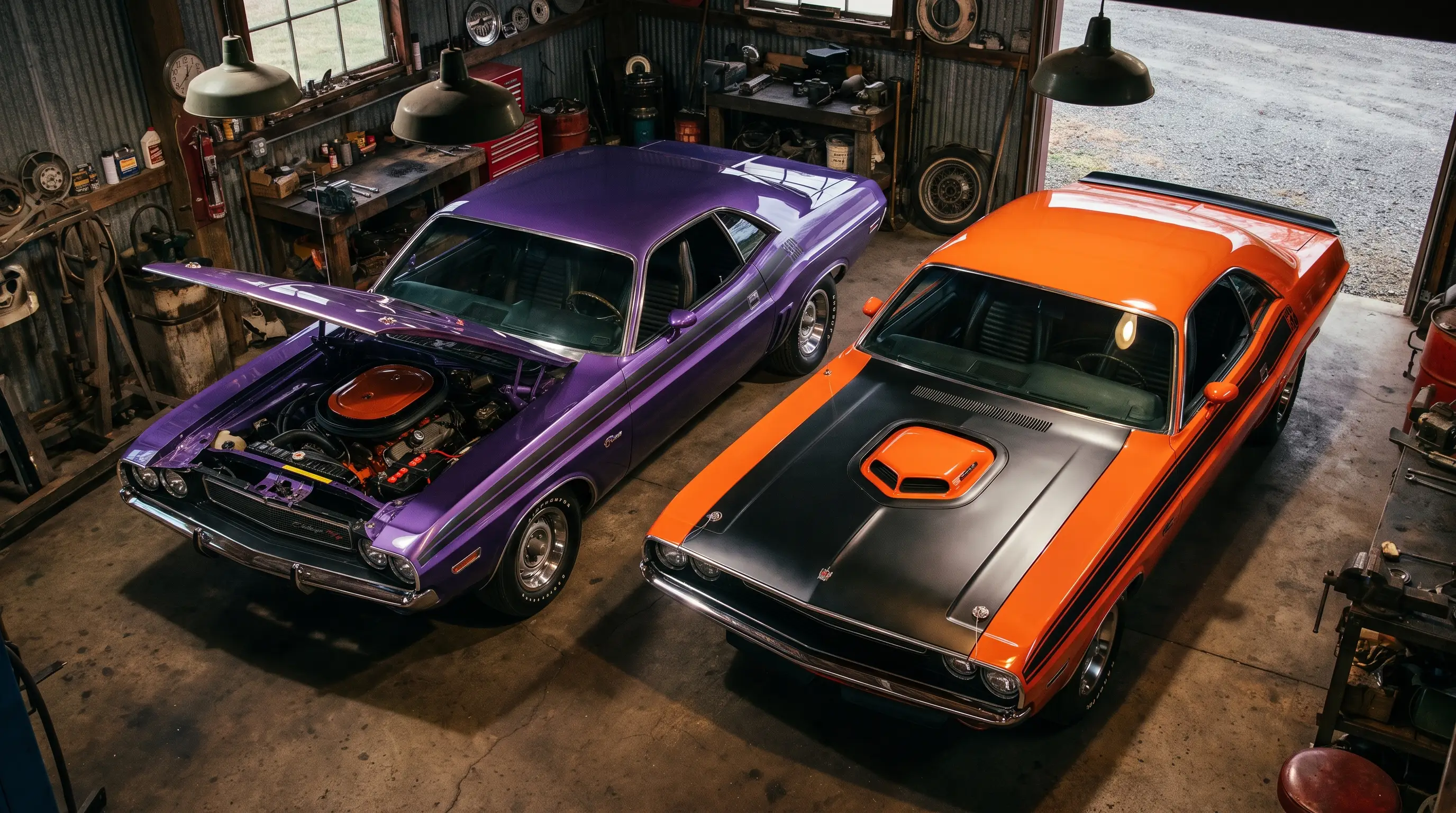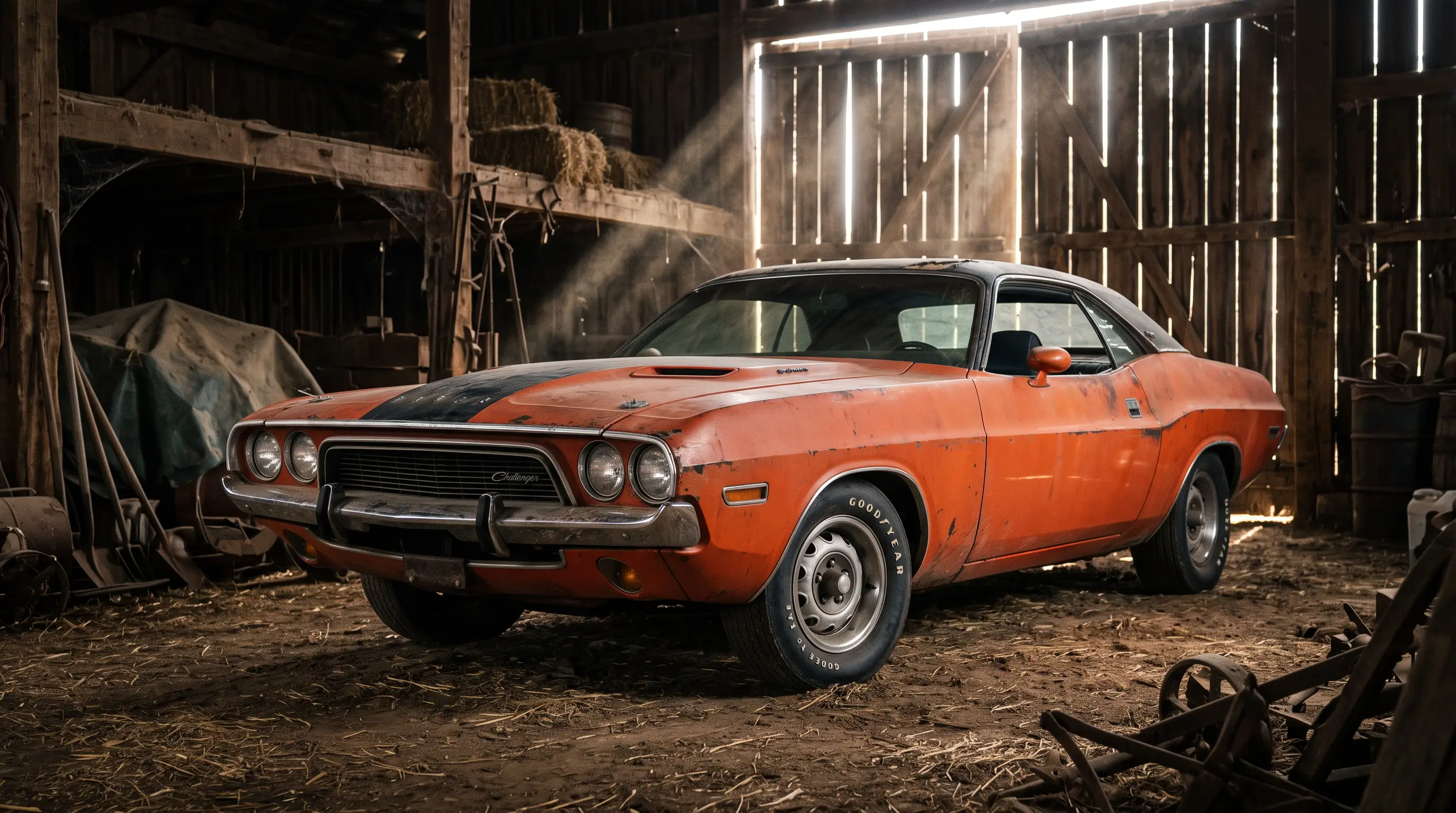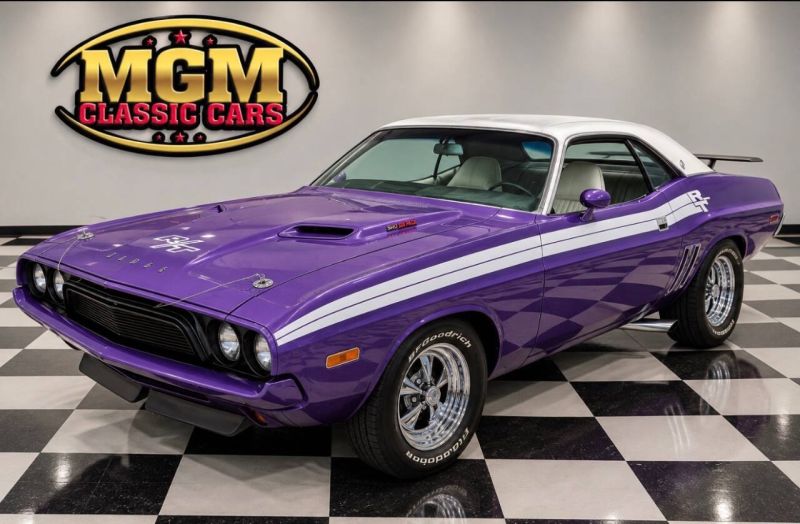
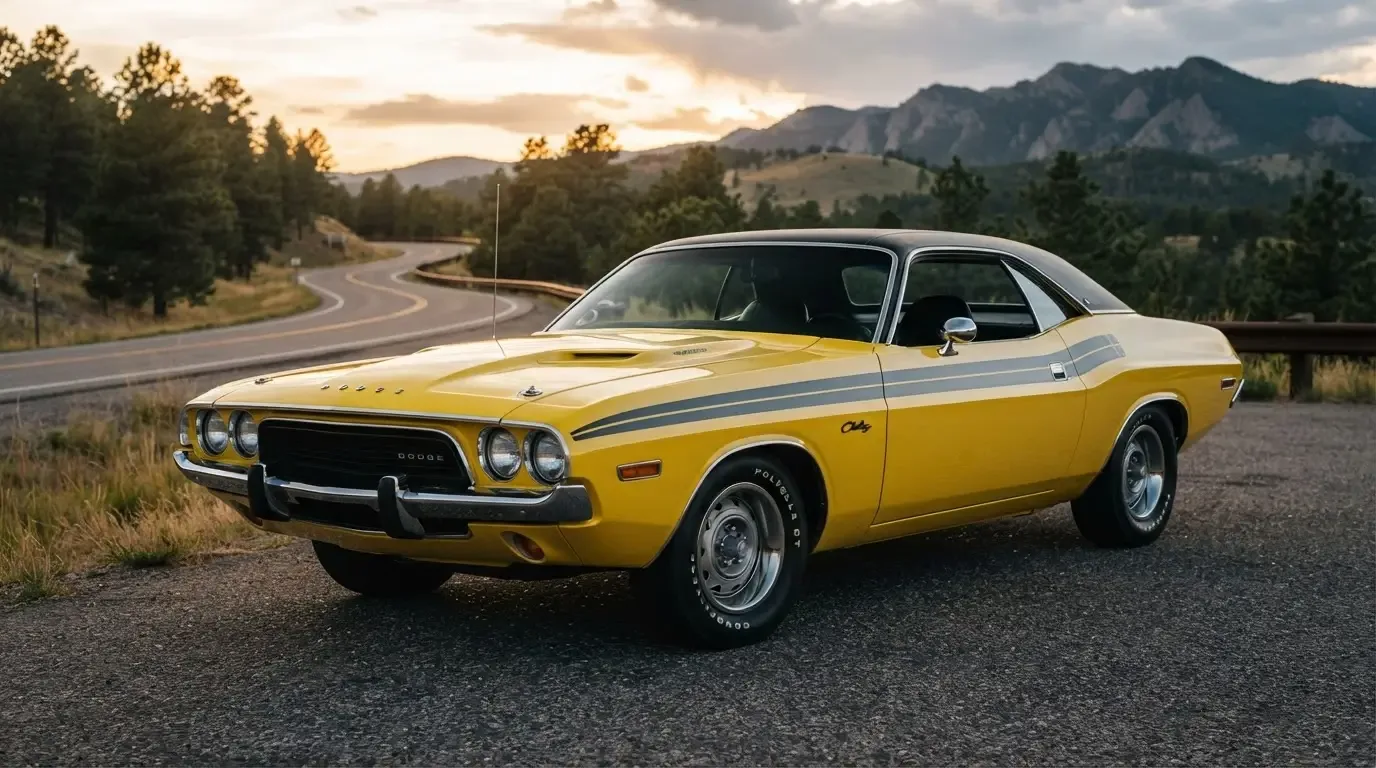
By the time the 1972 Dodge Challenger reached showrooms, the car was already living a second life. The wild first year was behind it, the big blocks were on their way out, and the men who signed off on the changes at Highland Park were reacting to a market that had turned against the very things that made the Challenger famous. This is the part of the story that gets skipped. The 1970 car gets the magazine covers and the auction records. The 1971 to 1974 cars carry the harder, more honest history of what happened when the muscle era ran out of room.
I want to walk through those four model years the way the factory paperwork records them, because the common retelling flattens a lot of real change into a single shrug. The truth is that each year brought a documented shift, and knowing which is which tells you a great deal about the car sitting in front of you.
The 1971 restyle nobody asked for
The 1970 Challenger arrived with a clean, full-width grille and simple taillights. For 1971 the stylists went the other way. The front received a split grille with a body-color center bar, and the rear taillights were redesigned into a segmented look. Simulated brake scoops appeared on the rear quarters of some trims. None of it changed the bones of the car, but it changed the face, and enthusiasts still argue about whether the 1971 front is the best looking of the run or the most fussy.
The R/T continued into 1971, and the high-performance engines were still on the order sheet, including the 426 Hemi and the 440 Six Pack for one final season. But the numbers had already collapsed. Insurance surcharges on high-output cars were biting, emissions rules were tightening, and buyers were drifting toward personal luxury instead of raw output. The 1971 R/T is a genuinely scarce car today for exactly that reason. Anyone tracing the wider arc of this model through our dodge challenger history will notice that 1971 is the pivot point, the last year the full muscle menu was available.
What changed under the hood by 1972
For 1972 the corporate decisions arrive all at once, and they are not subtle. The R/T badge was retired. The convertible was gone. The 426 Hemi, the 440, and the 383 all disappeared from the Challenger order form. What remained was a much shorter list built around the 318 two-barrel and the 340 four-barrel small block, with the 225 slant six as the base engine. Chrysler had also switched its published horsepower figures from gross to net that year, so the numbers on paper dropped hard even where the engine itself was not that different.
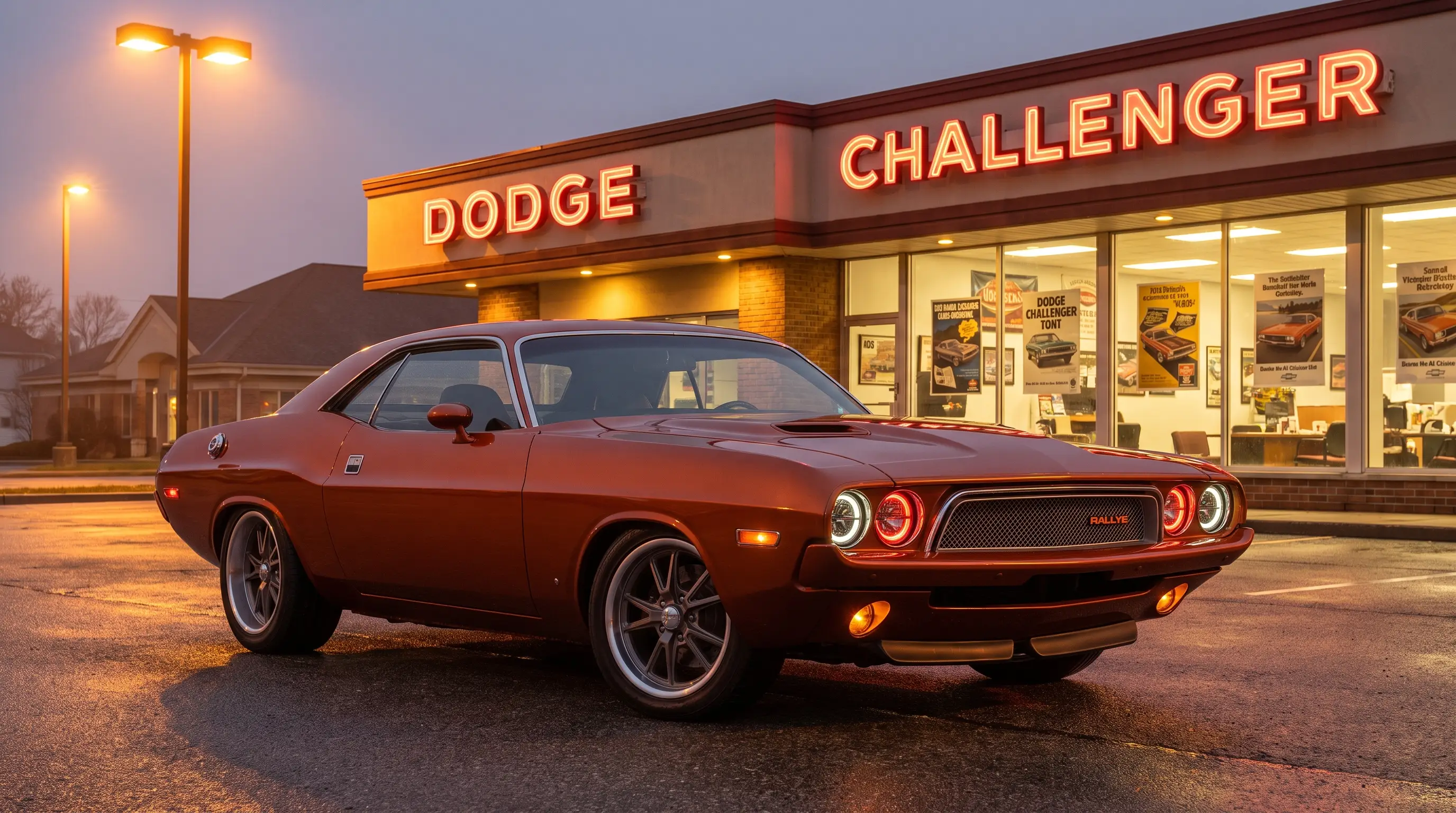
The 340 was the enthusiast's choice for 1972, rated at 240 net horsepower. It was the engine that kept the car interesting when the big blocks left. The new performance trim was called the Rallye, and it took over the visual role the R/T had played, with body side tape, simulated louvers, and Rallye instrument clustering on many cars. It was a lateral move dressed as a promotion.
| 1972 Dodge Challenger | Detail |
|---|---|
| Body style | Two-door hardtop coupe (E-body) |
| Base engine | 225 cubic inch slant six |
| Top engine | 340 cubic inch four-barrel V8 |
| Top engine output | 240 net horsepower |
| Trims | Base and Rallye |
| Dropped for 1972 | R/T, convertible, 426 Hemi, 440, 383 |
| Wheelbase | 110 inches |
The 1972 grille and the identity shift
Visually the 1972 car is the easiest of the whole run to identify. The split grille of 1971 was gone, replaced by a single sad-mouth grille that dipped low in the center. Purists tend to find it awkward. I would argue it is simply honest. The car was no longer selling on aggression, so the front stopped shouting. Trim was simplified, and the emphasis moved toward comfort options and appearance packages rather than drivetrain bragging rights.
This is where I want to gently correct a misconception. People often call every post-1971 Challenger a watered-down car, as if the factory stopped caring. The records do not support that reading. Chrysler kept the 340 alive, kept the Rallye visually distinct, and kept building the car with the same E-body structure it launched with. The company was managing decline, not walking away. A 1972 with the 340 and a four-speed is a real performance car by the standards of its own year.
1973 and 1974: bumpers, regulations, and the last cars
Federal bumper standards drove the next round of visible change. For 1973 the front bumper grew to meet the new five mile per hour impact rule, pushed out on brackets and flanked by rubber-faced guards on many cars. For 1974 the rear bumper received the same treatment. These are the cars people mean when they talk about the Challenger getting heavier and blunter at the ends, and the criticism is fair as far as the styling goes.
Under the hood, 1974 brought one more substitution. The 340 was retired and the 360 cubic inch V8 took its place as the top engine. The 318 and the slant six carried on. By this point the Rallye package was still offered, but the whole exercise was winding down. Chrysler ended E-body Challenger production in the spring of 1974, and the nameplate went dormant for years afterward.
If you are hunting one of these later cars, the differences between 1973 and 1974 are worth memorizing before you shop, and it is easy enough to shop classic Challenger listings and start comparing grilles, bumpers, and engine codes side by side. The visual cues sort the years quickly once you know them.
How many were actually built
Production tells the real story of the decline. The 1970 model year was the peak by a wide margin, with roughly 76,900 built. From there the numbers fall steeply. The 1971 total dropped to about 26,300, 1972 came in lower still at roughly 22,900, 1973 ticked back up to about 27,900, and the final 1974 run closed out at around 11,400. The total for the entire 1970 to 1974 classic Challenger run sits at roughly 165,400 cars.
What those figures mean for collectors is simple. The later cars are scarcer than the famous first year, but scarcity alone has never set Challenger values. Engine, trim, and documentation drive the market far more than raw survival counts. A plentiful 1970 340 car can be worth more than a rarer 1973 slant six, because buyers are paying for the performance story, not the rarity table.
"People assume the last Challengers were forgotten by the factory. The build records say otherwise. Chrysler kept refining the car right up to the final spring, even as the market walked away from it."
- Tom Ramirez
Why the later cars matter now
For a long time the 1971 to 1974 cars were treated as the leftovers of the lineup, the ones you bought when a 1970 was out of reach. That has changed. Collectors who came of age after the peak have less attachment to the ranking of years and more interest in honest, drivable cars they can afford. A 1972 or 1973 Challenger with a small block, correct trim, and a clean history is now a respected entry into E-body ownership rather than a consolation prize.
The 340 cars from 1972 and 1973 lead that revival. They pair a genuinely good engine with the later styling, and their production numbers are low enough to make a well-kept example feel special without demanding Hemi money. The 1974 360 cars are catching up as people accept that the last year deserves a place in the story rather than an asterisk.
There is a cultural dimension to all of this that runs alongside the factory record, and the way these cars landed in film and television gave the shape a second identity that outlived the sales charts. That side of the Challenger is worth a look too, because it explains why a car that stopped selling in 1974 never actually stopped being famous.
The misconceptions worth clearing up
A few myths cling to these later cars, and I hear them repeated as fact often enough that they deserve a plain answer. The first is that Chrysler killed the Challenger because it stopped selling. That is only half true. The car was selling in smaller numbers, yes, but the deeper cause was a whole market moving away from muscle at once, pushed by insurance costs, fuel worries, and tightening emissions rules. The Challenger did not fail on its own. It went down with the segment.
The second myth is that the 1972 and later cars are all slow. The base cars were modest, sure, but a 340 four-barrel car from 1972 or 1973 was genuinely quick for its moment, and it drove better than the raw net horsepower figure suggests. Judging a 1972 car by 1970 gross numbers is comparing two different measuring sticks, and it does the later car a real disservice.
The third myth is that the final 1974 cars were an afterthought. The build records show a company still making deliberate choices, swapping the 360 in for the 340 and keeping the Rallye package on the books to the end. That is not neglect. That is a company finishing the job properly even as it prepared to close the chapter.
Reading a later Challenger correctly
The mistake most first-time buyers make is treating all classic Challengers as interchangeable. They are not. The year sets the rules for what engines were even possible, which is the single fastest way to spot a car wearing badges it did not leave the factory with.
The 1971 to 1974 chapter is not the glamorous one, but it is the one that shows the muscle era for what it really was, a short burst followed by a long, managed goodbye. The 1972 Dodge Challenger sits right in the middle of that story, and it deserves to be read on its own terms rather than as a lesser version of the year before it.