
Every Camaro club meeting has the same moment. Somebody pulls a folder out from under the passenger seat, sets it on a folding table, and the conversation stops. Inside is a window sticker, or a Protect-O-Plate, or a dealer invoice with a coffee ring on it. Nobody cares how loud the car is anymore. They want to see the paper. That habit, more than chrome or horsepower, is what classic Camaro car clubs are built on, and it is how most of them started: a few owners in a parking lot, comparing notes, trying to figure out what they actually had.
Car Features
7 min read
Classic Camaro Clubs and How They Started
How classic Camaro clubs grew from parking-lot meets into Nationals, research groups and judging programs, and how to find the right club for your car.
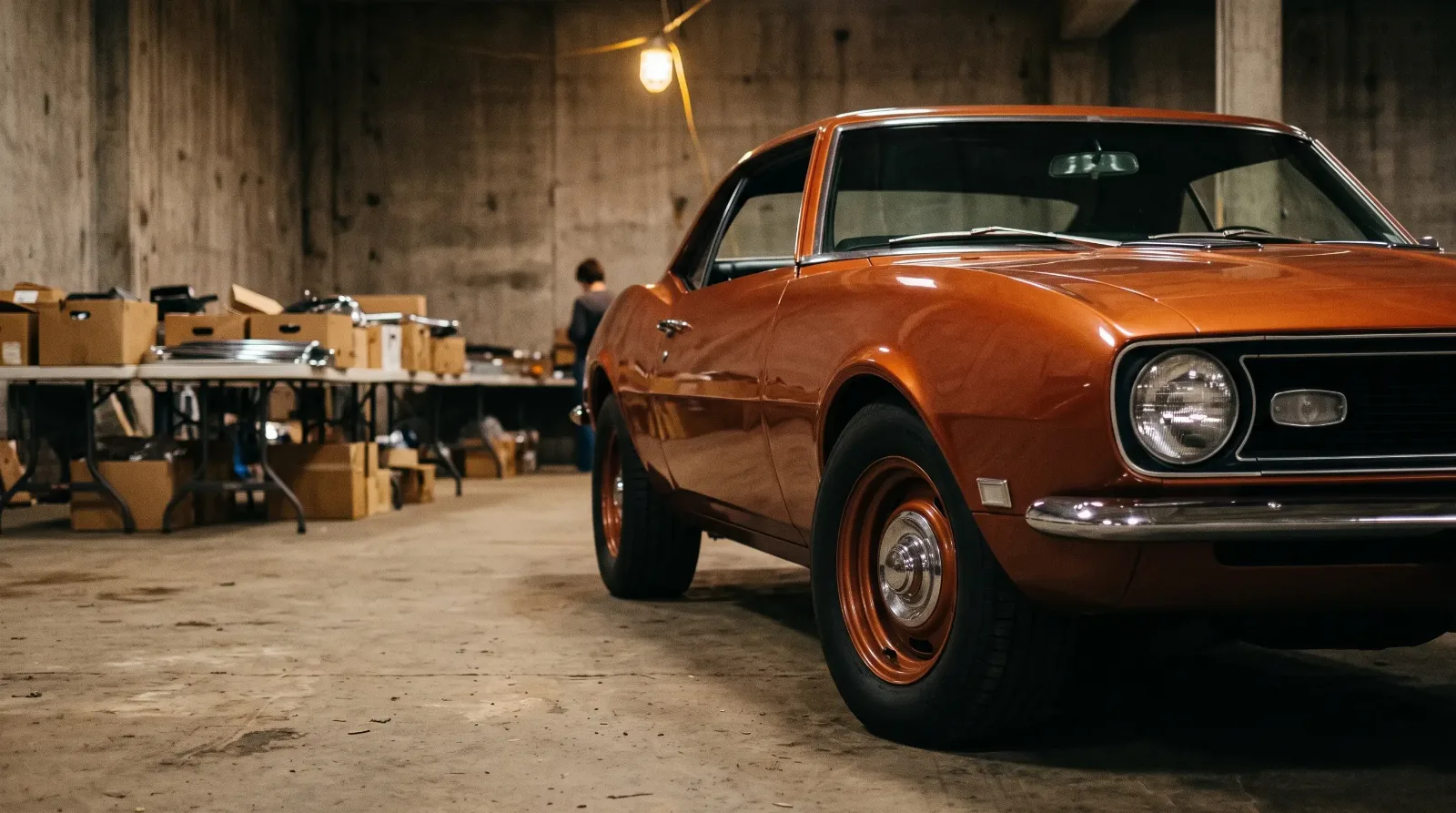
The Camaro's place in film, music and street culture is covered in the full story. This piece is about the people who kept the cars, the clubs they formed, and the research groups that grew out of them.
How classic Camaro car clubs got started
Here is the honest answer to "which was the first Camaro club": nobody has nailed it down with a primary source, and anyone who tells you otherwise should show you the paperwork. Club directory listings point to local groups forming within a decade or so of the first cars. The Western Michigan Camaro Club is listed as founded in 1975, and the Camaro Club of San Diego as established in August 1993. Those dates come from directory entries, not club charters, so treat them as leads.
The pattern is easier to pin down than the dates. A club usually starts local and stays local for years. Then it grows a show, the show grows a following, and the club becomes the thing people drive across a border to attend. The Ontario Camaro Club is a good example. By the club's own account, it began in August 1988 as the Ontario chapter of the International Camaro Club and took its current name on January 1, 1999, running independently since. Its annual Nationals, usually held in Niagara Falls, reached their 23rd edition in 2011, which puts the first one around 1989.
The founding stories are rarely dramatic. Owners meet, swap parts, argue about correct paint codes, and decide it would be easier to argue on a regular schedule. Pop culture did its part to bring new people in, from street racing to the Camaro in the movies, but the clubs themselves were built by people with dirty hands and full filing cabinets.
From parking lots to Nationals
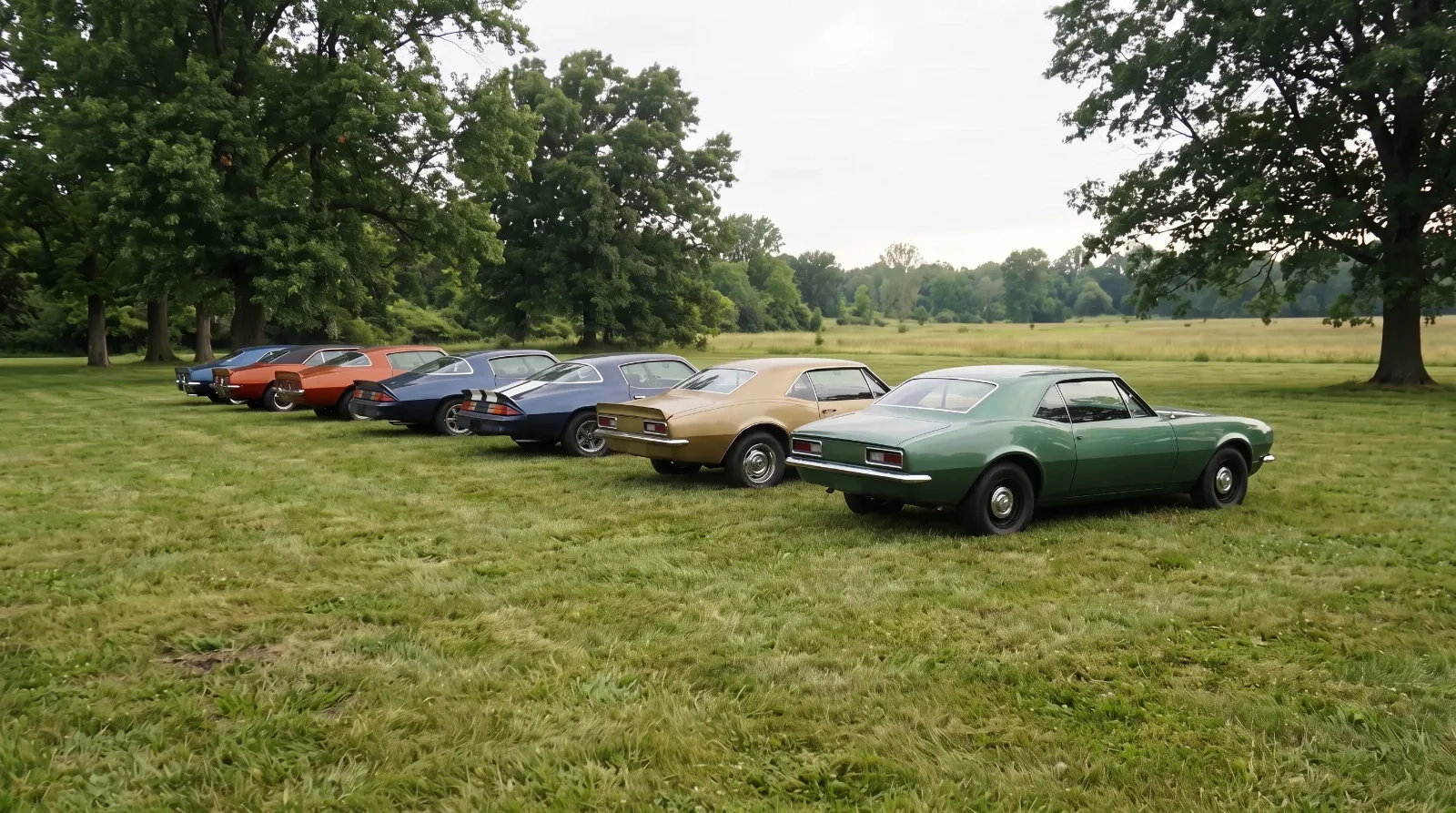
The 2011 Ontario Nationals show where club life can go. That year the club held its Nationals together with GM's Camaro Homecoming at the Oshawa Assembly plant, over the weekend of June 9 to 11, and close to 600 Camaros turned up. The club president at the time was Dale Oldham. A regional club, a factory and a few hundred owners in the same place: that is the whole hobby on one weekend.
In the United States the big gathering is the Camaro Nationals at Carlisle, Pennsylvania, sponsored by the American Camaro Association and held alongside the All-GM Nationals. By 2006 the show was running its seventh year of Vintage Camaro Certification. The association's own listing says the show began in 1999 as "Camaros at Carlisle" and that the group was formed to promote dialogue among more than 140 North American Camaro clubs.
Carlisle also shows how the clubs now celebrate the later cars. At the Carlisle GM Nationals on June 24 and 25, 2022, a "40 Years of the 3rd Gen" display marked four decades of the 1982 Camaro. The organizer, Carlisle Events, was founded in 1974 by Bill and Chip Miller. Cars that spent years as cheap used transportation now get a building of their own.
| Group or event | Started | What it does |
|---|---|---|
| Ontario Camaro Club | August 1988 | Regional club; annual Nationals, usually in Niagara Falls |
| Camaro Research Group | September 10, 1997 | First-generation research and records |
| Camaro Nationals at Carlisle | 1999 | Annual show with Vintage Camaro Certification |
| Classic Camaros of the Carolinas | January 8, 2011 | Regional club for 1967 to 1981 cars |
The paperwork people: registries and research groups
Some clubs drive. Some clubs dig. The Camaro Research Group is the second kind. It was founded on September 10, 1997, by three enthusiasts who met online, with a fourth co-founder joining them. The group lists its co-founders as Rich Fields, Martin Foltz, Greg Davies and Wayne Guinn. Its site, camaros.org, launched in the middle of its second year.
What a group like that does is unglamorous and very useful. It documents what the factory paperwork says and, just as important, what it does not. A 1967 to 1969 Camaro VIN, for example, does not tell you whether the car was a Z28, an SS or an RS. The Protect-O-Plate on those cars records the engine and carburetor, the transmission, the rear axle, selected options and the build month, and on 1967 and 1968 cars the paint and interior too. If you want to know what you own, that is where you start.
Research groups also say plainly when records are missing. For the 1969 COPO 9561 cars with the L72 427, the official records never surfaced. That is a bad answer for anyone selling a car with a story and a good one for anyone buying it.
"I have heard a hundred barn stories at club meetings and believed maybe six. The six all had paper. The other ninety-four had a cousin who knew a guy."
Wayne Coburn
Judging the unrestored car
Clubs shaped how the hobby judges cars, too. Vintage Camaro Certification at Carlisle is one example. Another is the Vintage Certification program at the Muscle Car and Corvette Nationals, which judges unrestored cars. Each car takes about three hours, including the underbody on a lift, and the 2012 rules covered cars built before 1988.
Three hours on a lift is a long time to hide anything. That is the point. A club judging sheet asks the questions a buyer should ask and rarely does: is this the original finish, are these the original parts, and where is the proof?
Finding a club that fits your Camaro
Newer clubs keep forming, and many pick a narrow lane. Classic Camaros of the Carolinas was formed on January 8, 2011, in Concord, near Charlotte, by Bobby Bonds, Keith Lutz, Larry McNeill, Gary Volpicelli and Roy Danaher. It covers 1967 to 1981 cars and calls itself the oldest exclusively classic Camaro club in the Charlotte region. A club with a clear focus tends to know its cars in depth.
The best thing a club gives you is not a parking spot at a show. It is a room full of people who have already made the mistakes you are about to make, and who will tell you about them for free. Just bring the folder.
Sources and notes
- About the Camaro Research Group, camaros.org
- First-generation Camaro numbers and Protect-O-Plate, Camaro Research Group
- Vintage Camaro Certification at the Camaro Nationals, Carlisle (2006 post)
- Huge turnout for Camaros' Oshawa homecoming, Auto123 (2011)
- Carlisle GM Nationals and the third-gen Camaro, Old Cars Weekly (2022)
- About Classic Camaros of the Carolinas
Related Reading

Have a
Chevrolet Camaro
for Sale?
Reach thousands of serious classic car collectors across the US.
Sell It Here →
Selling a classic? Here's how: compare the places to sell classic cars
Are You a Classic Car Dealer?
List your full inventory and connect with targeted classic car buyers.
Join as a Dealer →
#Car Shows
#chevrolet camaro
#classic camaro
#Carlisle
#Camaro clubs
#Camaro Research Group
#Camaro Nationals

About the author
Wayne Coburn
Longtime Corvette owner, judge and club figure who knows the cars, the records and the people behind them.
Related Listings - Chevrolet Camaro
Comments
Be the first to comment on this article.